
Best Dual Brew Coffee Makers – 2026 Reviews

It’s 6:40 on a Tuesday. One person in the house wants a single mug they can carry out the door, and the other wants a pot that’s still warm at ten. For years the answer was two machines fighting over the same two feet of countertop.
Dual brew coffee makers exist to end that standoff, but the label covers a lot of ground. Some will brew a carafe and a single cup while refusing pods altogether. Others take K-Cup capsules, Nespresso capsules, or nothing but a scoop of grounds. The difference between a machine you love and one you resent usually comes down to two things: whether both sides are genuinely usable day to day, and whether the water reservoir design fits how your household actually brews.
We went through the dual brew category across six brands and eight machines, from budget combos to a four-in-one unit that pulls espresso. What follows is a market survey, not a brand pitch – the goal is to match you to the right machine, whichever badge is on the front.
Best Dual Brew Coffee Makers – 2026 Reviews
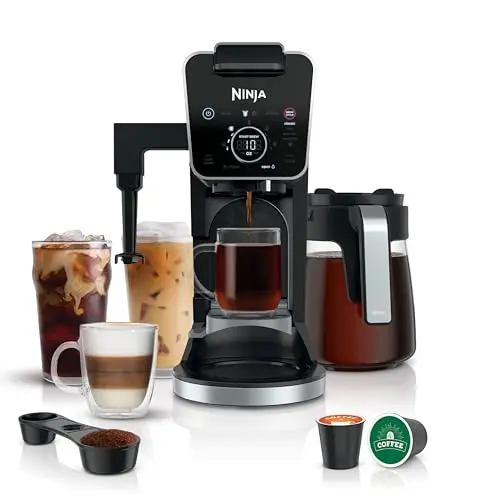
DualBrew Pro CFP301 – Pods, Grounds, and a Frother
The CFP301 covers both halves of the dual brew job without compromise: a pod side that also takes grounds, a 12-cup carafe side, and a fold-away frother that turns either into something coffeehouse-adjacent. A separate hot water line runs on its own two temperature settings, so tea and instant oatmeal don’t taste like last night’s dark roast.
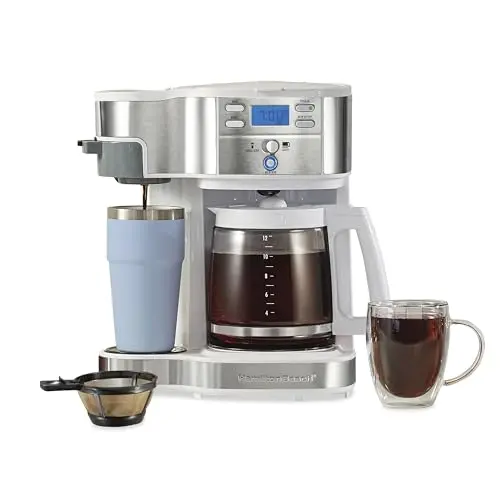
2-Way Programmable 49933 – Simple Two-Way Brewing
A carafe-and-single-serve machine with no pod slot and no pretense. The single-serve side uses a mesh scoop you fill with ground coffee and drop in – up to 14 oz into a travel mug – while the carafe side brews a full 12 cups. Two separate reservoirs mean neither side depends on the other.
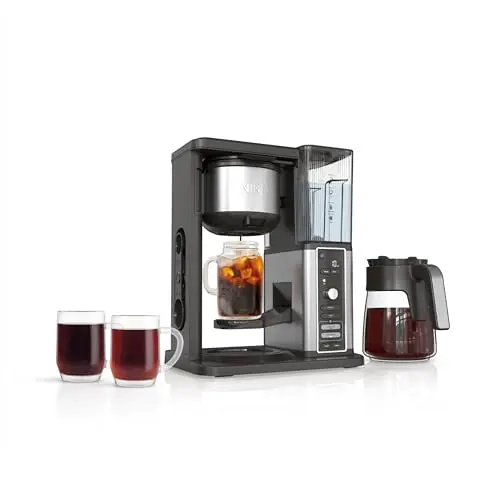
Hot & Iced XL CM371 – Hot, Iced, and Cold Brew
This one brews eight sizes – from a small cup up to an XL travel mug, plus quarter, half, and full carafe – all from ground coffee. Where it separates itself is temperature: an Over Ice setting and a rapid cold brew mode that turns out drinkable cold coffee in about ten minutes.
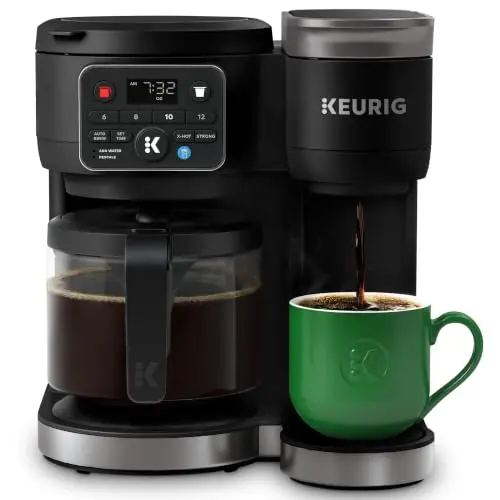
K-Duo Gen 2 – Pods and Carafe From One Reservoir
The K-Duo Gen 2 puts a K-Cup brewer and a 12-cup carafe brewer in one housing and feeds both from a single 72-oz reservoir. Multistream technology saturates the grounds more evenly, and a Brew Over Ice setting drops the temperature for single-cup iced drinks.
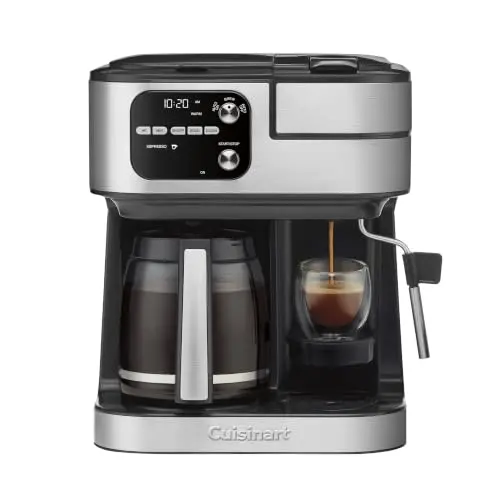
Coffee Center Barista Bar SS-4N1 – K-Cup, Nespresso, and Drip
The most drink-diverse machine here: a 12-cup drip side, a single-serve side that takes both K-Cup pods and Nespresso OriginalLine-style capsules, and a steam and froth system for cappuccino and latte. Three single-serve sizes cover 6, 8, and 10 oz.
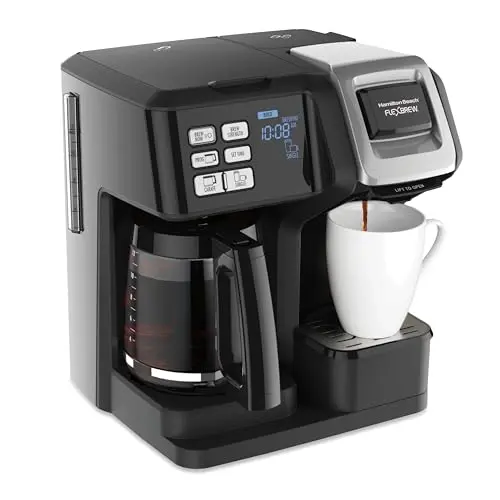
FlexBrew Trio 49976 – Three Ways to Brew on a Budget
Three ways to brew in one chassis: a 12-cup carafe side on ground coffee, plus a single-serve side that accepts a K-Cup pod (up to 10 oz) or ground coffee in the included basket (up to 14 oz into a travel mug). Separate reservoirs on each side and Select-a-Brew regular or bold control.

Dual Brew Coffee Maker – Touchscreen Carafe and Pod Combo
A side-by-side dual brew machine with a 12-cup glass carafe on one side and a K-Cup slot on the other, run from a programmable touchscreen. A removable drip tray makes room for travel mugs, and a reusable filter comes in the box.

HR-CM307 Dual Coffee Maker – Dual Boiler Speed on a Budget
A dual boiler setup separates the two sides: a 60-oz tank feeding the 12-cup multi-serve side and a smaller 15-oz tank for the single-serve side, which takes K-Cup pods or ground coffee. Touchscreen controls, 24-hour delay start, and a two-hour keep warm.
How We Evaluated These Dual Brew Coffee Makers
We didn’t run controlled kitchen lab tests or multi-month reliability trials. What we did: cross-referenced eight dual brew coffee makers from six distinct brands across five decision axes – pod and grounds support, brew size range, reservoir design, footprint, and maintenance load. We triangulated published specifications, feature sets, and owner feedback where available, then mapped each machine against two buyer profiles: the household that wants a pot in the morning and single cups later, and the solo drinker who wants both without two machines on the counter.
The scoring framework weighted real-world fit (70%) – how usable both brewing sides actually are in daily life – against feature differentiation (30%) – the extras that separate one dual brew machine from another, like frothers, independent hot water lines, and rapid cold brew modes. Recommendations track fit and differentiation, not brand preference, and we have no commercial relationship with any of the brands featured.
If you want the most complete pod-and-carafe package, the Ninja DualBrew Pro CFP301 is the pick; if you’d rather skip pods entirely, the Hamilton Beach 2-Way 49933 is the one we’d hand a friend.
We did not brew hundreds of pots, measure extraction yields, or track durability over months of daily use. What we can tell you is how the specifications line up and where owner experience consistently points, which is usually enough to separate a machine that fits your kitchen from one that only looks good on paper.
How to Choose the Right Dual Brew Coffee Maker
1. What Actually Makes a Coffee Maker a Dual Brew Machine
The phrase gets used loosely. A true dual brew coffee maker brews a full carafe and a single serving from the same footprint, each with its own controls – not a 14-cup machine with a small-batch button. The test is simple: can you make one mug for yourself at six in the morning and a full pot for guests at noon without swapping baskets or hauling out a second appliance?
The strongest dual brew setups go further and let the single-serve side take K-Cup pods, ground coffee, or both. That flexibility is usually what separates a machine people keep from one that ends up in the garage. Pod support also shapes how the thing gets used: grounds-only machines like the Hamilton Beach 2-Way 49933 cost less per cup and generate less waste, but they ask you to scoop and rinse every single time.
2. Shared Reservoir vs Two Tanks: The Dual Brew Detail You Notice Every Day
The Keurig K-Duo Gen 2 uses one large shared reservoir for both sides. Hamilton Beach and AIRMSEN split it into separate tanks. Neither approach is wrong, but they feel different in daily use. A shared tank means one fill covers everything and fewer trips to the sink – and an empty tank takes both brewers offline at once.
Two tanks let you run the carafe side dry without touching your single cup, and each has its own water window so you’re not guessing. The tradeoff is two things to fill and two things to eventually descale. If your household brews a pot every morning and single cups all afternoon, the shared reservoir usually wins on convenience.
3. Pods, Grounds, or Both? Picking Your Dual Brew Coffee Maker
This is the decision that shapes your grocery list. Pod households get speed and zero cleanup, at the cost of per-cup price and plastic waste. Grounds households get better value and can use a burr grinder, but every single cup involves a scoop and a rinse.
Combo machines split the difference, and the range is wide. The Cuisinart Barista Bar SS-4N1 goes furthest, taking K-Cup pods and Nespresso OriginalLine capsules alongside its 12-cup drip side – the only machine here that can pull a real espresso shot. If you don’t need that, a simpler combo like the FlexBrew Trio covers pods and grounds without the espresso premium.
4. Brew Sizes, Carafe Format, and Travel Mug Clearance
Check cup clearance before anything else. If you brew into a tall travel mug, you need a machine whose tray removes or lowers – the Hamilton Beach models and the Pantrymade both handle it, and it’s the kind of detail that turns a good machine into an irritating one.
On the carafe side, decide between glass with a warming plate and a thermal carafe. Glass plus a hot plate keeps coffee drinkable for a couple of hours and lets you see how much is left; thermal holds temperature longer but is harder to clean. Single-serve capacity matters too: most pod brews top out at 10 to 12 oz, while the grounds baskets on the Hamilton Beach machines stretch to 14 oz.
5. Maintenance, Footprint, and Matching a Dual Brew Coffee Maker to Your Household
Dual brew machines have two brewing paths to descale, which roughly doubles the chore. Budget for a monthly rinse and a descaling routine every few months, and expect at least one of these machines to remind you about it. Footprint is the other reality check: most units here run 11 to 13 inches deep and 12 to 17 inches tall, so measure the space under your upper cabinets before committing.
Match the machine to the household, not the spec sheet. A solo drinker who occasionally hosts is well served by a grounds-only dual brew machine. A family with a pod loyalist and a drip loyalist needs a combo. And if espresso drinks are non-negotiable, only one option here covers it.
Frequently Asked Questions
1. Do all dual brew coffee makers accept K-Cup pods?
No, and it’s the most common assumption shoppers get wrong. Plenty of dual brew machines are grounds-only – they brew a carafe and a single cup, but the single-serve side uses a mesh basket or scoop rather than a pod chamber. The Hamilton Beach 2-Way and the Ninja Hot & Iced XL are both in that camp.
If pod compatibility matters, look for explicit K-Cup compatibility in the specs. The Keurig K-Duo Gen 2, Ninja DualBrew Pro, and Hamilton Beach FlexBrew Trio all list it, while the Cuisinart Barista Bar adds Nespresso OriginalLine capsules on top. Always confirm the pod format – pod compatible doesn’t automatically mean K-Cup.
2. Ninja DualBrew Pro vs Keurig K-Duo: which is the better dual brew coffee maker?
They solve the same problem from different directions. The Ninja DualBrew Pro wins on range: more brew sizes, a fold-away frother, a specialty concentrate setting, and a separate hot water dispenser. The Keurig K-Duo Gen 2 wins on simplicity and reservoir capacity – one shared 72-oz tank feeds both sides, and the pod side is the familiar Keurig routine.
Pick the Ninja if you want coffeehouse-style drinks and maximum flexibility. Pick the K-Duo Gen 2 if you’re already invested in K-Cups, want a bigger shared tank, and would rather not manage extra features. Both carry durability question marks in owner feedback, so neither is a buy-it-and-forget-it choice.
3. Cuisinart Barista Bar vs Ninja DualBrew Pro: which handles espresso better?
The Cuisinart, clearly. It’s the only machine in this group that takes Nespresso OriginalLine capsules, which means real espresso pressure rather than a strong coffee concentrate. Add the steam and froth system and you can build a cappuccino properly.
The Ninja’s answer is the Specialty Brew concentrate plus its fold-away frother – a convincing latte-style drink, but not espresso. The tradeoff is footprint and price tier: the Barista Bar is bigger, heavier, and pricier, and its build quality draws more complaints. If espresso is a genuine requirement, the Cuisinart is the only option here; if it’s a nice-to-have, the Ninja is the more dependable daily driver.
4. Is a dual brew coffee maker worth it compared with two separate machines?
For most households, yes – one machine means one footprint, one power cord, and one descaling routine instead of two. It also ends the counter-space argument that keeps people from owning both a drip brewer and a single-serve machine.
The exception is the household that wants the best of each category separately. A dedicated single-serve brewer usually brews faster than a combo’s pod side, and a dedicated drip machine holds temperature more consistently. If you brew a pot every single day and pods are only an occasional convenience, a combo is still the tidier answer.
5. Can a dual brew coffee maker make iced coffee or cold brew?
Several can. The Ninja Hot & Iced XL CM371 has dedicated Over Ice and rapid cold brew modes, producing cold brew in about ten minutes rather than overnight. The Ninja DualBrew Pro and Keurig K-Duo Gen 2 both offer an Over Ice setting on their single-serve sides, tuned to keep the ice from melting instantly.
What you won’t get from any of these is a true slow-steep cold brew concentrate with the body of a 12-hour batch – the rapid modes are a fast approximation. For everyday iced coffee, though, the temperature adjustment makes a noticeable difference over brewing hot and pouring over ice.
Final Verdict
For most people shopping this category, the Ninja DualBrew Pro CFP301 is the answer. It’s the only machine here that covers pods, grounds, a full carafe, hot water, and frothed milk without making you choose, and it does it in a footprint that still fits under a cabinet.
If you’d rather skip pods entirely, the Hamilton Beach 2-Way 49933 is the honest, affordable dual brew machine – two reservoirs, a scoop-and-brew single serve, and the steadiest owner sentiment in the group. And if iced coffee is the daily ritual, the Ninja Hot & Iced XL CM371 handles hot, iced, and rapid cold brew from the same basket.
The through-line is simple: decide whether pod support is a need or a nice-to-have, then match the reservoir design to your morning. Everything else follows.
