
Best Duo Coffee Makers – 2026 Reviews

A duo coffee maker sounds like the obvious answer to a divided household: one side for a quick pod, the other for a full carafe. The catch is that not every dual brewer does both jobs equally well. Some nail the single cup but make a mediocre pot; others brew a solid carafe while treating pod support like an afterthought.
The best duo coffee makers get three things right: the single-serve side is fast and uncomplicated, the carafe side makes a full pot you actually want to finish, and the whole machine doesn’t take over the counter. Pod compatibility, reservoir design, and long-term reliability separate the genuinely useful dual brewers from the ones that just check two boxes.
We compared the current market with those daily routines in mind, from simple ground-coffee models to feature-heavy machines with frothers and cold brew. The goal is to help you choose the right fit for your kitchen, not to crown one brand by default.
Best Duo Coffee Makers – 2026 Reviews
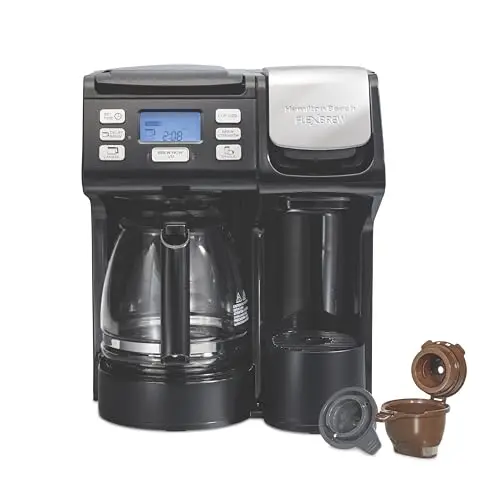
FlexBrew Trio – Three-Way Brewing for Pods, Grounds, and Carafes
The FlexBrew Trio is the most flexible dual brewer in this lineup: it brews a single cup with a pod or ground coffee, or a full 12-cup carafe. The 56-oz removable reservoir supports several single servings before a refill, and easy-touch programming makes wake-up coffee possible. It’s a practical pick for households that don’t want to choose between convenience and a full pot.
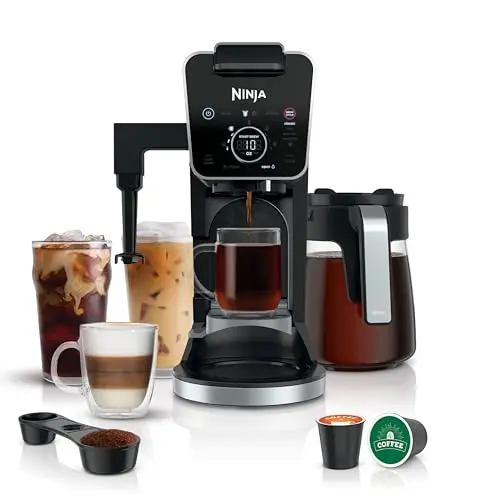
DualBrew Pro CFP301 – Pods, Grounds, and Coffeehouse Extras
The DualBrew Pro CFP301 is the feature-heavy option: it brews K-Cup pods or grounds, offers 13 brew sizes, and adds a fold-away frother plus a separate hot-water dispenser. Four brew styles include Classic, Rich, Over Ice, and Specialty, so it can cover everyday coffee and coffeehouse-style drinks. The multi-position 60-oz reservoir helps it fit different counter layouts.
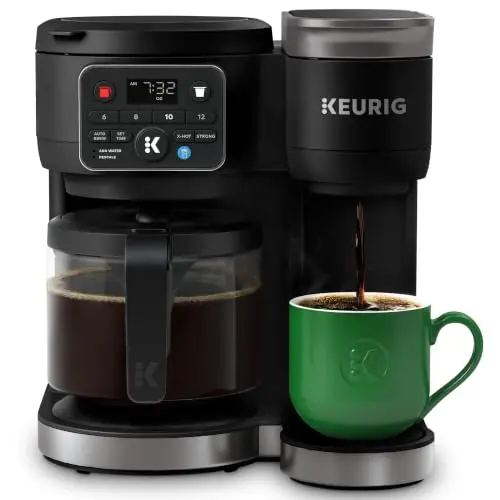
K-Duo Gen 2 – K-Cup Convenience Meets Full-Carafe Brewing
The K-Duo Gen 2 keeps the Keurig routine simple while adding a full-carafe side. It brews K-Cup pods or ground coffee, includes a Brew Over Ice setting, and offers 6- to 12-oz single cups or 6- to 12-cup carafes. A shared 72-oz removable reservoir cuts down on refills, and programmable carafe auto-brew can have a pot ready when you wake up.
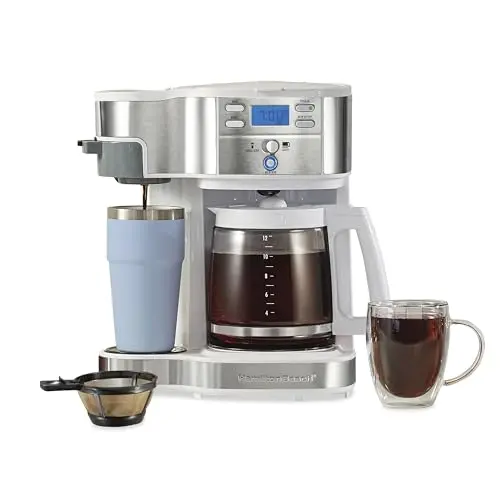
2-Way Programmable 49933 – Simple Dual Brewing Without Pods
The Hamilton Beach 2-Way is the simpler, ground-coffee-focused duo brewer. It makes up to 14 oz in the single-serve side or 12 cups in the carafe side, with two separate easy-fill reservoirs and a water window for each. AutoPause & Pour and a two-hour keep-warm with automatic shutoff keep the routine low-stress.

DualBrew GP161 – Hot, Iced, and Rapid Cold Brew
The Ninja DualBrew GP161 is built around hot, iced, and cold coffee. It brews grounds or pods from a single cup up to a 12-cup carafe, offers Classic, Rich, Over Ice, and Cold Brew styles, and can make a single cup of rapid cold brew in under 10 minutes. The adjustable warming plate holds coffee for up to four hours.
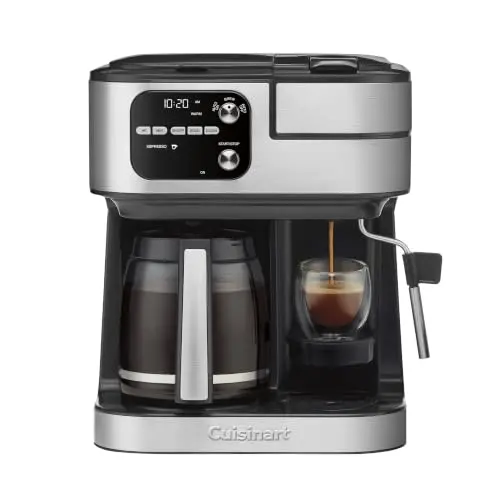
Coffee Center Barista Bar 4-in-1 – Espresso, Pods, and Drip in One
The Cuisinart Coffee Center Barista Bar 4-in-1 is the most espresso-focused duo brewer here. It makes up to 12 cups of drip coffee, brews K-Cup pods in three single-serve sizes, and accepts Nespresso OriginalLine-style capsules for espresso. A built-in frother, 24-hour programmability, brew-strength control, and a charcoal water filter round out the package.

Dual Brew Coffee Maker – Budget Touchscreen Dual Brewing
The Pantrymade Dual Brew is a budget-friendly take on the pod-and-carafe formula. It brews a 12-cup carafe or a single K-Cup pod, uses a programmable touchscreen, and includes a two-hour auto shut-off. The side-by-side layout and adjustable drip tray are aimed at keeping the footprint manageable and travel mugs splash-free.

12-Cup Programmable Dual Coffee Maker – Compact Pod-and-Carafe Flexibility
The AIRMSEN Dual Coffee Maker packs a lot into a compact frame: a 12-cup carafe side, a single-serve side for K-Cup pods or ground coffee, 24-hour delay start, and a touchscreen. It uses a 1000W system to brew a full carafe quickly and a single serving in under 90 seconds, with separate water tanks for each side.
How We Evaluated These Duo Coffee Makers
We didn’t run controlled kitchen lab tests or long-term reliability trials. What we did: cross-referenced 8 duo coffee maker models from 6 distinct brands across five decision axes – brew flexibility, carafe performance, single-serve convenience, reservoir and footprint, and long-term ownership. We triangulated published specifications, feature sets, owner feedback where available, and use-case fit for households that want both a pod-style cup and a full pot from one machine. We also weighed how easy each machine is to live with: reservoir refills, carafe pouring, pod-side cleanup, and counter footprint. We pressure-tested the specs against real-world routines rather than treating a longer feature list as automatically better.
The scoring framework weighted real-world fit (70%) – how well each brewer handles the daily mix of single cups and carafes – against feature differentiation (30%) – pod compatibility, brew styles, reservoir design, and extras like frothers or cold brew. We audited the group for genuine differences and mapped each pick to a distinct buyer profile rather than treating every dual brewer as interchangeable. Where feedback was uneven, we treated it as a watch point rather than a verdict. We have no commercial relationship with any of the brands featured; recommendations track fit and differentiation, not brand preference. If you want the most complete all-rounder, the FlexBrew Trio is the first machine we’d point you to; if coffeehouse-style drinks matter, the DualBrew Pro CFP301 is the stronger match.
How to Choose the Right Duo Coffee Makers
1. What Makes a Duo Coffee Maker Worth It?
A duo coffee maker earns its counter space when both sides are genuinely useful. The pitch is simple: two brew paths for a quick single cup and a full carafe for shared mornings. The test is whether the single-serve side is fast and uncomplicated enough to use daily, and whether the carafe side makes coffee you’d actually finish. If one side feels like an afterthought, you’re paying for flexibility you won’t use.
2. Carafe Side vs. Single-Serve Side: Where Dual Brewers Cut Corners
The carafe side is usually straightforward drip coffee, so the bigger differences show up in the single-serve design. Some machines are pod-compatible; others stick to a ground-only single serve basket. If you mostly drink ground coffee and want the simplest routine, the 2-Way Programmable is the pick. If you want pod convenience without giving up a carafe, look at the pod-and-grounds models instead.
3. Pod Compatibility and Ground Coffee Flexibility
Pod support is not one feature; it’s a compatibility question. Standard K-Cup pods are the most common, while a few machines add Nespresso OriginalLine capsules for espresso. Ground coffee remains the most flexible input because you’re not locked into a pod format. The more pod formats a machine accepts, the more you’ll want to check brew-size options and how easy the pod holder is to clean. For espresso-style capsules, the Barista Bar 4-in-1 is the pick.
4. Reservoir, Footprint, and Countertop Fit
Counter fit matters more with duo brewers because you’re housing two brewing systems. A shared reservoir saves refills and space, while separate reservoirs let each side have its own water supply but add refill points. Check whether the reservoir is removable, whether it can sit on the side or rear, and whether a tall travel mug clears the dispenser. A machine that fits your counter and your mug is easier to live with than one with a longer feature list.
5. Cleaning, Descaling, and Long-Term Reliability
Dual brewers have more surfaces to clean than a basic drip machine: carafe side, pod side, drip tray, and reservoir. Regular descaling matters in hard-water areas, and pod-side cleanup is the area most likely to get skipped. Long-term reliability is the other big variable; feedback on some models points to premature failures, so it’s worth checking the warranty and how easy replacement parts are to find. A simpler machine with fewer pathways often has less to go wrong.
6. How Much Should You Spend on a Duo Coffee Maker?
Budget-friendly duo brewers typically cover the basics: a 12-cup carafe, a single-serve side, and simple programming. Mid-range models add better reservoirs, more brew sizes, and stronger pod support. At the premium end, you’re paying for extras like frothers, cold brew, espresso capsule compatibility, and more brew styles. If cold brew is a priority, the DualBrew GP161 is the pick; otherwise, decide which two or three features you’ll use weekly and ignore the rest.
Frequently Asked Questions
1. What's the difference between the Hamilton Beach FlexBrew Trio and the Ninja DualBrew Pro CFP301?
The FlexBrew Trio is the simpler all-rounder: it brews pods, grounds, and a 12-cup carafe, with a fast single cup and a large removable reservoir. The DualBrew Pro CFP301 adds a built-in frother, specialty brew concentrate, a separate hot-water dispenser, and more brew styles. The FlexBrew Trio is easier to settle into; the Ninja is better if you want a coffee station for lattes and cappuccinos. Both cover the core duo-brewer job, but the Ninja asks more of you in cleaning and counter space.
2. Is the Keurig K-Duo worth it compared with the Hamilton Beach 2-Way?
They target different routines. The K-Duo Gen 2 is the better fit if you want K-Cup convenience, a shared reservoir, and a brew-over-ice setting for cold coffee. The Hamilton Beach 2-Way is the better fit if you drink mostly ground coffee and want a ground-coffee only single-serve side with two separate reservoirs. The K-Duo is more versatile with pods; the 2-Way is simpler and easier to reason about.
3. Do duo coffee makers really brew both pods and grounds well?
Not always. Some machines have a strong pod side but a basic grounds basket, while others make better drip coffee than single-serve pods. The carafe side is usually the more consistent performer because drip brewing is a mature format. Read the specs carefully: if a model says pod-compatible but not grounds-compatible on the single-serve side, it won’t give you the full duo-brewer experience.
4. How much counter space does a duo coffee maker need?
Plan for more footprint than a single-serve brewer because you’re fitting a carafe, a pod or grounds side, and often a larger removable reservoir. Check the depth with the carafe in place and leave room for travel mug clearance under the dispenser. A side-mounted or rear-mounted reservoir can make a big difference in tight kitchens.
5. Which duo coffee maker is best for cold brew?
The DualBrew GP161 is the clear pick if cold brew and iced coffee are priorities. It has a rapid cold brew mode that makes a single cup in under 10 minutes, plus an Over Ice setting for hot-brewed iced coffee and a full carafe cold brew option. Most duo brewers treat iced coffee as an afterthought; this one makes it a core strength.
Final Verdict
For most households, the FlexBrew Trio is the duo coffee maker to beat. It covers pods, grounds, and a full carafe, brews a single cup quickly, and keeps the daily routine simple. If you’re watching the budget and drink mostly ground coffee, the 2-Way Programmable is the smarter spend – you give up pod support but keep the carafe-and-single-cup flexibility. Cold brew and iced coffee drinkers should go with the DualBrew GP161, which adds rapid cold brew and four brew styles without turning the machine into a science project. And if espresso drinks are the reason you want a duo brewer, the Barista Bar 4-in-1 is the premium pick for Nespresso capsules, K-Cups, and drip in one footprint.
