
Best Dust Mite Mattress Protectors – 2026 Reviews

You vacuum, you wash the sheets every week, and still wake up congested. Dust mites are the quiet culprit, and they are not living in your pillowcase – they are tucked into the mattress itself. A regular mattress pad can block a spill, but it does almost nothing to keep allergens from drifting out of the seams and zip line.
The difference between a so-so protector and a genuinely useful dust mite mattress protector comes down to the enclosure. You want a full six-sided cover, a zipper that seals at the pull, and a fabric tight enough to trap allergens while still letting the bed breathe. Depth fit matters just as much: a cover that strains over a pillow-top or bunches on a thin mattress will not stay sealed for long.
We looked across brands to find options for deep mattresses, sensitive sleepers, budget shoppers, and twin-bed setups. The picks below are ranked by how completely they enclose the mattress and how livable they feel night after night. Start with your mattress depth, then choose the fabric and warranty level that fits your room.
Best Dust Mite Mattress Protectors – 2026 Reviews
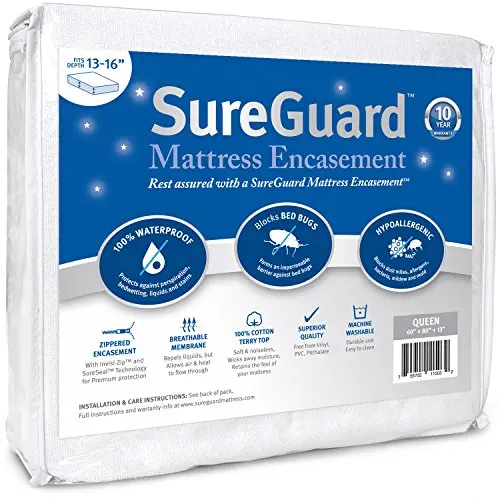
Queen Deep Mattress Encasement – Cotton Terry Dust Mite Barrier
A six-sided zippered encasement with a cotton terry top and a sealed zipper system. It is built for deeper queen mattresses and adds a waterproof, dust mite blocking layer without the plasticky feel.
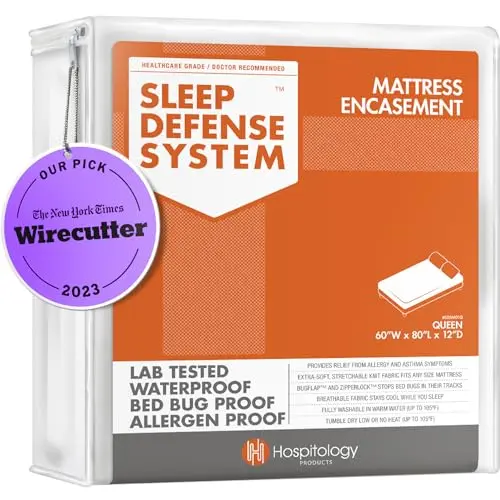
Queen Mattress Encasement – Stretch-Fit Dust Mite Defense
A stretchable zippered encasement that fits queen mattresses from 12 to 18 inches deep. The soft knit face and breathable waterproof membrane are designed for daily comfort, with a five-year limited warranty.
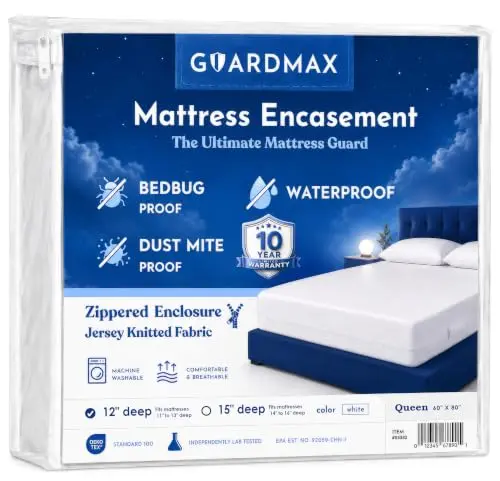
Queen Zippered Mattress Protector – Soft Jersey Six-Sided Barrier
A jersey-knit zippered encasement with a sealed six-sided design and OEKO-TEX Standard 100 certification. It fits queen mattresses up to 13 inches deep and is machine washable.
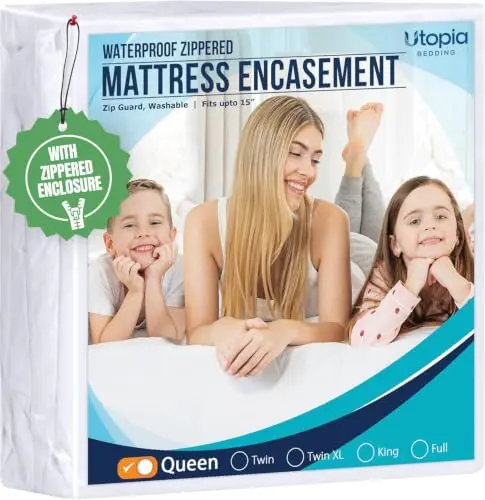
Waterproof Queen Mattress Encasement – Budget Zippered Barrier
A budget-friendly zippered encasement with a stretchy knit fabric and a waterproof TPU backing on all sides. It fits queen mattresses up to 15 inches deep and is machine washable.
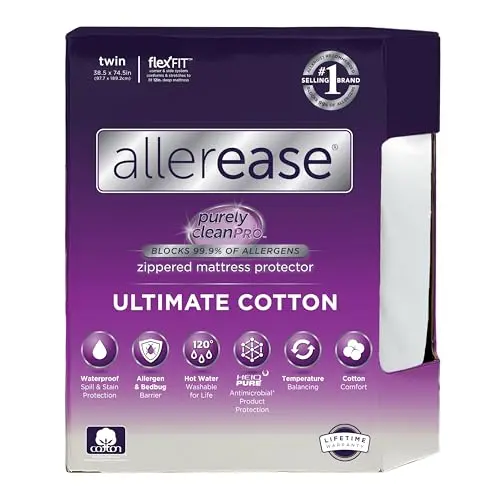
Ultimate Allergy Protection Zippered Protector – Twin Allergy Barrier
A zippered twin mattress protector with tightly woven allergy-blocking fabric, waterproof backing, and temperature-balancing technology. It is machine washable and backed by a lifetime limited warranty.
How We Evaluated These Dust Mite Mattress Protectors
We didn’t run a dust mite lab test or sleep on each of these protectors for weeks. What we did: cross-referenced 5 dust mite mattress protectors from 5 distinct brands across 5 decision axes – enclosure design, zipper seal, depth fit, fabric feel, and care requirements. We triangulated published specifications, feature sets, and owner feedback where available, then mapped each option against representative buyer profiles: allergy-sensitive sleepers, deep-mattress owners, budget shoppers, and twin-bed setups. We also audited the zipper closures and waterproof claims to separate true six-sided encasements from fitted pads that only cover the top. We weighed owner-sentiment signals only where they helped explain a pattern, not as a substitute for specifications.
The scoring framework weighted real-world fit and containment (70%) – how completely each protector encloses the mattress and how livable it feels night after night – against feature differentiation (30%) – certification, warranty, fabric upgrades, and depth range. We benchmarked the lineup on the details that matter for dust mite control: sealed zipper pulls, tight fabric weaves, and breathable waterproof membranes. We have no commercial relationship with any of the brands featured; recommendations track fit and differentiation, not brand preference. If you have a thicker mattress, the SureGuard Queen Mattress Encasement is the strongest match; if you want a softer stretch fit, the Hospitology Mattress Encasement is the better route.
How to Choose the Right Dust Mite Mattress Protector
1. What Makes a Mattress Protector Genuinely Dust Mite Proof
The label dust mite proof gets used loosely. For real protection, you want a full six-sided encasement that zips around the entire mattress, not a fitted pad that only covers the top. Dust mites live inside the mattress, so the goal is to seal allergens in rather than just wipe the surface clean.
Look for a sealed zipper closure with a guard or flap at the pull. A standard zipper can leave a small gap, and that gap is enough for allergens to escape over time. The fabric should be a tightly woven or knit barrier that still breathes, because a non-breathable plastic sleeve can sleep hot and drive you back to a bare mattress.
2. Encasement vs. Fitted Protector: Which Dust Mite Mattress Protector Do You Need?
A zippered mattress encasement is the only style that fully surrounds the mattress on all six sides. That is the right choice for dust mite allergies, bed bugs, or a mattress you want to keep clean for years. A fitted mattress protector is easier to change and can be comfortable, but it leaves the sides and bottom exposed.
If your main goal is allergen containment, start with an encasement and add a fitted pad on top only if you want extra absorbency or a softer surface. If you are mainly guarding against spills, a fitted protector may be enough. For a balanced dust mite mattress protector, the SureGuard Queen Mattress Encasement is the clearest example of the full-encasement approach.
3. Zipper Seals, Fabric Weaves, and Breathability
The zipper is the most overlooked part of a dust mite mattress protector. A fine-tooth zipper with a sealed pull guard creates a tighter closure than a standard coil zipper. Some brands add a stitched flap that folds over the zipper pull; that small detail matters more than a fancy fabric name.
For comfort, look for breathable knit or cotton terry surfaces and a waterproof membrane that does not crinkle. A quiet protector is easier to live with, and a breathable one is less likely to sleep hot. If you want the softest surface in this lineup, the Guardmax Queen Zippered Mattress Protector uses a jersey knit that feels closer to a T-shirt.
4. Getting the Depth Fit Right for Your Mattress
Depth fit is where many encasements fail. Measure your mattress before buying; a cover that is too shallow will strain the zipper, and one that is too deep will bunch under the sheets. Most queen mattresses fall in the 9 to 15 inch range, but pillow-top and hybrid models can run deeper.
If your mattress is on the thicker side, choose a protector with a stretch-to-fit depth range rather than a single depth. The Hospitology Mattress Encasement stretches from 12 to 18 inches, which gives it more room to work with. For standard-depth mattresses, a simpler encasement can be a better fit and less expensive.
5. Budget, Mid-Range, and Premium Dust Mite Mattress Protectors
Entry-level encasements cover the basics: a six-sided waterproof barrier, a zippered closure, and machine-washable fabric. They may use thinner knit fabric or a simpler zipper, but they can still do the core job. Mid-range options add softer fabrics, better zipper guards, and more generous depth ranges.
Premium dust mite mattress protectors add cotton terry tops, certifications like GREENGUARD Gold or OEKO-TEX, longer warranties, and more polished finishes. If budget is the priority, the Utopia Waterproof Queen Mattress Encasement is the value-focused pick. If you want a premium surface and a longer warranty, the SureGuard is the stronger fit.
Frequently Asked Questions
1. Do dust mite mattress protectors actually work?
They can help, but only if they are true encasements. A six-sided zippered cover traps dust mite allergens inside the mattress, so they are not circulating into your bedding. A fitted pad that only covers the top is a spill barrier, not a full allergen barrier. The zipper seal and tight fabric weave are the details that separate a real dust mite mattress protector from a general waterproof pad.
No protector eliminates dust mites from a room. You still need to wash bedding in hot water and control humidity, but an encasement is the piece that protects the mattress itself.
2. What's the difference between the SureGuard Queen Mattress Encasement and the Hospitology Mattress Encasement?
The SureGuard is the cotton terry option with a 13-16 inch depth range and a 10-year quality guarantee. It is the better pick if you want a softer, more padded surface and a longer warranty. The Hospitology is the stretch-fit option, covering 12 to 18 inches, so it is more forgiving on deep or pillow-top mattresses.
Choose the SureGuard Queen Mattress Encasement for a premium sleep surface; choose the Hospitology Mattress Encasement if your mattress is deeper or you prefer a softer knit feel.
3. How does the Guardmax Queen Zippered Mattress Protector compare to the Utopia Waterproof Queen Mattress Encasement?
The Guardmax uses a soft jersey knit and carries OEKO-TEX Standard 100 certification, which is useful if you care about fabric safety. Its depth range tops out around 13 inches. The Utopia is the budget-friendly option with a 15-inch depth range and a quiet knit fabric.
If you want a certified fabric and a softer feel, the Guardmax is the stronger choice. If you want the lowest-cost entry into a six-sided dust mite encasement, the Utopia makes more sense.
4. Can I use a dust mite mattress protector on a deep mattress?
Yes, but you need to match the encasement to the mattress depth. A cover rated for 9 to 12 inches will strain on a deep mattress, and a cover rated for 13 to 16 inches can bunch on a thin one. Look for a stretch-to-fit range if your mattress is thicker, and measure before ordering.
For deep mattresses, the Hospitology encasement is the more forgiving fit because it stretches from 12 to 18 inches. A standard-depth mattress can use a simpler, less expensive encasement.
5. How often should I wash a dust mite mattress protector?
Wash your dust mite mattress protector every one to two months, or more often if someone in the home has allergies or accidents happen. Use the warm or hot water setting allowed by the manufacturer, then tumble dry on low. Avoid bleach and high heat unless the care label explicitly allows them.
Between washes, vacuum the mattress surface only if the encasement is removed, and keep the zipper fully closed during normal use. A spare encasement makes laundry day easier because you can swap one out without leaving the mattress bare.
Final Verdict
For most people, the SureGuard Queen Mattress Encasement is the dust mite mattress protector to buy. It combines a cotton terry sleep surface, a sealed zipper system, a 13-16 inch depth fit, and a 10-year quality guarantee in one package. It is the premium pick, but the comfort and enclosure justify the step up.
If your mattress is extra deep or you prefer a softer stretch feel, the Hospitology Mattress Encasement is the better fit. If you want the best value, the Utopia Waterproof Queen Mattress Encasement covers the dust mite basics at a budget-friendly price. And if you want a certified jersey-knit fabric, the Guardmax Queen Zippered Mattress Protector is the softer alternative.
Start with the mattress depth, then choose the fabric and warranty level you actually need. That is the fastest route to a better night’s sleep.
