
Best Duvets For Allergies – 2026 Reviews

You wake up congested, eyes gritty, sneezing before you’ve had coffee. You blame pollen season. Then you wash your pillowcase, feel marginally better for two days, and it all comes back. The duvet you’re sleeping under is a warm, porous, years-old object that holds onto everything you shed at night – and it rarely gets laundered as often as the sheets do.
That’s the honest starting point for anyone shopping a duvet for allergies. The label on the box matters less than two things: what the fill is made of, and whether you can realistically put the whole thing through a wash cycle every month or two. Certifications are worth having, but a certified insert you can only dry clean is worse for you than an uncertified one you actually launder.
We looked across the market at down-alternative inserts, complete comforter sets, and feather options, sorting them by how well each one supports an allergy routine rather than by how plush it photographs. Here’s what holds up, and who each one suits.
Best Duvets for Allergies – 2026 Reviews
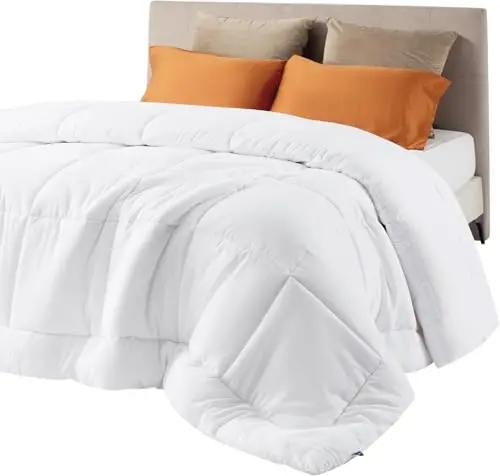
Comforter Duvet Insert – Oeko-TEX Certified All-Season Fill
A box-stitched down-alternative insert with a polyester shell that carries an OEKO-TEX designation, eight corner tabs, and a fill weight aimed at year-round use. Designed to work either as a standalone comforter or inside a duvet cover.

Ultra-Soft Comforter Set – Hypoallergenic With Matching Shams
A complete set rather than a bare insert: a box-stitched down-alternative comforter plus two matching shams, built on double-brushed microfiber with a plush fill. The listing describes the fill as hypoallergenic and the set as fully machine washable.

Duvet Insert – Simple Washable Down Alternative
A plain, box-stitched down-alternative insert in white with built-in corner tabs and piped edges. Nothing decorative – it’s meant to disappear inside a duvet cover and go through the wash without fuss.
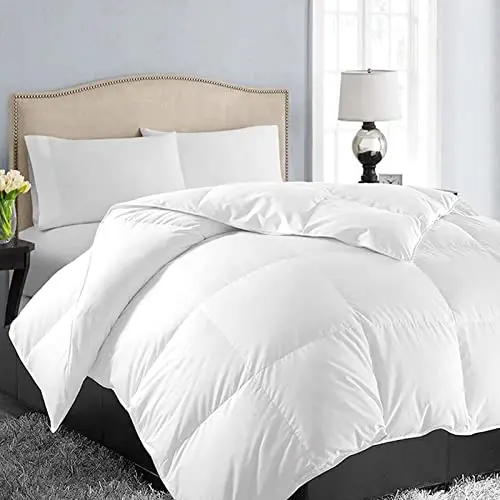
Quilted Duvet Insert – Brushed Cover, All-Season Fill
A brushed-polyester duvet insert with box quilting and a whole-piece polyester fill. It’s cut at 88 by 88 inches and finishes with hemmed edges and corner tabs for securing a cover.

Organic Cotton Duvet Insert – Feather-Down Luxury
A premium feather-and-down-fiber duvet insert with an unbleached, undyed organic cotton cover, baffle-box construction, and eight corner ties. Built for people who want the traditional feather feel alongside documented material standards.

All-Season Duvet Insert – Lightweight Microfiber Comfort
A lightweight microfiber duvet insert cut at 88 by 92 inches, with box stitching, four sewn corner loops, and a synthetic down-alternative fill. Designed for year-round use with a bias toward warmer sleepers.
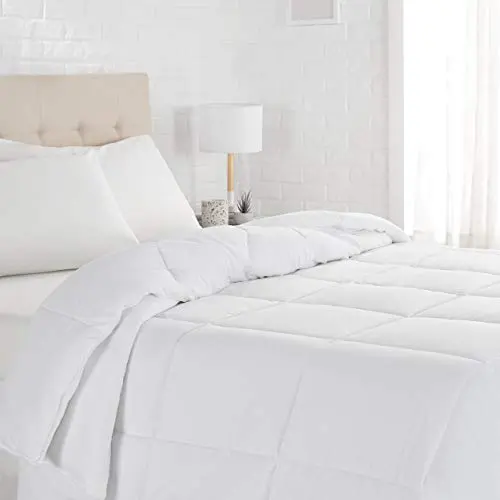
Down Alternative Comforter – Lightweight Everyday Insert
A lightweight down-alternative comforter and duvet insert with a 100% polyester shell, corner tabs, and a full/queen cut at 88 by 88 inches. It arrives vacuum-sealed and needs a day to decompress.
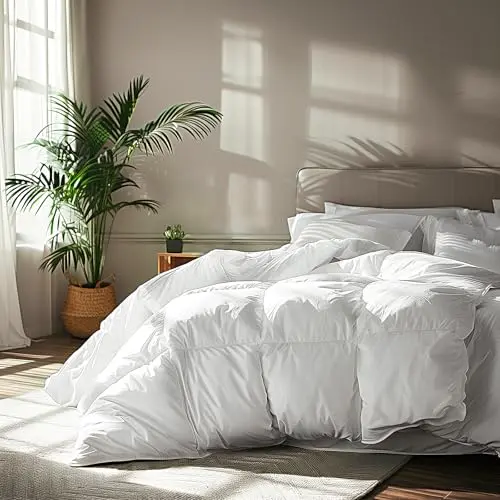
Goose Feather Down Fiber Comforter – Hotel-Style Cotton Cover
A hotel-style comforter filled with goose feather fiber and goose down fiber, wrapped in a 100% cotton cover. The fill goes through Serta’s FreshLoft hypoallergenic processing and carries OEKO-TEX certification.
How We Evaluated These Duvets for Allergies
We didn’t run dust-mite allergen assays or lab sleep trials. What we did: cross-referenced eight duvet inserts and comforter sets from eight distinct brands across six decision axes – fill material, shell fabric and weave, certification status, care instructions and wash temperature, warmth and breathability, and available sizing. Where a listing leaned on the word hypoallergenic, we checked whether the claim pointed to a named certification or to a described process, and treated those two things very differently.
We triangulated published specifications, care labels, third-party certification references, and aggregated owner feedback where available, then mapped each option against the actual routine of an allergy-prone sleeper: cover off, cover washed, insert laundered, bed remade. Anything that undercut that loop – dry-clean-only care, split care guidance, or a single-size cut – got flagged rather than smoothed over.
The scoring framework weighted real-world fit for allergy management (70%) against feature differentiation (30%) – certifications, tab and loop counts, size range, and construction details that separate one insert from another. We have no commercial relationship with any of these brands; recommendations track fit and differentiation, not brand preference. If you want the safest all-round starting point, the Bedsure Comforter Duvet Insert is where we’d begin; if a complete set with shams suits your bed better, the Bare Home Comforter Set is the alternative.
How to Choose the Right Duvet for Allergies
1. Dust Mites, Dander, and What an Allergy-Friendly Duvet Actually Does
Most bedding allergies aren’t reactions to the duvet itself. They’re reactions to what lives in it. Dust mites feed on shed skin cells, thrive in warm humid bedding, and their waste is one of the most common indoor allergens. A duvet is a large, warm, porous object that stays on your bed for years, which makes it a reservoir.
So an allergy-friendly duvet isn’t a special product category so much as a set of properties: a tightly woven shell that resists mite passage, a fill that can be laundered rather than dry cleaned, and enough breathability that the bed doesn’t hold moisture. Get those three right and the wording on the box matters a lot less.
2. Down vs. Down Alternative for Allergy-Prone Sleepers
Down has a reputation problem it only partly deserves. Genuine feather dander allergy exists, but it’s less common than people assume – most reactions trace back to dust mites living in the fill. What down does do is create an inviting structure for them, and cheaper down shells can let particles pass through.
Down alternative – polyester fiberfill – sidesteps the whole question. It’s synthetic, it washes well, and there’s no feather or dander component to react to. That’s why most of our picks use it. If you want the natural-fiber feel anyway, choose a certified option: the APSMILE Organic Cotton Duvet Insert pairs an OCS organic cotton cover with OEKO-TEX Standard 100 compliance, which is about as much documentation as this category offers. Just weigh that against a feather fill.
3. Washability Is the Feature That Actually Manages Allergens
Washing bedding in hot water is the standard recommendation for reducing dust mites, and no certification substitutes for it. So the first thing to check on any duvet is the care label. Machine washable is the baseline; dry clean only is a genuine problem, because you can’t launder it often enough to matter.
Here’s the wrinkle: many inserts specify cold water and low or no heat to protect the fill. That doesn’t make them useless – a washable cover plus regular laundering of the insert still helps – but it limits the hot-wash step. If that matters to you, look for inserts whose instructions allow warm or hot washing, and treat the label as a buying criterion rather than an afterthought.
4. Certifications Worth Checking on an Allergy-Friendly Duvet
OEKO-TEX Standard 100 is the one to know. It’s a third-party test for harmful substances across the finished product, and it shows up on several picks here. The Organic Content Standard covers the cotton side, verifying organic content in the cover fabric rather than the fill.
What you should treat skeptically is the word hypoallergenic on its own – it isn’t a regulated standard for bedding. It can mean a certified process, or it can mean marketing. The useful question is whether the claim points to a named certification or a described process. Serta’s FreshLoft processing and Bedsure’s OEKO-TEX designation both do; a bare claim doesn’t.
5. Bedsure vs. Bare Home: Two Routes to an Allergy-Friendly Duvet
These two sit closest together in the lineup, and the choice is mostly about format. The Bedsure Comforter Duvet Insert is a single insert with an OEKO-TEX designated shell and eight corner tabs, available across a wide size range including oversized options. It’s designed to live inside a cover you choose yourself.
The Bare Home Comforter Set arrives as a bundle – comforter plus two shams – with a heavier fill and a brushed microfiber surface. It’s the easier one-purchase answer for dressing a whole bed, and the extra loft suits cooler sleepers. But the brushed shell is less breathable than plain cotton, and this listing is a King set.
6. Duvet Weight and Breathability for Allergy-Prone Sleepers
Heat and humidity are what dust mites want, so a duvet that runs hot isn’t doing you any favors. Fill weight is the clearest guide: a light-to-medium polyester fill sits in the middle, warm enough for most of the year without baking you. Just as important is the shell – plain cotton and smooth microfiber breathe differently from double-brushed fabrics, and the difference shows up on a warm night.
If you sleep hot, bias light and look for cotton. If you’re perpetually cold, a heavier fill with a cover you can strip and wash is a better trade than a heavy comforter you can’t launder.
7. What the Price Tiers Actually Buy You in This Category
At the entry tier you get a plain box-stitched polyester insert – genuinely adequate, and affordable enough to keep two in rotation so one is always clean. The mid-range buys better shell fabric, more consistent fill distribution, and often a certification or a warranty. At the premium end you’re paying for natural fibers, documented material standards like OCS and OEKO-TEX, and construction such as baffle boxes.
Worth saying plainly: for allergy management specifically, a washable mid-range insert you launder regularly beats a premium one you can only dry clean.
Frequently Asked Questions
1. Are down duvets bad for allergies?
Not inherently, and the reputation is a bit unfair. True feather dander allergy is uncommon; the more frequent problem is that down clusters create cozy pockets for dust mites, and older or loosely woven shells let particles through. A tightly woven, certified down duvet that you can actually launder is a different proposition from a decades-old featherbed.
That said, down alternative is the lower-risk default – polyester fill is fully synthetic, holds up to washing, and removes the feather question entirely. If you want natural fill anyway, prioritize a certified shell and a care label that allows real laundering rather than dry cleaning.
2. What's the difference between the Bedsure comforter and the Bare Home comforter set?
Both are box-stitched synthetic inserts with a soft hand, so the split comes down to format. The Bedsure Comforter Duvet Insert is a single insert with an OEKO-TEX designated shell and eight corner tabs, sold across a wide range of sizes up to oversized king – the better choice if you already have a cover and want control over the styling.
The Bare Home Comforter Set bundles two matching shams and lands at a heavier fill, but it’s sold here as a King set in grey. If you want the bed dressed in one purchase and don’t mind a brushed microfiber surface, Bare Home is the simpler buy; for a Queen bed or a cover you already own, Bedsure is the pick.
3. How does the EASELAND insert compare with the Utopia Bedding duvet insert?
Same category, different personalities. The EASELAND uses a brushed cover with a whole-piece fill, so it feels softer and holds loft more evenly – the better pick if you want the insert itself to feel nice against skin. The Utopia Bedding insert is plainer and lighter, with a loft that reads more like a standard comforter.
On allergy specifics, neither carries a named certification, so you’re choosing on construction and how often you’ll realistically wash. EASELAND’s reinforced stitching gives it a slight edge for repeated laundering; Utopia’s lower tier makes it easier to buy two and rotate them.
4. Do I need a duvet cover if I have allergies?
Yes – arguably more than anyone else. A cover is the washable barrier between you and the insert, and it’s far easier to launder weekly than a queen comforter. Look for a tightly woven cotton cover, which blocks mite passage better than an open weave, and choose one that closes fully rather than an open-ended style.
Then wash the cover weekly and the insert itself every month or two, following its care label. That rotation is what actually keeps the allergen load down over time.
5. How often should I wash my duvet if I have allergies?
Weekly for the cover, and every four to eight weeks for the insert itself, assuming the care label allows it. Washing at a hot temperature is the standard recommendation for mite reduction, but many inserts specify cold water and low heat – so check the label first and choose a machine-washable insert at the point of purchase rather than discovering the limitation later.
If your insert is dry-clean-only, that’s a standing disadvantage for allergy management. Plan on a washable cover doing most of the work, and consider replacing a non-washable insert rather than fighting it.
Final Verdict
For most allergy-prone sleepers, the Bedsure Comforter Duvet Insert is the answer – an OEKO-TEX designated shell, eight corner tabs, and a fill that survives regular laundering without turning lumpy. It’s the balance point between certification and washability, and it’s the one we’d point a friend toward.
If budget is the constraint, the Amazon Basics Down Alternative Comforter gets you warm-wash care and a warranty at the entry tier, and two in rotation beats one expensive insert. Want the whole bed dressed in one order? The Bare Home Comforter Set brings shams and a heavier loft. And if you’re set on natural fibers and documented standards, the APSMILE Organic Cotton Duvet Insert is the premium route – just confirm feather fill agrees with you first.
