
Best Electric Percolator Coffee Makers – 2026 Reviews

Percolator coffee has a way of announcing itself before you take a sip. The burble, the steam, the slightly theatrical wait – it’s not the fastest way to make coffee, but it’s one of the most satisfying. The catch is that not every electric percolator earns counter space. Some brew hot but turn bitter, some keep warmth for hours, and some start leaking well before the honeymoon is over.
The useful split in this market isn’t brand versus brand; it’s how each electric model handles the basics: capacity, brew speed, keep-warm behavior, and how much plastic touches the coffee. Electric percolators also vary in whether they feel like a simple pot or a small appliance with timers and strength settings.
We looked across the category to find models that make sense for different kitchens, from a four-cup countertop pot to a 12-cup crowd brewer and a commercial urn for events. Here’s how they sort out.
Best Electric Percolator Coffee Makers – 2026 Reviews

02811 12-Cup Stainless Steel – Classic Crowd Percolator
A classic stainless steel percolator sized for a full pot, with a ready light, automatic temperature control, and an easy-pour spout. It’s the straightforward electric percolator to beat for most households.
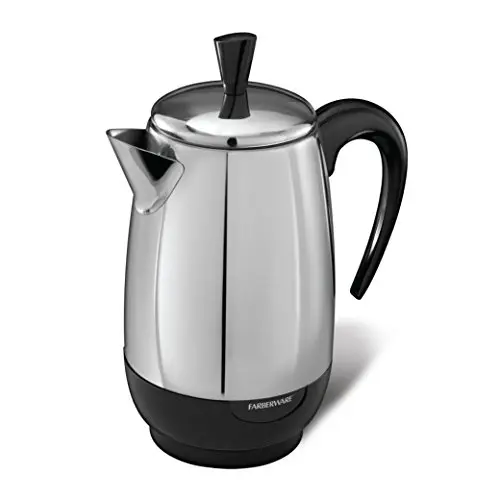
FCP280 8-Cup – Stainless Steel Everyday Percolator
An 8-cup stainless steel percolator with a no-drip spout, detachable cord, and automatic keep-warm. It’s a practical middle-ground pot for daily coffee without a lot of controls.

54159 12-Cup Classic – Detachable-Cord Percolator
A 12-cup classic-style percolator with a stainless steel stem and basket, ready light, coffee-level indicator, and detachable cord. It’s built for a full pot and a crowd.
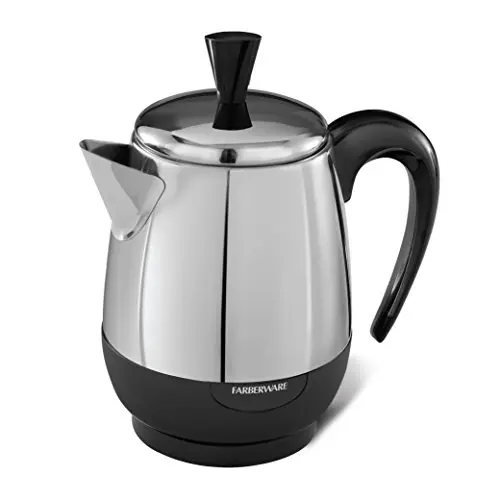
FCP240 4-Cup – Compact Quick-Brew Percolator
A compact 4-cup stainless steel percolator with a cool-touch handle, automatic keep-warm, and quick brewing. It’s sized for one or two people and small counters.

EPLTR-8MS 10-Cup – Stainless Steel Office Percolator
A 10-cup stainless steel electric percolator with a removable filter basket, cool-touch handle, ready light, and keep-warm function. It’s a budget-friendly office or home pot.

Coffee Urn – 100-Cup Commercial Percolator
A commercial-style 100-cup coffee urn with double-wall stainless steel, a two-way pour faucet, and keep-warm indicator. It’s built for events, offices, and large gatherings rather than daily countertop use.
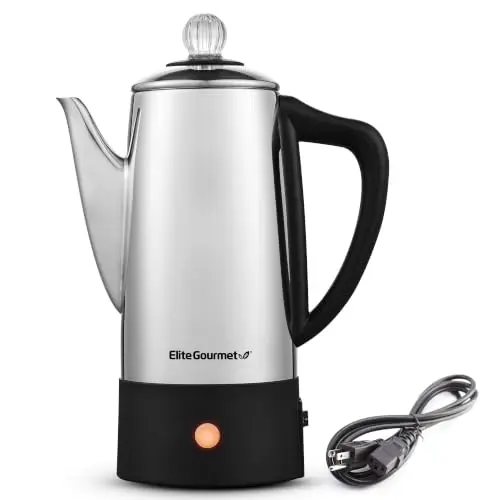
EC140 6-Cup – Compact Safety-First Percolator
A 6-cup stainless steel percolator with 1000W brewing, automatic keep-warm, auto shut-off, boil-dry protection, and cordless serving from a 360-degree base. It’s a compact pot with safety features.
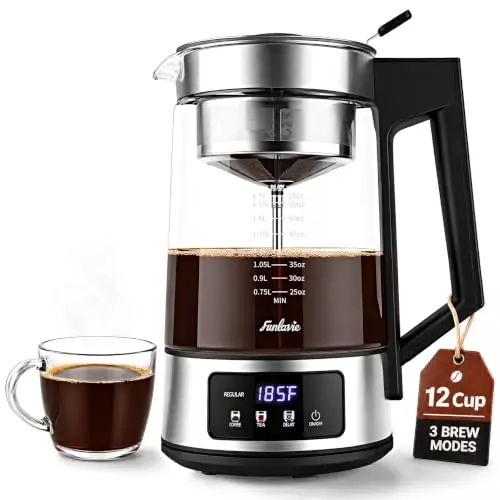
OMT-PC1058 12-Cup – Programmable Brew-Strength Percolator
A 12-cup electric percolator with three brew-strength settings, a 24-hour delay timer, eight-hour keep-warm, and a borosilicate glass carafe. It’s the most programmable pot in this lineup.
How We Evaluated These Electric Percolator Coffee Makers
We didn’t run controlled brew-temperature tests or long-term durability trials. What we did: cross-referenced 8 electric percolator coffee maker models from 8 distinct brands across 6 decision axes – capacity, wattage and brew speed, keep-warm behavior, materials and plastic contact, cleanup, and durability signals. We triangulated published specifications, feature sets, and owner feedback where available, then mapped each pot against representative buyer profiles for this category.
The scoring framework weighted real-world performance (70%) – how well each electric percolator delivers hot, full-flavored coffee and holds it at serving temperature – against feature differentiation (30%) – unique controls, safety systems, and use-case specificity. We audited capacity claims against cup-size math, weighed stainless versus plastic contact points, and pressure-tested each recommendation against the realities of daily use. We have no commercial relationship with any of the brands featured; recommendations track fit and differentiation, not brand preference. If you want the safest all-around full-pot pick, the Presto 02811 is the one to beat. If you want a smaller, simpler pot, the Farberware FCP280 makes more sense.
Because percolator coffee is sensitive to grind and basket design, we paid close attention to whether each model uses a reusable stainless basket or a plastic-heavy path. We also considered footprint and serving ergonomics, since a pot that is awkward to pour gets used less often. The result is a lineup sorted by real-world fit rather than spec-sheet bragging rights.
How to Choose the Right Electric Percolator Coffee Maker
1. What Makes an Electric Percolator Different From a Stovetop Pot
An electric percolator does the same cyclical brewing dance as a stovetop pot, but it brings its own heating element, cord, and usually an automatic keep-warm mode. That convenience is the main draw: you fill the basket, add water, plug it in, and wait for the light. A stovetop percolator needs a burner and a little more attention, but it can go camping or work during a power outage. For countertop coffee, the electric version is the more practical choice.
2. Capacity and Cup Math: Match the Brew Size to Your Household
Percolator capacity is usually stated in five-ounce cups, not big mugs. An 8-cup pot is closer to four generous mugs, while a 12-cup model is a full table pot. If you mostly brew for one or two, a compact 4-cup electric percolator like the Black+Decker FCP240 cuts waste and counter clutter. For a family or a shared office pot, step up to 10- or 12-cup capacity so you’re not brewing twice.
3. Brew Speed, Wattage, and Keep-Warm Behavior
Most electric percolators brew at roughly one cup per minute, but wattage and pot size still affect how quickly you get to that first pour. A 1000-watt compact pot can feel faster than a larger 800-watt model simply because there’s less water to heat. Keep-warm behavior matters just as much: a good pot holds coffee at serving temperature without cooking it into bitterness. If you want a mid-size pot with automatic keep-warm and a detachable cord, the Farberware FCP280 is the value-oriented route.
4. Stainless Steel, Plastic Contact, and Cleanup
The brew path is where materials earn their keep. A stainless steel basket and stem are easier to rinse and avoid the plastic-heavy taste some drinkers notice in cheaper pots. Plastic lids, knobs, and handles are common and not automatically a problem, but they shouldn’t be the main contact surface for hot coffee. If dishwasher convenience matters, check which parts are top-rack safe rather than assuming the whole pot can go in.
5. Durability Signals and Warranty Coverage in Electric Percolators
Percolators live in a hot, wet environment, so weak points tend to show up at the base connection, sight glass, and heating element. A one-year warranty is common; a lifetime guarantee is rare and worth reading closely. Simple pots with fewer electronics usually have less to fail, while programmable models add convenience and more potential fault points. For a full-size pot with a simple service path, the Presto 02811 is the safer bet.
6. When a Coffee Urn Makes More Sense Than a Countertop Percolator
If you’re serving a meeting, reception, or holiday crowd, a countertop percolator runs out fast. A 100-cup coffee urn with a two-way faucet and double-wall insulation keeps refills moving without brewing pot after pot. It’s overkill for daily coffee and takes up storage space, but for events it’s the difference between hosting and scrambling. The Zulay 100-cup urn is the purpose-built option here.
Frequently Asked Questions
1. Presto 02811 vs Farberware FCP280: Which electric percolator fits a daily routine?
Go with the Presto 02811 if you want a 12-cup full-pot brewer with a ready light and a strong all-around reputation. It’s the better fit for households that finish a pot or regularly serve guests. Choose the Farberware FCP280 if 8-cup capacity, a detachable cord, and a no-drip spout matter more than maximum volume. The Farberware is easier to move around; the Presto is the more natural crowd pot.
2. Black+Decker FCP240 vs Elite Gourmet EC140: Which compact electric percolator is better for small batches?
The Black+Decker FCP240 is the simpler small-batch choice, with a 4-cup capacity, a cool-touch handle, and straightforward keep-warm operation. The Elite Gourmet EC140 adds auto shut-off and boil-dry protection, plus cordless serving from a swivel base, but its durability record is less reassuring. If safety features are the priority, the Elite is tempting; if you want fewer things to go wrong, the Black+Decker is the safer compact pick.
3. Are electric percolators actually better than drip coffee makers for bold coffee?
Not universally. An electric percolator circulates hot water through the grounds repeatedly, which can produce a stronger, fuller-bodied cup than a standard drip machine. That same cycle makes it less forgiving: too fine a grind or too long on the keep-warm plate can turn the coffee bitter. Drip makers are better at set-and-forget consistency; percolators are better for drinkers who like a robust, old-school cup and don’t mind a little attention.
4. How do you keep percolated coffee from turning bitter?
Start with a coarse grind meant for percolators, and don’t overfill the basket. Percolators recirculate coffee, so too much heat for too long is the usual culprit. Use the keep-warm mode rather than a rolling boil, and decant leftovers if your pot holds coffee on heat for hours. A stainless steel basket that’s rinsed promptly also helps keep old oils from building up.
5. Can a 100-cup coffee urn work for a home gathering?
Yes, if the gathering is genuinely large. A 100-cup urn is built for self-serve events, with a two-way faucet and insulation that keeps coffee hot while people cycle through. For a small dinner party it’s too much appliance and too much storage. Rent or borrow one for occasional events; buy one only if you host meetings, receptions, or big family gatherings regularly.
Final Verdict
For most buyers, the Presto 02811 is the answer – it nails full-pot capacity, heat retention, and simple serving without a learning curve. If you want a smaller pot with a detachable cord and straightforward stainless construction, the Farberware FCP280 is the value pick. For one or two drinkers or a tight counter, the Black+Decker FCP240 is the compact route. And if you’re serving a room rather than a table, the Zulay 100-cup urn is purpose-built for the job. Match the pot to your daily cup count first; everything else is secondary. None of these pots need a barista skill set; the right one is simply the size and feature set that fits your morning.
