
Best Energy Star Dehumidifiers – 2026 Reviews

That first warm, rainy week of spring has a way of announcing itself in the basement: a faint musty smell, condensation on the cold-water pipe, and a hygrometer creeping past 60%. A dehumidifier is the obvious fix, but the Energy Star label on the box doesn’t tell you whether a unit is sized for a damp crawlspace or a 6,000-square-foot basement.
The useful split in this category is between real moisture-removal capacity and livability. A high pint rating matters, but so do drainage, noise, auto-defrost behavior, and whether the tank is big enough to avoid constant emptying. Energy Star certification is a starting filter, not a finish line.
We compared the market across brands and room sizes to find the Energy Star dehumidifiers that make sense for different basements, bedrooms, and utility spaces. The goal is simple: match the machine to the moisture problem, not the marketing copy.
Best Energy Star Dehumidifiers – 2026 Reviews
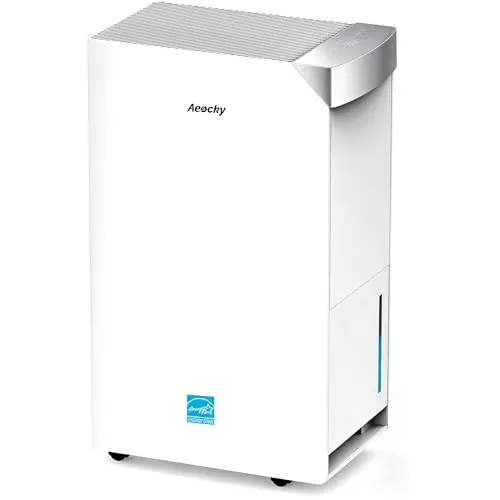
LEO-Lite – Energy Star 6.0 Basement Workhorse
A 74-pint Energy Star Version 6.0 unit built for basements up to 5,000 sq. ft. The LEO-Lite pairs a rotary compressor, auto-defrost, and a 1.45-gallon tank with drain-hose support, plus power-off memory for smart plugs.

JD025CE-120 – High-Capacity Basement Coverage
A 120-pint Energy Star dehumidifier for very large basements and whole-home coverage up to 6,000 sq. ft. It adds 90-degree auto-swing airflow, a wide 30%-80% RH range, and both tank and hose drainage.

DryPrime-35-WP – Replaceable-Pump Basement Dehumidifier
A 75-pint Energy Star dehumidifier with a removable, cleanable pump and a 16.5-foot drain hose. Four modes, auto shut-off/restart, and a 1.45-gallon tank make it a practical basement option.
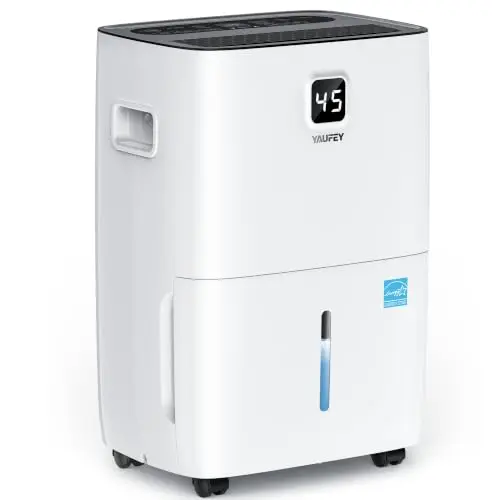
JD025Q-80 – 80-Pint Whole-Room Dehumidifier
An 80-pint Energy Star dehumidifier for rooms up to 5,500 sq. ft. It offers four modes, three fan speeds, a 1.06-gallon tank, and an included drain hose for continuous gravity drainage.
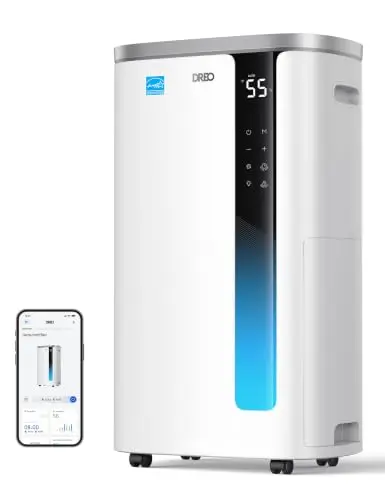
DR-HDH003S – Smart 75-Pint Quiet Dehumidifier
A 75-pint Energy Star smart dehumidifier for large rooms up to 4,500 sq. ft. The 1.85-gallon tank, 41 dB operation, app energy monitoring, and three fan speeds make it a strong livability pick.
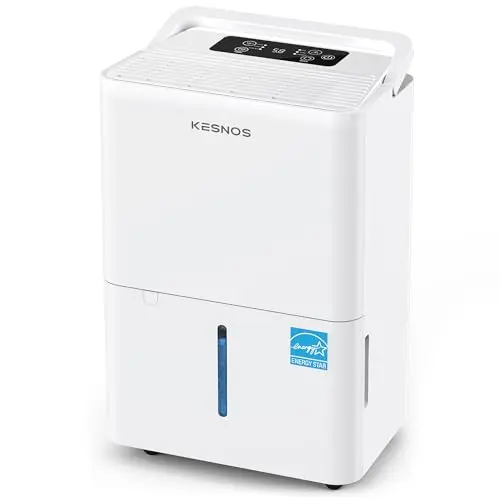
CTH30B – Compact Ultra-Quiet Dehumidifier
A compact 30-pint Energy Star dehumidifier for medium spaces up to 2,500 sq. ft. It runs at a low 36 dB, offers four preset modes, and includes a drain hose for continuous use.

MAD22C1AWS – Smart Small-Space Dehumidifier
A 22-pint Energy Star dehumidifier for smaller spaces up to 1,500 sq. ft. Wi-Fi, Alexa and Google Assistant control, a 0.8-gallon tank, and simple hose drainage make it an easy smart-home fit.
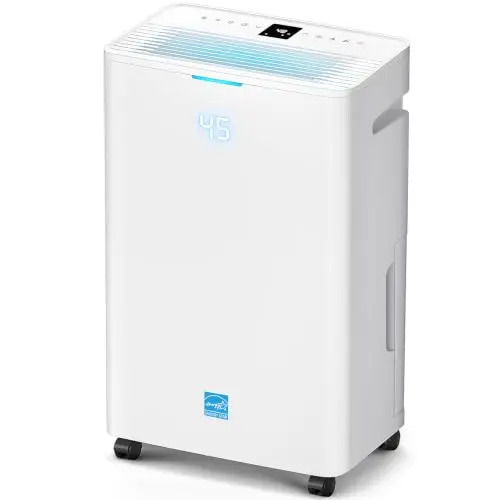
V2 – Quiet Multi-Mode Dehumidifier
A 45-to-80-pint Energy Star dehumidifier for spaces up to 4,500 sq. ft. It includes a 1.72-gallon tank, drain hose, five modes, child lock, and a quiet 40 dB sleep mode.
How We Evaluated These Energy Star Dehumidifiers
We didn’t replicate a flooded-basement test or run controlled moisture-removal trials. What we did: cross-referenced 8 Energy Star dehumidifier models from 8 distinct brands across 6 decision axes – rated pint capacity, square-footage coverage, energy certification, drainage setup, noise level, and daily livability. We triangulated published specifications, feature sets, and owner feedback where available, then mapped each unit to basement, bedroom, bathroom, and whole-home use cases.
The scoring framework weighted real-world fit and performance (70%) – how well each model matches its stated room size and drainage needs – against feature differentiation (30%) – certification level, pump or hose flexibility, smart controls, and cold-weather operation. We have no commercial relationship with these brands; recommendations track fit and differentiation, not brand preference. If you want the most complete basement package, the AEOCKY LEO-Lite is the strongest match; if sheer capacity matters more, the Waykar JD025CE-120 is the one to compare against.
We paid close attention to whether the Energy Star claim sits alongside useful real-world specs: a credible pint rating, a workable tank, and a drainage path that matches the space. A rating here is a shopping signal, not a lab result. A unit that suits a damp 1,500-square-foot basement is not the same purchase as one for a 6,000-square-foot commercial space, and we scored accordingly.
How to Choose the Right Energy Star Dehumidifiers
1. What Energy Star Certification Actually Means for a Dehumidifier
Energy Star certification is an efficiency threshold, not a capacity rating. A certified compact unit and a certified high-capacity basement model can both qualify while solving very different moisture problems. The label tells you the dehumidifier meets a federal efficiency standard; it does not tell you how many pints it will pull from your space in cool, real-world conditions.
Pay attention to the certification version and the pint capacity together. A newer Version 6.0 model may have an edge in efficiency, but a larger unit that runs less often can still be the better match for a wet basement. Use the label as a filter, then compare rated moisture removal, tank size, and drainage.
2. Match Pint Capacity to Square Footage and Dampness
Dehumidifier pints are usually rated at a hot, humid test condition such as 95°F and 90% RH. A cool basement will not hit that number, so treat rated pint capacity as a ceiling rather than a daily promise. Match square-footage coverage to the space, then add margin if the basement smells musty, has visible seepage, or stores paper and fabric.
A 30-pint unit can be right for a bedroom or small basement, while a 75- to 120-pint model makes more sense for a large, open basement or a whole-home application. If you are sizing a roughly 5,000-square-foot basement, the Yaufey JD025Q-80 is a sensible benchmark. Do not buy on pint count alone if the tank is tiny and the room has no drain.
3. Drainage Options: Tank, Gravity Hose, or Built-In Pump
Drainage is where daily ownership lives. A tank capacity around one gallon is common, but a wet basement can fill it fast. Continuous gravity drainage works well when you have a floor drain or a low exterior outlet; it is simple and reliable. A built-in pump is the better answer when condensate must travel up a wall or across a ceiling.
If you need uphill drainage, the Gasbye DryPrime-35-WP is the pick here because its pump is removable for cleaning and replacement. Otherwise, prioritize a unit with a hose connection and an auto shut-off that protects the floor when the tank fills.
4. Noise, Placement, and Daily Livability
Noise specs are not perfectly comparable across brands, but they are still useful. A unit rated around 41 dB operation is easier to live near than one that announces every compressor cycle. Place the dehumidifier away from walls and furniture so airflow is not blocked, and choose a model with caster wheels if you plan to move it between rooms.
Look for auto-defrost if the space runs cool, auto restart after power outages, and a washable filter that is easy to reach. If quiet operation is near the top of your list, the DREO DR-HDH003S is the one to shortlist. In a bedroom or finished basement, livability can matter as much as raw pint capacity.
5. Energy Star Dehumidifier Brands Compared: Efficiency vs. Capacity
The market splits into compact bedroom models and high-capacity basement units. Energy Star certification appears across all three tiers, so the real question is whether the unit matches your space and drainage setup. Pump-equipped designs cost more but solve a specific installation problem; gravity-drain models are simpler and often enough.
Compare rated capacity, tank size, noise, and coverage window before brand name. A well-matched mid-size dehumidifier can outperform an oversized unit that cycles awkwardly in a small room. If the space is large and consistently damp, prioritize capacity and continuous drainage; if it is small and noise-sensitive, prioritize low dB and a manageable footprint.
Frequently Asked Questions
1. Are all Energy Star dehumidifiers equally efficient?
No. Certification is a threshold, not a ranking. Pint capacity, compressor design, fan speeds, and defrost logic all affect real energy use. A model built to a newer Version 6.0 standard may have an efficiency edge, but it still has to be sized to the room. The AEOCKY LEO-Lite is a good example of a newer certified design; compare its capacity and drainage against your space before assuming the label alone decides.
2. What's the difference between the AEOCKY LEO-Lite and Waykar JD025CE-120?
The LEO-Lite is a 74-pint unit aimed at up to 5,000 square feet with auto-defrost, low-fan operation, and a longer coverage window. The Waykar JD025CE-120 is the higher-volume option at 120 pints and up to 6,000 square feet, with 90-degree auto swing and a 30%-80% RH range. Choose the Waykar JD025CE-120 for a large, wet basement; choose the LEO-Lite for strong capacity with a longer coverage window and simpler placement.
3. How does the Gasbye DryPrime-35-WP compare with the DREO DR-HDH003S?
Both are 75-pint class units with different strengths. The Gasbye DryPrime-35-WP prioritizes replaceable pump drainage and a 16.5-foot hose, so it is the better fit when condensate must be pushed uphill. The DREO DR-HDH003S leans into 41 dB operation, a 1.85-gallon tank, and app energy monitoring. Choose Gasbye for installation flexibility; choose DREO for quiet smart-home convenience.
4. Do I need a pump or is gravity drainage enough?
Gravity drainage is enough when you have a floor drain, sink, or low exterior outlet nearby. A built-in pump matters when the dehumidifier sits in a basement without a drain or must lift water up a wall. Look for a replaceable pump if you want easier maintenance, and always keep the tank auto shut-off working as a backup. For a simple setup, a gravity hose is the least fussy choice.
5. How often should I empty a dehumidifier tank?
It depends on pint capacity, tank size, and how damp the room is. In a wet basement, a 0.8-gallon tank may need daily attention, while a 1.85-gallon tank can stretch longer. If you do not want to monitor it, use continuous drainage; if you do, choose a tank that is easy to remove and carry.
Final Verdict
For most buyers, the AEOCKY LEO-Lite is the best overall Energy Star dehumidifier because it combines serious basement capacity with auto-defrost, a longer coverage window, and manageable noise. If you’re drying a very large or consistently wet space, the Waykar JD025CE-120 gives you more raw capacity and auto-swing airflow. For a bedroom or smaller basement, the Kesnos CTH30B is the quiet compact pick, while the Gasbye DryPrime-35-WP makes sense when you need to push water uphill through a serviceable pump. Choose by room size and drainage first; the Energy Star label is the baseline, not the whole decision.
