
Best Entry Espresso Machines – 2026 Reviews

The first espresso machine is a strange purchase: you want cafe-style shots, but you’re also signing up for a learning curve. Entry machines sit in that tension. They need to be forgiving enough for a beginner, yet capable enough that you don’t outgrow them in a month.
The two axes that separate a good entry espresso machine from a frustrating one are temperature stability and workflow forgiveness. A machine that overheats, runs cold, or demands perfect tamping before it produces anything drinkable will make you quit. A machine with steady heat and a usable steam wand lets you improve one variable at a time.
We looked across the market at manual, semi-automatic, and pod-based options to find the entry points that make sense for different routines. The goal isn’t the cheapest machine or the most feature-packed one; it’s the one that matches how much hands-on effort you actually want to invest.
Best Entry Espresso Machines – 2026 Reviews
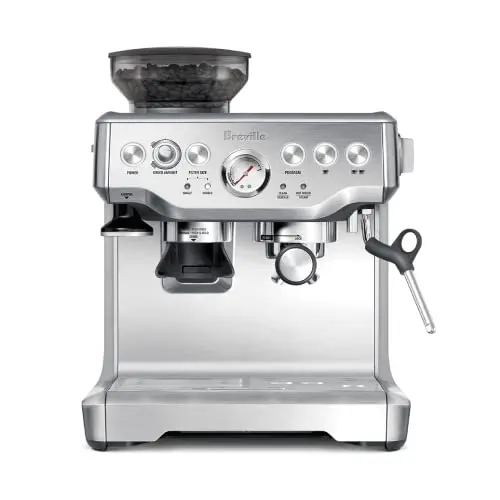
Barista Express BES870XL – All-in-One Bean-to-Cup Starter
A bean-to-cup entry machine with an integrated conical burr grinder, PID temperature control, low-pressure pre-infusion, and a manual steam wand for microfoam.
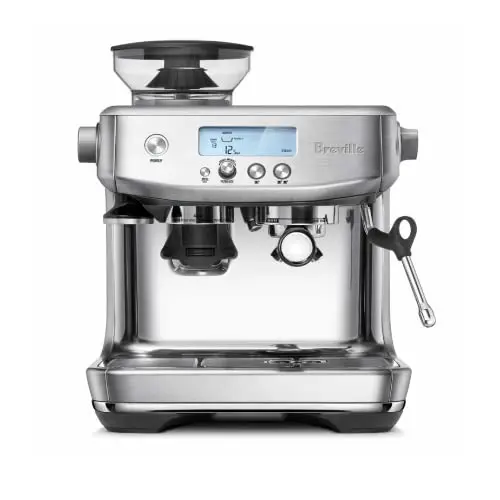
Barista Pro BES878BSS – Faster Heat and LCD Guidance
A faster-heating Barista-series machine with ThermoJet, PID control, LCD guidance, an integrated grinder, and a manual steam wand.
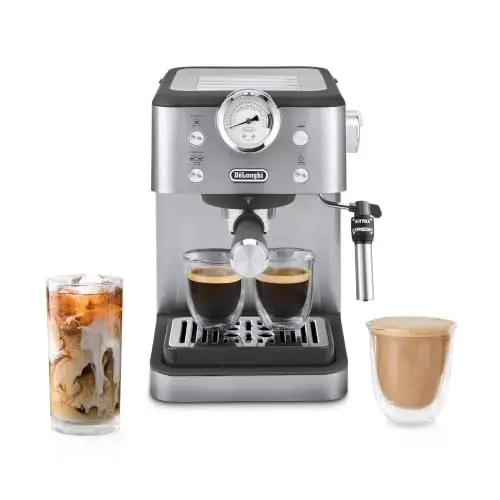
Classic Signature EM450M – Rapid-Heat Beginner Espresso
A compact 15-bar espresso machine with Thermoblock rapid heat-up, an adjustable two-setting steam wand, and preset single or double shots.
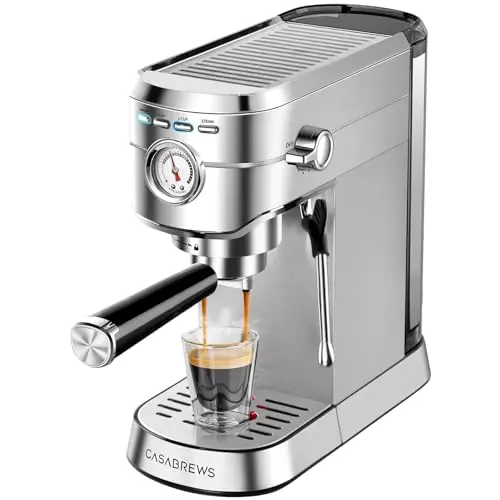
CM5418 – Compact 20-Bar Espresso with Pressure Gauge
A compact 20-bar semi-automatic with a built-in pressure gauge, powerful steam wand, and 34-ounce removable water tank.
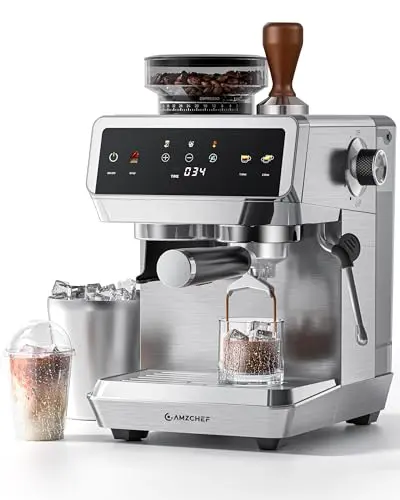
CM1626 – Built-In Grinder and Temperature Control
A semi-automatic espresso machine with a built-in grinder, 44 grind settings, 190-201°F temperature control, cold brew mode, and a touch screen.

Stilosa EC260BK – Simple Manual Espresso Starter
A simple manual espresso machine with a 15-bar pump, stainless steel boiler, manual steam wand, and compact footprint.
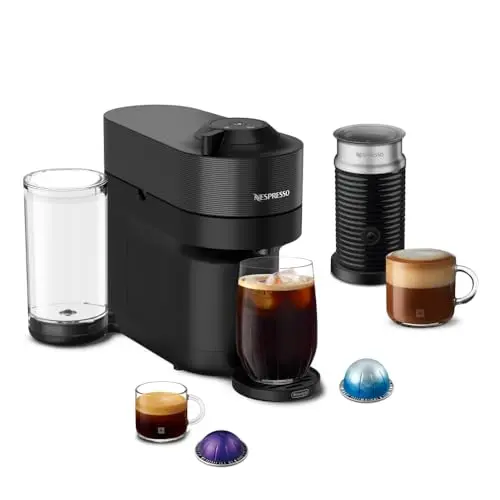
Vertuo Pop+ with Aeroccino – Pod-Based Espresso Convenience
A pod-based coffee and espresso machine with one-touch brewing, a compact footprint, and a bundled Aeroccino3 milk frother.
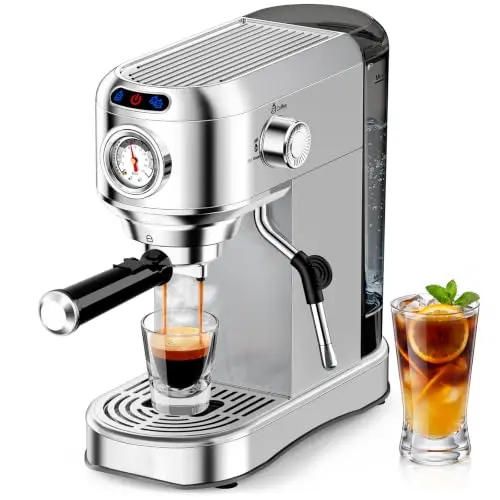
ST-699B – Slim 20-Bar Espresso with Steam Wand
A slim 20-bar semi-automatic espresso machine with a visible pressure gauge, powerful steam wand, and 34-ounce removable water tank.

3700 Essential – Budget-Friendly 20-Bar Compact
A budget-friendly 20-bar semi-automatic with a powerful steam wand, 43.9-ounce removable water tank, and compact stainless-steel body.
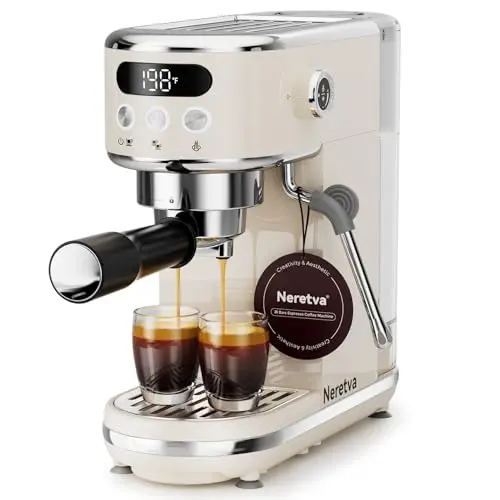
Neretva 20 Bar – Compact Espresso with LED Display
A compact 20-bar semi-automatic with an LED temperature display, pre-infusion, powerful steam wand, and 1.3-liter water tank.
How We Evaluated These Entry Espresso Machines
We didn’t pull side-by-side shots in a test kitchen or measure extraction yield with a refractometer. What we did: cross-referenced 10 entry espresso machine models from 7 distinct brands across six decision axes – ease of use, milk-frothing control, temperature and pressure consistency, grinder integration, footprint, and cleanup routine. We also weighed how much counter space each machine takes and how much of the brew routine can be repeated without guesswork. We triangulated published specifications, feature sets, and owner feedback where available, then mapped each machine to a first-time shopper profile.
The scoring framework weighted real-world fit (70%) – how forgiving the workflow feels, how repeatable the shots are, and how much milk-drink range the steam wand supports – against feature differentiation (30%) – built-in grinders, pressure gauges, preset dosing, and other conveniences that separate one entry machine from another. We audited included accessories and maintenance requirements, too, because a machine that’s hard to clean stops being convenient fast. We pressure-tested the specs against real-world workflows and looked for features that actually change the daily routine, not just the spec sheet. We have no commercial relationship with any of the brands featured; recommendations track fit and differentiation, not brand preference. If you want the most complete bean-to-cup start, the Barista Express is the pick; if faster heat-up and a clearer interface matter more, the Barista Pro makes the stronger case.
How to Choose the Right Entry Espresso Machine
1. What Makes an Espresso Machine Truly Entry-Level?
An entry-level espresso machine is not simply the cheapest machine on the shelf. It’s the one that gives a beginner a forgiving workflow: steady brew temperature, predictable pressure, and a usable steam wand that doesn’t fight you. The best entry machines make it easy to change one variable at a time – grind, dose, tamp – so you can taste what went wrong and correct it.
Look for consistent temperature control and a usable steam wand before you look at flashy screens. A machine that pulls a stable shot and textures milk reliably will teach you more than one with extra presets and a wobbly temperature curve.
2. Manual, Semi-Automatic, or Pod: Which Entry Espresso Machine Fits Your Routine?
A manual machine gives you the most control and the steepest learning curve; you grind, dose, tamp, and stop the shot yourself. A semi-automatic adds a pump and often a steam wand but still asks you to manage the puck. A pod machine removes almost all of that work in exchange for capsule lock-in. If convenience is the priority, the Vertuo Pop+ is the pod-based pick; if you want to learn the craft, start with a manual or semi-automatic.
3. Milk Frothing: Steam Wand vs. Automatic Frother
A manual steam wand takes practice, but it gives you control over microfoam texture for latte art and flat whites. An automatic frother is more consistent for busy mornings, especially if you make cold foam or multiple drinks. The trade-off is control versus convenience. For the steepest learning curve with the most reward, the Barista Express is the machine we’d choose; for push-button foam, a bundled frother like the one on the Vertuo Pop+ is easier.
4. Grinder or No Grinder? The Biggest Entry Espresso Machine Decision
A built-in grinder saves counter space and makes the bean-to-cup routine faster, but it adds cost and another component to clean. A separate burr grinder usually gives you more adjustability and easier upgrades, while pre-ground coffee is the simplest path but limits freshness. If you want a built-in grinder without stepping into premium territory, the CM1626 is the value route. If you already own a grinder, a machine like the Stilosa keeps the espresso side simple.
5. Temperature Stability, Pressure, and Portafilter Size
PID temperature control is the feature to look for if you want repeatable shots; it holds the brew temperature steadier than a simple thermostat. A 15-bar pump is enough for most entry machines, while a 20-bar pump is common on budget models and can help with pre-infusion and crema, though puck prep still matters more than the headline number. Portafilter size also affects workflow: a 54mm portafilter gives you more room for a consistent dose than a smaller 51mm basket, but accessories are easier to find for common sizes.
6. Cleaning, Descaling, and Long-Term Ownership
Entry machines are small, but they still need a routine. Descaling removes mineral buildup and keeps temperature and flow stable; how often depends on your water hardness. Backflushing, steam-wand purging, and regular drip-tray cleaning matter more than most shoppers expect. A machine with a removable water tank and accessible drip tray is easier to live with long-term.
Frequently Asked Questions
1. Are entry espresso machines good enough for latte art?
Yes, if they have a real steam wand and enough practice time. The limiting factor is usually technique, not the machine: you need silky microfoam, a clean steam wand, and milk that’s cold when you start. A machine like the Barista Express has a powerful wand, but it still takes repetition to get latte art pours. Pod machines with a separate frother can make good foam, but they give you less control over texture and temperature.
2. Breville Barista Express vs De'Longhi Classic Signature: Which entry espresso machine is better for milk drinks?
The Barista Express is the stronger choice if you want an all-in-one setup with a built-in grinder, PID temperature control, and a manual steam wand for latte art. The Classic Signature is easier on counter space and heats up quickly, but it expects you to supply your own grinder and its adjustable steam wand is less powerful. For most milk-drink beginners who don’t already own a grinder, the Barista Express is the more complete buy.
3. De'Longhi Stilosa vs CASABREWS CM5418: Which compact entry espresso machine is easier to live with?
The Stilosa is simpler and more stripped-down, which makes it a good first manual machine if you already have a grinder. The CM5418 adds a pressure gauge, a 20-bar pump, and a 34-ounce removable water tank, so it gives you more feedback while dialing in. Both are compact, but the CM5418’s gauge is the feature that helps beginners learn faster. If you want the most hand-holding for the least money, the CM5418 is the pick.
4. Do I need a built-in grinder on an entry espresso machine?
Not strictly, but it changes the workflow. A built-in grinder saves space and makes it easier to grind directly into the portafilter, which is why machines like the Barista Express and AMZCHEF CM1626 are popular starting points. A separate burr grinder usually gives you more control and easier upgrades, while pre-ground coffee is the lowest-effort route but goes stale faster. If you value convenience and don’t want another appliance, pay for the built-in grinder.
5. How long does it take to learn an entry espresso machine?
Most people can pull a drinkable shot in a few sessions, but consistent espresso takes longer. Expect to spend time dialing in grind size, dose, and tamp pressure, then repeating the same routine until it’s boring. Milk frothing adds another skill layer. Machines with PID temperature control and a pressure gauge shorten the feedback loop, but no entry machine removes the learning curve entirely.
Final Verdict
For most first-time buyers, the Barista Express is the answer – it pairs a real grinder, steady PID temperature control, and a capable steam wand in one countertop package. If you want faster heat-up and a clearer interface, the Barista Pro is the premium step-up. If budget is the deciding factor, the 3700 Essential gets you 20-bar pressure and a steam wand at the entry tier. And if counter space is tight, the CM5418 packs a pressure gauge and compact body into a smaller footprint. Pick the workflow you’ll actually use, not the spec sheet that looks best on paper.
