
Best Ergonomic Pillows For Side Sleepers – 2026 Reviews

Side sleeping is the most common position and the least forgiving one. Your head has to sit level with a shoulder that’s suddenly an inch or two thicker than it is when you lie on your back. The pillow either fills that gap or your neck spends eight hours bending toward the mattress.
That’s where most pillows quietly fail. The wrong loft doesn’t announce itself at bedtime. It shows up as a stiff neck at 6 a.m., a numb arm, or a shoulder that aches by Wednesday. Ergonomic pillows attack the problem from a few directions – contouring, height adjustment, or both – and the results vary wildly between brands and even between models from the same brand.
Below you’ll find the picks that actually address the side-sleeper geometry problem, from memory foam contours with tunable layers to a plain high-loft cotton pillow for people who want nothing to do with foam. We compared how each option handles height, cooling, and arm clearance, so you can match the pillow to your frame instead of to a marketing claim.
Best Ergonomic Pillows for Side Sleepers – 2026 Reviews
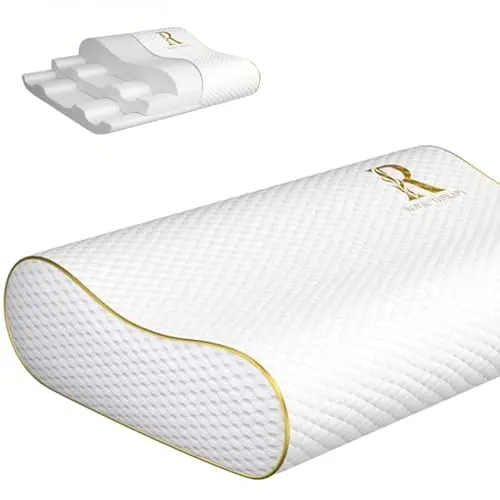
Memory Foam Contour Pillow – Adjustable Three-Layer Loft
The Royal Therapy contour pillow uses a three-layer memory foam build you can actually modify: pull the middle layer and the pillow sits lower, leave it in for fuller support. The foam is CertiPUR-US certified and the cover is a washable rayon-from-bamboo blend with OEKO-TEX approval. It measures 24 by 14 inches with a 5-inch profile at full loft, which is a realistic starting point for average-to-broad shoulders.
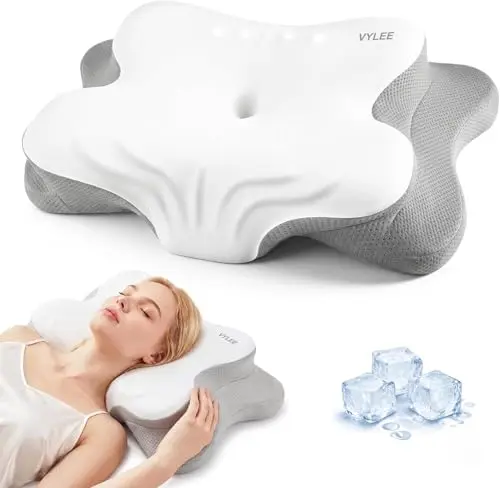
LYM101 Cervical Pillow – Dual-Height Contour with Cooling Cover
The VYLEE LYM101 pairs a butterfly-shaped memory foam core with two distinct heights. Rotate the pillow 180 degrees and you switch between a taller side built for shoulder clearance and a lower side for back and stomach positions. The cover is an 87% nylon, 13% spandex blend with a cool, slick hand feel, and it zips off for machine washing. A 12-month warranty is included.
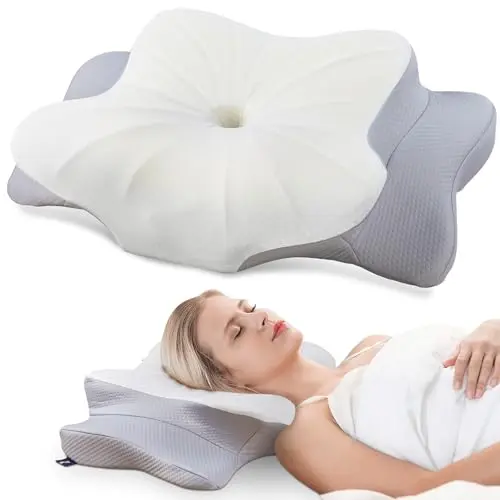
JK79 Cervical Pillow – Armrest Grooves for Side Sleepers
DONAMA’s JK79 is a butterfly-shaped contour pillow with a 5.51-inch overall height, a dual-height profile, and specific grooves cut so your arm can slide underneath. The cover is a breathable cotton-polyester blend, the core is CertiPUR-US certified foam, and the pillow carries a one-year warranty. Replacement covers are available separately.
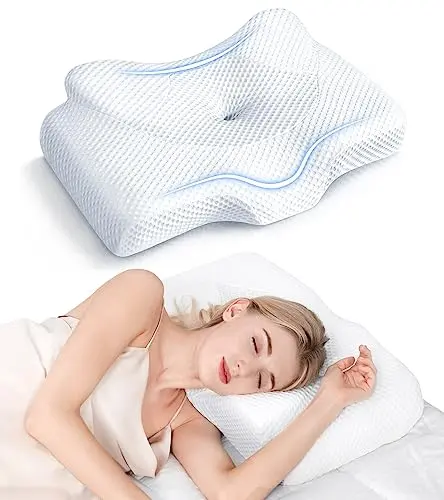
Hollow-Center Cervical Pillow – Rotate for Two Heights
Osteo’s approach is a hollow center that cradles the back of your head rather than pushing against it, paired with a 3D mesh cover designed to let heat escape. You get two heights by rotating the pillow 180 degrees, plus a removable bottom insert for a third option. The foam is CertiPUR-US certified and the cover carries OEKO-TEX approval.
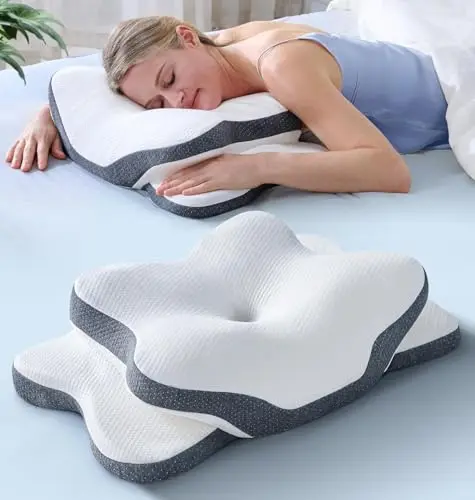
KTDK Cervical Pillow – Six-Zone Contour with Armrests
The Latree KTDK combines a butterfly contour with six distinct zones, armrest channels, and a hollow head cradle. Its open-cell memory foam is paired with a 3D mesh cover, and the pillow carries OEKO-TEX, CertiPUR-US, and ISPA certifications. It ships with a 100-night trial, which is unusually generous in the entry price tier.
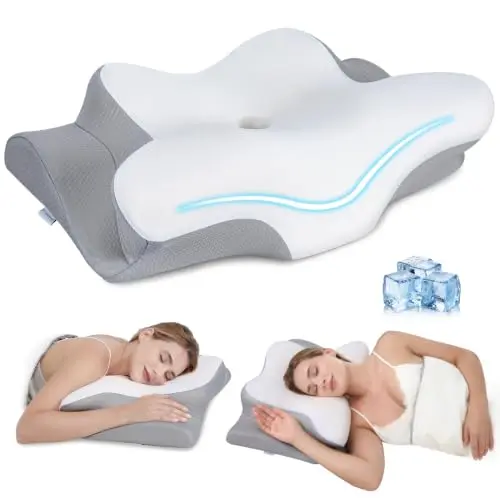
Two-Height Cervical Pillow – Ice Silk Cooling Cover
Missleep’s contour pillow uses a two-height butterfly core you flip 180 degrees, wrapped in an ice silk cover that feels cool and slick against the skin. The slow-rebound foam is OEKO-TEX and CertiPUR-US certified, the cover is removable and machine washable, and the pillow includes a six-month warranty.
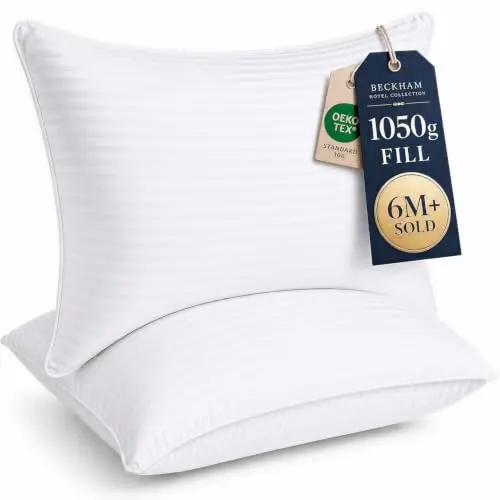
Hotel Collection Bed Pillow Set – Medium-Firm Down Alternative
A traditional rectangular pillow rather than a contoured one: 20 by 28 inches, an 8-inch loft, and 1,050 grams of hollow-fiber down alternative inside a 100% cotton cover. It’s OEKO-TEX certified, feather-free, machine washable, and sold as a set of two.
How We Evaluated These Ergonomic Pillows for Side Sleepers
We didn’t spend months sleeping on these pillows or measure loft compression with calipers. What we did: cross-referenced 7 ergonomic pillow models from 7 distinct brands across six decision axes – contour shape, loft and height adjustability, foam density and rebound, cover material and breathability, care requirements, and published certifications. We triangulated manufacturer specifications, published feature sets, and owner feedback where available, then mapped each candidate against the specific geometry problem side sleepers face: keeping the head level when a shoulder is in the way.
A contour pillow lives or dies on height. Too low and your neck bends toward the mattress all night; too high and your chin tips forward. So we weighted real-world side-sleeping fit at 70% – does the pillow fill the shoulder gap and hold that height until morning – against feature differentiation at 30%, which covers adjustable layers, arm channels, cooling covers, and trial periods. We audited certifications separately, because OEKO-TEX, CertiPUR-US, and ISPA claims are easy to verify and hard to fake, and a pillow without them gets a lower ceiling in our scoring. Options that shipped with a repairable cover or a replaceable insert got credit for maintenance.
We have no commercial relationship with any of the brands here, and recommendations track fit and differentiation rather than brand preference. If your shoulders are broad and you want to tune loft yourself, the Royal Therapy memory foam contour pillow is your match. If a cooler surface and a simple flip between two heights matter more, go with the VYLEE LYM101.
How to Choose the Right Ergonomic Pillow for Side Sleepers
1. Why Side Sleepers Need More Pillow Height Than Back Sleepers
Lie on your side and the distance between your ear and the mattress is set by your shoulder width – commonly somewhere between 4 and 6 inches for adults. A pillow that’s too low lets your head drop below your spine line, which is why side sleepers wake with a kink on one side of the neck. Too high and your chin tips toward your chest, straining the back of the neck and often making snoring worse.
That’s the whole reason a contour exists. The raised edge supports the neck while the dip cradles the skull, holding your head roughly in line with your spine. Smaller frames usually land right around a 3.5- to 4.5-inch profile. Broader shoulders tend to want 5 inches or more. Measure the gap rather than guessing – it’s the single most useful number in this category.
2. What Actually Makes a Pillow Ergonomic
Ergonomic gets used loosely in pillow marketing. Stripped down, it means the pillow supports neutral spinal alignment in the position you actually sleep in – not that it has an unusual shape. A butterfly contour, a hollow center, a three-layer foam stack, and a plain tall cotton pillow can all qualify if they hold your head at the right height.
What separates the better options is adjustability and certification. A pillow you can change height on will survive a new mattress, a weight change, or a shift in sleep position; a fixed one won’t. On the safety side, CertiPUR-US covers foam emissions and content while OEKO-TEX covers the textile. Brands that publish both are generally more careful about what goes into the product, and that shows up in how the foam smells and how the cover wears.
3. Contour Shape, Hollow Center, or Plain Loft: Ergonomic Pillow Configurations Compared
The butterfly contour is the most common ergonomic shape, with a raised neck edge, a head dip, and side wings. It works well for side sleepers because the wings keep your head from rolling off. A hollow center design takes a different route: it lets the back of the skull settle into a recess while the surrounding edges hold the neck. That suits people who find a solid foam dome pushes their head too far forward.
Then there’s the plain high-loft pillow, which isn’t contoured at all but still solves the height problem. If you’ve tried foam and hated the firmness, or you overheat easily, a tall cotton down-alternative pillow is a legitimate ergonomic choice. If arm numbness is your main complaint, the DONAMA JK79 cuts channels under the arms that most contours skip entirely.
4. Adjustable Loft: The Feature Worth Paying For
There are three ways brands make height adjustable, and they aren’t equivalent. Removable layers give the biggest range, because you can pull a full slab of foam out of the stack. 180-degree rotation between two contoured sides is quicker and gives you two fixed profiles. Removable inserts at the base add a small amount of extra height without changing the contour at all.
If you’re between sizes, adjustable loft is worth prioritizing over almost any other feature. It’s also where the market splits into tiers: entry-level contour pillows typically offer rotation only, mid-range models add inserts, and the most flexible options use layered foam you can strip down. The Royal Therapy contour pillow is the clearest example of the layered approach in this lineup.
5. Cooling Covers and Hot-Sleeping Side Sleepers
Foam traps heat, and side sleepers have their face pressed into the pillow for hours, so cover material matters more than most buyers expect. Nylon-spandex covers feel actively cool at first touch and stay cooler than cotton knits. A 3D mesh cover trades smoothness for airflow. Cotton remains the breathable default – a 100% cotton cover will outperform microfiber every time.
Be skeptical of gel-infused foam claims. In practice the cover fabric does most of the cooling work, and a washable, removable cover matters more than a gel layer you can’t clean. If you sleep hot, the VYLEE LYM101 and its nylon-spandex cover is the one to look at first.
6. Ergonomic Pillow Care and Break-In: What to Expect in Week One
Most memory foam pillows ship compressed. Give them 24 to 48 hours to reach full loft, and expect a faint manufacturing smell that fades with airing. Foam cores can’t go in a washing machine; only the cover can. Unzip it, wash cold, air dry, and the core stays dry and intact.
Then give your body one to two weeks. A contour pillow changes how your neck is supported, and the first three nights often feel wrong before they feel right. If the height is still off after two weeks, try the other side of the pillow or remove a layer before you give up on it entirely.
Frequently Asked Questions
1. What's the difference between the Royal Therapy pillow and the DONAMA cervical pillow?
Both are contoured memory foam, but they solve height differently. The Royal Therapy uses a three-layer build you can strip down, which gives the widest adjustment range and suits sleepers who are still between sizes. The DONAMA relies on dual-height rotation plus armrest grooves, so it’s fixed at two profiles but handles arm placement better.
If you wake with a numb arm, the DONAMA is the more targeted choice. If you’re still figuring out your ideal loft, or your mattress has changed recently, Royal Therapy is more forgiving.
2. How does the VYLEE cervical pillow compare with the Osteo hollow pillow?
The VYLEE LYM101 is a butterfly contour with a 4.9-inch and 3.9-inch side and a cool nylon-spandex cover – it pushes support toward the neck and shoulders directly. The Osteo takes a hollow-center approach, letting the skull settle into a recess while the rim supports the neck, and adds a removable insert for a third height.
Sleepers who feel pushed forward by solid foam usually prefer the Osteo. Sleepers who want maximum shoulder clearance usually prefer the VYLEE. If shoulder clearance is the priority, the VYLEE LYM101 is the one we’d point you toward.
3. Are ergonomic pillows actually better for side sleepers?
They’re better when the shape solves a height problem you actually have. A contoured pillow holds your neck at a consistent angle and stops your head from sliding forward, which a soft rectangular pillow can’t do.
But an ergonomic pillow at the wrong height is worse than a plain pillow at the right one – the contour just adds pressure points. Think of ergonomic design as a delivery mechanism for correct loft, not a benefit on its own. If a plain high-loft pillow already keeps your neck neutral, you don’t need a contour.
4. How thick should a pillow be for side sleeping?
Start with your shoulder width. Most adults land between 4 and 6 inches of loft, with smaller frames doing better around 3.5 to 4.5 and broader shoulders needing 5 inches or more.
The test: lie on your side and check whether your nose, chin, and sternum form a straight line. If your head tilts down, add height; if your chin tucks, reduce it. An adjustable pillow like the Royal Therapy lets you correct this without buying a second pillow.
5. Do contoured memory foam pillows go flat over time?
Dense, slow-rebound foam holds its shape far longer than down alternative or fiberfill, which is why the memory foam picks here should outlast a traditional pillow. What typically fails first is the cover or the contour edge, not the core.
A washable cover and a CertiPUR-US foam core are the two things that most affect longevity. Fiberfill pillows, by contrast, compress within months and usually need replacing or doubling up.
Final Verdict
For most side sleepers, the Royal Therapy memory foam contour pillow is the answer. The three-layer build lets you tune loft to your shoulder width, and the medium-firm foam holds that height until morning. If you run hot or want a single flip between two heights, the VYLEE LYM101 covers the same ground with a cooler cover.
Working to a tighter budget? The Latree KTDK brings contour zones, armrests, and a 100-night trial at an entry-level price. And if you’d rather skip foam entirely, the Beckham Hotel Collection pillow set gives you a tall, breathable cotton pillow that suits side sleeping – just expect to replace it sooner than a foam core.
