
Best Esd Control Humidifiers For Large Facilities – 2026 Reviews

The first cold snap of the year is when it shows up. A technician reaches for a rack and gets a snap. A printer jams for no reason. A calibration drifts. Dry air turns a facility into a static generator, and no amount of wrist-strap discipline fixes a room sitting at desert humidity.
ESD control humidification is a coverage problem before it’s a features problem. You aren’t shopping for a bedroom appliance. You need a unit that can evaporate enough water per day to hold a large volume of air in the target band, push that moisture beyond the corner it sits in, and keep doing it for months without depositing mineral dust on the surfaces you’re trying to protect.
That narrows the field fast. The realistic options split into ducted, furnace-mounted units that humidify through existing HVAC, and freestanding console units that own one room at a time. Plenty of products are marketed as large-room humidifiers while being sized for a living room, so the honest shortlist for a big building is short. What follows is what genuinely holds up at facility scale, and which buyer each option actually suits.
Best ESD Control Humidifiers for Large Facilities – 2026 Reviews
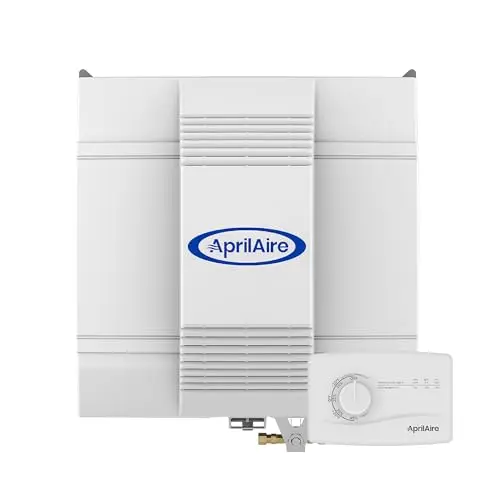
700M – Fan-Powered Output for Large Facilities
A furnace-mounted evaporative humidifier with its own blower, so it pulls heated air through a water panel and pushes moist air straight into the ductwork. Rated for roughly 5,300 square feet and 18 gallons of moisture a day, it’s the highest-output unit in this group and the one built for a building rather than a room.
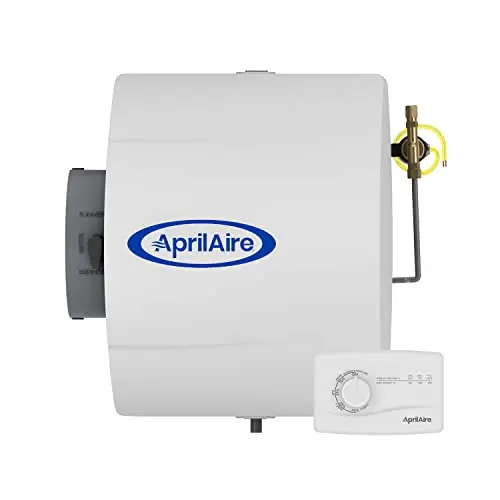
600M – Ducted Whole-Building Humidity
A furnace-mounted evaporative humidifier rated for about 5,000 square feet and 17 gallons per day. It uses the furnace blower to move air through the water panel instead of running its own fan, which keeps the parts count down and the install simpler.
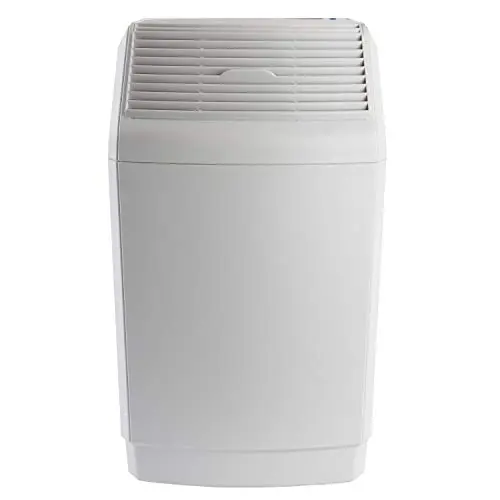
Space Saver 831000 – Six-Gallon Console for Big Rooms
A freestanding console humidifier with a six-gallon reservoir, digital controls, and an automatic humidistat. It’s rated for roughly 2,700 square feet, rolls on casters, and fills from the front, so no ductwork or plumber is required.
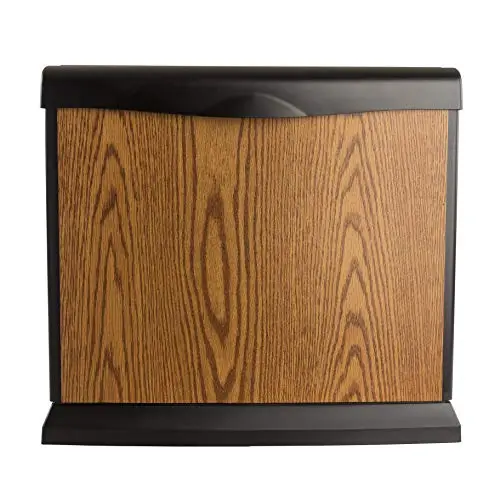
Valiant EA1407 – Furniture-Style Console Humidifier
A console-style evaporative humidifier in a honey-oak cabinet, with five gallons of capacity split across two removable bottles, a digital humidistat, and a readout that flips between actual and target humidity. The manufacturer rates it for whole-house coverage up to roughly 4,000 square feet.
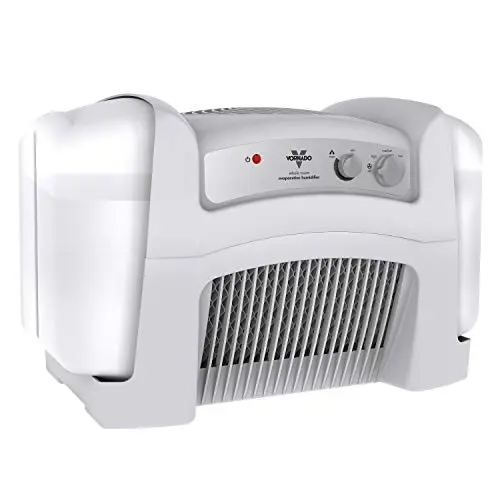
Evap40 – Dual-Tank Evaporative for Smaller Zones
A compact evaporative humidifier with two removable tanks, three fan speeds, and a built-in adjustable humidistat. It’s rated for rooms up to about 1,000 square feet and uses dual wicking filters to release moisture without visible mist.
How We Evaluated These ESD Control Humidifiers for Large Facilities
We didn’t run instrumented static-decay measurements or controlled chamber humidity trials. What we did: cross-referenced five humidifier models from three brands that are genuinely rated for large-space output, then mapped them across six decision axes – daily moisture output, coverage rating, how each unit integrates with existing HVAC, water and filter maintenance, control and humidistat behavior, and build with warranty coverage. We triangulated published specifications, manufacturer documentation, aggregated owner feedback where available, and how each unit’s design lines up with the realities of a facility: continuous duty, hard water, and someone other than the installer doing the upkeep. A facility is a harder environment than a house. Doors open, air changes are higher, and the equipment runs for months rather than weeks.
The scoring framework weighted real-world fit for large-space humidity control (70%) – whether a unit can move enough moisture into a big volume and keep doing it – against feature differentiation (30%) – ducted versus console design, control sophistication, and maintenance design. We have no commercial relationship with any of the brands here; recommendations track fit and differentiation, not brand preference. If you’re humidifying a ducted building, the 700M is the most capable unit in this group; if you need a freestanding unit for one large room, the Space Saver 831000 is the practical starting point.
How to Choose the Right ESD Control Humidifier for Large Facilities
1. What ESD Control Actually Requires From a Humidifier
Static charge builds when the air is dry. The drier it is, the less surface moisture there is to bleed charge away, and the more dramatic the zap when someone touches a rack or a door frame. That’s why ESD control programs generally aim to hold an occupied space somewhere in the 40-60% relative humidity band rather than letting it drift down through the teens and twenties over a winter.
What a humidifier isn’t is a complete solution. Grounding, wrist straps, dissipative flooring, and ionization all do work that humidification can’t, and no humidifier earns anyone a compliance certificate by itself. What it does do is change the entire air volume at once, which no bench-level device can. For that job, the things that matter are continuous output, even distribution, and an evaporation method that doesn’t deposit anything on the surfaces you’re protecting.
2. Matching Humidifier Output to Large Facilities, Not Just Square Footage
The square-footage number on the box is the least reliable spec in this category. Manufacturer ratings assume tight construction and typical ceiling heights, so a facility with dock doors, high bays, or a heavy air-change rate will need considerably more moisture to hold the same humidity. Treat the coverage rating as a ceiling, not a target.
The more honest number is gallons per day of moisture output, meaning how much water the unit can evaporate in 24 hours. Keep that separate from tank capacity, which only tells you how often someone has to walk over with a pitcher. A console with a big reservoir and modest evaporative output still falls behind in a large room; a ducted unit rated in the high teens per day won’t.
3. Ducted vs. Console Humidifiers for Large Facilities
Ducted, furnace-mounted humidifiers tie into the HVAC system, tap a water line, and drain to a floor drain. They distribute moisture through the same ductwork that carries heat, which is the only practical way to humidify several rooms at once. The trade-off is installation: you need forced-air heat, duct access, plumbing, and usually a professional.
Console humidifiers roll into a room, get filled by hand, and ask nothing of the building. That makes them the right answer for a single large space or a retrofit where nobody wants to open a duct. If your building already has forced-air ductwork and a drain, the 700M is the pick; if it doesn’t, the Space Saver 831000 is the freestanding route.
4. Evaporative vs. Ultrasonic: Why White Dust Matters in an ESD-Controlled Space
Ultrasonic humidifiers vibrate water into a fine mist, and everything dissolved in that water goes into the air with it. In a space where you’re protecting contacts, optics, calibration gear, or circuit assemblies, that white mineral dust settles on exactly the surfaces you care about. Every unit in this lineup is evaporative for that reason: water evaporates off a wick or panel, and the minerals stay behind in the media.
The cost of that design is consumable media. Wicks and water panels load up with scale, especially on hard water, and need replacing on a schedule. Budget for it. A clogged wick drops output quietly, and you won’t notice until someone starts getting shocks again.
5. Water Supply, Drainage, and the Maintenance Load Nobody Budgets For
Ducted units want a cold-water line and a drain. Console units want a person. Both need somebody to own the task, because humidification is one of those systems that works perfectly until it doesn’t, and the failure mode is usually a scale-clogged wick or a reservoir nobody refilled.
Hard water shortens wick life and increases how often you’re cleaning. Standing water in a warm reservoir is also a place things grow, so periodic sanitizing belongs in the maintenance calendar alongside filter changes. If you’re specifying for a facility, write the refill and wick-replacement cadence into the plan before the unit goes in, not after.
6. What Humidifier Tier Fits Your Facility
Entry-level means a console unit for one room or one zone, with a few gallons of reservoir, a humidistat, and manual refills. Mid-range gets you a larger console with more daily output, or a basic ducted bypass unit for a modest building. The premium tier is fan-powered ducted equipment with the highest daily output and the longest warranty coverage, which is where a genuinely large building should be looking.
Spend on output and installation quality before you spend on app control. A console like the Evap40 that’s correctly sized and maintained will outperform a fancier unit that’s undersized for the volume.
Frequently Asked Questions
1. Can a humidifier alone keep a facility within ESD-safe humidity levels?
No, and any vendor implying otherwise is overselling. Humidity control is one layer of an ESD program, sitting alongside grounding, wrist straps, dissipative flooring, and ionization. What humidification does uniquely is change the entire air volume at once, which is why it matters so much in large facilities where you can’t treat every bench individually.
Practically, you’re trying to hold the space in a mid-range humidity band and keep it there as the weather swings. That’s a sizing and controls problem far more than a features problem.
2. How does the AprilAire 700M compare to the AIRCARE Space Saver 831000?
They solve the same problem from opposite directions. The 700M is ducted and furnace-mounted, rated for roughly 5,300 square feet at 18 gallons per day, and distributes through your HVAC, but it needs forced-air ductwork, a water line, and a drain. The Space Saver 831000 is freestanding, rated around 2,700 square feet, and needs nothing from the building beyond an outlet and someone to refill it.
If the building already has ductwork, the 700M is the more capable humidifier. If it doesn’t, or you’re humidifying one large room, the Space Saver 831000 avoids a construction project.
3. AprilAire 600M or AIRCARE Valiant EA1407 for a large facility?
The 600M is a ducted bypass unit rated near 5,000 square feet and 17 gallons per day. The Valiant is a console rated up to roughly 4,000 square feet with a five-gallon reservoir. Both are evaporative, so neither puts mineral dust into the air.
The decision is really about distribution. The 600M pushes moisture through the whole ducted system, which is what a multi-room facility needs. The Valiant humidifies one large room well and asks nothing of the building, which suits a single open shop floor or a retrofit where opening ductwork isn’t realistic.
4. How much humidifier output does a large facility actually need?
Start with gallons per day, not tank size. Coverage ratings assume tight construction and normal ceiling heights, so a space with dock doors, high bays, or heavy air changes will need more output than the label suggests. If you’re torn between two sizes, go up.
Then check the maintenance math. A unit rated in the high teens per day is doing real work, and its wick or water panel becomes a consumable you’ll be replacing. That’s normal, so plan for it rather than being surprised by it.
5. Is evaporative humidification the right choice for ESD-controlled areas?
Generally yes. Ultrasonic humidifiers aerosolize whatever is dissolved in the water, and that mineral dust settles onto contacts, optics, and assemblies. Evaporative units leave the minerals in the wick or panel and release water vapor instead.
The trade-off is consumable media and a bit more upkeep. On hard water, expect to replace wicks more often, but that’s a far better problem than conductive dust landing on the equipment you’re protecting.
Final Verdict
For most large facilities that already run forced-air heat, the 700M is the answer. The fan-powered design and daily output give you the headroom a big volume actually needs, and it distributes through the ductwork instead of one corner of one room. If the ductwork isn’t there, or budget is the deciding factor, the Space Saver 831000 gets a large room into a stable band with automatic control and no trades involved. For a single ESD-sensitive zone rather than a whole floor, the Evap40 is the low-effort option, and the 600M is the value play if you’re ducted and don’t need the extra fan. Whichever you pick, plan the water path and the wick replacement schedule before the unit goes in. That’s where these installations succeed or fail.
