
Best Espresso Machine Brands – 2026 Reviews

Somewhere between the third failed latte and the fourth app notification about a sale on pods, most people stop asking which machine to buy and start asking which brand to trust. That’s the better question. Espresso machines live on your counter for years, and the brand behind the badge determines whether you can find a replacement basket in 2029 or whether the whole thing goes to e-waste because one heating element gave out.
Two things separate the brands worth your money from the ones that just photograph well. The first is hardware honesty: does the machine give you real espresso components, or a plastic housing wrapped around a pressurized basket? The second is the service story – parts availability, warranty length, and whether the thing was designed to be opened up by an owner instead of a technician.
We looked across the major espresso machine brands and picked the model from each that best represents what that brand actually does well. Some win on integration, some on commercial-style parts, some on pure convenience. The right answer depends on whether you want a system that does the work or a platform you grow into.
Best Espresso Machine Brands – 2026 Reviews
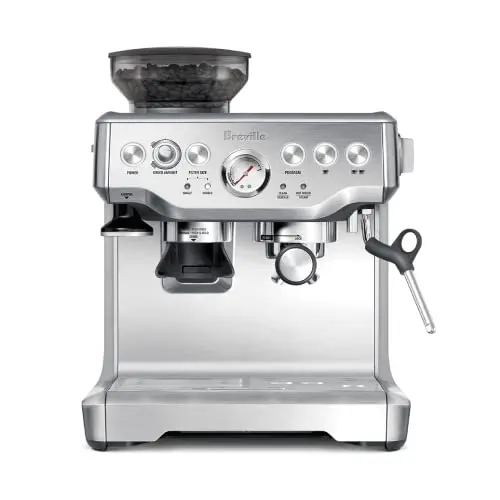
Barista Express – Grind, Dose, and Brew in One
A bean-to-cup workhorse that grinds, doses, and pulls shots from a single footprint. The conical burr grinder sits above the portafilter cradle so you grind straight into the basket, and the manual steam wand is there when you want to texture milk yourself.
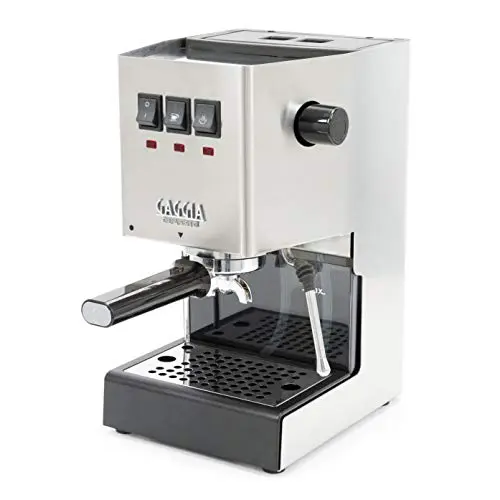
Classic Evo Pro – Commercial Parts in a Home Body
The enthusiast’s route: a 58mm commercial portafilter, a three-way solenoid valve, and a steel housing built in Italy. No grinder, no presets, no screen – just the components that make repeatable shots possible.
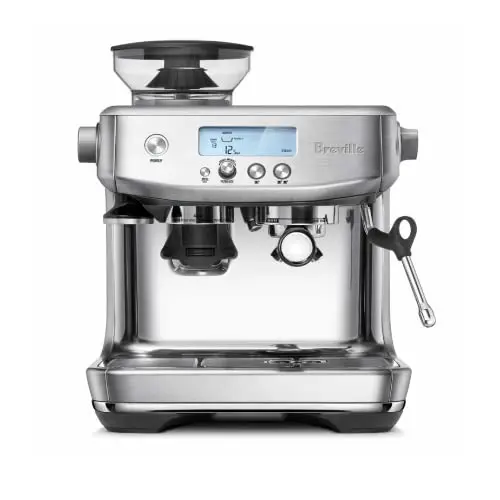
Barista Pro – Three-Second Heat-Up With LCD Guidance
The same grind-and-brew formula as the Barista Express, but the ThermoJet heater reaches extraction temperature in about three seconds and an LCD walks you through grind and shot progress.
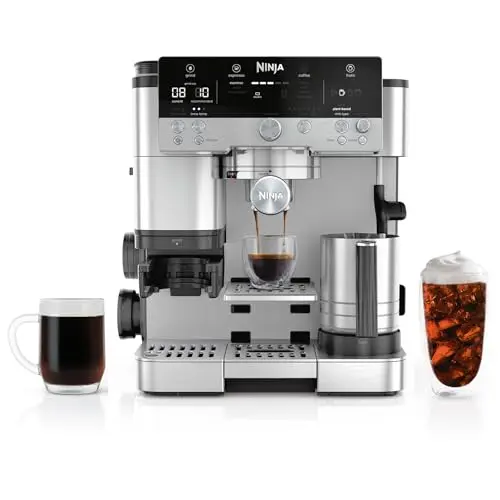
Luxe Cafe Premier ES601 – Espresso, Drip, and Cold Brew
Espresso, drip coffee, and cold brew from one machine, with an integrated burr grinder and a hands-free frother. It’s built for people who want cafe-style drinks without learning espresso theory first.
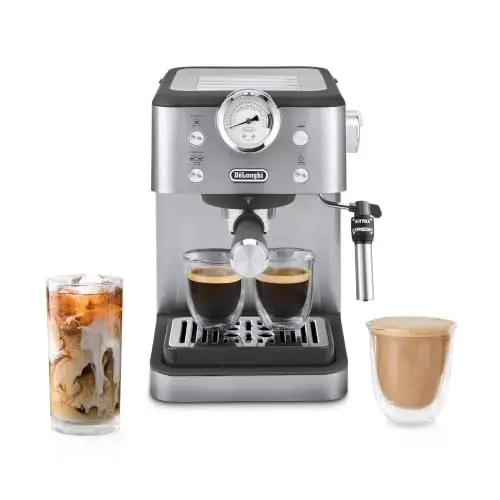
Classic Signature EM450M – Adjustable Froth, Fast Heat-Up
A compact manual machine with the pieces that matter at this level: a 15-bar Italian pump, Thermoblock heating, and a two-setting steam wand that moves from silky steamed milk to stiff microfoam.

Stilosa EC260BK – Entry-Level Espresso With a Real Steam Wand
The classic first machine: a stainless steel boiler, a manual steam wand, and single or double baskets. No grinder, no presets, no screen – just the basics done properly.
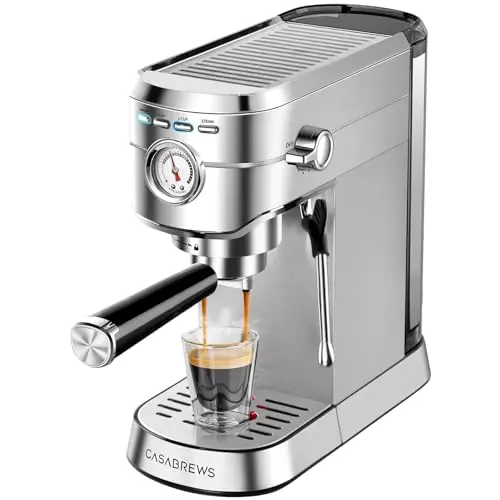
CM5418 – Pressure Gauge on a Compact Body
A slim stainless semi-automatic with a 20-bar pump and a visible pressure gauge – handy while you’re learning to read a shot. Narrow enough to fit kitchens that can’t spare much counter.
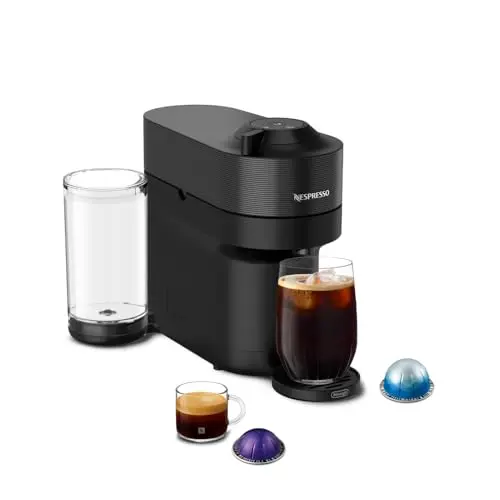
Vertuo Pop+ – One-Touch Pod Espresso and Coffee
Capsule espresso and coffee with one-touch operation. The side-mounted tank keeps the body narrow, and a 30-second heat-up means it’s ready before you’ve found a cup.
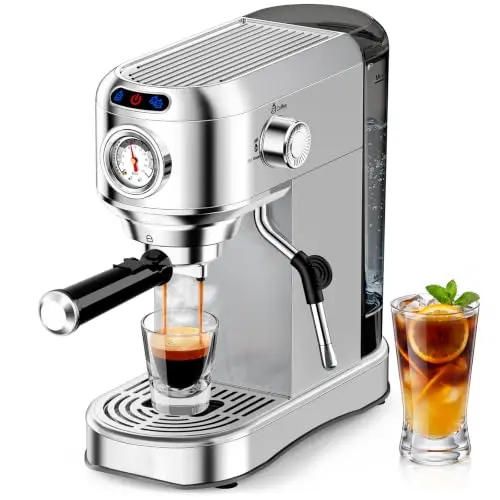
ST-699B – A4-Sized Countertop Espresso
A genuinely small 20-bar semi-automatic with a pressure gauge and a heater that preheats in about 20 seconds. Built for countertops where nothing else fits.

3700 Essential – Bigger Tank, Simpler Setup
The larger-tank take on CASABREWS’ compact formula: a 43.9 oz reservoir, 20-bar pump, and steam wand – minus the pressure gauge.
How We Evaluated These Espresso Machine Brands
We didn’t run controlled kitchen lab tests or long-term reliability trials. What we did: cross-referenced 10 espresso machine models across 7 distinct brands against six decision axes – pump pressure and boiler type, grinder integration, milk-frothing hardware, portafilter and basket compatibility, footprint and reservoir capacity, and how serviceable each brand’s machines are once the honeymoon ends. We audited published specifications, mapped each machine’s feature set to a realistic buyer profile, and weighed owner feedback where available to catch the gap between what a spec sheet promises and what a counter actually delivers over months of daily use.
The scoring framework weighted real-world fit (70%) – how reliably a machine turns out repeatable shots and usable microfoam for the person it’s aimed at – against feature differentiation (30%) – the hardware choices that make one brand’s approach distinct from another’s. A 58mm commercial portafilter earns its keep differently than a hands-free frother, and we scored each on its own terms rather than against a single universal ideal.
We have no commercial relationship with any of the brands featured here, and recommendations track fit and differentiation, not brand preference. If you want one machine that grinds and brews without extra gear, the Breville Barista Express covers the most ground. If you’d rather build technique on commercial-parts hardware, the Gaggia Classic Evo Pro is the better teacher.
How to Choose the Right Espresso Machine Brands
1. Grinder or No Grinder: The Brand Split That Matters Most
Three brand philosophies show up in this category. The first integrates a conical burr grinder into the machine – the Breville Barista models and the Ninja Luxe Cafe Premier do this – so dosing happens straight into the portafilter with no second appliance. The second leaves grinding to you: the Gaggia Classic Evo Pro, both De’Longhi machines, and the CASABREWS and AERCANA models all expect pre-ground coffee. The third removes the variable entirely with capsules.
The integrated approach wins on freshness and counter space, but when the grinder goes down, the whole machine is out of service. Grinder-free designs are cheaper to replace and easier to repair, at the cost of a separate purchase and a second plug. Capsule systems trade control for consistency. If you want one box that handles the entire job, the Breville Barista Express is the most straightforward starting point.
2. Why Espresso Machine Brands Diverge on Portafilter Size
Portafilter diameter is the quiet spec that shapes everything downstream. The Gaggia Classic Evo Pro uses a 58mm commercial portafilter, the size the third-party accessory market is built around, so baskets, tampers, and distribution tools are easy to source. Breville’s Barista machines use 54mm. The CASABREWS and AERCANA machines use 51mm baskets. A smaller basket isn’t a dealbreaker, but it narrows your options.
Pump ratings mislead too. You’ll see 15-bar and 20-bar pumps advertised, but traditional espresso extraction happens around 9 bar, which is the number Gaggia specifies. A higher pump rating is a ceiling, not an outcome. If you plan to upgrade components over time, the Gaggia Classic Evo Pro is the one with a real parts path.
3. Heat-Up Time, Boilers, and What the Spec Sheet Won't Tell You
How a machine heats water changes your morning more than any other spec. Thermoblock heating, used on the De’Longhi Classic Signature, is fast and compact. A stainless steel boiler like the Stilosa’s is a sturdier component that takes longer to come up to temperature. Breville’s ThermoJet system reaches extraction temperature in about three seconds, the fastest here, and the AERCANA advertises a 20-second preheat.
What specs don’t show: recovery time between shots, how long the switch from brew to steam takes, and how the machine behaves when you pull a shot and steam milk back to back. Most single-boiler machines in this group need a cooldown between the two.
4. Milk Frothing: Manual Wands, Adjustable Wands, and Hands-Free Systems
Milk is where most home setups fall apart. A manual steam wand – on the Gaggia, both Breville Barista models, the CASABREWS machines, the AERCANA, and the Stilosa – gives you full control and a real learning curve. De’Longhi’s Classic Signature goes a step further with an adjustable two-setting wand that shifts between silky steamed milk and stiffer microfoam.
Then there’s the hands-free route: the Ninja’s Dual Froth System pairs a spinning whisk with an automatic steamer and four presets including cold foam. You pour and walk away. It won’t teach you latte art, but it removes the variable that frustrates most beginners. If milk drinks are the whole point, the Ninja Luxe Cafe Premier is the least fussy path in this lineup.
5. Breville Barista Express vs Gaggia Classic Evo Pro: Two Schools of Home Espresso
These two sit in similar territory and represent opposite philosophies. The Barista Express is a system – grinder, dose control, temperature regulation, pre-infusion, and accessories in one box, with a short path to a decent flat white. The Classic Evo Pro is a platform – 58mm commercial hardware, a three-way solenoid valve, and replaceable parts, with a longer path to a great shot.
Pick the Breville if you want good results this month. Pick the Gaggia if you want a machine you’ll still be upgrading in five years.
6. What Espresso Machine Brands Are Worth Paying More For
Price tiers here map to components more than prestige. At the entry tier you get smaller baskets, more plastic in the housing, and wider unit-to-unit variance. Mid-tier machines add metal housings, better wands, and steadier temperature control. The premium tier buys grinder integration, faster heat-up, and longer warranty coverage – the Barista Pro states two years, while most of this group states one.
Brand matters most on the service side. Established names have parts channels and repair options. Newer entrants trade long-term history for a lower cost of entry. If repairability is your priority, that’s another reason the Gaggia stands out; if retail presence and support matter more, Breville and De’Longhi are the safer bets.
Frequently Asked Questions
1. What's the difference between the Breville Barista Express and the Gaggia Classic Evo Pro?
One is a complete system, the other is a platform. The Barista Express bundles a conical burr grinder, on-demand dosing, PID temperature control, and low-pressure pre-infusion into a single footprint, so a beginner can pull a drinkable shot the same week. The Classic Evo Pro gives you a 58mm commercial portafilter and a three-way solenoid valve, but no grinder and no hand-holding – you’ll want a separate burr grinder and some patience.
Choose Breville for convenience now, Gaggia for headroom later.
2. How does the Ninja Luxe Cafe Premier compare with the De'Longhi Classic Signature?
They solve different problems. The Ninja is a three-in-one machine: espresso, drip coffee, cold brew, plus a hands-free frother with four presets and Barista Assist dosing and tamping. It’s the one to buy if the household drinks both espresso and regular coffee and nobody wants a routine.
The De’Longhi Classic Signature is a narrower, more traditional manual machine with an adjustable two-setting steam wand and customizable espresso presets. It takes up less counter and asks you to develop a little technique.
3. Do I need a built-in grinder, or should I buy one separately?
It depends on how much counter space you have and how many devices you’re willing to own. An integrated grinder like the one in the Breville Barista Pro saves a purchase, keeps beans fresher at the moment of dosing, and shortens the workflow. The trade-off is that a grinder failure takes the whole machine offline.
A separate grinder paired with a machine like the Gaggia Classic Evo Pro gives you real upgrade paths and easier servicing. It costs more in total and eats more counter, but each part can be replaced independently.
4. Is a capsule machine like the Nespresso Vertuo Pop+ a real espresso machine?
Functionally, yes – it brews espresso-strength coffee with a foam layer, using pre-ground capsules instead of a portafilter. What it doesn’t give you is control: no grind adjustment, no dose changes, no third-party coffee. If your goal is a consistent double espresso in thirty seconds, the Vertuo Pop+ does that with less effort than anything else here.
If your goal is learning to make espresso, a manual machine with a real steam wand will teach you more. The capsule ecosystem is the trade-off – convenient, but locked in.
5. How long should an espresso machine last, and which brands are easiest to repair?
There’s no standard, but the pattern in owner feedback is that entry-tier machines more often run into trouble inside a year or two, while commercial-parts designs hold up longer because wear items are replaceable. The Gaggia Classic Evo Pro is explicitly designed for self-service, with a steel housing that comes apart and standard components inside.
Breville and De’Longhi have broad service networks and stated warranty terms – a year on most models here, two on the Barista Pro. Newer brands like CASABREWS and AERCANA offer a lower cost of entry but less documented long-term support. Descaling on schedule is the single biggest factor you control.
Final Verdict
For most people, the Breville Barista Express is the answer – it grinds, doses, and brews from one footprint, and the manual steam wand is good enough to make latte art a realistic goal rather than a fantasy. It’s the least amount of gear that still produces genuinely fresh espresso.
If you’d rather grow into the hobby, the Gaggia Classic Evo Pro hands you commercial-style hardware and a machine you can service yourself. If milk drinks are the whole point and nobody wants a learning curve, the Ninja Luxe Cafe Premier covers espresso, drip, cold brew, and hands-free foam. And if the budget is tight and the counter is tighter, the De’Longhi Stilosa gets you a real steam wand and a stainless boiler at the entry tier.
