
Best Espresso Machines With Built-In Grinder – 2026 Reviews

You want a flat white that tastes like the café down the street, but your counter already looks like a small appliance showroom. A built-in grinder promises to simplify that morning routine by turning whole beans into fresh espresso in one machine. The catch is that not every built-in grinder is a shortcut to better coffee.
The first fork is workflow. Semi-automatic machines with a portafilter and steam wand give you more control and more cleanup, while fully automatic models push you toward one-touch drinks and a milk carafe. The second fork is grind control: burr type, grind settings, dose consistency, and how easy the machine is to live with after the novelty wears off.
This guide surveys the category across brands, from hands-on machines that reward practice to compact automatics that simplify a mixed-drink household. We focus on what separates a satisfying daily machine from one that looks good on the counter but adds friction to your morning.
Best Espresso Machines with Built-In Grinder – 2026 Reviews
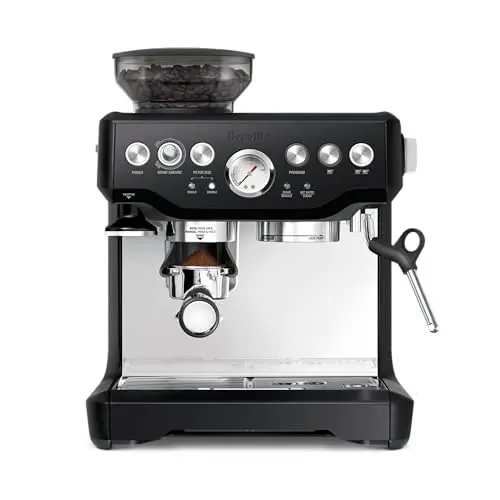
Barista Express BES870BTR – Hands-On Espresso with Built-In Grinder
The Barista Express is for the drinker who wants to learn the variables. It grinds on demand into a 54mm portafilter, uses low-pressure pre-infusion, and gives you a manual steam wand for texturing milk. The dose and grind are adjustable, so you can chase a specific shot instead of accepting a preset.
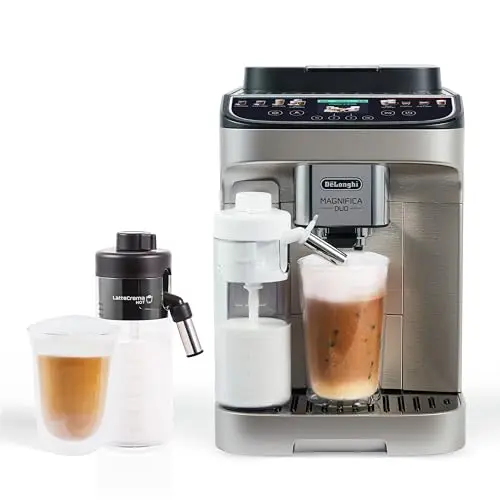
Magnifica Duo ECAM33080SXB – One-Touch Espresso and Cold Brew
A fully automatic bean-to-cup machine with a built-in conical burr grinder, 20 preset hot and iced recipes, and LatteCrema hot and cold frothing. It handles espresso, drip coffee, and cold brew from one touchscreen, so the workflow is closer to a café menu than a manual station.
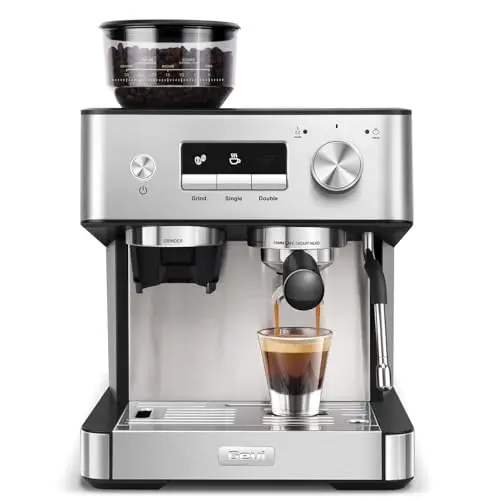
20 Bar Espresso Machine – 30-Setting Built-In Grinder
A semi-automatic espresso machine with a 20-bar pump, a built-in conical burr grinder with 30 settings, and a steam wand that also dispenses hot water. It uses a 58mm portafilter and offers adjustable grind duration plus single or double shot volumes.
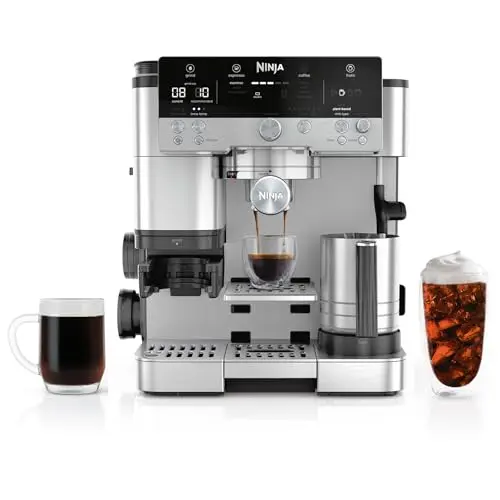
Luxe Cafe Premier ES601 – 3-in-1 Espresso and Coffee
A 3-in-1 machine that brews espresso, drip coffee, and cold brew from a built-in conical burr grinder with 25 settings. Barista Assist guides grinding, weight-based dosing, assisted tamping, and real-time temperature and pressure adjustments, while the dual froth system handles hot or cold microfoam.
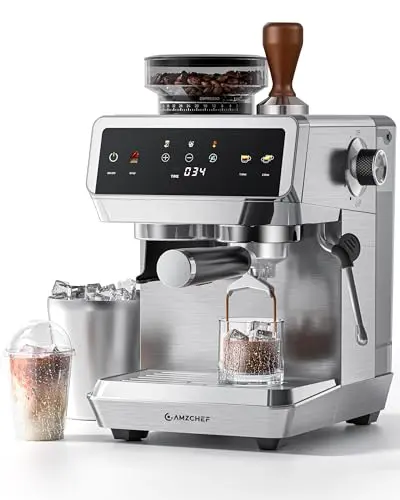
CM1626 – 44-Setting Grinder and Touch Control
A compact semi-automatic with a built-in grinder offering 44 grind settings, 190F to 201F temperature control, a cold brew mode, and an 8mm steam wand. The touch screen shows grind time, brew time, and temperature, and the 60 oz removable tank supports several drinks before a refill.

Luxe Cafe Mini Plus ES351 – Compact Espresso and Drip
A compact 2-in-1 espresso and drip coffee machine with a built-in conical burr grinder, a precision scale for weight-based dosing, and hands-free AutoFroth. Barista Assist calibrates grind size, dose, temperature, and pressure for each drink.
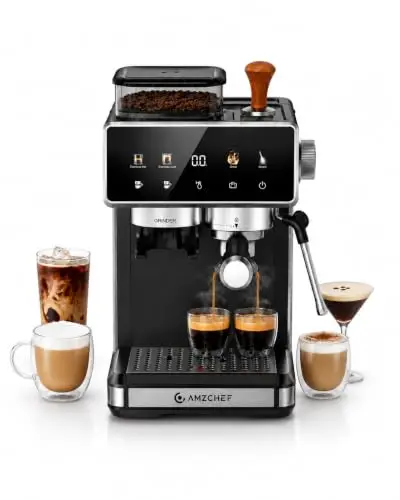
5560 – Entry-Level Espresso with 20 Grind Settings
An entry-level semi-automatic with a 20-bar pump, a built-in grinder with 20 settings, and 3 PID temperature levels. It offers 3 to 10 seconds of pre-infusion, a steam wand for milk drinks, and a compact frame.
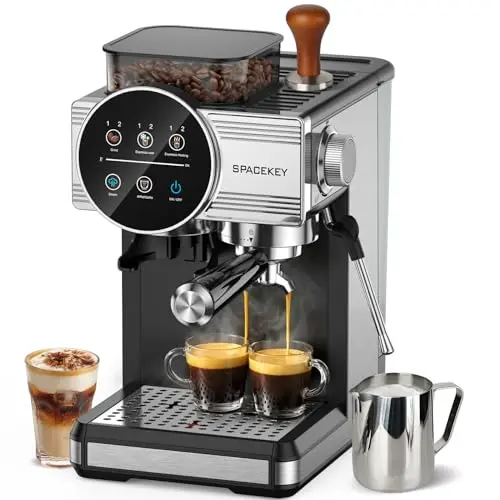
CM5510 – Compact 20-Bar Espresso with Steam Wand
A compact semi-automatic with a 20-bar pump, a built-in conical burr grinder with 30 settings, and PID temperature control. It includes a 51mm portafilter, a steam wand, a cold brew function, and a 60.9 oz removable tank.
How We Evaluated These Espresso Machines with Built-In Grinders
We didn’t run lab extraction tests or measure temperature stability with instruments. What we did: cross-referenced 8 espresso machines from 6 brands across 7 decision axes – grind range and burr type, dose control, milk frothing, brew workflow, capacity and footprint, cleaning and maintenance, and long-term reliability signal. We triangulated published specifications, feature sets, and owner feedback where available, then mapped each machine to representative buyer profiles for this category.
The scoring framework weighted real-world performance (70%) – how well each machine delivers on its stated use case – against feature differentiation (30%) – unique technical advantages and use-case specificity. We audited the lineup for meaningful differences rather than marketing labels. We have no commercial relationship with any of the brands featured; recommendations track fit and differentiation, not brand preference. If you want a hands-on workflow with a 54mm portafilter and manual steam wand, the Breville Barista Express is your match. If you want one-touch drinks and a fully automatic workflow, the De’Longhi Magnifica Duo serves you better.
We also weighed how much friction each machine adds to a normal morning. A built-in grinder only helps if the hopper is easy to fill, the grind dial is repeatable, and the drip tray and milk system are simple to clean. Where feedback pointed to a recurring durability issue, we treated it as a buyer-awareness note rather than a dealbreaker. We did not score machines on brand heritage or café-style styling; those details are noted only when they affect daily use. The result is a lineup that separates manual, semi-automatic, and fully automatic approaches instead of pretending every built-in grinder works the same way.
How to Choose the Right Espresso Machine with a Built-In Grinder
1. What a Built-In Grinder Actually Changes
A built-in burr grinder removes the separate appliance and the transfer step between grinder and portafilter. That can improve freshness and cut clutter, but the real benefit depends on grind consistency and how easy the grind dial is to adjust. A machine with a narrow range or a hopper that is awkward to empty can make switching beans more trouble than it is worth.
Pay attention to retention, too. If old grounds sit in the chute, the first shot after a bean change may taste stale. If you want the most control over dose and grind, the Breville Barista Express is the clear pick because it grinds directly into the portafilter and lets you adjust the dose manually.
2. Semi-Automatic vs Fully Automatic Espresso Machines
Semi-automatic machines give you a portafilter, a steam wand, and more control over grind and dose. They ask for more practice and cleanup, but they are the better fit if you enjoy the process. Fully automatic machines handle grinding, dosing, tamping, and often milk frothing, with a milk carafe that can be as simple as pressing a button.
The tradeoff is flexibility. A fully automatic model is excellent for a household that wants consistent drinks with minimal effort, but it leaves less room to experiment with a new bean or a different basket. For the least manual effort, the De’Longhi Magnifica Duo is the pick because its recipe menu and milk system cover hot and iced drinks without a separate station.
3. Grind Settings, Dose Control, and Portafilter Size
More grind settings are not automatically better, but a wider range helps when you switch between espresso and coarser brewing styles. Look for a conical burr grinder, a repeatable grind dial, and some form of weight-based dosing if you want consistency without weighing every shot yourself. 58mm portafilter machines have the widest accessory support, while smaller sizes can limit your upgrade path.
A machine with a wide grind range and a 58mm portafilter is the sweet spot for many buyers. If that combination matters and you want to stay in the mid-range tier, the Gevi 20 Bar is the pick because it pairs 30 grind settings with a 58mm portafilter and a steam wand.
4. Milk Frothing: Manual Steam Wand vs Hands-Free Frother
A manual steam wand gives you control over microfoam and is the better choice if you want to pour latte art. It takes practice, especially with plant-based milk, but the feedback is immediate. A hands-free automatic frother is more consistent for cappuccinos and lattes when you do not want to think about texture.
Think about who will use the machine. If one person makes a flat white every morning and enjoys the ritual, a steam wand is fine. If the household wants hot or iced milk drinks with minimal effort, a built-in automatic frother or milk carafe will get more use.
5. Breville Barista Express vs De'Longhi Magnifica Duo: Which Workflow Fits You?
The Breville Barista Express is the manual control option. You grind into the portafilter, tamp, pull the shot, and texture milk yourself. That workflow is slower at first, but it gives you the tools to improve your technique and chase a specific flavor profile. The De’Longhi Magnifica Duo is the one-touch convenience option. It grinds, doses, brews, and froths with less hands-on work, and the recipe menu covers espresso, drip coffee, and cold brew.
Choose the Breville if you want to learn and do not mind a few messy puck experiments. Choose the De’Longhi if you want café-style drinks to be easy for everyone in the house. Neither approach is inherently better; they simply suit different morning routines.
6. Cleaning, Maintenance, and Long-Term Ownership
Built-in grinders add one more system to maintain, so check how easy the hopper, chute, and brew path are to access. Regular descaling matters in hard-water areas, and a removable milk system is much easier to keep clean than a fixed wand or carafe. Wipe the steam wand after every use and empty the drip tray before it overflows.
Long-term reliability is the hardest thing to judge from a spec sheet. Look for a clear warranty, available replacement parts, and a design that lets you clean the burr area without disassembling the whole machine. A simple routine beats a complicated one you avoid.
Frequently Asked Questions
1. Breville Barista Express vs De'Longhi Magnifica Duo: Which is easier for beginners?
The De’Longhi Magnifica Duo is easier for a true beginner because its one-touch automation handles grinding, dosing, and milk frothing. The Breville Barista Express has a manual workflow and a real learning curve, but it teaches you how grind, dose, and milk texturing affect the cup.
If you want to press a button and get a consistent latte, go with the De’Longhi Magnifica Duo. If you want to learn espresso and do not mind practice, the Breville Barista Express is the better teacher.
2. Gevi 20 Bar vs AMZCHEF CM1626: Which offers better value?
The Gevi 20 Bar is the stronger value if a 58mm portafilter and third-party accessory support matter to you. Its 30 grind settings are fewer than the AMZCHEF CM1626’s 44 grind settings, but the 58mm ecosystem is a real long-term advantage.
The AMZCHEF CM1626 is the better fit if you want a wider grind range, a touch screen, and more precise temperature control in a compact frame. Both have a manual steam wand, so neither is the easier option for hands-free milk drinks.
3. Do built-in grinders actually save counter space?
They can, but only if the machine replaces a dedicated grinder rather than sitting next to one. A built-in grinder also adds a hopper to the machine’s height and makes the whole unit heavier, so measure your clearance before you buy.
The bigger benefit is workflow: fewer appliances, fewer steps, and less coffee spilled between grinder and portafilter. If you already own a grinder you love, a built-in model may not save as much counter space as the marketing suggests.
4. How often should I clean an espresso machine with a built-in grinder?
Wipe the steam wand and flush the group after daily use, and empty the drip tray before it gets full. A deeper clean of the brew path and milk system should be a weekly habit if you make milk drinks often.
Descaling depends on your water hardness, but it should be on a regular schedule rather than a once-a-year afterthought. Clean the burr grinder area according to the manual, and avoid leaving oily dark-roast beans in the hopper for long periods.
Final Verdict
For most people, the Breville Barista Express is the answer. It gives you a real grinder, a 54mm portafilter, and a manual steam wand without forcing you into a fully automatic routine, and it rewards a little practice with noticeably better shots. If you want one-touch drinks and a built-in milk system, the De’Longhi Magnifica Duo is the premium route. Budget-conscious shoppers should look at the Gevi 20 Bar for its 58mm portafilter and broad grind range, while the Ninja Luxe Cafe Premier makes sense for a household that wants espresso, drip coffee, and cold brew from one guided machine. Start with the workflow you will actually use every morning; the best espresso machine with a built-in grinder is the one that makes your usual drink easy, repeatable, and worth the counter space.
