
Best Espresso Machines For Business – 2026 Reviews

The 9 a.m. rush in a small office has a way of exposing weak coffee gear. Someone wants a quick espresso, someone else wants a full mug, and a visitor asks for a latte while the regular coffee drinker just wants the carafe filled. A business espresso machine has to survive that kind of mixed demand without turning every drink into a training session.
The two axes that separate good business machines from mediocre ones are automation and workflow. Automation decides whether a new employee can make a decent cappuccino on day one. Workflow decides whether the machine keeps up when three people arrive at once. Milk handling and cleanup matter just as much, because a shared machine that’s annoying to maintain gets abandoned fast.
We looked across the market at espresso machines that make sense for offices, breakrooms, and meeting spaces, from compact manual models to fully automatic bean-to-cup systems. The goal isn’t to crown a café-style flagship; it’s to help you pick the machine your team will actually use every day.
Best Espresso Machines for Business – 2026 Reviews
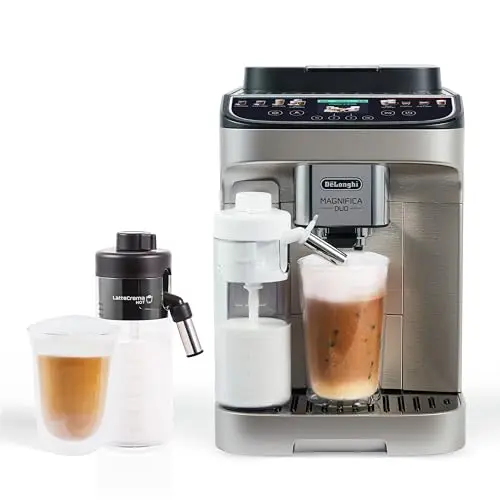
Magnifica Duo ECAM33080SXB – Fully Automatic Office Espresso
A fully automatic bean-to-cup machine built for a workplace where people want espresso, drip coffee, cold brew, and iced drinks without a training session. The touchscreen and one-touch recipes keep the line moving, and the integrated grinder means fresh coffee with less prep.
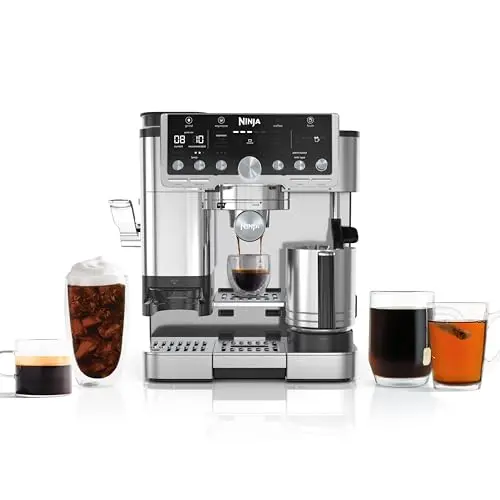
Luxe Cafe Pro ES701 – Four-in-One Team Coffee Station
A 4-in-1 machine that covers espresso, drip coffee, cold brew, and hot water, with a built-in grinder and hands-free frothing. It’s aimed at teams that want café-style drinks plus a regular pot of coffee without adding another appliance.
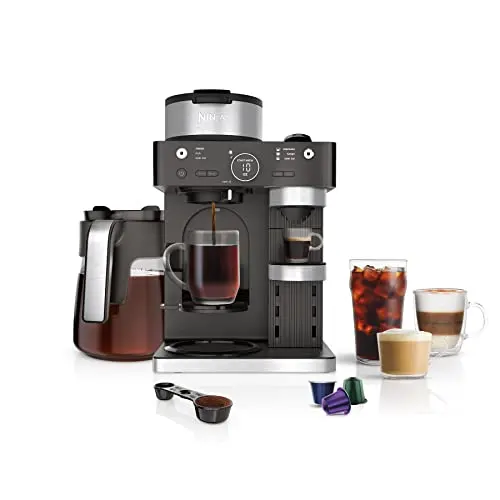
CFN601 – Espresso and 12-Cup Carafe for Breakrooms
A hybrid espresso and coffee maker that brews Nespresso Original capsules, ground coffee, and a 12-cup carafe. The built-in frother and capsule bin make it a practical breakroom option for mixed drink preferences.
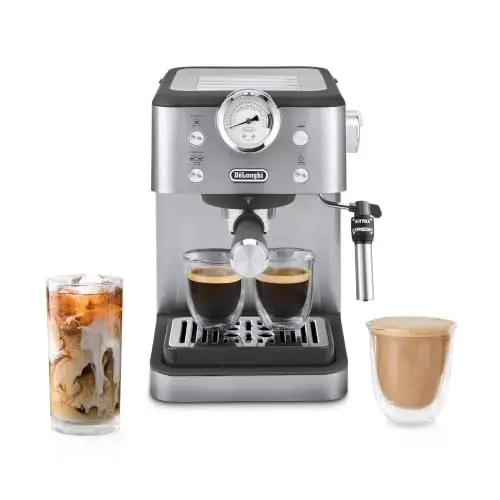
Classic Signature EM450M – Compact Manual Espresso for Small Teams
A compact semi-automatic machine with a 15-bar pump, preset single and double shots, and a two-setting steam wand. It suits a small office that wants manual espresso with a small footprint and simple controls.
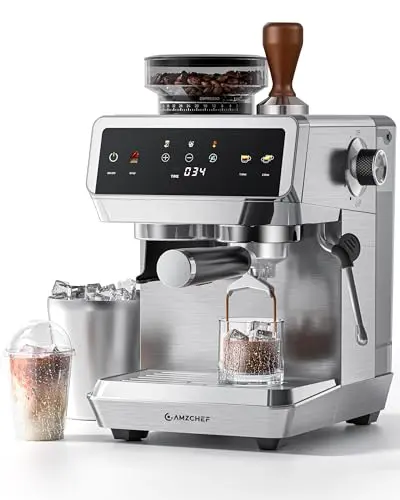
CM1626 – Built-In Grinder for Small Offices
A compact espresso machine with a built-in grinder, adjustable temperature, and a cold brew mode. The touch screen and steam wand make it a flexible option for a small office that wants fresh-ground espresso without a separate grinder.
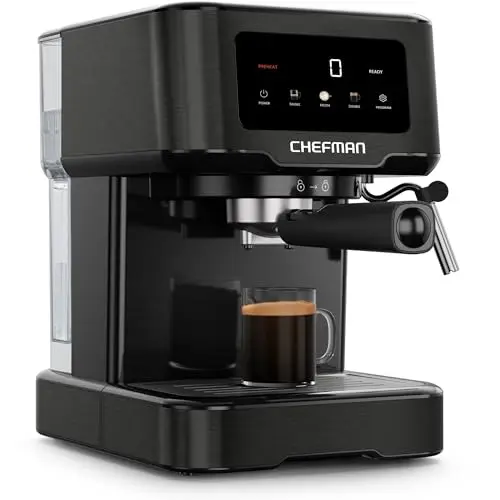
CraftBrew RJ54-SS-15-D-BLK – Budget-Friendly Compact Espresso
A compact 15-bar espresso machine with a steam wand, touch controls, and a removable 1.5-liter water tank. It’s a budget-friendly starting point for a very small office that wants espresso and milk drinks without a large investment.
How We Evaluated These Espresso Machines for Business
We didn’t run controlled kitchen lab tests or long-term reliability trials. What we did: cross-referenced 6 espresso machines from 4 brands across 6 decision axes – automation and training load, drink variety, milk frothing, capacity and workflow, cleaning and maintenance, and footprint. We triangulated published specifications, feature sets, and owner feedback where available, then mapped each machine to a representative business use: a small office, a busy breakroom, or a meeting-heavy workplace. We did not measure extraction yields, run water-hardness trials, or simulate months of daily service, so our calls lean on documented capabilities and how each machine is designed to be used.
The scoring framework weighted real-world performance (70%) – how well each machine fits a shared workplace without constant babysitting – against feature differentiation (30%) – unique technical advantages like built-in grinding, hands-free frothing, or batch brewing. We also weighed how much training a new operator needs, how easy the milk system is to clean, and whether the machine can keep up with a queue. We have no commercial relationship with any brand here; recommendations track fit and differentiation, not brand preference. If your priority is a hands-off office setup, the De’Longhi Magnifica Duo is the strongest match. If you need espresso plus drip and cold brew from one countertop machine, the Ninja Luxe Cafe Pro is the better fit.
How to Choose the Right Espresso Machines for Business
1. What Makes an Espresso Machine Right for Business Use
Business espresso is less about café theater and more about repeatability. The machine has to make a good cup when the regular operator is out, the office manager is in a hurry, and a visitor wants something different. The strongest business picks balance throughput, automation, and cleaning routine rather than chasing the most manual control. A machine that pulls a great shot but needs a trained barista will sit idle in most offices. A machine that is easy to use but produces weak coffee will get abandoned. The middle ground is a setup that can serve a small team or a meeting-heavy workplace without turning coffee into a chore.
2. Capacity and Workflow in a Shared Office Espresso Setup
Start with how many drinks you need in a burst, not just how many people work there. A 12-cup carafe or a large reservoir can matter more than a fancy steam wand if meetings drive demand. A single-serve capsule path helps when people want speed and consistency, while a bean-to-cup machine suits teams that care about fresh grinding. If meetings are part of the rhythm, the Ninja CFN601 is the easier route because it can brew a 12-cup carafe and espresso from one machine. For a smaller office, a compact semi-automatic machine may be enough. The goal is a workflow that doesn’t create a queue at 9 a.m.
3. Automatic vs. Manual Espresso Machines for Workplace Teams
Fully automatic machines reduce training load and keep quality consistent across shifts, which is why they tend to suit shared workplaces. Semi-automatic machines cost less, take less counter space, and give an experienced operator more control, but they depend on someone willing to grind, dose, tamp, and steam. If nobody wants to train on a portafilter, the De’Longhi Magnifica Duo is the safer business choice. If the team enjoys the ritual and volume is low, a manual machine can work, but it should be treated as a shared appliance with a named owner.
4. Milk Frothing and Drink Variety for Business Coffee Service
Milk is where business machines often fall down. A automatic milk carafe makes cappuccinos and lattes realistic for self-service, while a manual steam wand demands more skill and cleanup. Hot and cold foam capability is useful if your team drinks iced lattes year-round. Plant-based milk compatibility matters too; not every frother handles oat or almond milk the same way. The more variety you offer, the more you need a simple cleaning routine and clear instructions posted nearby. A machine that makes one great drink but frustrates people on the second order isn’t a good business fit.
5. Maintenance and Downtime in a Business Espresso Machine
Shared machines live and die by maintenance. Descaling intervals, water hardness, and daily milk cleaning matter more in an office than at home because the machine may run every day and sit idle on weekends. Look for removable water tanks, dishwasher-safe milk parts, and clear alerts. A service plan or warranty matters for a machine that a team depends on. The best business espresso machine is the one that keeps working when nobody remembers to baby it. If upkeep sounds like a chore, favor a fully automatic model with guided cleaning over a manual machine.
6. Budget Tiers for Business Espresso Machines
Business espresso machines span entry-level and premium tiers, with plenty in between. Entry-level machines can work for a very small office with modest daily demand, but they usually involve more manual steps and lighter-duty parts. Mid-range machines add built-in grinders, better frothing, or batch brewing. Premium machines bring fully automatic operation, drink variety, and larger-capacity milk systems. For a very small office watching spend, the Chefman CraftBrew is the budget entry point. The sweet spot for most businesses is the tier where you stop paying for café-style controls and start paying for reliability and workflow.
Frequently Asked Questions
1. What's the difference between the De'Longhi Magnifica Duo and the Ninja Luxe Cafe Pro for a business?
The Magnifica Duo is a fully automatic bean-to-cup machine with 20 recipes, a built-in grinder, and hot or cold milk frothing. It’s designed for a team that wants espresso, drip coffee, cold brew, and iced drinks with minimal training. The Ninja Luxe Cafe Pro is a 4-in-1 machine that adds drip coffee and cold brew but keeps more of a barista-style workflow with its grinder, dosing, and integrated tamper. For a business, choose the De’Longhi Magnifica Duo if you want the lowest training load and the widest automatic menu; choose the Ninja Luxe Cafe Pro if you want more hands-on drink crafting and a slightly more compact counter presence.
2. Is a fully automatic espresso machine worth it for a small office?
For most shared offices, yes. A fully automatic machine reduces training load, keeps shot consistency predictable, and usually handles milk cleaning with fewer steps. It makes sense when several people will use the machine and nobody wants to own the barista role. A semi-automatic machine can be a better fit if volume is low and one or two people actually enjoy the process. The key is whether the machine will still be used on a busy Monday when the usual expert is out.
3. How many drinks can a business espresso machine handle in a day?
Match the machine to your peak demand, not the total headcount. A small team can get by with a compact semi-automatic or a single-serve capsule machine, while a meeting-heavy workplace benefits from a 12-cup carafe or a fully automatic model with a large water tank. If people queue up at the same time every morning, prioritize workflow and reservoir size over fancy drink presets. If demand is spread out, a smaller machine with a good steam wand may be enough.
4. What's the difference between the Ninja CFN601 and the De'Longhi Classic Signature for breakroom use?
The Ninja CFN601 is built for flexibility: it brews Nespresso Original capsules, ground coffee, and a 12-cup carafe, with a built-in frother and a used-capsule bin. That makes it a strong breakroom machine for mixed preferences and meetings. The De’Longhi Classic Signature is a compact manual machine with a 15-bar pump, preset shots, and a two-setting steam wand. It suits a small office that wants hands-on espresso and has someone willing to tamp and steam. For pure self-service variety, the CFN601 is easier; for a compact espresso ritual, the Classic Signature is the more satisfying pick.
Final Verdict
For most businesses, the De’Longhi Magnifica Duo is the answer. It covers espresso, drip coffee, cold brew, and iced drinks with a fully automatic workflow, built-in grinder, and hot or cold milk frothing, so a shared team can serve itself without a barista. If your office runs on espresso plus drip and cold brew from one countertop machine, the Ninja Luxe Cafe Pro is the stronger fit for busy teams. If meetings and mixed preferences dominate, the Ninja CFN601 is the breakroom-friendly pick because it can brew capsules, grounds, and a 12-cup carafe. And if you’re equipping a very small office on a tight budget, the Chefman CraftBrew gets you into espresso and milk drinks with a compact, light-duty setup. Choose the machine that matches your daily workflow, not the one with the longest feature list.
