
Best Espresso Machines For Cafe – 2026 Reviews

There’s a moment that turns a home espresso habit into a full-blown hobby: you pull a shot, steam a pitcher of milk, and the result tastes thin and flat next to the flat white from the shop down the street. It’s rarely the badge on the machine that’s to blame. It’s stale or inconsistently ground coffee, a brew temperature that drifts, or milk that got blasted into big bubbles instead of folded into silk.
Those three problems point straight at the specs that actually matter here: grind quality and adjustability, temperature control at the group, and steam wand performance. Everything else – the touchscreen, the preset buttons, the cold brew mode – is garnish. The real split in this lineup is between machines that hand you control and machines that do the thinking for you, and both can land a genuinely cafe-worthy cup.
We looked across the major brands making espresso machines that can hold up to daily cafe-style drink making, not just an occasional Sunday shot. Some have grinders built in, some assume you already own one, and a couple are compact enough for a small kitchen. Here’s how they actually differ, and which one fits the way you’ll use it.
Best Espresso Machines for Cafe – 2026 Reviews
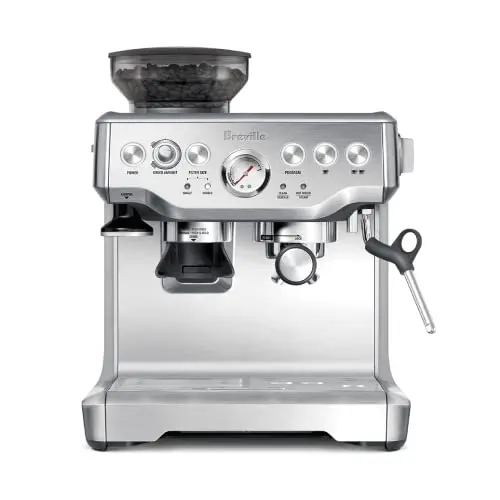
Barista Express – Built-In Grinder, Cafe-Quality Shots
A bean-to-cup manual machine that grinds on demand straight into the portafilter, then pulls the shot with digital temperature control. The shortest path from whole beans to a cafe-style latte in one footprint.
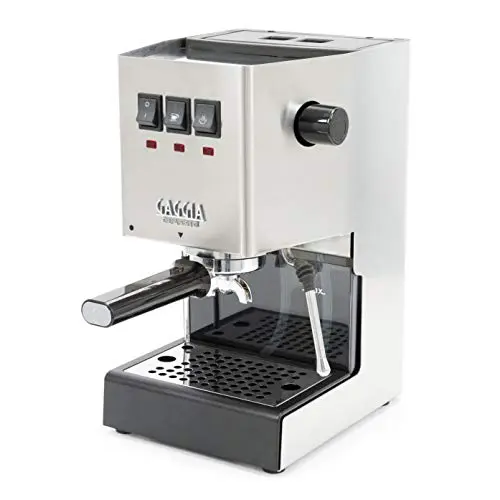
Classic Evo Pro – Commercial Parts, Purist Control
A small, steel-bodied Italian machine built around commercial-style parts: a 58mm portafilter, a three-way solenoid valve, and a proper steam wand. No grinder, no presets – just the pieces that matter for repeatable shots.
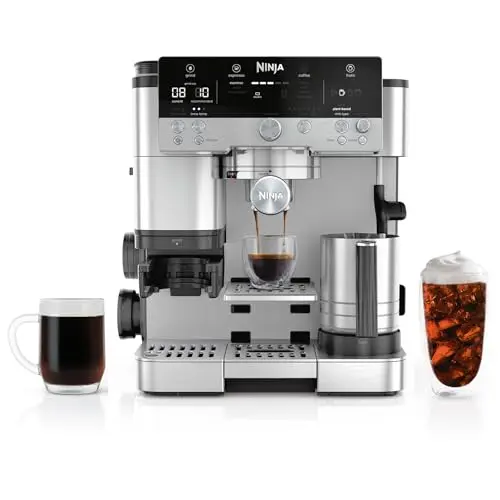
Luxe Cafe Premier ES601 – Guided 3-in-1 Cafe Brewing
A guided machine that grinds, doses, tamps, and froths with minimal input, and also handles drip coffee and cold brew. The closest thing here to pressing a button and getting a cafe-style drink.
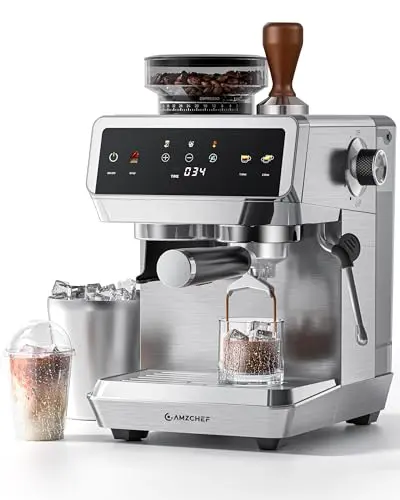
CM1626 – Built-In Grinder with Temperature Control
A compact all-in-one with a 44-setting burr grinder, adjustable brew temperature, and a touchscreen showing grind time, brew time, and temp. Mid-range money for grinder-plus-machine convenience.
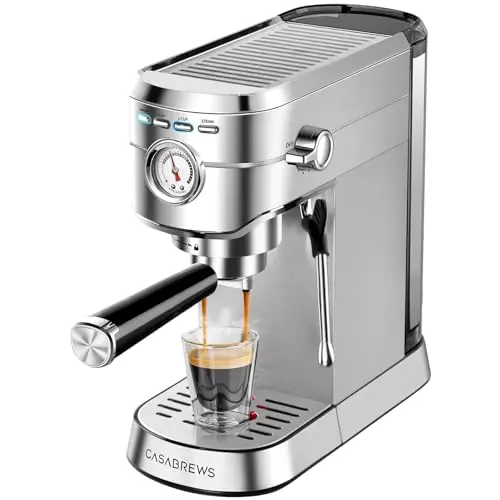
CM5418 – Compact Gauge-Backed Steaming
A slim stainless machine with a 20-bar pump, a visible pressure gauge, and a steam wand that punches above its footprint. Good for small kitchens that still want milk drinks.

Stilosa EC260BK – Entry Point to Milk Drinks
A compact, budget-friendly manual machine with a stainless steel boiler, a 15-bar pump, and a manual steam wand. A low-friction way to start making lattes at home.

3700 Essential – Big Tank, Small Footprint
The most budget-friendly way into a 20-bar pump and a real steam wand. Compact, stainless, and fitted with a larger tank than most machines at this size.
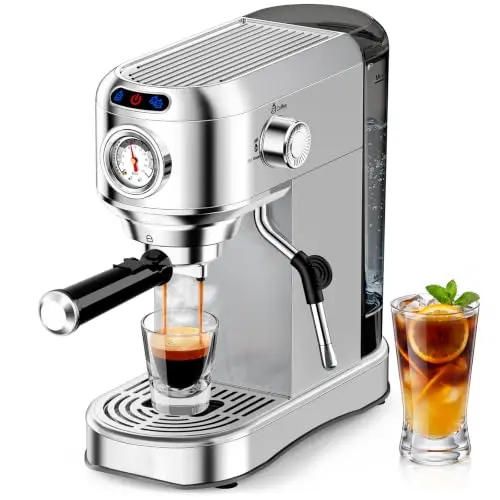
ST-699B – Slim 20-Bar Setup with Gauge
A countertop-friendly 20-bar machine with a visible pressure gauge and a fast 20-second preheat. Slim enough for small kitchens that still want milk drinks.
How We Evaluated These Espresso Machines for Cafe
A few things we can’t tell you: we didn’t pull hundreds of shots on a lab scale or run months of reliability trials in a busy cafe. What we can tell you is how these machines differ on the things that decide whether your morning flat white tastes like the one you buy – grind consistency, temperature stability, steam quality, and workflow.
We cross-referenced eight espresso machines from seven brands across six decision axes: pump pressure and temperature control, grinder integration and grind range, portafilter size and basket compatibility, steam wand performance and microfoam quality, tank capacity and footprint, and the learning curve each machine demands. We triangulated published specifications, feature sets, and owner feedback where available, then mapped every machine against two buyer profiles – the tinkerer who wants to dial in a shot and the commuter who wants a cafe-style latte before walking out the door.
The scoring weighted real-world fit (70%) – how reliably a machine delivers repeatable shots and decent microfoam in daily use – against feature differentiation (30%) – built-in grinders, guided dosing, hands-free frothing, and other advantages that genuinely change the workflow. We have no commercial relationship with any of the brands here; recommendations track fit and differentiation, not brand preference. If you want one machine that grinds and steams for you, the Barista Express is the shortest path. If you already own a good grinder and want commercial-style parts, the Gaggia Classic Evo Pro is the better match.
How to Choose the Right Espresso Machine for Cafe-Style Drinks
1. What Separates a Cafe-Quality Espresso Machine From a Home Toy
Espresso is a small, fussy extraction, and cafe results come down to a short list: freshly ground coffee at the right fineness, water at a stable temperature, consistent pressure through the puck, and milk steamed into microfoam rather than foam. Any machine that gets those four right will make better drinks than a fancier machine that gets one wrong.
The practical question is where you want the machine to stop helping. A built-in grinder removes the biggest variable, because pre-ground coffee goes stale fast and no amount of pressure control fixes that. A manual steam wand keeps you in charge of texture but demands practice. Pressure gauges are feedback tools – they don’t make coffee better on their own, but they shorten the learning loop considerably.
2. Pressure, Temperature, and Grind: The Three Levers That Matter
Pump pressure gets marketed hard, and the numbers on the box have drifted upward. Espresso traditionally extracts around 9 bar; a 15- or 20-bar pump describes the machine’s capability, not the pressure at the puck, so a bigger number doesn’t automatically mean a better shot. What matters more is whether the machine holds pressure steadily through the extraction.
Brew temperature is the lever people overlook. Too cool and the shot tastes sour and thin; too hot and it turns bitter and ashy. Machines with PID temperature control or an adjustable range give you a way to respond when a particular roast doesn’t taste right. Grind fineness is the third lever, and it’s the one you’ll adjust daily – a conical burr grinder with a wide range of settings is worth more than any preset button.
3. Built-In Grinder or Separate Grinder for Cafe-Style Espresso?
A built-in grinder saves counter space, one power outlet, and the small daily friction of moving grounds from grinder to portafilter. It also removes the temptation to keep using coffee that was ground last week. The tradeoff is that if the grinder fails, the whole machine goes down with it.
A separate burr grinder buys you upgrade flexibility and often better grind quality for the money, but it’s another purchase and another footprint. If you already own a good one, don’t pay twice – put the budget into the brew side instead. If you’re starting from nothing and want the shortest path to a decent cup, the AMZCHEF CM1626 bundles a 44-setting grinder with adjustable brew temperature at a mid-range price.
4. Steam Wand Quality Decides Your Latte and Cappuccino
Most disappointing home espresso is really disappointing milk. A weak wand heats milk without aerating it properly, giving you a thin, bubbly pitcher that ruins an otherwise decent shot. A strong wand creates a rolling vortex that folds air in evenly, producing microfoam – glossy, pourable, and sweet-tasting because the milk hasn’t been scalded.
Look for a wand with a proper tip and enough steam power to finish a pitcher before the milk overheats; on many compact machines you’ll also want to check whether the boiler needs a cool-down between brewing and steaming. Commercial-style wands, like the one on the Gaggia Classic Evo Pro, give the most control but reward practice. Automatic frothing systems trade some control for consistency, which is a fair deal if you make the same drink every morning.
5. Manual, Semi-Automatic, or Guided: Choosing Your Cafe Workflow
Manual machines ask you to grind, dose, tamp, and stop the shot yourself. That’s more work and more skill, but it’s also how you learn what a good extraction feels and tastes like. Semi-automatic machines keep the manual portafilter workflow but handle timing and volume with buttons, removing one variable without removing the craft.
Guided machines sit at the other end. They weigh the dose, assist the tamp, adjust temperature and pressure for the drink you picked, and can froth milk hands-free. The tradeoff is less control over the variables a tinkerer wants to play with. Pick based on your mornings: if you want a latte in a few minutes with no thinking, guided wins. If you want to chase a better shot every week, manual is the more satisfying machine.
6. What Cafe-Style Espresso Machines Cost at Each Tier
At the entry level, you’re buying a pump, a boiler, and a steam wand – no grinder, and usually a smaller portafilter. These machines can make genuinely good milk drinks, but expect to add a grinder and accept a shorter lifespan. The De’Longhi Stilosa sits in this bracket with a stainless steel boiler and a manual wand.
The mid-range is where grinders start appearing and temperature becomes adjustable – the sweet spot for most people bringing cafe habits home. At the top end, you’re paying for grinder quality, temperature stability, build materials, and commercial-style parts like a 58mm portafilter, plus guided automation on the newest machines. None of it is wasted money, but the upgrades matter most if you drink espresso straight rather than drowned in milk.
7. Footprint, Water Capacity, and Daily Upkeep
Measure the space before you fall for a machine. A grinder-plus-espresso combo typically needs well over a foot of depth, and the premium all-in-ones are heavier and bulkier still. Compact machines in the five- to six-inch width range fit tight kitchens but tend to carry smaller tanks, which means more refills.
Upkeep is where budget and premium machines diverge quietly. Expect to descale regularly, empty the drip tray often, and wipe the steam wand after every use. Look for a removable water tank that lifts out without moving the machine, and a drip tray you can pull clean. If a machine has a three-way solenoid valve, the puck comes out drier and cleanup is noticeably easier.
Frequently Asked Questions
1. Do I need a built-in grinder to make cafe-style espresso at home?
Not strictly, but you need a burr grinder somewhere in the workflow. Pre-ground coffee stales within days and no machine can compensate for that. A built-in grinder is the simplest arrangement because it grinds directly into the portafilter and removes the transfer step. A separate burr grinder is often better value and easier to upgrade, and it lets you put more of your budget into the brew side.
If you want one purchase that covers both, the Breville Barista Express and the AMZCHEF CM1626 each pair a conical burr grinder with adjustable brewing.
2. Breville Barista Express vs Gaggia Classic Evo Pro: which is better for cafe-style drinks?
They solve the same problem from opposite ends. The Barista Express bundles a conical burr grinder, PID temperature control, and pre-infusion in one machine, so you can go from whole beans to a finished latte without buying anything else. The Classic Evo Pro spends its budget on commercial hardware instead: a 58mm portafilter, a three-way solenoid valve, and a commercial steam wand, but no grinder.
Starting from zero, the Breville is the more complete answer. Already owning a capable grinder, the Gaggia is the more rewarding machine.
3. How does the Ninja Luxe Cafe Premier compare with the Breville Barista Express?
Both grind and brew in one body, but they assume different users. The Luxe Cafe Premier is built around Barista Assist – weight-based dosing, assisted tamping, and automatic pressure and temperature adjustments – plus a hands-free froth system and drip and cold brew modes. The Barista Express is manual: you dose, tamp, and time the shot, then steam milk with your own hand on the pitcher.
Choose the Ninja if consistency with minimal effort is the goal, and the Breville if you want to learn the craft and adjust variables yourself. The Ninja’s extra modes come with a bigger footprint and more electronics in the chain.
4. Can a compact espresso machine handle daily cafe-style drink making?
Yes, with realistic expectations. Compact machines like the AERCANA ST-699B or the CASABREWS CM5418 can pull a decent shot and steam milk for one or two drinks at a time. What they don’t offer is the thermal stability or recovery speed of a bigger machine, and many need a cool-down between brewing and steaming before the overheat protection resets.
If your routine is a single latte each morning, that’s fine. If you’re making four milk drinks back to back for a household, a machine with a larger boiler and steadier temperature control will be less frustrating.
5. What's the difference between the CASABREWS CM5418 and the 3700 Essential?
They’re close cousins with different priorities. The CM5418 adds a visible pressure gauge and slightly more steam power, which helps when you’re learning to read a shot. The 3700 Essential drops the gauge but fits a much larger 43.9 oz water tank into a similar footprint, making it better for back-to-back drinks.
Both are 20-bar, grinder-free machines with manual steam wands, so the deciding factor is whether you’d rather have feedback (gauge) or capacity (tank).
Final Verdict
For most people chasing cafe-style espresso at home, the Barista Express is the answer. It grinds on demand, holds temperature with PID control, and gives you a steam wand that can actually produce latte art – one machine, one plug, no extra purchases.
If you already own a good grinder and want commercial-style hardware, the Gaggia Classic Evo Pro is the purist’s pick, with a 58mm portafilter and a three-way solenoid valve the Breville can’t match. Want the drinks without the learning curve? The Ninja Luxe Cafe Premier doses, tamps, and froths for you. And if you’re testing the waters on a tight budget, the CASABREWS 3700 Essential gets you a 20-bar pump and a real steam wand for entry-level money.
Match the machine to your mornings, not to the spec sheet – that’s the difference between a countertop ornament and a daily habit.
