
Best Espresso Machines For Coffee Shop – 2026 Reviews

A line of twelve people at 7am will expose every weak point in an espresso setup. Not the marketing specs – the real ones. How long the machine takes to recover between shots. Whether the steam wand keeps up with a run of flat whites. What happens when the third person this month steps onto the bar and has to pull something decent with almost no training.
That’s the lens we used here. Machines sold for home kitchens can absolutely do shop duty, but only some of them, and only in the right context. A high-volume café with a morning queue needs different bones than a farmers-market cart, a mobile trailer, or a bakery adding a small espresso bar in the corner. The two axes that separate the survivors from the shelf-queens are serviceable hardware – commercial-style group components, standard portafilter sizing, available parts – and repeatable output, meaning a machine that produces the same shot for whoever happens to be standing at the bar.
We looked across the market rather than at one brand, weighing manual, semi-automatic, and fully automatic espresso machines against what a coffee shop actually asks of them. Some picks here are built on commercial parts and can be repaired for years. Others are hands-off crowd-pleasers that let anyone on staff serve a consistent latte. Both are legitimate answers – they just solve different problems.
Best Espresso Machines for Coffee Shop – 2026 Reviews
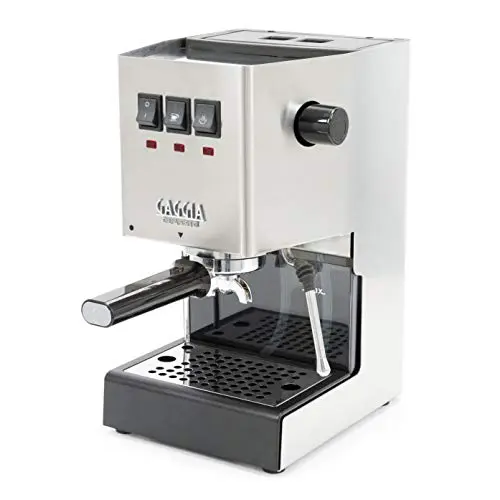
Classic Evo Pro – Commercial Parts in a Compact Frame
A compact, Italian-built semi-automatic with the internals of a much larger machine: a 58mm commercial portafilter, a commercial three-way solenoid valve, and a steel housing you can actually open up and work on.
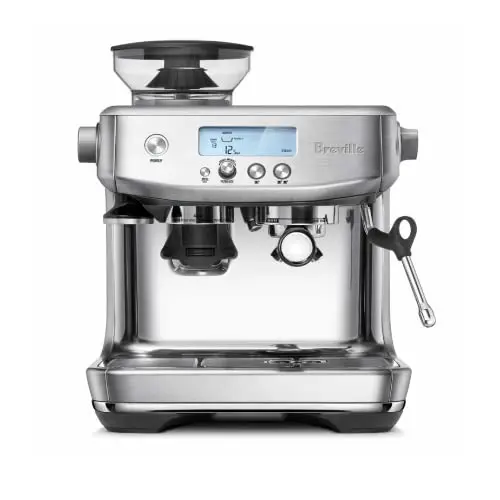
Barista Pro – Three-Second Heat-Up for Back-to-Back Shots
Breville’s step-up Barista model swaps the thermocoil for a ThermoJet heating system that reaches extraction temperature in about three seconds and flips to steam almost instantly – the difference you feel when the queue builds.
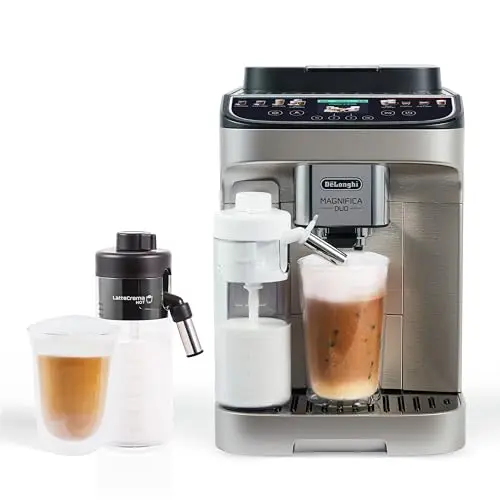
Magnifica Duo – Hands-Off Automatic Service
A fully automatic machine that grinds, brews, and froths without a barista in the loop – 20 preset recipes across espresso, drip, cold brew, and iced drinks, plus a frother carafe that handles hot and cold foam.
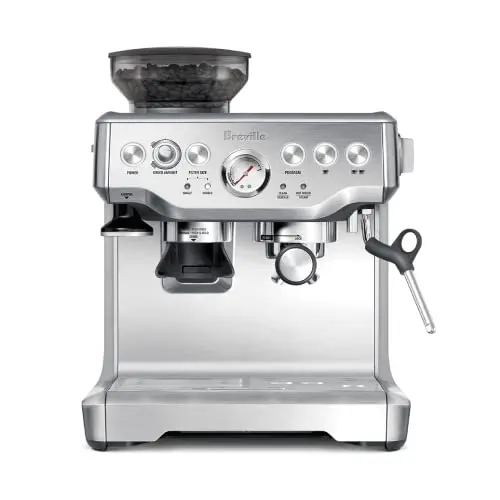
Barista Express – Built-In Grinder and Full Manual Control
The machine that put bean-to-cup on the home counter: a conical burr grinder, PID temperature control, low-pressure pre-infusion, and a manual steam wand, all in brushed stainless steel.
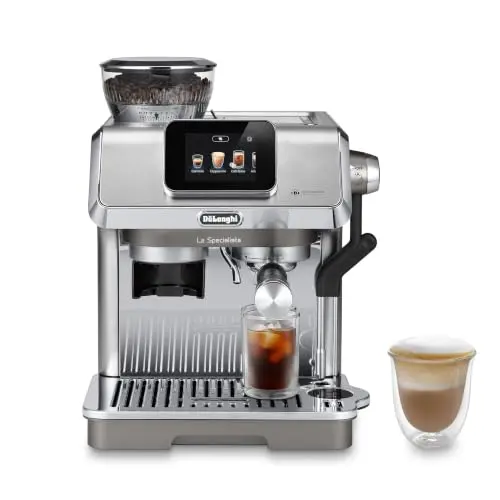
La Specialista Touch – Guided Dialing for Rotating Staff
De’Longhi’s guided semi-automatic walks you through grind, dose, pre-infusion, and temperature step by step – a touchscreen barista coach with 10 preset recipes and an automatic steam wand.
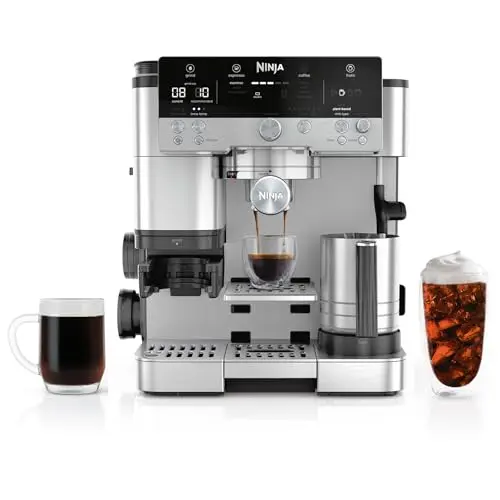
Luxe Cafe Premier ES601 – Guided 3-in-1 Brewing
A three-in-one that pulls espresso, brews drip coffee, and makes cold brew, with Barista Assist handling grind, dose, tamping, and temperature automatically.
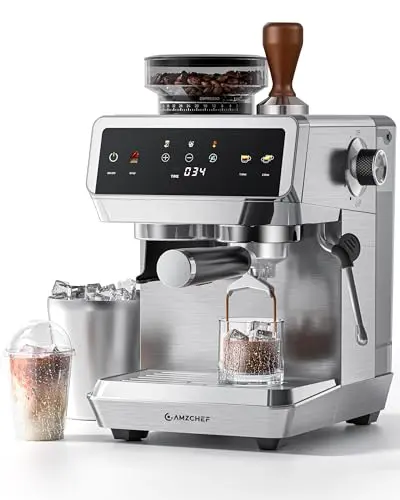
CM1626 – Budget Bean-to-Cup with 44 Grind Steps
An entry-level bean-to-cup machine with a 44-step grinder, adjustable brew temperature, a cold brew mode, and a touchscreen – at the lowest outlay in this lineup.
How We Evaluated These Espresso Machines for Coffee Shop
We didn’t pull shots on a café bar or clock milk-steaming times during a morning rush. What we did: cross-referenced 7 espresso machine models from 5 distinct brands across six decision axes – portafilter and group sizing, steam recovery, serviceability, grind control, drink-menu range, and daily maintenance load. We triangulated published specifications, feature sets, and owner feedback where available, then mapped each machine against realistic shop scenarios: a two-person cart, a pop-up, a small café adding a second station, and a low-volume office counter.
The scoring framework weighted real-world fit for shop use (70%) – how well a machine survives back-to-back orders, how repeatable its shots are in the hands of rotating staff, and whether it can be repaired rather than replaced – against feature differentiation (30%), meaning the genuine technical advantages each model brings to a counter. We have no commercial relationship with any brand here; recommendations track fit and differentiation, not brand preference. For a small café or cart where parts availability and shot repeatability matter most, the Classic Evo Pro is the pick; if speed of switching from brew to steam drives your queue, the Barista Pro is the better fit.
How to Choose the Right Espresso Machine for a Coffee Shop
1. What Actually Matters in an Espresso Machine for a Coffee Shop
Shop use reorders the priority list. At home the question is whether a machine can make a great drink; at a counter the question is whether it can make that same drink forty times in a row, at speed, by whoever is on bar, and still be fixable two years later. That reframes the shortlist around duty cycle rather than peak drink quality.
Three things jump to the top. Group and portafilter standards: commercial 58mm sizing means baskets, tampers, and accessories come from a wide pool instead of one vendor. Steam capacity matters too, because a shop menu skews milk-heavy and a wand that needs a long cooldown between pitchers will choke a queue. And parts availability: a machine with no service path is a disposable machine, no matter how good the first week tastes.
2. Serviceability Is the Coffee Shop Dealbreaker
Home machines get replaced. Shop machines get repaired. If the housing is steel, the valve is a standard commercial three-way, and the manufacturer publishes a parts diagram, the machine has a life beyond its first failure. That distinction matters more in a coffee shop than any spec printed on the box.
If it’s your top filter, the Classic Evo Pro is the clearest match in this lineup – steel housing, a commercial three-way solenoid valve, and a 58mm portafilter that takes standard baskets. Pair it with a good separate burr grinder and you have a rig you can rebuild piece by piece.
Also weigh how easily the machine descales, whether the reservoir lifts out for refilling mid-shift, and whether the drip tray and steam wand wipe down without tools.
3. Portafilter Size, Dose, and Shot Recovery Time
Bigger baskets and commercial diameters give you more headroom to dial in a repeatable dose. A 58mm basket holds a full double comfortably, while smaller baskets work fine but narrow the recipes and accessories available to you. Dose consistency is the other half of the equation – a built-in grinder with a dosing cradle removes a variable when several people share the bar.
Recovery time is the number nobody prints on the box. A machine that brews and then takes a long climb back to steam pressure sets the pace of your queue. Fast transitions between brew and steam matter more than peak wattage.
4. Milk Steaming Throughput for a Coffee Shop Menu
Most shop menus are milk-first, so treat the steam wand as a primary spec. A commercial-style wand gives you control over aeration and texturing; an automatic frother gives you consistency across staff and, often, cold foam for iced drinks. Those are different bets, and neither is wrong.
What you can’t fake is throughput. Ask how long the machine takes to come back to full steam after a pitcher, and whether the wand purges cleanly between drinks. On a busy morning, that gap determines whether your bar moves or stalls.
5. Manual, Semi-Automatic, or Fully Automatic Espresso Machines
These three styles are really three staffing models. Manual and semi-automatic machines reward skill and give you full control over grind, dose, and pre-infusion – the right call if you have or want trained baristas. Fully automatic machines trade that control for consistency and speed, which matters when turnover is high or the person on bar is also running the register. For a hands-off counter where nobody wants to learn puck prep, the Magnifica Duo automates grind, brew, and froth across a wide drink menu.
If you want speed without surrendering manual brewing, the Barista Pro splits the difference with a fast-heating system and a grinder built into the machine. Price tiers track roughly the same line: entry-level buys a compact grinder-plus-brewer combo, mid-range adds temperature stability and stronger steam, and premium buys heating speed, guided dialing, and automation.
6. Water Quality, Cleaning, and the Daily Shutdown Routine
Hard water kills espresso machines quietly. A water filter and a hardness test are cheap insurance, and descaling on schedule beats a repair bill later. Backflush the group at the end of each shift, and clean the milk system every single day if you’re running dairy through it.
Removable reservoirs and dishwasher-safe milk carafes sound like small conveniences until you’re the one closing. Build the shutdown routine into your labor plan before you buy, not after.
Frequently Asked Questions
1. Gaggia Classic Evo Pro vs Breville Barista Pro: which suits a coffee shop better?
They solve different problems. The Classic Evo Pro is built around commercial-style hardware – a 58mm portafilter, a commercial three-way valve, and a steel housing you can open up – so it’s the better long-term bet for a shop that wants to maintain and repair its own equipment. It has no grinder, so budget for one.
The Barista Pro is the better bet for speed: the ThermoJet heating system reaches extraction temperature in about three seconds and switches to steam almost immediately, and the built-in grinder keeps the workflow short. You give up commercial sizing and some repairability. Choose on whether serviceability or queue speed is your real constraint.
2. What's the difference between the De'Longhi Magnifica Duo and the Ninja Luxe Cafe Premier?
Both lean automatic, but they aim at different counters. The Magnifica Duo is a true super-automatic: 20 one-touch recipes, a built-in conical burr grinder, and a frothing carafe that handles hot or cold dairy and plant milk with nobody touching a pitcher. It’s the pick when the goal is a broad menu served consistently by anyone on shift.
The Luxe Cafe Premier is a 3-in-1 – espresso, drip, and cold brew – with Barista Assist handling grind, dosing, tamping, and temperature. It’s more flexible on menu variety but a smaller-capacity machine, and its durability feedback is less reassuring. Choose the De’Longhi for reliable automated service, the Ninja for menu breadth on one footprint.
3. Can a home-style espresso machine actually handle coffee shop volume?
Sometimes, with caveats. The machines here can serve a low-volume counter – a cart, a pop-up, a bakery corner, a second decaf station – but they aren’t built for a high-volume café pulling hundreds of shots a day. The dividing line is duty cycle: commercial machines are designed to run continuously and be serviced on site, while these need recovery time between bursts and depend on parts availability for repair.
If you’re somewhere in between, weight 58mm commercial components and serviceability heavily. A machine you can fix is worth more than a machine with a better spec sheet.
4. Do you need a separate commercial grinder if the espresso machine has a built-in one?
Not always, but often. Built-in grinders on bean-to-cup machines remove a variable and shorten workflows, which is exactly what you want when staff rotate. They also tend to be smaller, slower, and harder to service than a standalone commercial burr grinder.
If you’re grinding for back-to-back orders, a separate grinder gives you faster recovery, easier burr replacement, and the ability to keep pulling shots while one grinder is down. Machines without a grinder, like the Gaggia, assume you’re buying one anyway.
5. How much counter space should you budget for an espresso machine in a shop?
More than the spec sheet suggests. The machines here run roughly 8 to 20 inches deep and 9.5 to 15 inches wide, and you still need clearance for the portafilter, a milk jug, a tamping mat, and a separate grinder if you’re using one. Add headroom for filling the reservoir or hopper and for the steam wand to swing freely.
A compact machine like the Classic Evo Pro slots easily into a tight bar; a super-automatic like the Magnifica Duo is closer to 20 inches deep, so measure before you commit.
Final Verdict
For most small-shop setups, the Classic Evo Pro is the answer. It’s the only machine here built around commercial-style components – a 58mm portafilter, a commercial three-way valve, steel housing – and the only one you can realistically keep repairing instead of replacing. If your bottleneck is the queue rather than the repair bench, the Barista Pro turns drinks around faster with its instant brew-to-steam transition and built-in grinder. And if you’re staffing a counter with people who have never tamped a puck, the Magnifica Duo takes the barista out of the equation with one-touch recipes and automatic hot and cold frothing. Working to a tight budget for a cart or a low-volume counter? The CM1626 covers grinder plus brewer for a fraction of the outlay, with the honest caveat that it isn’t built for years of hard service.
