
Best Espresso Machines For Iced Lattes – 2026 Reviews

An iced latte is unforgiving in a way a hot one never is. The shot goes into a glass with cold milk and a handful of ice, and everything thin or bitter gets magnified as the ice melts. Espresso that tastes fine under a blanket of steamed milk often reads sharp and watery twenty seconds later.
Two things separate the machines that handle this well from the ones that don’t. First is extraction control – stable temperature and a grind you can actually dial in, because a slightly sweeter, more concentrated shot survives dilution. Second is the milk side. A steam wand makes hot microfoam, while a dedicated cold foam program makes the dense, pourable foam an iced latte actually wants sitting on top of it.
This guide works through the machines worth cross-shopping across the major brands in the category, from compact budget-friendly units to fully automatic bean-to-cup models. We’ll flag which ones lean into cold drinks, which ones expect you to do the work yourself, and which tradeoffs you’d be living with day to day.
Best Espresso Machines for Iced Lattes – 2026 Reviews
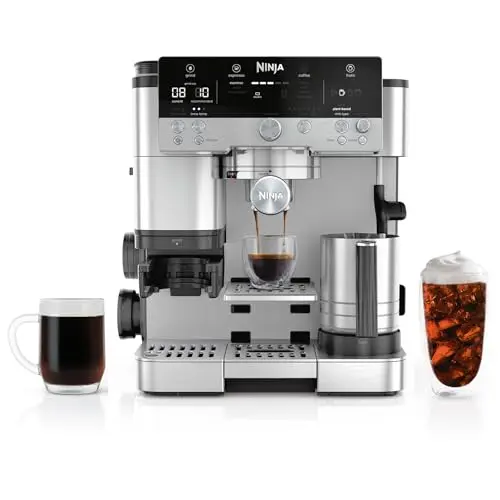
Luxe Cafe Premier ES601 – Cold Foam for Iced Lattes
A 3-in-1 machine that pulls espresso, brews drip coffee, and makes cold brew, with a hands-free dual froth system that includes a dedicated cold foam program. The built-in conical burr grinder offers 25 settings, and Barista Assist handles dosing and tamping guidance so a shot is repeatable rather than lucky.
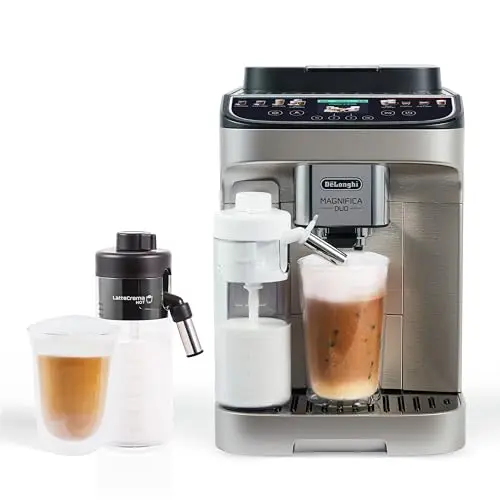
Magnifica Duo – One-Touch Hot and Iced Drinks
A fully automatic bean-to-cup machine with a menu of 20 hot and iced presets, three brewing methods under one roof, and the LatteCrema Hot and Cool carafe system for velvety hot or cold foam. The integrated conical burr grinder grinds fresh for every drink.
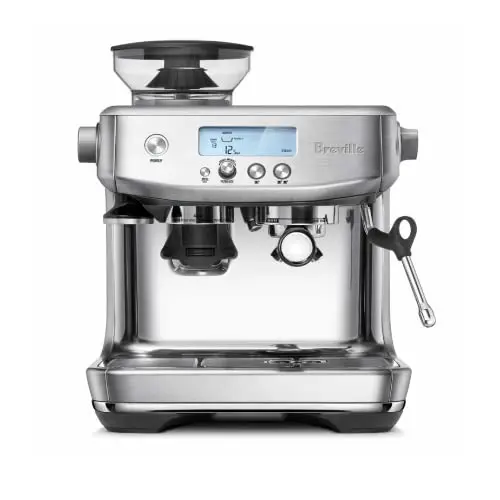
Barista Pro BES878BSS – Fast Heat-Up and Built-In Grinding
A manual machine with a built-in conical burr grinder, PID temperature regulation to within a couple of degrees, and an LCD that walks you through grinding and extraction. ThermoJet heating reaches brew temperature in about three seconds and switches into steam without a long wait.
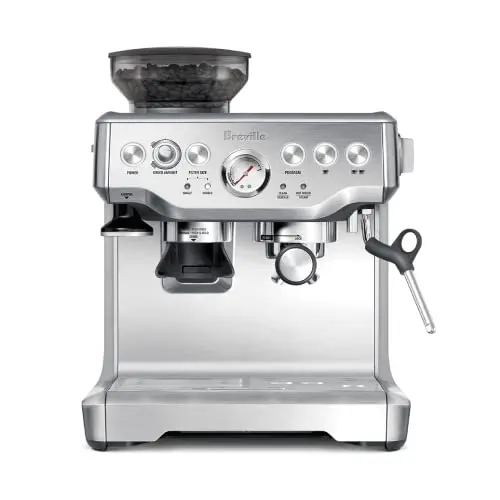
Barista Express BES870XL – Bean-to-Cup Manual Control
The classic all-in-one: an integrated conical burr grinder with dose control, low-pressure pre-infusion, and PID temperature regulation, paired with a manual steam wand and a 54mm portafilter. Everything from bean to shot happens in a single footprint.
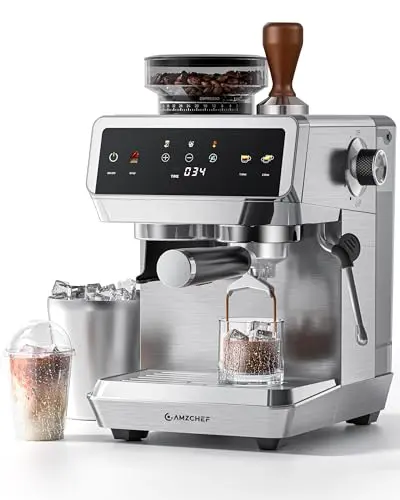
CM1626 – Adjustable Temperature with Cold Brew Mode
A semi-automatic machine with a built-in grinder offering 44 grind settings, brew temperature adjustable between 190F and 201F, a one-touch cold brew mode, and a 60 oz water tank. An 8mm stainless steel steam wand handles milk texturing.
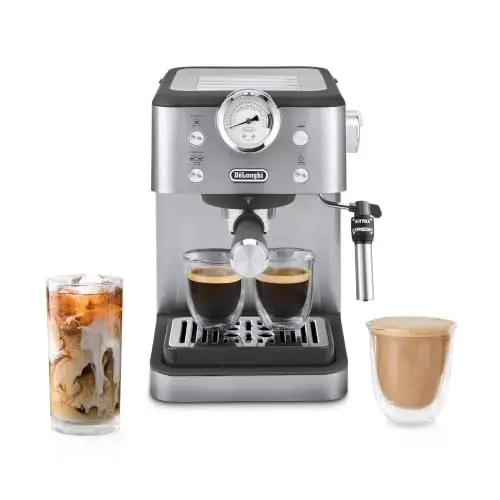
Classic Signature EM450M – Compact Semi-Automatic
A compact semi-automatic machine built around a 15-bar Italian pump, Thermoblock heating, preset single and double doses, and a two-setting steam wand that moves between silky steamed milk and denser microfoam. A pressure gauge sits up front.
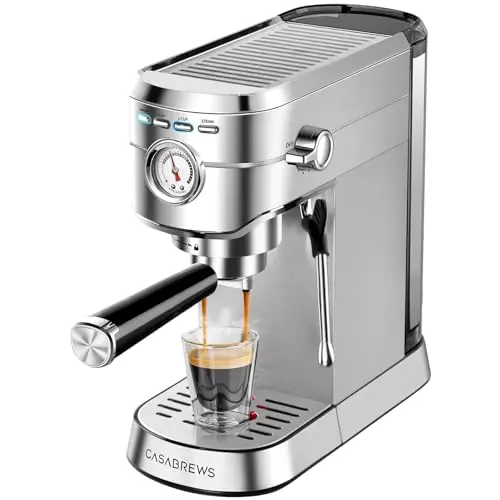
CM5418 – Compact 20-Bar with Pressure Gauge
A compact semi-automatic with a 20-bar pump, a built-in pressure gauge on the front panel, a milk-frothing steam wand, and a 34 oz removable tank. Single and double baskets and a tamper with scoop ship in the box.

3700 Essential – Budget 20-Bar Starter
An entry-level semi-automatic with a 20-bar pump, a steam wand for milk texturing, and a 43.9 oz removable water tank that brews several drinks before a refill. Single and double baskets plus a tamper with scoop are included.
How We Evaluated These Espresso Machines for Iced Lattes
We didn’t run controlled kitchen lab tests or long-term reliability trials. What we did instead: cross-referenced 8 espresso machines from 5 distinct brands across 6 decision axes – extraction pressure and brew temperature, milk and cold-foam capability, grinder integration, water capacity and footprint, everyday workflow, and warranty coverage. We triangulated published specifications, mapped each machine against the actual job of building an iced latte – a concentrated shot that has to survive cold milk and melting ice – and weighed long-term reliability feedback where available.
The scoring framework put real-world fit for iced lattes (70%) ahead of feature differentiation (30%). That ordering matters: a machine with a dedicated cold-foam program and repeatable dosing earns more credit here than a hotter, more manual model tuned purely for cappuccinos. We have no commercial relationship with any brand in this lineup, and recommendations track fit and differentiation rather than brand preference. A machine that makes a beautiful hot latte but forces you to chill and hand-whisk milk is a worse iced-latte machine, full stop.
If cold drinks are the main event, the Luxe Cafe Premier is the most direct match in this group. If you’d rather load beans, press a button, and walk away with a cold-foam-topped latte, the Magnifica Duo makes a strong case for itself.
How to Choose the Right Espresso Machine for Iced Lattes
1. Why Iced Lattes Ask More of an Espresso Machine Than Hot Drinks
Ice is the variable nobody accounts for. A shot that lands in a hot cup at a standard ratio tastes balanced; the same shot over ice with cold milk gets diluted by melt within a couple of minutes. That’s why iced-latte drinkers tend to prefer a shorter, more concentrated shot – more coffee, less water – so there’s flavor left after the dilution happens.
Temperature matters too. Stable brew temperature across consecutive shots means your second drink tastes like your first, which is a real consideration if you’re making two at once. Machines with PID control or a fast-recovery heating system handle this better than simple thermostats.
2. Extraction Pressure and Temperature: What Actually Matters
Bar numbers sell machines, but 15-bar and 20-bar pumps both deliver espresso at roughly the same working brew pressure – the pump rating is the ceiling, not what reaches the puck. What’s worth comparing is temperature stability, whether there’s a pre-infusion stage to wet the puck evenly, and how quickly the machine recovers between shots.
Thermoblock and similar on-demand heating systems reach temperature quickly and are common in compact machines, while PID regulation appears on models aimed at people who want repeatable results. Both can make good iced-latte espresso; the difference shows up in consistency across a session.
3. Cold Foam vs. a Steam Wand for Iced Lattes
A steam wand textures milk with hot steam. That’s perfect for cappuccinos, and it works for iced lattes if you chill the milk first or accept a warm layer on a cold drink. Cold foam is a different process – air and agitation rather than heat – and it produces the thick, spoonable topping you see on café iced drinks.
Only a few machines here build that in: the dual froth system on the Luxe Cafe Premier and the LatteCrema Cool carafe on the Magnifica Duo both handle cold foam hands-free. If cold foam is the whole point of your iced latte, the Luxe Cafe Premier is the pick here; the rest of the lineup will need a steam wand and a little patience.
4. Built-In Grinder or Standalone: Where the Money Goes
Freshness matters more for cold drinks than hot ones, because cold mutes aroma – a stale grind reads flat when the drink is iced. That argues for a built-in conical burr grinder if you’re drinking iced lattes regularly.
The tradeoff is complexity and cost. Machines with integrated grinding carry more that can go wrong, and the grinder is often the first part to draw complaints over time. If you already own a good standalone grinder, buying a machine without one is a legitimate way to spend less. If you want one box, the Barista Pro pairs a wide grind range with fast heat-up, and the AMZCHEF CM1626 offers 44 grind settings at a lower tier.
5. Footprint, Water Capacity, and Countertop Reality
Check depth before you check anything else. Fully automatic machines with milk carafes take up serious real estate – the Magnifica Duo runs nearly 20 inches deep – while compact semi-automatics can sit in a fraction of that. Measure the space under your cabinets, not just the width on the box.
Water tank capacity ranges from 34 oz on the smallest units to 67 oz on the Breville models. A bigger tank means fewer refills mid-session, but it also adds bulk. A removable tank that lifts out easily is worth more than raw volume in daily use.
6. Espresso Machines for Iced Lattes: Common Buying Mistakes
The most common mistake is buying on pressure rating alone. The second is assuming every machine with a steam wand can make cold foam – it can’t. The third is underestimating cooling cycles: many semi-automatics need to cool down between frothing and brewing, which turns a two-drink order into a longer project than expected.
Finally, don’t overlook upkeep. Steam wands need wiping after every use, water tanks need descaling on schedule, and built-in grinders benefit from occasional cleaning tablets. If you want low effort, a fully automatic model is worth the premium tier outlay; if you want a budget-friendly entry, a 3700 Essential-style machine gets you real espresso with fewer conveniences.
Frequently Asked Questions
1. What's the difference between the Ninja Luxe Cafe Premier and the De'Longhi Magnifica Duo?
Both make cold foam, but they get there differently. The Luxe Cafe Premier is a 3-in-1 that brews espresso, drip coffee, and cold brew, with a hands-free dual froth system and guided dosing and tamping through Barista Assist. The Magnifica Duo is fully automatic bean-to-cup: pick one of 20 hot or iced presets and the machine grinds, brews, and dispenses from the LatteCrema carafe.
In practice, the Ninja gives you more manual levers and a friendlier entry point; the De’Longhi gives you less to think about and a bigger counter footprint.
2. Is the Breville Barista Express or the Barista Pro better for iced lattes?
The Barista Pro has the edge for cold drinks, mainly because of ThermoJet heat-up – it reaches brew temperature in about three seconds and transitions to steam almost instantly, so making two iced lattes back to back is far less tedious. It also adds an LCD that shows grind and extraction progress and carries a two-year limited warranty.
The Barista Express pulls equally good espresso for less, but you’ll wait longer between shots and steam, and coverage is one year. Neither has a cold foam program, so milk duty is manual either way.
3. Can you make an iced latte without a cold foam feature?
Yes. Two approaches work well. First, chill your milk and steam it briefly to build a light microfoam you pour over the ice. Second, skip the wand entirely and shake cold milk hard in a sealed jar – you’ll get a looser but genuinely cold foam that behaves well on an iced drink.
What you can’t do is expect a standard steam wand to produce the dense, spoonable texture a cold foam program makes. If that texture is what you’re after, the Luxe Cafe Premier is the one in this lineup built for it.
4. Do you need a built-in grinder for iced lattes?
Not strictly, but it helps more than it does for hot drinks. Cold temperatures mute aroma, so a stale grind reads flatter over ice than it would in a cappuccino. A conical burr grinder that doses on demand keeps the coffee fresh right up to the shot.
If you already own a good standalone grinder, buying a machine without one – like the De’Longhi Classic Signature – is a sensible way to reallocate budget toward extraction quality instead.
5. How strong should the espresso be for an iced latte?
Stronger than you’d pull for a hot latte. Aim for a short, concentrated shot – more coffee, less water – because ice will dilute the drink within minutes. A 1:1.5 to 1:2 brew ratio is a reasonable starting point, then adjust to taste.
Brew temperature also matters: a slightly cooler extraction tends to taste cleaner once chilled, which is why machines with adjustable temperature like the AMZCHEF CM1626 are worth a look for iced drinks.
Final Verdict
For most people making iced lattes at home, the Luxe Cafe Premier is the answer – it pairs a hands-free cold foam program with a built-in grinder and guided dosing, and it’s the most beginner-friendly route to a café-style iced latte here. If you want the machine to handle everything and you have the counter depth for it, the Magnifica Duo delivers cold foam and one-touch iced recipes without any fiddling.
If you’re shopping on a tighter budget, the 3700 Essential gives up the gauge and the grinder but still pulls a proper shot. And if you’d rather control every variable, the Barista Express remains the most satisfying manual machine in this group.
