
Best Espresso Machines For The Money – 2026 Reviews

There’s a moment, usually a few months into a daily café habit, when the arithmetic starts to bother you. A home espresso machine promises to end that – if the machine you buy is actually good enough to drink from, which is a bigger if than the marketing admits.
The value question here isn’t just what a machine costs. It’s what you get per dollar: does it grind its own beans, does the steam wand produce real microfoam, does the temperature hold steady long enough for a second shot? Plenty of affordable machines nail one of those and fumble the rest. The best-value picks stack two or three.
What follows is a survey of the machines worth considering across the price spectrum, from compact entry-level pumps to all-in-ones with grinders and guided dosing. Some ask more of you than others. Every one of them earns its place by doing something well that the machine sitting next to it doesn’t.
Best Espresso Machines for the Money – 2026 Reviews
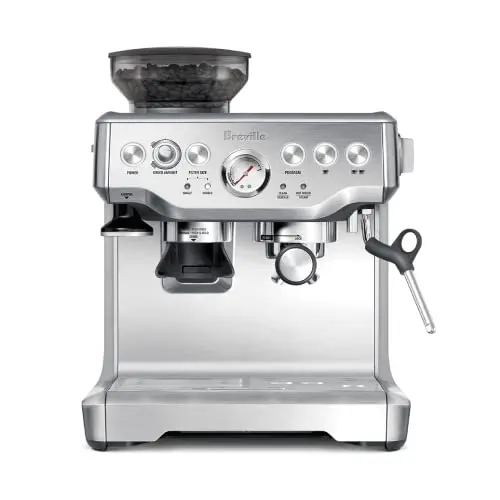
Barista Express BES870XL – Built-In Grinder, Café-Style Shots
A genuine bean-to-cup setup in one footprint: a conical burr grinder feeds a 54mm portafilter, PID regulation holds brew temperature steady, and low-pressure pre-infusion eases into the shot. The steam wand is the real thing, not a frothing aid.
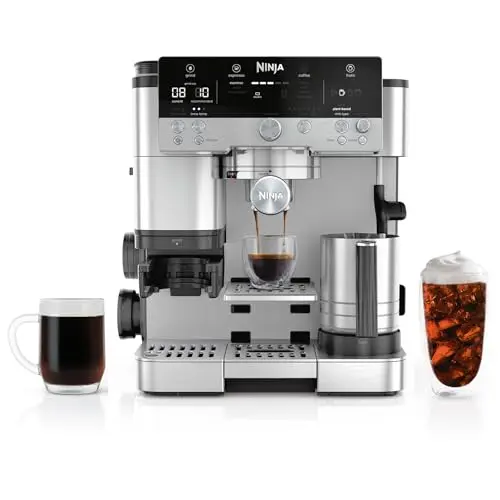
Luxe Cafe Premier ES601 – Hands-Free Frothing, Three Machines in One
A three-in-one that pulls espresso, brews drip coffee and makes cold brew from the same body, with Barista Assist guiding grind, dose and tamp. The dual froth system handles milk without you standing over it.
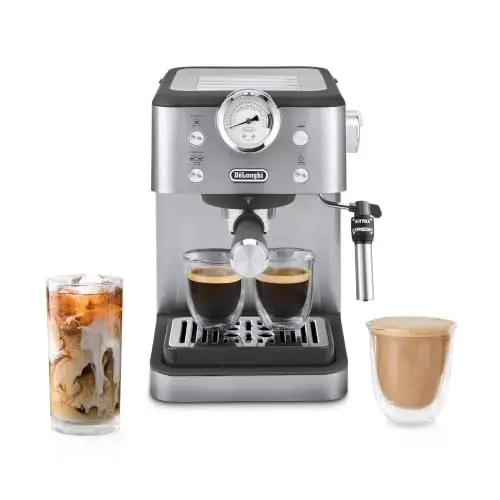
Classic Signature EM450M – Fast Heat-Up, One-Press Presets
Simple, compact and quick to temperature: a 15-bar Italian pump, Thermoblock heating and a two-setting steam wand, plus programmable single and double shots. No grinder, no fuss, no unnecessary dials.
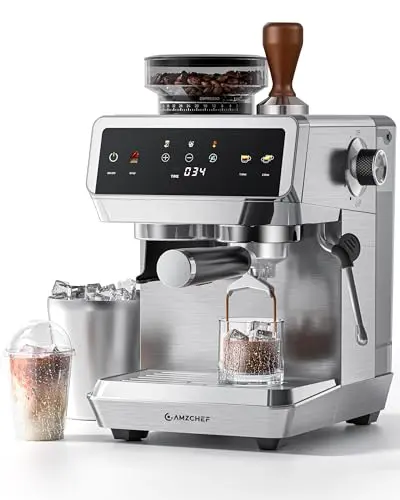
CM1626 – Grinder and Temperature Control on a Budget
A grinder-equipped semi-automatic with 44 grind settings, brew temperature adjustable from 190F to 201F, a touch screen that tracks grind and brew time, and a one-touch cold brew mode. Compact for how much it carries.
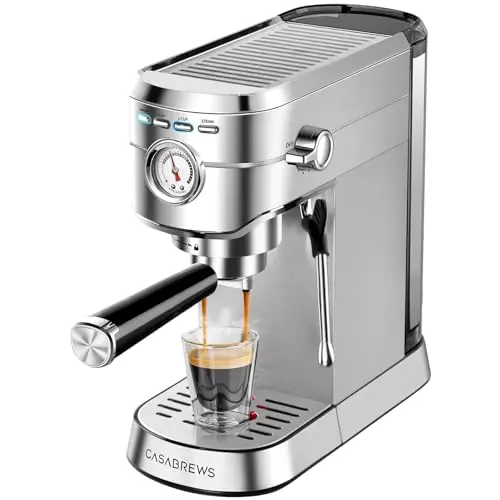
CM5418 – Pressure Gauge and 20-Bar Pump
A compact 20-bar semi-automatic with a visible pressure gauge on the front, a 34 oz removable tank and a steam wand built for microfoam. Grinder sold separately.

3700 Essential – Entry-Level 20-Bar Espresso
The lowest-cost route into a 20-bar pump machine here, with a larger 43.9 oz removable tank, a 51mm portafilter and a steam wand. It drops the pressure gauge to hit its tier.

C5010 Slim – Five-Inch-Wide Espresso for Small Counters
Five and a half inches wide, with a 20-bar pump, pressure gauge, pre-infusion and PID temperature control. A lot of specification for the tier, provided your counter space is measured in inches.
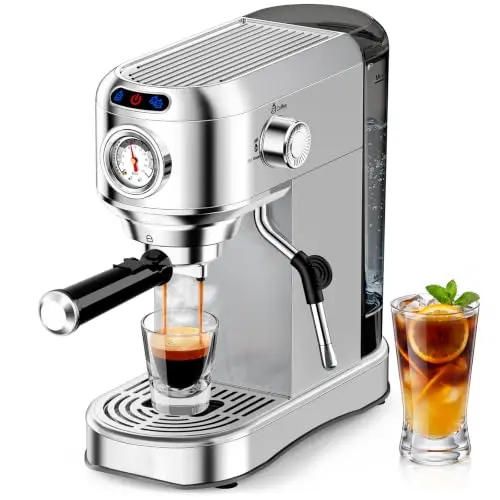
ST-699B – Compact 20-Bar Starter Machine
A compact 20-bar semi-automatic with a pressure gauge, a 1450W heater that preheats quickly and a 34 oz removable tank. Ground coffee only – no grinder inside.
How We Evaluated These Espresso Machines
We didn’t brew on these machines side by side in a test kitchen. What we did: cross-referenced 8 espresso machines from 7 distinct brands across 5 decision axes – grinder capability, brew temperature and pressure control, milk-frothing design, footprint and tank capacity, and how much hands-on work each machine demands per shot. We triangulated published specifications, manufacturer feature sets, aggregated owner feedback where available, and use-case fit for the buyers most likely to shop this tier: latte drinkers stepping up from a café habit, small-kitchen owners, and first-time espresso makers. We also mapped footprint against typical counter depths, since a value pick you can’t fit is no pick at all.
The scoring framework weighted real-world fit (70%) – how reliably each machine delivers a repeatable, drinkable shot for its likely owner – against feature differentiation (30%) – what each unit offers that its closest rival doesn’t, whether that’s a built-in grinder, guided dosing or a pressure gauge. Where owner feedback was thin or contradictory, we flagged it rather than papering over it. We have no commercial relationship with any brand here; recommendations track fit and differentiation, not brand preference. If you want one machine that grinds, brews and steams without a second purchase, the Barista Express is the shortest path; if you’d rather the machine did the thinking, the Luxe Cafe Premier earns its spot.
How to Choose the Right Espresso Machines for the Money
1. What Actually Makes an Espresso Machine Worth the Money
Pump pressure gets the biggest font on the box and matters less than you’d expect. 15 to 20 bar is the working range; beyond that, the number is marketing. What decides whether a shot tastes good is temperature stability – water that stays in the right band through the whole extraction – plus a consistent grind and dose. A machine with a 20-bar pump and a wobbly heater loses to a 15-bar machine that holds temperature every time.
The second value lever is how much work each shot demands. Some machines want you to weigh, grind, dose, tamp and time; others walk you through it. Neither is inherently better, but be honest about your morning tolerance for ritual before paying for capability you won’t use.
2. Where the Money Goes: Entry-Level vs Mid-Range Espresso Machines
Entry-level pump machines generally ship with a pressurized filter basket, a basic boiler and a modest steam wand. They can produce genuinely drinkable espresso, but most need a cool-down cycle between steaming milk and pulling the next shot – which is why they suit one-drink-at-a-time households best.
Step up a tier and the money goes into PID temperature control, a non-pressurized basket that rewards a good grind, and a wand with enough steam power to texture rather than simply heat. That’s the band where most of the value in this category lives.
The top of the consumer range adds a built-in conical burr grinder and guided dosing. You’re paying to remove a separate purchase and a variable, not to reach a fundamentally different style of coffee.
3. Do You Need a Built-In Grinder to Get Good Value?
Freshly ground coffee is the single biggest upgrade to shot quality, and a built-in grinder removes the I’ll-buy-one-later step that never happens. The catch: grinders inside affordable machines vary a lot in consistency and step count. A 44-setting grinder gives you far more room to dial in than a vague stepless burr.
If you already own a good burr grinder, buying a machine without one is the smarter spend – same outlay, better brew hardware. If you don’t, the CM1626 is the most affordable way here to get a grinder, adjustable brew temperature and a steam wand in one body.
4. Milk Frothing Matters More Than the Spec Sheet Admits
Most people buying in this category are making lattes and cappuccinos, which means the steam wand deserves as much scrutiny as the pump. A manual wand rewards practice and gives you control; a hands-free frother trades nuance for consistency.
Watch for machines that force a cool-down between brewing and steaming – it turns a two-minute drink into a five-minute one at exactly the moment you’re least patient. If you make milk drinks daily and want the machine handling texture, the Luxe Cafe Premier is built around that tradeoff.
5. Compact Espresso Machines for Small Kitchens
Footprint is a value spec. A machine that hogs the counter gets used less; one that fits gets used every morning. Narrow bodies under six inches wide exist at entry level, usually paired with a smaller water tank you’ll refill more often.
Balance the two: a 40-plus ounce tank means fewer refills, and a detachable tank and drip tray make daily cleaning realistic rather than aspirational. Some slim machines still include a pressure gauge and pre-infusion, so width alone doesn’t tell you what you’re giving up.
6. Which Espresso Machine Is the Best Value for Beginners?
Two paths make sense. If you want to learn the craft – dose, tamp, shot timing – the Barista Express teaches you on real equipment and includes the grinder, so the learning curve and the upgrade path are the same purchase.
If you’d rather be handed a good shot, a guided machine with automatic dosing and hands-free frothing gets you there with less friction at a higher entry point. And if the budget is tight and you already own a grinder, the 3700 Essential delivers a 20-bar pump, a real steam wand and a generous tank for the least money in this lineup.
Frequently Asked Questions
1. Is a home espresso machine actually cheaper than buying coffee out?
Eventually, yes – but the honest answer depends on how much you drink and what you’d otherwise order. A mid-range machine with a grinder removes the per-drink cost entirely, leaving beans as your only recurring expense. The break-even point arrives quickly for a two-latte-a-day household and slowly for someone who brews twice a week.
What tips the math is how often you actually use it. Machines that are annoying to operate don’t get used, and an unused machine has no value at all. That’s why workflow friction belongs in the same conversation as price.
2. What's the difference between the Breville Barista Express and the Ninja Luxe Cafe Premier?
They solve the same problem differently. The Barista Express is a manual craft machine: you grind, dose, tamp and watch the shot, with PID-controlled brew temperature and a wand you learn to use. The Luxe Cafe Premier automates those steps with guided dosing and assisted tamping, then adds drip coffee and cold brew on top.
Pick the Breville if you want to get good at espresso. Pick the Luxe Cafe Premier if you want a good cup with minimal involvement.
3. How does the De'Longhi Classic Signature compare to the CASABREWS CM5418?
The De’Longhi leans on Thermoblock heating for fast warm-up and a two-setting steam wand, and its preset shot buttons make the morning routine a single press. The CASABREWS counters with a 20-bar pump and a visible pressure gauge, which is genuinely useful while you’re learning to read a shot.
Neither includes a grinder. The De’Longhi is the tidier, more forgiving machine; the CASABREWS gives you more feedback to work with and a slightly softer ask on budget.
4. Are 20-bar espresso machines better than 15-bar machines?
No. Pressure above the working range doesn’t improve extraction; in practice most espresso is pulled well below the pump’s rated maximum. What separates a good shot from a bad one is temperature stability, an even grind and dose, and a basket that lets water pass uniformly.
A 15-bar machine with tight temperature control will outperform a 20-bar machine with a loose heater. Treat the bar number as a spec-sheet entry, not a quality signal.
5. Do you need a built-in grinder to get good value?
Not necessarily. If you already own a capable burr grinder, spending the difference on brew hardware is the better trade. If you don’t, a built-in grinder saves a separate purchase and the internal argument about whether fresh beans are worth the hassle.
The practical test: will you grind every single time? If the honest answer is no, buy a grinder-equipped machine and remove the choice – the AMZCHEF CM1626 is the cheapest way to do that here.
Final Verdict
For most people shopping this category, the Barista Express is the answer – it bundles a real grinder, PID temperature control and a proper steam wand in one machine, and it’s the pick that keeps earning its keep after the novelty wears off. If you’d rather be guided than taught, the Luxe Cafe Premier automates the fiddly parts and adds drip and cold brew.
Working to a tighter budget with a grinder already on the counter? The 3700 Essential covers the basics with a 20-bar pump and a genuine steam wand for the least money here. And if you want the grinder included without stretching to the top tier, the AMZCHEF CM1626 is the value play – adjustable brew temperature, a 44-setting grinder and a touch screen for mid-tier money. Match the machine to your morning, not to the spec sheet.
