
Best Espresso Machines For Small Business – 2026 Reviews

A small business coffee setup has a different job than a home counter. The machine has to survive shared use, make sense to whoever opens the shop or office that morning, and turn out a repeatable latte without turning every drink into a training session. That shifts the priority list: workflow speed, consistent dosing, milk-frothing routine, and recovery time between drinks matter more than the longest feature list.
The tricky part is that most machines sold as espresso makers are home-style machines. They can work beautifully in a small office, studio, salon, or low-volume retail counter, but they are not commercial workhorses. Decide early whether you need a built-in grinder, how much milk frothing automation you want, and how much counter space you can give up. We cross-shopped the category across brands to help you pick the machine that fits your staffing and volume, not just your countertop.
Best Espresso Machines for Small Business – 2026 Reviews
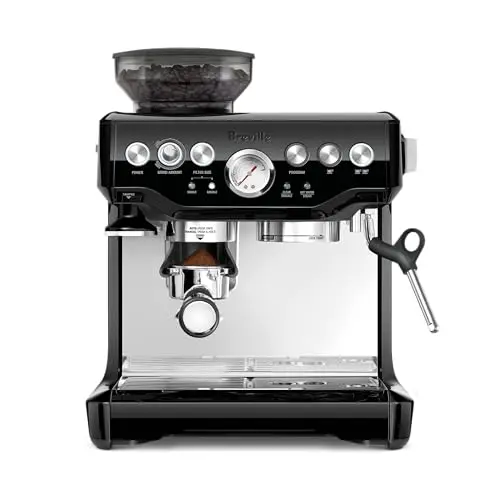
Barista Express BES870BSXL – Built-In Grinder Workhorse
A semi-automatic, grinder-equipped espresso machine with PID temperature control, low-pressure pre-infusion, and a manual microfoam steam wand. The 67-ounce tank and half-pound hopper suit a small team willing to train on workflow.
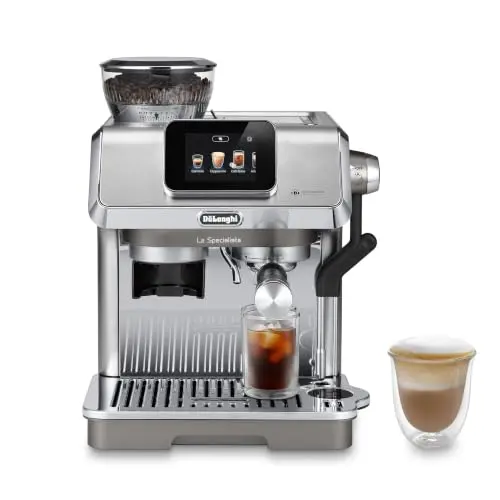
La Specialista Touch EC9455M – Guided Premium Brewing
A guided semi-automatic machine with a built-in conical burr grinder, 10 preset recipes, Bean Adapt dial-in assistance, and automatic milk frothing. It is the premium option for a small business that wants consistency with hands-on control.
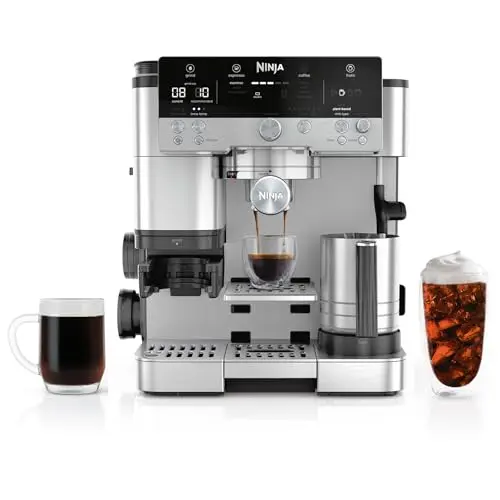
Luxe Cafe Premier ES601 – Low-Effort 3-in-1
A 3-in-1 espresso, drip coffee, and cold brew machine with a built-in grinder, Barista Assist guidance, assisted tamping, and hands-free hot or cold frothing. It is built for low-effort consistency in a shared office.
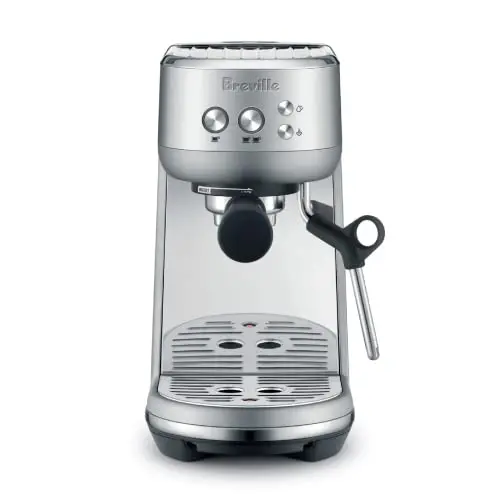
Bambino BES450BSS – Fast, Compact Semi-Auto
A compact semi-automatic espresso machine with ThermoJet fast heating, PID temperature control, and an automatic steam wand. It has no grinder, so pair it with a separate grinder for a small-business setup.
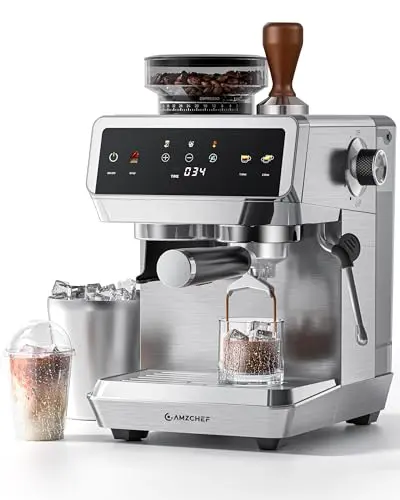
CM1626 – Grinder Combo with Temp Control
A budget-minded semi-automatic espresso machine with a built-in 44-setting grinder, 190-201°F temperature control, touchscreen operation, and a manual steam wand. It is a lower-cost way to get grinding and brewing in one unit.
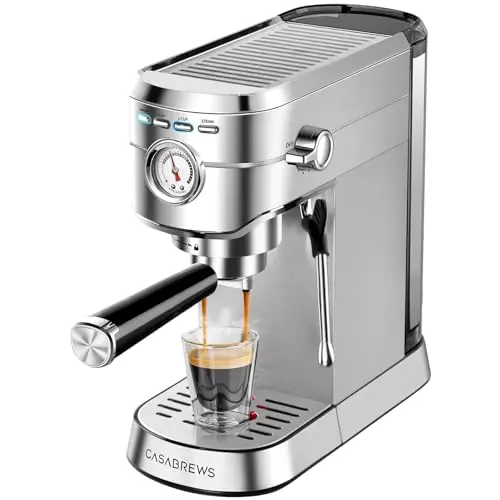
CM5418 – Compact 20-Bar Manual
A compact semi-automatic espresso machine with a 20-bar pump, visible pressure gauge, and powerful steam wand. It has no grinder and requires a cool-down between steaming and brewing.

Stilosa EC260BK – Entry-Level Manual
A simple manual espresso machine with a stainless steel boiler, 15-bar pump, and manual steam wand. It is an entry-level option for low-volume use and needs a separate grinder.
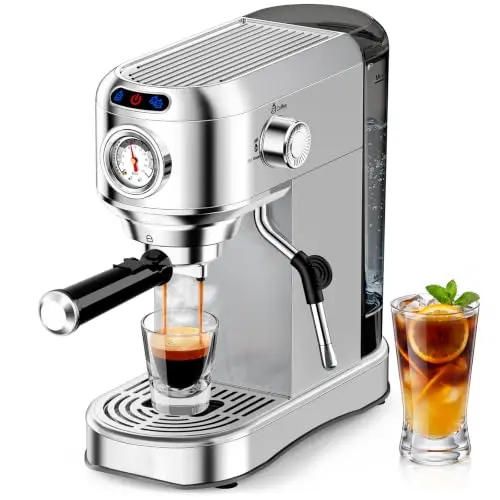
ST-699B – Ultra-Compact 20-Bar
An ultra-compact semi-automatic espresso machine with a 20-bar pump, pressure gauge, and powerful steam wand. It fits tight counters but has no grinder.
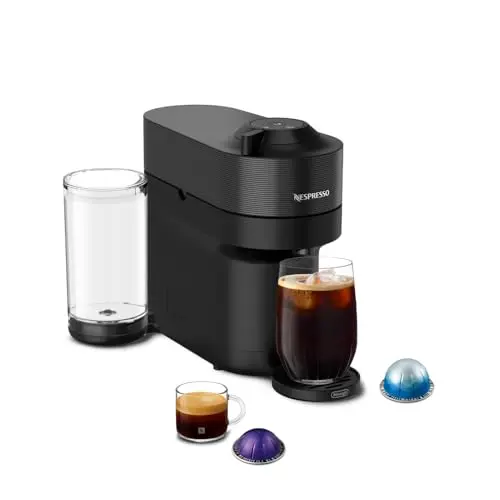
Vertuo Pop+ ENV92B – Capsule Convenience
A capsule-based coffee and espresso machine with one-touch brewing, five cup sizes, and a compact side-tank design. It skips grinding and tamping entirely but locks you into pods.
How We Evaluated These Espresso Machines for Small Business
A few things we can’t tell you: we didn’t run a commercial-volume cafe trial or measure long-term duty cycles in a lab. What we can: cross-referenced 9 espresso machine models from 7 distinct brands across six decision axes – grinder integration, milk-frothing workflow, capacity and recovery, counter footprint, training burden, and durability signals. We triangulated published specifications, feature sets, owner feedback where available, and use-case fit for small-business settings like offices, studios, salons, and low-volume retail counters.
We weighted real-world fit for a small business (70%) – how consistently each machine supports repeatable drinks with limited staff training – against feature differentiation (30%) – grinder quality, frothing automation, preset guidance, and capacity advantages. We audited each lineup for genuine workflow tradeoffs rather than spec-sheet bragging rights. We have no commercial relationship with any featured brand; recommendations track fit and differentiation, not brand preference. We mapped those tradeoffs against common small-business scenarios, from a two-person studio to a customer-facing counter.
If you can train a dedicated operator and want a proven grinder-equipped workhorse, the Barista Express is your match; if you want guided premium brewing with automatic milk, the La Specialista Touch serves you better.
How to Choose the Right Espresso Machine for Small Business
1. What Matters Most in an Espresso Machine for Small Business
A small business asks more from an espresso machine than a home kitchen does. The machine has to be understandable to more than one person, recover quickly between drinks, and produce a consistent shot even when the person pressing the button is not a coffee obsessive. The biggest practical filters are workflow speed and recovery time.
That does not mean you need a full commercial setup. For a low-volume office, studio, salon, or small retail counter, a well-chosen home-style machine can work well – as long as you are realistic about duty cycle and training burden. If you serve a steady cafe line, skip this category and budget for commercial equipment.
2. Built-In Grinder vs Separate Grinder for Small Business Espresso
A built-in grinder simplifies the workflow: beans go in, ground coffee goes into the portafilter, and there is one less appliance on the counter. That matters in a shared space where nobody wants to hunt for the right grinder setting. A separate grinder can be upgraded independently and may offer more control, but it adds counter space and another step in the morning routine.
If you want a grinder without jumping to the premium tier, the AMZCHEF CM1626 is the pick here. If you already own a capable grinder, put the budget into the espresso machine instead.
3. Manual, Semi-Automatic, and Guided Workflows for Small Teams
A manual workflow gives the operator the most control, but it also demands tamping, timing, and milk technique. Semi-automatic control keeps some of that hands-on feel while adding consistent pressure and temperature. Guided brewing goes further, using presets, feedback, or assisted tamping to shorten the learning curve.
For a low-effort office workflow, the Ninja Luxe Cafe Premier ES601 is the pick. For a small business with one trained operator who enjoys the craft, a manual or semi-automatic machine can be more satisfying and easier to service.
4. Milk Frothing: Steam Wand vs Automatic Frother
Milk drinks are where small-business workflows tend to bottleneck. A manual steam wand gives you control over microfoam texture, but it takes practice and adds time to every latte. An automatic steam wand or hands-free frother reduces training and keeps results more repeatable across different operators.
If you already have a grinder and want speed, the Breville Bambino is the pick; its automatic steam wand is beginner-friendly and the machine heats up very quickly. If milk drinks are the core of your menu, prioritize frothing automation over extra espresso modes.
5. Capacity, Footprint, and Recovery Time
Water tank capacity and bean hopper size determine how often someone has to stop and refill. A recovery time gap between brewing and steaming matters more in a shared space than it does at home. And counter footprint is a real constraint in a small office or retail counter.
Measure the space before you buy, including clearance for the portafilter and milk jug. A compact machine with a small tank can be the right call for a two-person studio, while a larger tank and hopper make more sense for a customer-facing counter.
6. Durability, Support, and Realistic Expectations
Most machines in this category are home-style espresso makers, not commercial workhorses. Duty cycle and service support matter as much as specs. Check warranty terms, availability of consumable parts, and whether the brand has a track record you trust.
Owner feedback can reveal patterns that spec sheets hide – grinder failures, leaks, or weak steam – but treat it as one signal, not a verdict. A machine with a strong warranty and accessible support is often the safer small-business choice than a cheaper model with unclear service.
7. How Much Should You Spend on a Small-Business Espresso Machine?
Entry-level machines get you espresso and a manual steam wand, usually without a grinder. Mid-range models add better temperature control, faster heating, or a built-in grinder. The premium tier brings guided brewing, automatic frothing, and larger capacity.
Think in terms of total cost of ownership: a separate grinder, milk jug, descaling supplies, and replacement parts all count. For a small business, the right question is not which machine is cheapest, but which one your team can operate consistently without wasting coffee or time.
Frequently Asked Questions
1. What's the difference between the Breville Barista Express and De'Longhi La Specialista Touch for a small business?
The Barista Express is a manual semi-automatic machine with a built-in grinder, PID temperature control, and a steam wand you operate yourself. The La Specialista Touch adds guided brewing, 10 preset recipes, and automatic milk frothing, which shortens training for a shared team. For a small business that wants guided premium consistency, the La Specialista Touch is the pick; choose the Barista Express if you prefer proven manual control and can train a dedicated operator.
2. Is the Ninja Luxe Cafe Premier or Breville Bambino easier for an office team to use?
The Ninja Luxe Cafe Premier ES601 is easier for a team because Barista Assist guidance, assisted tamping, and hands-free frothing remove several manual steps. The Breville Bambino heats faster and is much smaller, but it has no grinder and still asks the operator to manage the grind and dose. For the easiest shared workflow, the Luxe Cafe Premier ES601 is the pick; for a compact setup with a separate grinder, the Bambino makes more sense.
3. Do I need a built-in grinder for a small business espresso machine?
Not strictly. A separate grinder can be upgraded independently and often gives more control, but it adds counter space and another workflow step. A built-in grinder simplifies training and keeps freshly ground coffee consistent, which is valuable in a small business. If you want a grinder-equipped machine without a premium price tier, the AMZCHEF CM1626 is the value route; if you already own a good grinder, spend the budget on the espresso machine instead.
4. How many drinks can a home-style espresso machine handle in a small business?
A home-style espresso machine can handle a low-volume office, studio, or salon, but it is not a commercial-grade machine. Watch recovery time between shots, water tank size, and duty cycle; a queue of milk drinks will expose weak spots faster than straight espresso. For a customer-facing cafe with steady lines, look at commercial equipment rather than these low-volume models.
5. What's the difference between the De'Longhi Stilosa and CASABREWS CM5418?
The De’Longhi Stilosa is an entry-level manual machine with a stainless steel boiler and a manual steam wand. The CASABREWS CM5418 steps up to a 20-bar pump and a visible pressure gauge, and it is narrower on the counter. Neither has a grinder, and both need a cool-down between steaming and brewing. Choose the Stilosa for brand support and simplicity; choose the CM5418 if the pressure gauge and compact footprint matter more.
Final Verdict
For most small businesses, the Barista Express is the answer – it pairs a built-in conical burr grinder with PID temperature control and a capable steam wand, so a trained operator can turn out consistent espresso and microfoam without a separate grinder. If you want guided brewing and automatic milk frothing, the La Specialista Touch is the stronger fit. If the priority is minimal training for an office team, the Ninja Luxe Cafe Premier ES601 is purpose-built for that workflow. And if you need the lowest-cost grinder-equipped setup, the AMZCHEF CM1626 is the budget pick. Match the machine to your staffing and volume, not to the spec sheet.
