
Best Espresso Machines For Small Coffee Shops – 2026 Reviews

A small coffee shop lives and dies in the ten seconds between finishing one drink and starting the next. The machine that matters isn’t the one with the longest feature list – it’s the one that’s already back at brew temperature when the next order lands. That single filter cuts through a surprising amount of marketing noise.
Two things separate a machine that survives a small counter from one that folds under it. The first is recovery time: how fast it climbs back to brew temperature after a shot, and how quickly it pivots to steam. The second is how much thinking it demands. A machine that asks for a scale, a timer, and a practised hand on every order will slow down whoever is covering the bar on a slow Tuesday.
This guide looks across the major brands in the space and treats these machines as what they are: compact, prosumer-grade espresso machines that can carry a cart, a kiosk, an office counter, or a small café where espresso is one part of the menu rather than the entire engine. Some of them handle that job well. A couple are better left in a home kitchen, and we’ll say which is which.
Best Espresso Machines for Small Coffee Shops – 2026 Reviews
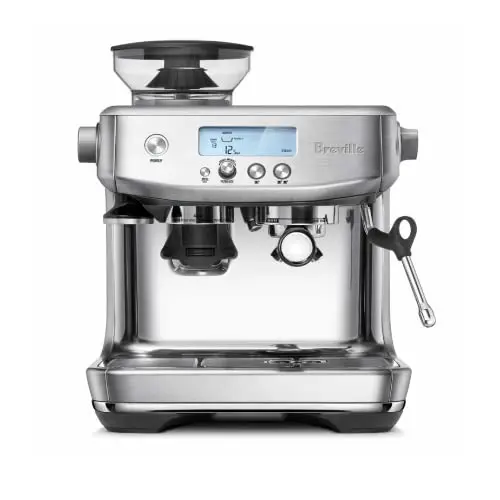
Barista Pro – Fast Heat-Up for Busy Counters
The Barista Pro is the quickest machine here to get from cold to pulling shots, and the one most likely to keep a short queue moving. A ThermoJet heating system reaches extraction temperature in roughly three seconds and shifts to steam almost immediately, so you aren’t standing around between a flat white and a cortado. Add an integrated conical burr grinder, an LCD that shows grind and extraction progress, and the longest warranty in this lineup, and it makes a strong case as the primary machine on a compact café counter.
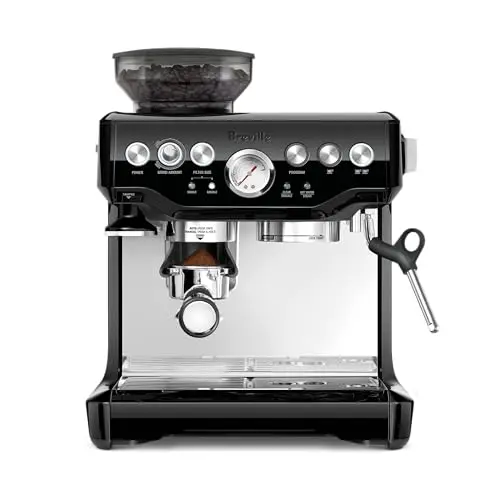
Barista Express – Built-In Grinder, Proven Workflow
The Barista Express is the machine that made bean-to-cup espresso mainstream, and it still holds up as a one-box solution. The conical burr grinder doses straight into a 54mm portafilter, PID temperature regulation keeps extraction stable, and low-pressure pre-infusion eases into the puck instead of hitting it all at once. The 67-ounce tank is the largest in this lineup, which means fewer mid-service refills on a low-volume counter.
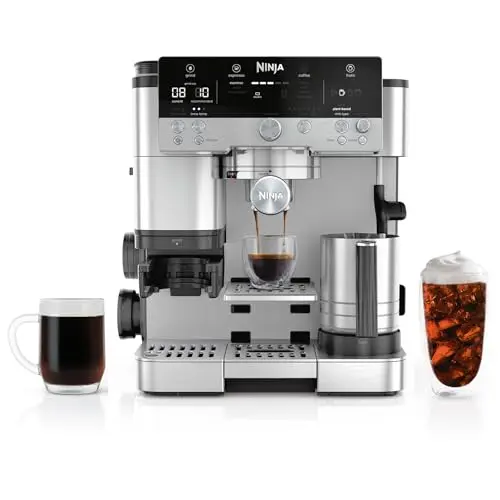
Luxe Cafe Premier – Three Machines, One Footprint
The Luxe Cafe Premier is really three machines sharing one chassis: espresso, drip coffee, and rapid cold brew. For a small shop with a limited menu and staff who rotate often, the guided Barista Assist routine – weight-based dosing, assisted tamping, real-time temperature and pressure adjustment – does a lot of the thinking. The hands-free dual froth system handles dairy and non-dairy milk across four presets, including cold foam.
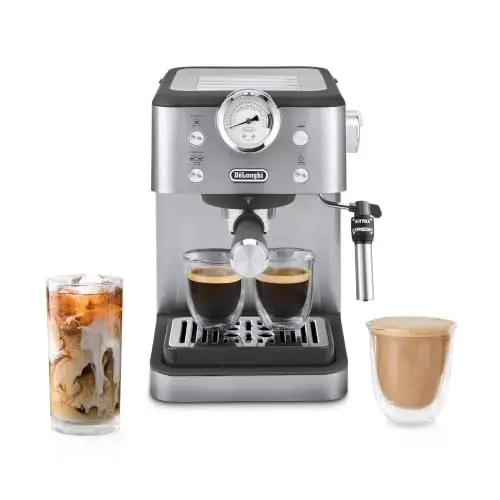
Classic Signature – Thermoblock Speed in a Compact Frame
The Classic Signature is the sensible middle of the De’Longhi range – a 15-bar Italian pump, Thermoblock heating that comes up fast, and a two-setting steam wand that switches between silky steamed milk and a richer microfoam. Preset single and double shots take some of the repetition out of a busy stretch, and the compact stainless body slots into a small counter without dominating it.
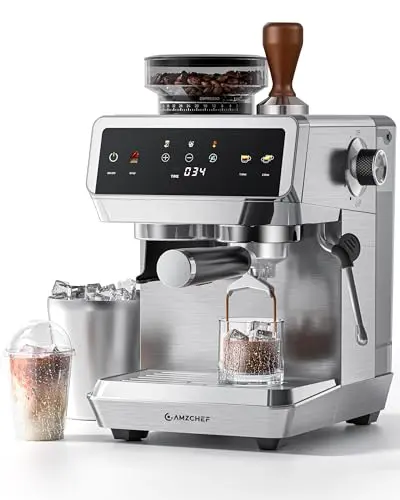
CM1626 – 44 Grind Settings and Temperature Control
The CM1626 pairs two features you rarely see together at this tier: a built-in grinder with 44 settings and adjustable brew temperature from 190F to 201F. There’s also a cold brew mode, a 60-ounce tank, and a touchscreen that displays grind time, brew time, and temperature together. For a small shop rotating single-origin beans, that temperature range is genuinely useful.
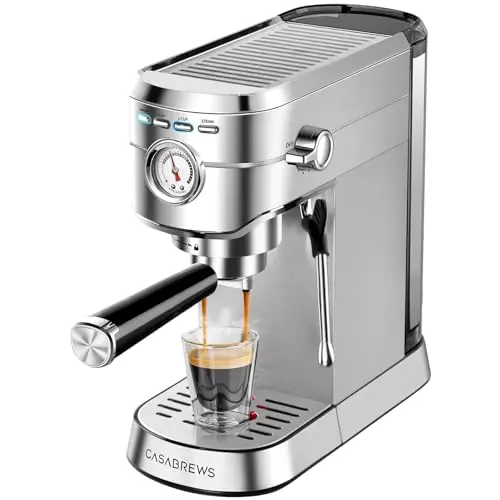
CM5418 – Slim Frame with a Built-In Gauge
The CM5418 is built around a 20-bar Italian pump and a 1350W boiler, with a front-panel pressure gauge that tells you what’s actually happening during extraction. At just over five inches wide it’s the narrowest machine in this lineup, which makes it the obvious candidate for a counter where every inch is contested. A 34-ounce removable tank and a steam wand for microfoam complete the package.

ECMG0 – Compact 20-Bar Starter
The ECMG0 is a 20-bar semi-automatic with NTC temperature control, pre-infusion, and a pressure gauge, wrapped in full stainless housing. It’s one of the smallest machines here, and it includes a hot water function that’s useful for americanos, tea, and warming cups before a shot. The removable froth nozzle makes the steam wand easier to clean than most at this tier.

Stilosa – Entry-Level Metal Boiler
The Stilosa is the simplest machine here and the most affordable way into a real 15-bar pump with a stainless steel boiler. There’s a manual steam wand for milk, single and double baskets included, and a 1000ml removable tank. It’s small, light, and it does the two things a low-volume counter needs: pull a shot and steam milk.
How We Evaluated These Espresso Machines for Small Coffee Shops
We didn’t stand behind these machines through a Saturday morning rush, pulling shot after shot until the boilers complained. What we did: cross-referenced 8 espresso machines from 6 distinct brands across 5 decision axes – heat-up and recovery speed, steam power for milk, grind control, water capacity relative to footprint, and warranty support. We triangulated published specifications, feature sets, and owner feedback where available, then mapped each machine against what a small shop counter actually asks for.
The scoring framework weighted real-world fit for shop duty (70%) – how fast a machine recovers between drinks and how reliably it steams – against feature differentiation (30%), meaning the specs that change how you work rather than the ones that look good on a product page. We have no commercial relationship with any of the brands here; recommendations track fit and differentiation, not brand preference. If your menu is milk-heavy, the Barista Pro is where we’d start. If you’re outfitting a cart on the tightest budget, the Stilosa gets you pouring.
One thing worth saying plainly: every machine in this lineup is prosumer-grade hardware, not a high-volume café workhorse. We weighted that limit heavily – a machine that stalls on the fourth consecutive milk drink is a worse shop pick than one with a shorter feature list. Where owner feedback on reliability was uneven, we said so instead of sanding it down.
How to Choose the Right Espresso Machines for Small Coffee Shops
1. What Actually Matters in an Espresso Machine for a Small Coffee Shop
A small coffee shop doesn’t need the biggest machine – it needs the one that recovers fastest. The two things that decide whether a counter keeps moving are heat-up and recovery time and steam power. A machine that takes half a minute to climb back to brew temperature after each shot will cost you more across a morning than a machine that costs twice as much. Everything else – finish, branding, the length of the feature list – is secondary to those two.
The second filter is workflow fit. If one person runs the bar, a built-in grinder and a guided dosing routine are worth more than a marginally better pump. If two people work the counter, separating grinding from brewing actually speeds things up. Be honest about how many hands you have before you buy.
2. Built-In Grinder vs. Standalone: Matching Your Espresso Machine to Shop Workflow
A built-in grinder saves counter space and a plug, and it removes the step where someone forgets to weigh the dose. That’s the whole argument, and for a one-person bar it’s a strong one. The Barista Express is the clearest example – beans go in the hopper and ground coffee lands in the portafilter with no scale in between.
The counterargument is serviceability. When a grinder is integrated and it fails, the whole machine goes down. A standalone grinder can be swapped or repaired independently. On a busier bar, a standalone grinder also grinds the next dose while the current shot pulls, which is a genuine throughput gain. Decide which failure mode you can live with.
3. Steam Power and Recovery Time: The Real Bottleneck in a Small Coffee Shop
Milk is where small shops lose time. A single-boiler machine has to finish brewing before it can steam, then cool down before it can brew again – that pause is the one your customer notices. A machine with a dedicated steam path or an instant transition smooths it out. The hands-free frother on the Luxe Cafe Premier is the extreme version of that idea: milk goes in, you do something else, and the foam is ready.
Look at wand control too. A two-setting or fully manual wand lets you move from silky steamed milk to a denser microfoam, which matters if your menu runs from flat whites to cappuccinos. A fixed-aeration wand locks you into one texture and one texture only.
4. Footprint, Water Capacity, and Counter Flow in a Tight Espresso Setup
Measure before you buy, and measure the right thing. Machine width isn’t the number that matters – it’s width plus grinder plus knock box plus pitcher space, and the last one is what everyone forgets. A narrow machine like the CM5418 buys you room for a better grinder; a wide 3-in-1 eats that room but replaces two other appliances.
Water capacity is less glamorous and more consequential than it sounds. Tank size sets how often someone stops to refill mid-rush, and a removable tank you can carry to a sink beats a fixed one you have to top up with a jug. An inline filter is a small bonus that pays off quickly in hard-water areas.
5. Where Espresso Machine Price Tiers Land, and What You Actually Get
Entry-level machines give you a real pump, a real boiler, and a manual steam wand, and not much else. They’re the cheapest way to start and the fastest way to discover you also need a grinder. The Stilosa sits squarely in that tier and is honest about it.
Mid-range buys temperature stability and better steam control, usually paired with faster heat-up. Premium buys grinder integration, guided workflows, and quicker recovery, plus longer coverage – a two-year term instead of a one-year term is a meaningful difference on a machine that runs daily.
6. Durability, Warranty, and Service: Buying an Espresso Machine You Can Keep Running
Every machine in this category is prosumer hardware, and owner feedback across the board includes early failures. That isn’t a reason to avoid the category – it’s a reason to buy with a service plan in mind. Check whether the brand has a repair partner near you, whether consumables like gaskets and filter baskets are easy to source, and how long the warranty actually runs.
Practical habits stretch lifespan more than brand choice does: filtered water, regular backflushing, and descaling on schedule. If you can’t commit to that routine, buy the machine with the longest warranty and the simplest service path.
Frequently Asked Questions
1. How does the Breville Barista Pro compare to the Ninja Luxe Cafe Premier for a small shop?
They solve different problems. The Barista Pro is a specialist espresso machine – faster to temperature, with an almost instant espresso-to-steam transition and a grinder built for dialing in espresso. It’s the better pick if your menu is espresso and milk drinks and you want the shortest possible gap between them.
The Luxe Cafe Premier is a broader platform: espresso, drip, and cold brew from one chassis, with assisted tamping and a hands-free frother that make it far easier to train someone on. If your shop sells iced drinks and batch coffee alongside espresso, that breadth justifies the counter space. If you’re purely espresso, the Breville wins on speed and simplicity.
2. Is the De'Longhi Stilosa or the CASABREWS CM5418 a better fit for a low-volume counter?
Neither is a workhorse. Both are single-boiler, grinder-less machines with a manual steam wand, so both force you to sequence brewing and steaming, and both need a separate grinder.
The Stilosa brings the stainless steel boiler and the better-known service network. The CM5418 brings a built-in pressure gauge, the narrowest frame in this lineup, and the lower entry price. If counter space is the binding constraint, the CASABREWS wins. If you want the most durable boiler at this end of the market and can accept a slow wand, the De’Longhi is the safer call. Either way, keep volumes genuinely low – these are occasional-use machines, not rush-hour ones.
3. Can a compact espresso machine actually keep up with a small coffee shop?
Only if you define your volumes honestly. A machine like the Classic Signature will handle a steady trickle of drinks comfortably, and its Thermoblock heating comes up fast enough that you’re not standing there waiting. What none of these machines do well is a sustained queue – single-boiler designs force a pause between brewing and steaming, and prosumer pumps aren’t rated for continuous duty.
The honest rule: if you’re serving several drinks a minute at peak, you want a heat-exchanger or dual-boiler machine, which is a different category and a different budget. These belong on a cart, a kiosk, an office counter, or in a café where espresso is a supporting act.
4. Do I need a built-in grinder in a shop espresso machine?
Not strictly, but it changes your workflow. A built-in grinder keeps dosing consistent and saves counter space, which is usually the right trade for a one-person bar. A standalone grinder is easier to service, lets you grind the next dose while a shot pulls, and can be upgraded independently.
Whichever you pick, freshness matters more than the grinder’s location. Grinding on demand beats a hopper full of pre-ground coffee every time, and a burr grinder – conical or flat – will beat a blade grinder by a wide margin regardless of what machine it’s attached to.
5. How much water capacity does a small coffee shop espresso machine need?
Think in terms of refill interruptions rather than litres. A larger tank means fewer trips to the sink mid-service; a small removable tank is easier to carry but needs topping up more often. In this lineup tanks run from roughly 34 ounces up to 67 ounces, which is the difference between refilling every few drinks and refilling once a session.
A removable tank is the more practical feature – fixed tanks are awkward to fill and awkward to clean. If your water is hard, add an inline filter and descale on schedule; scale is the most common reason a machine dies early.
Final Verdict
For most small coffee shop setups, the Barista Pro is the answer – it heats in seconds, moves from espresso to steam without a real pause, and keeps your workflow on a single counter. If you’re outfitting a kiosk or a cart where one person does everything, the Luxe Cafe Premier hands off frothing and tamping so a new hire can pull a decent drink on day one. And if the budget is genuinely entry-level, the Stilosa pours a respectable shot as long as you accept a slower steam wand. Whichever way you go, budget for a spare filter basket and a second milk pitcher – those two extras smooth out more rushes than any added feature ever will. Choose based on your busiest ten minutes, not your quietest.
