
Best Espresso Machines On A Budget – 2026 Reviews

The first espresso machine is exciting until you see the price tags. Suddenly a simple morning latte starts looking like a luxury subscription. The good news is that the budget bracket has gotten genuinely useful: you can find real pumps, steam wands, pressure gauges, and even built-in grinders without stepping into premium territory.
The two axes that separate a good budget espresso machine from a frustrating one are temperature stability and milk frothing. A machine that runs cool or swings hot will make even good beans taste flat. A weak steam wand turns cappuccino into a chore.
We looked across the budget-friendly end of the market, from bare-bones manuals to compact semiautomatics with built-in grinders. The goal is to help you pick the right machine for your counter, your patience level, and the drinks you actually make.
Best Espresso Machines on a Budget – 2026 Reviews
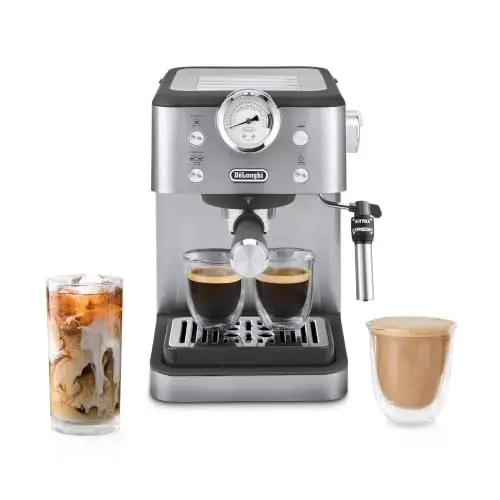
Classic Signature EM450M – Preset Espresso Without the Fuss
The Classic Signature is the budget pick that feels more thoughtful than its price tier suggests. It pairs a 15-bar pump with Thermoblock heating and preset single or double shots, so you can get repeatable espresso without counting seconds. The two-setting steam wand is a real asset for cappuccino and latte drinkers.
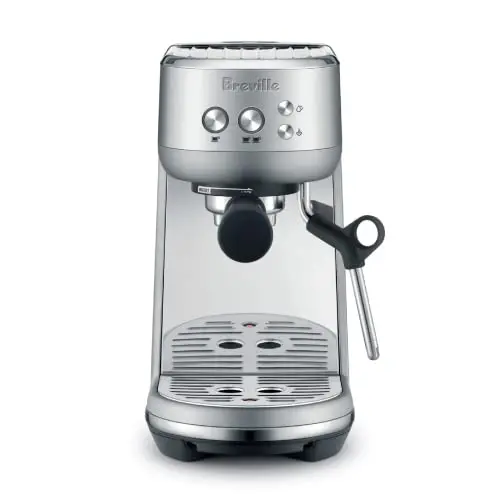
Bambino BES450BSS – Fast-Heat Beginner Espresso
The Bambino is the easiest machine here to recommend to someone who wants cafe-style milk drinks without a long learning curve. Its ThermoJet system reaches brewing temperature quickly, and the automatic steam wand handles milk texture for you. The compact body is a good fit for tight counters.
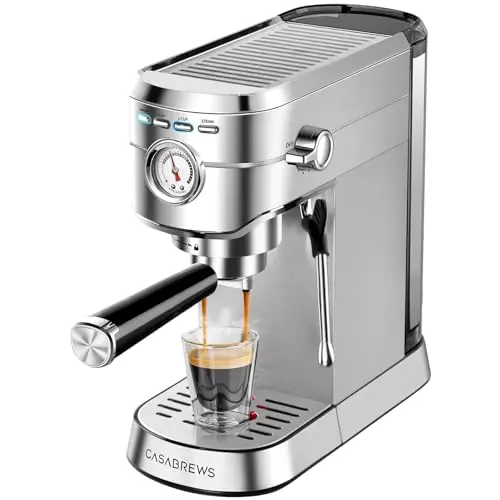
CM5418 – Pressure Gauge and Powerful Steam
This CASABREWS model is the milk-forward pick in the budget bracket. The 20-bar pump and built-in pressure gauge give you visual feedback while dialing in, and the steam wand is strong enough for glossy microfoam. The compact stainless body is easy to live with.

ECMG0 – 20-Bar Espresso with Pressure Gauge
The Gevi balances a low-entry price with features that usually cost more: a 20-bar pump, pre-infusion, NTC temperature control, and a pressure gauge. It’s a compact stainless machine aimed at home baristas who want feedback without spending a lot.

Stilosa EC260BK – Simple Manual Espresso
The Stilosa is the definition of an entry-level espresso machine: a 15-bar pump, a stainless steel boiler, a manual steam wand, and a compact body. It’s a low-risk way to learn the basics of grinding, tamping, and steaming.

3700 Essential – Compact Entry-Level Espresso
The 3700 Essential is the lowest-cost route into semi-automatic espresso in this lineup. It keeps the 20-bar pump and powerful steam wand but drops the pressure gauge to hit a budget-friendly tier. The compact stainless body and 43.9-ounce tank are practical for small kitchens.
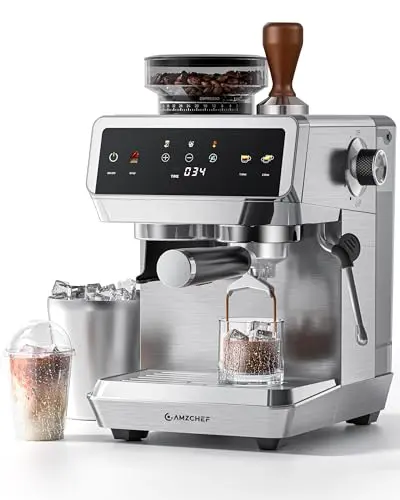
CM1626 – Built-In Grinder and Temp Control
The AMZCHEF is the only machine here with a built-in grinder, which makes it a true bean-to-cup option in the budget bracket. It adds adjustable brew temperature, 44 grind settings, a touch screen, and a cold brew mode. The stainless body is compact but heavier than the basic machines.

PE3670U – Compact Espresso with LED Display
The Neretva is a compact 20-bar machine with a temperature display and pre-infusion. It’s aimed at buyers who want visual feedback and a small footprint without paying for a premium brand. The stainless finish gives it a more polished look than the price tier suggests.
How We Evaluated These Budget Espresso Machines
We didn’t run lab-style pressure or temperature measurements, and we didn’t pull hundreds of shots in a test kitchen. What we did: cross-referenced 8 espresso machine models from 6 distinct brands across 6 decision axes – pump pressure and extraction design, heat-up and temperature control, milk-frothing capability, footprint and water-tank capacity, controls and learning curve, and build and warranty signals. We triangulated published specifications, feature sets, owner feedback where available, and use-case fit for budget-conscious buyers who mostly make espresso, lattes, and cappuccinos at home.
We mapped each model against representative buyer profiles: the first-time espresso owner, the milk-drink regular, the small-kitchen user, and the tinkerer who wants a pressure gauge. That let us weigh not just what each machine can do, but who it actually suits. We also weighed how much practice each machine demands before the first decent shot and whether the steam wand can handle dairy and alternative milks without a steep learning curve. The scoring framework weighted real-world fit and performance (70%) – how well each machine delivers on daily espresso and milk drinks – against feature differentiation (30%) – the specs and conveniences that set one budget machine apart from another. We have no commercial relationship with any of the brands featured; recommendations track fit and differentiation, not brand preference. If you want the most balanced daily driver, the Classic Signature EM450M is the pick. If you’re a beginner who mainly drinks lattes, the Bambino BES450BSS is the easier starting point.
How to Choose the Right Budget Espresso Machine
1. What Actually Matters in a Budget Espresso Machine
A budget espresso machine can make genuinely good espresso, but the priorities are different from a premium machine. Start with pump pressure: 15 bar is the practical baseline, while 20 bar gives extra headroom. More important is temperature stability, because a machine that runs cool or swings hot will flatten even great beans. Pre-infusion is a nice bonus that gently wets the puck before full pressure. Finally, look at the portafilter size and filter baskets; a 54mm setup is more forgiving than a 51mm one, though both can work.
2. Budget Espresso Machines: Pump Pressure and Temperature Stability
Pressure alone doesn’t guarantee good espresso. A 15-bar pump paired with stable heat can outperform a 20-bar pump with poor temperature control. Look for Thermoblock heating or PID temperature control if you want repeatable shots. Pre-infusion helps, but it’s not a substitute for fresh coffee and a consistent grind. On a budget, prioritize pump pressure that matches your beans and a machine that holds temperature over the biggest number on the box.
3. Milk Frothing on a Budget: Manual vs. Automatic Steam Wands
Milk drinks are where budget machines separate. A manual steam wand gives you more control but demands practice; an automatic steam wand is easier for beginners and more consistent for microfoam. If milk texture is the priority, the CASABREWS CM5418 is the one to choose. Its powerful steam wand and pressure gauge make it easier to learn without upgrading. Just expect a short cool-down between steaming and brewing.
4. Compact Espresso Machines for Small Kitchens
Compact machines are a real advantage in small kitchens. Check the footprint, the water-tank capacity, and the cup clearance under the portafilter. If counter space is tight and you want the lowest entry point, the CASABREWS 3700 Essential is the pick. It has a narrow body and a removable tank, though the small drip tray fills quickly.
5. When to Spend a Little More on a Budget Espresso Machine
Spending a little more in the budget bracket usually buys one of three things: a built-in grinder, a better steam wand, or more forgiving temperature control. If you want the easiest beginner experience, the Bambino BES450BSS is the pick. Its automatic steam wand and fast heat-up remove friction, but you’re paying for convenience rather than a bigger boiler.
6. Cleaning and Maintenance for Budget Espresso Machines
Budget machines still need care. Descaling matters if your water is hard, and a removable water tank makes rinsing easier. Wipe the steam wand after every use and run a cleaning cycle when the manual calls for it. Skipping maintenance is the fastest way to shorten the life of an affordable espresso machine.
Frequently Asked Questions
1. What's the difference between the De'Longhi Classic Signature and the Breville Bambino?
The Classic Signature is the more traditional semi-automatic: a 15-bar pump, preset single and double shots, and a two-setting steam wand that rewards a little practice. The Bambino is the more beginner-focused machine, with a three-second heat-up, an automatic steam wand, and a very compact footprint. Choose the Classic Signature EM450M if you want a lower-cost daily driver with a pressure gauge; choose the Bambino if milk drinks and speed matter more.
2. Is the CASABREWS CM5418 worth choosing over the De'Longhi Stilosa?
It depends on what you want to learn. The Stilosa is a simple manual machine with a 15-bar pump and a manual steam wand; it’s cheap and easy to understand, but durability feedback is mixed. The CM5418 adds a 20-bar pump, a built-in pressure gauge, and a more powerful steam wand, which makes it the better pick for milk-heavy drinkers who want visual feedback. If you mainly drink straight espresso and want the lowest cost, the Stilosa is fine. If cappuccinos are the point, the CM5418 is the stronger choice.
3. Do budget espresso machines make good espresso?
Yes, with caveats. A budget espresso machine can pull a solid shot if it has a stable pump, reasonable temperature control, and a forgiving filter basket. The biggest differences show up in milk frothing, build quality, and longevity. You’ll get better results by pairing a budget machine with freshly ground coffee and a consistent tamp than by chasing specs alone.
4. Which budget espresso machine is easiest for beginners?
The Bambino BES450BSS is the easiest starting point in this lineup because its automatic steam wand and fast heat-up remove two common friction points. The De’Longhi Classic Signature is also beginner-friendly thanks to preset shots and a pressure gauge, but its manual steam wand asks for a bit more practice. If you want the least fiddly path to a latte, start with the Bambino.
Final Verdict
For most budget-conscious buyers, the Classic Signature EM450M is the answer. It balances a 15-bar pump, preset shots, and a genuinely useful two-setting steam wand without asking you to baby-sit the process. If you’re spending as little as possible, the 3700 Essential gets you into semi-automatic espresso with a 20-bar pump and a compact body, provided you accept entry-level longevity. Beginners who mainly drink lattes should look at the Bambino BES450BSS; its automatic steam wand and fast heat-up make the daily routine easier. And if milk texture is your priority, the CM5418 adds a pressure gauge and a powerful steam wand for more feedback while you learn.
