
Best Espresso Machines With Milk Steamers – 2026 Reviews

The shot pulls fine. Then you steam the milk and it all falls apart: thin, wet foam that collapses into a puddle before you sit down. Most of the time the espresso wasn’t the problem. The milk steamer was.
That’s what makes this category trickier than it looks. Two machines can both advertise a 20-bar pump and a steam wand and behave nothing alike, because what separates a good milk drink from a bad one is steam power and dryness, plus how quickly the machine recovers between frothing and pulling the next shot. The second axis is workflow: does the machine grind for you, does it dose by preset, or does it hand you a portafilter and expect you to earn it.
We looked across the market rather than at one brand’s lineup – manual machines, semi-automatics, fully automatic bean-to-cup units, and one capsule system that pairs with a separate frother – and sorted them by who each one actually suits. Pricing here spans entry-level to premium, and the right pick depends far more on your tolerance for fiddling than on the badge on the front.
Best Espresso Machines With Milk Steamers – 2026 Reviews
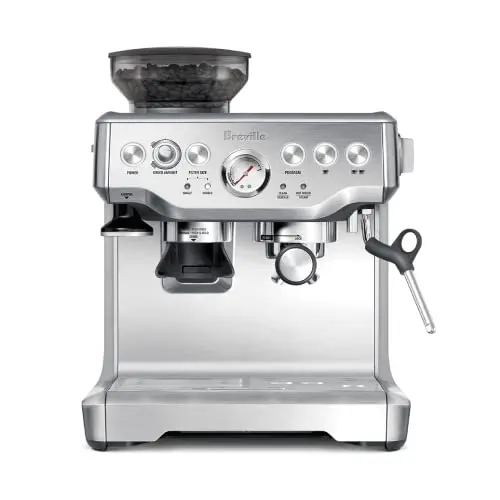
Barista Express BES870XL – Grinder and Steam Wand in One
The machine most home baristas learn on, and still the reference point for this category. A conical burr grinder sits on top, a 54mm portafilter below it, and a proper steam wand on the side – grind, dose, tamp, pull, and steam without moving to a second appliance.
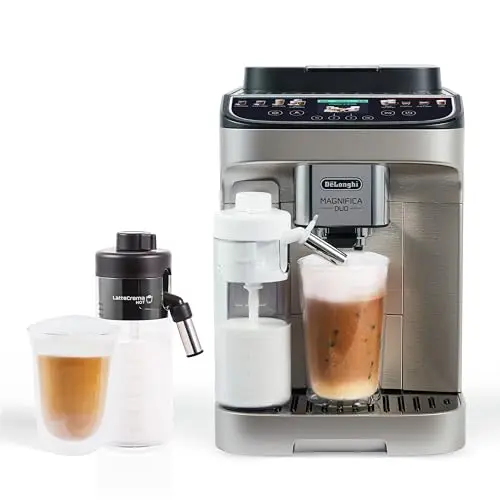
Magnifica Duo ECAM33080SXB – One-Touch Drinks With Hot and Cold Froth
A bean-to-cup machine that grinds, brews, and froths on command, with a menu built around milk. Three brewing technologies cover espresso, drip coffee, and cold brew, and the LatteCrema system handles hot and cold foam from dairy or plant milk.
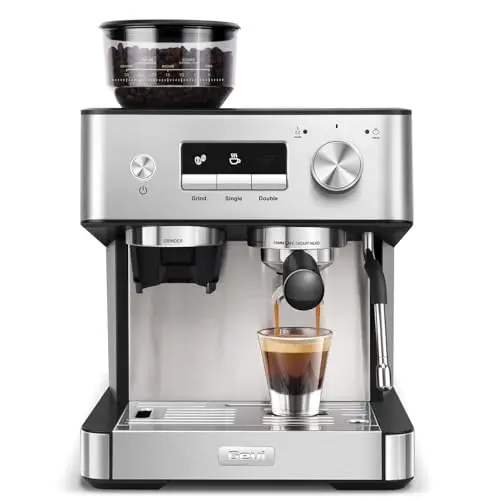
ECMI0-SS0A1 – 30-Step Grinder With PID Control
The mid-range answer to the all-in-one question: a 30-setting conical burr grinder, a wide 58mm portafilter, and a steam wand that doubles as a hot water spout, all on one panel with adjustable grind duration and shot volume.
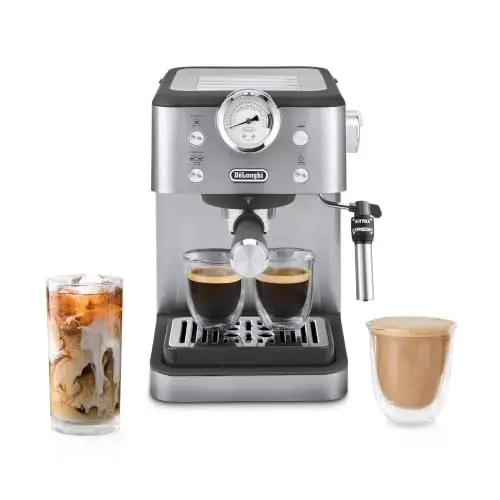
Classic Signature EM450M – Two-Setting Steam Wand, Fast Heat-Up
A compact semi-automatic that leans on simplicity. Thermoblock heating gets you to brewing temperature quickly, preset single and double buttons handle dosing, and an adjustable two-setting steam wand covers both silky steamed milk and stiffer microfoam.
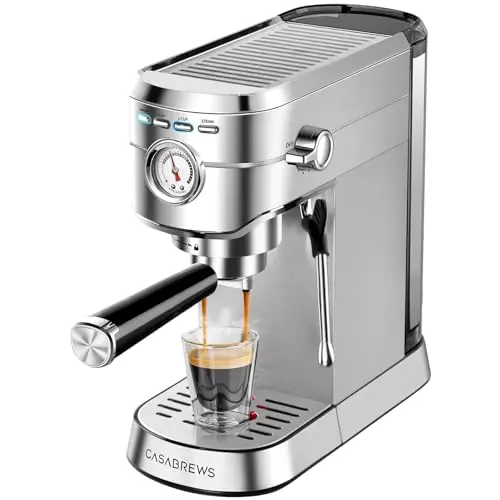
CM5418 – Compact Steam Wand Espresso With Pressure Gauge
A narrow stainless semi-automatic that fits where bigger machines won’t. A 20-bar pump, a 1350W boiler, and – unusually at this end of the market – a visible pressure gauge that tells you how the shot is actually running.
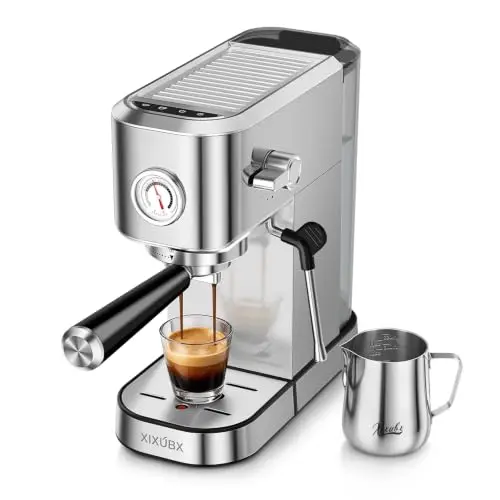
EM720 – Instant Heat and a Visible Pressure Gauge
The budget machine built for back-to-back milk drinks. An instant heating element removes the cool-down pause between steaming and brewing, and the 360-degree steam wand detaches for cleaning. A frothing pitcher ships in the box.
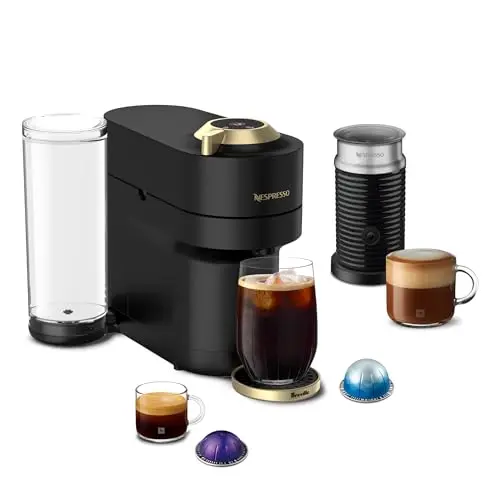
Vertuo Pop+ Deluxe – Capsule Espresso With Aeroccino Frother
The low-effort route to milk drinks. Sealed capsules brew single or double espresso and larger coffees at the touch of a button, while the bundled Aeroccino3 heats or froths milk in seconds. No grinder, no tamping, no wand to learn.

3700 Essential – Slim Entry-Level Espresso With a Big Tank
The most stripped-back way into semi-automatic espresso. A 20-bar pump, a 1350W heating system, and a steam wand for microfoam, wrapped in a body slim enough for a genuinely tight counter. The larger tank means fewer refills.
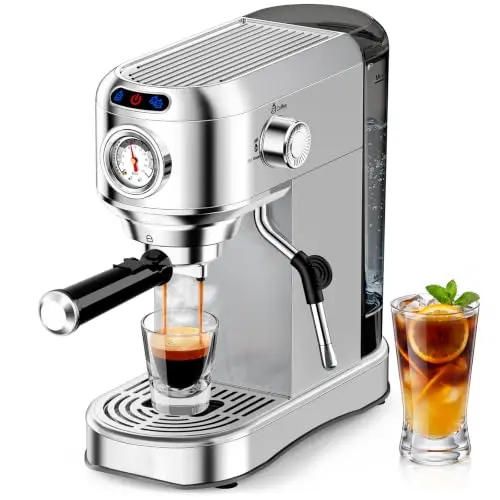
ST-699B – Tiny Footprint, 20-Second Preheat
A genuinely small machine with a fast 1450W heating system that preheats in about 20 seconds. The 360-degree steam wand and visible pressure gauge punch above the footprint, and the body is roughly A4-sized on the counter.
How We Evaluated These Espresso Machines With Milk Steamers
We didn’t run controlled kitchen lab tests or long-term reliability trials. What we did: cross-referenced nine espresso machines from seven distinct brands across six decision axes – steam wand type and control, grinder integration, pump rating and temperature stability, footprint and tank capacity, recovery time between steaming and brewing, and how much manual input each machine demands. We triangulated published specifications, feature sets, and aggregated owner feedback where available, then mapped every machine to a buyer profile it actually suits.
The scoring framework weighted real-world fit (70%) – how reliably a machine turns beans and milk into a drink you’d order again – against feature differentiation (30%), meaning genuine technical advantages like a burr grinder, PID control, or a steam wand that gives you texture control. We have no commercial relationship with any brand featured here; recommendations track fit and differentiation, not brand preference. If you want one machine that grinds and steams properly, the Barista Express BES870XL is your match; if you’d rather press one button and walk away, the Magnifica Duo ECAM33080SXB is the better fit.
We also weighted the milk steamer unusually heavily, because it’s the component that most often disappoints on cheaper machines. A weak or wet wand produces foam that collapses inside a minute. Where a machine uses a separate frothing jug rather than a wand, we judged the texture it can produce on its own terms instead of docking it for the different approach.
How to Choose the Right Espresso Machine With a Milk Steamer
1. Steam Wand vs. Frothing Jug: What 'Milk Steamer' Actually Means
A true steam wand injects pressurized steam into the milk and aerates it as you stretch the surface. It gives you texture control – dry foam for a cappuccino, a thin glossy layer for a flat white – but it’s a skill you build. A separate electric frother, like the Aeroccino bundled with capsule machines, does one thing well: heats and foams with a single press. A carafe system such as De’Longhi’s LatteCrema sits between them, frothing automatically and often cleaning itself.
None of these is strictly better. A wand offers the most control; a jug system offers the least effort. If you want a wand you control by hand without paying premium money, the CM5418 is a sensible entry point.
2. Steam Power, Dryness, and Recovery Time
Two specs quietly decide how pleasant milk work is. Wattage hints at how fast the element can generate steam; a 1350W to 1450W heating system is typical in this range. More important is recovery time – how long the machine needs before it will brew again after steaming. Traditional boilers need a cool-down, which is why budget machines often ask you to pull the shot first and steam second. Instant-heat or thermoblock designs shrink or remove that wait; the EM720 is built around exactly that advantage.
3. Built-In Grinder or a Separate Grinder?
A built-in conical burr grinder is the single biggest convenience upgrade in this category. It means one footprint, one power cable, and grounds that never sit around oxidizing. The trade-off is that you can’t upgrade the grinder independently later, and integrated grinders vary enormously – some dose straight into the portafilter with a stepless dial, others offer 30 stepped settings and a wide 58mm basket.
If you already own a good standalone grinder, buy the espresso machine without one and put the money into the wand and the boiler instead. Pressurized (dual-wall) baskets, included with most entry machines, generate decent crema from pre-ground coffee, but they mask the grind quality a burr grinder gives you.
4. Manual, Semi-Automatic, or Fully Automatic Espresso Machine?
Manual and semi-automatic machines hand you the portafilter: you dose, tamp, start the shot, and judge the flow by eye. Fully automatic bean-to-cup models grind, dose, tamp, brew, and often froth on a single press. Manual gives you a higher ceiling; automatic gives you consistency at 7am on a weekday.
Most people overestimate how much they’ll enjoy manual work and underestimate how quickly a rushed tamp shows up in the cup. If you drink milk drinks daily and want them finished before you’ve fully woken up, automatic is the honest choice.
5. Breville Barista Express vs. Gevi ECMI0-SS0A1: Two Grinder Machines, Two Buyers
Both grind and both steam, but they’re aimed at different people. The Breville Barista Express has the more established 54mm ecosystem, PID temperature regulation, and low-pressure pre-infusion that flatters lighter roasts, plus a stepless grind dial that’s quicker to dial in by ear. The Gevi ECMI0-SS0A1 counters with a 58mm portafilter, more grind steps, and a dual-function wand that doubles as a hot water spout.
Pick the Breville if you want the machine the accessory market has spent a decade supporting. Pick the Gevi if you’d rather have more adjustment range and a wider basket for a lower outlay.
6. Tank Size, Footprint, and Daily Cleaning
Water tank capacity ranges from about 25 oz on capsule machines to 43 oz or more on semi-automatics. Bigger tanks mean fewer refills; smaller removable tanks mean easier filling at the sink. Counter footprint is where machines differ most – some are 5 to 6.5 inches wide, others run nearly 14 inches deep, so measure before you commit.
Cleaning separates the machines that stay pleasant from the ones that get abandoned. A detachable steam wand and a removable drip tray cut daily effort; a milk carafe that goes in the dishwasher cuts it further. Descaling is non-negotiable in hard-water areas, so check whether your machine accepts a water filter.
Frequently Asked Questions
1. What's the difference between the Breville Barista Express and the De'Longhi Magnifica Duo?
They sit at opposite ends of the workflow spectrum. The Barista Express BES870XL is a manual machine with an integrated grinder: you dose, tamp, and steam with a wand you control by hand, and you get PID temperature control and pre-infusion in return. The Magnifica Duo ECAM33080SXB is fully automatic – it grinds, brews, and froths from a menu of one-touch recipes, including iced drinks and cold foam, with far less control over the shot itself.
Choose the Breville if you want to learn the craft and adjust shot by shot. Choose the De’Longhi if the goal is consistent milk drinks for several people with minimal effort.
2. Do capsule machines count as espresso machines with a milk steamer?
Only loosely. The Nespresso Vertuo Pop+ Deluxe brews from sealed capsules and bundles a separate Aeroccino frother rather than an on-board steam wand, so you get hot or cold foam but not the texture control a wand gives you. What you do get is one-touch operation, a 30-second heat-up, and no grinding or tamping at all.
If your definition of the category requires a wand you hold and angle yourself, look at a semi-automatic instead. If it just requires a good cappuccino with almost no effort, the capsule route is legitimate.
3. Is a 20-bar pump better than a 15-bar pump for espresso?
Not in any way you’ll taste. Extraction happens at roughly 9 bar at the puck; the pump rating is headroom, not a quality score. A 20-bar pump and a 15-bar pump are both more than sufficient, and what actually matters is pressure stability across the shot rather than the peak number on the box.
This is also why a visible pressure gauge is more useful than a bigger pump figure – it tells you what’s happening mid-extraction so you can adjust grind or dose.
4. What's the difference between the CASABREWS CM5418 and the XIXUBX EM720?
Both are compact entry-tier semi-automatics with a 20-bar pump, a pressure gauge, and a steam wand, so the real difference is the heating design. The CASABREWS CM5418 uses a conventional boiler, which means a cool-down wait between frothing and pulling your next shot – espresso first, steam second. The XIXUBX EM720 uses an instant heating element that lets you move between brewing and steaming without the pause, and it includes a frothing pitcher in the box.
If you make one drink at a time, either works fine. If you’re making three in a row, the instant-heat machine saves real minutes.
5. How much counter space should I budget for an espresso machine with a milk steamer?
Plan for depth as much as width. Compact models run about 5 to 6.5 inches wide but still need 11 to 14 inches of depth to clear the portafilter and drip tray, plus headroom above if the bean hopper loads from the top. Machines with a built-in grinder are taller, and you should leave a couple of inches behind the machine so the steam wand can swing freely.
If your counter is genuinely narrow, pairing a separate frothing jug with a small machine can be more workable than a wide all-in-one.
Final Verdict
For most buyers, the Barista Express BES870XL is the pick. A built-in burr grinder, real temperature control, and a steam wand with enough power and dryness to texture milk properly – it’s the machine that makes the whole category make sense.
If you want a proper steam wand without stretching the budget, the CM5418 is the entry point we’d point a friend to, pressure gauge and all. Want the machine to do the work? The Magnifica Duo ECAM33080SXB grinds, brews, and froths on command. And if you’d rather skip the wand entirely, the Vertuo Pop+ Deluxe gets you a cappuccino in about a minute with almost nothing to learn.
