
Best Espresso Machines – 2026 Reviews

Somewhere between the third mediocre café latte of the week and the receipt for it, most people start wondering whether the machine belongs on their own counter. The answer is usually yes – but only if you buy the right kind. Espresso setups fail at home for two reasons: the machine fights the user, or the user expects the machine to do things it was never built to do.
Two axes separate the good options from the frustrating ones. The first is temperature and pressure stability – a machine that holds steady brew conditions will make decent coffee from an average grind, while one that swings hot and cold makes every shot a coin flip. The second is milk hardware. If you drink flat whites and cappuccinos, the steam wand matters as much as the brew path, and it’s the spec most buyers ignore until they’re standing there with a pitcher.
Below you’ll find machines ranging from a sub-hundred-dollar starter to a full bean-to-cup setup with a built-in grinder – different answers for different kitchens, not one brand’s product line in a row. We’ll tell you which ones ask more of you, which ones do the work for you, and where the tradeoffs actually land.
Best Espresso Machines – 2026 Reviews
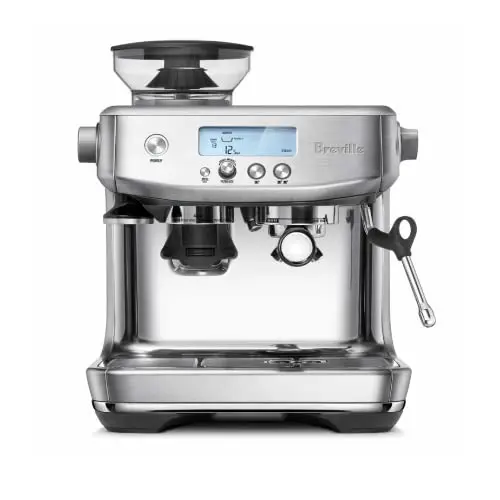
Barista Pro – Bean-to-Cup Speed and Control
A bean-to-cup machine pairing a conical burr grinder with PID-regulated brewing and Breville’s fast ThermoJet heater. Dose straight into the portafilter, tamp, and pull – no second appliance on the counter. The steam wand is manual, so milk texture is a skill you build rather than a button you press.
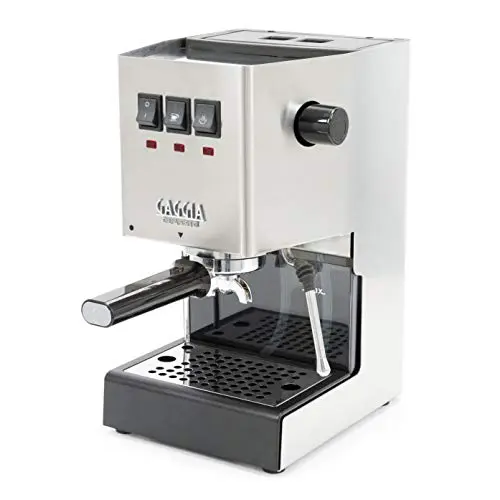
Classic Evo Pro – Commercial Parts, Self-Serviceable
A deliberately old-school machine: steel housing, a 9-bar brew path, a 58mm commercial portafilter, and a three-way solenoid valve that dries the puck at the end of the shot. No grinder, no programming, no screen. What you get instead is something designed to be opened, adjusted, and repaired.
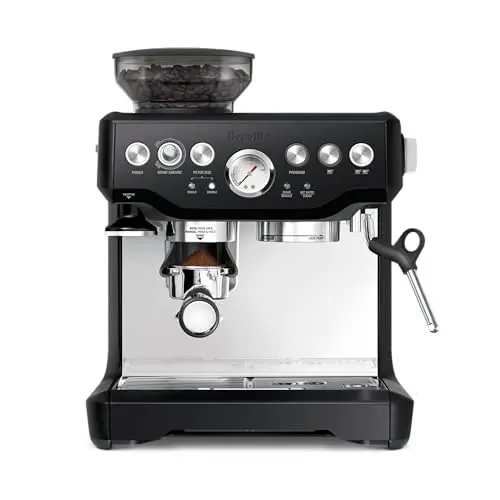
Barista Express – The All-in-One Benchmark
The machine that made built-in grinders normal. A conical burr grinder feeds the 54mm portafilter on demand, PID regulation holds brew temperature, and low-pressure pre-infusion softens the start of the shot. You still tamp and steam by hand – it automates the grind, not the craft.
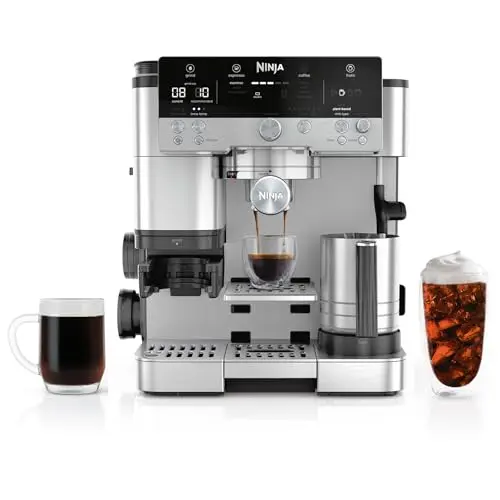
Luxe Cafe Premier – Guided Brewing for Beginners
A 3-in-1 that treats espresso as one mode among several: double or quad shots, drip coffee in three styles, and cold brew. Barista Assist handles grinding, weight-based dosing, assisted tamping, and real-time temperature and pressure adjustment, while a dual froth system produces hot or cold microfoam hands-free.
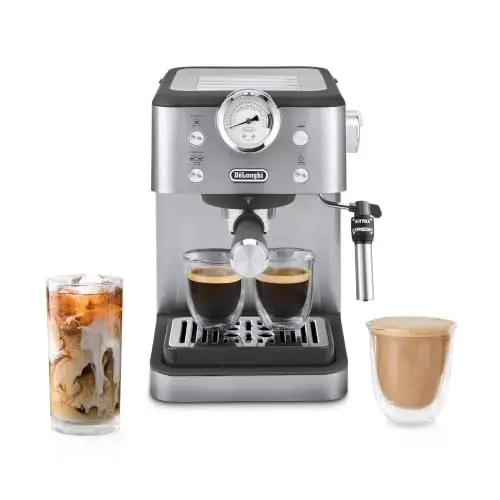
Classic Signature – Presets With an Adjustable Frother
A compact stainless semi-automatic with a 15-bar Italian pump, Thermoblock heating, programmable single and double presets, and a steam wand with two texture settings. The pressure gauge on the front panel gives you something to read while you dial in.
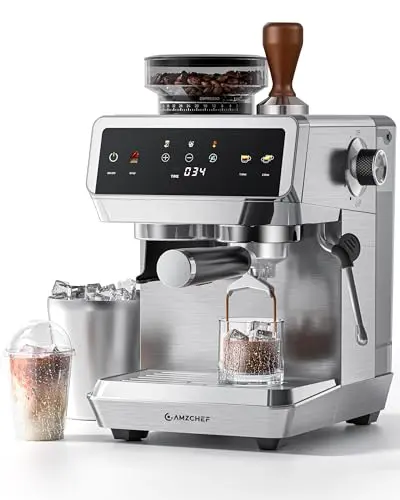
CM1626 – Temperature Control on a Budget
A semi-automatic with a built-in grinder, adjustable brew temperature from 190F to 201F, 44 grind settings, and a cold brew mode. The touch display shows grind time, brew time, and temperature, and a descaling routine is built in.

Stilosa – The Straightforward Entry Point
The plainest machine here, and that’s the pitch. A 15-bar pump, a stainless steel boiler, a manual steam wand, and a compact 8.6-pound body. It ships with single and double baskets plus a scoop-tamper, so there’s nothing else to buy on day one.
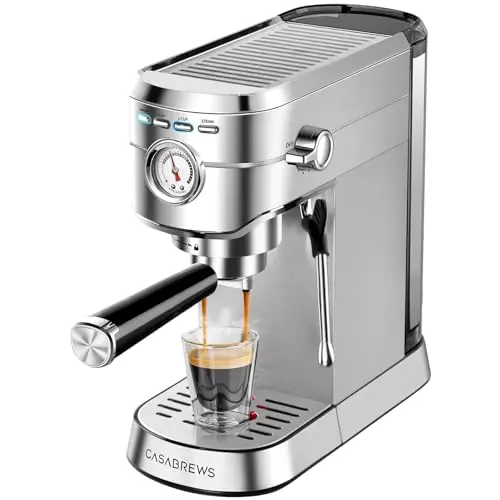
CM5418 – Pressure Gauge in a Narrow Body
A narrow stainless semi-automatic with a 20-bar pump, a visible pressure gauge, and a 34-ounce removable tank. At roughly five and a half inches wide it fits counters where most espresso machines won’t go.

3700 Essential – Bigger Tank, Fewer Extras
The simpler, larger-tank version of the CASABREWS formula: 20-bar pump, 1350W heating, a 43.9-ounce removable tank, and no pressure gauge. Same narrow stainless body, fewer extras.
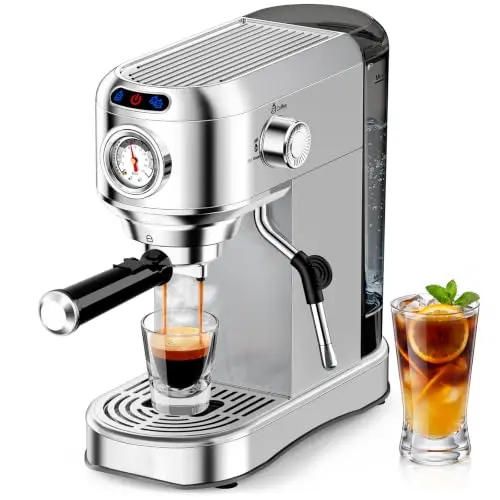
ST-699B – Fast Heat, Small Footprint
A compact semi-automatic with a 20-bar pump, a visible pressure gauge, a 1450W heating system rated for a 20-second preheat, and a 34-ounce removable tank. The footprint is roughly A4-sized, so it fits in kitchens where a full-size machine is out of the question.
How We Evaluated These Espresso Machines
We didn’t run controlled lab extractions with a refractometer, and we didn’t live with these machines for months on end. What we did: cross-referenced 10 espresso machines from 7 distinct brands across six decision axes – brew pressure and temperature stability, portafilter and basket compatibility, milk-frothing hardware, grinder integration, counter footprint, and maintenance routine. We triangulated published specifications, feature sets, and owner feedback where available, then mapped each option against realistic buyer profiles: the person stepping up from a pod machine, the person who wants a grinder built in, and the person who wants to learn the craft properly.
The scoring framework weighted real-world fit (70%) – how well a machine performs in daily use, from heat-up time to how forgiving it is with an imperfect grind – against feature differentiation (30%) – the hardware and controls that separate one option from another. We have no commercial relationship with any of the brands featured; recommendations track fit and differentiation, not brand preference. If you want one machine that handles grinding, brewing, and steaming without a second appliance, the Barista Pro is the one. If you’d rather own something you can service yourself for a decade, the Classic Evo Pro is the better answer.
Two things got full weight and one got none: heat-up speed and milk texture mattered, cosmetic finish didn’t. A machine that photographs well and steams badly did not rank highly here.
How to Choose the Right Espresso Machine
1. Pump Pressure, Temperature, and What Actually Matters in an Espresso Machine
You’ll see 15-bar and 20-bar pumps plastered across budget machines, and it’s mostly noise. Espresso extracts at roughly 9 bar at the puck. A higher-rated pump doesn’t make better coffee – it just means the pump has headroom. What changes the cup is temperature stability: a machine that holds a steady brew temperature across back-to-back shots beats one that spikes and dips every cycle.
Look for PID control if consistency matters to you. Without it, brew temperature drifts and you end up timing your shot around the machine’s rhythm, which is a habit rather than a feature. A pressure gauge, by contrast, is genuinely useful on a manual machine – it tells you whether your grind and dose are in range.
2. Do You Need a Built-In Grinder in Your Espresso Machine?
A built-in grinder is the single biggest convenience decision in this category. Bean-to-cup machines like the Barista Pro and Barista Express grind directly into the portafilter, which removes a whole appliance from your counter and shortens the path from bag to cup. The tradeoff is that you’re locked into that grinder – if the burrs fail, the machine is partly out of commission.
A separate setup – a machine with no grinder plus a dedicated burr grinder – buys upgrade flexibility and usually better grind quality from a dedicated unit. It also takes more space and more time. If you drink milk drinks daily and value a short workflow, integrated wins. If you’re chasing the best possible shot and don’t mind two appliances, separate wins.
3. Single Boiler, Thermoblock, and ThermoJet: Heat-Up and Recovery
Heating architecture decides how long you wait and whether you can steam right after pulling a shot. A single boiler is the traditional design: reliable and simple, but you brew, then wait, then steam. Thermoblock systems heat water on demand through a narrow channel, which cuts warm-up time and lets some machines switch between brew and steam quickly. Breville’s ThermoJet on the Barista Pro takes that further with a claimed three-second transition – the difference between making two lattes and giving up on the second one.
If you mostly drink straight espresso, this matters less. If your household runs on flat whites, it matters a lot.
4. Milk Frothing: Manual Wand, Auto Frother, or Nothing at All
This is where machines diverge most. A manual steam wand – as on the Gaggia Classic Evo Pro or the Stilosa – gives you real control and a skill you can build on. It also punishes you for not paying attention. An auto frother like the one on the Ninja Luxe Cafe Premier trades control for repeatability: pour milk, pick a texture, walk away.
An adjustable two-setting wand, which the Classic Signature uses, is a reasonable middle ground – one position for silky steamed milk, one for stiffer microfoam.
5. Portafilter Size, Baskets, and Upgrade Room
Portafilter diameter determines how much of the aftermarket fits your machine, and it’s easy to miss. A 58mm portafilter – the commercial standard, used on the Gaggia Classic Evo Pro – accepts the widest range of baskets, tampers, and distribution tools. Most budget machines use 51mm baskets, which work fine but limit what you can add later.
Check what ships in the box, too. Pressurized baskets are forgiving with pre-ground coffee; non-pressurized baskets demand a good grinder but reward you with a better shot once you’re dialed in.
6. What Espresso Machine Price Tiers Actually Buy You
Entry-level machines get you a pump, a wand, and a heated block. You’ll learn technique, and you’ll likely replace the machine within a few years – feedback on this tier frequently mentions short service lives. Mid-range machines add better temperature control, sturdier parts, and often a grinder. Premium machines buy consistency, faster transitions between brew and steam, and the kind of build you’d expect to keep on the counter for a decade.
The honest takeaway: spending more doesn’t automatically make better coffee. It makes consistent coffee with less effort. A careful barista with an entry machine beats a distracted one with a flagship.
Frequently Asked Questions
1. Is the Breville Barista Express or the Gaggia Classic Evo Pro the better first espresso machine?
They solve different problems. The Barista Express is the easier start: the built-in grinder, dose control, and PID temperature regulation remove several variables at once, so you’re learning one skill at a time. The Classic Evo Pro asks more of you from day one – you’ll need a separate grinder, and temperature management becomes part of your routine – but it gives back commercial-bench parts, a 58mm portafilter, and a machine you can service rather than replace.
Pick the Breville if you want good coffee quickly. Pick the Gaggia Classic Evo Pro if you want to grow into the machine.
2. What's the difference between the Ninja Luxe Cafe Premier and the Breville Barista Pro?
The Ninja is built around removing decisions: guided dosing, assisted tamping, and a hands-free frother with preset textures, plus drip coffee and cold brew modes. The Breville gives you manual control – a real steam wand, a grind dial you adjust by feel, and a workflow you refine over time. The Ninja is the better fit for a household where nobody wants to learn technique; the Breville is the better fit for someone who does.
3. Why do budget espresso machines advertise 20 bar of pressure?
Because it’s a number that fits on a box. Espresso extracts at roughly 9 bar at the puck, and the pump rating describes what the pump can generate, not what reaches your coffee. A 20-bar pump isn’t a quality signal by itself – the machines in this lineup producing the most consistent shots rely on temperature control and a stable brew path instead. A pressure gauge, on the other hand, is genuinely useful for diagnosing a bad grind.
4. How much counter space does an espresso machine really need?
More than the spec sheet suggests. Narrow machines like the CASABREWS CM5418 and AERCANA ST-699B run five to six inches across, but you still need clearance for the portafilter handle, the steam wand sweep, and a tamper. Full-size units such as the Ninja Luxe Cafe Premier and the Barista Pro occupy roughly a 13-by-14-inch footprint and weigh considerably more. Measure before you commit, especially under upper cabinets.
5. Can an entry-level espresso machine make latte-art-quality milk?
Yes, with caveats. A manual steam wand on an inexpensive machine can produce good microfoam – the limiting factor is usually technique and how quickly the wand recovers between pitchers. What budget machines typically lack is steam power consistency: the second pitcher often comes out wetter than the first. If latte art is a daily goal rather than a weekend experiment, a machine with more steam headroom will frustrate you less.
Final Verdict
For most people, the Barista Pro is the answer. It grinds, brews, and steams from one box, the ThermoJet heater keeps pace on a rushed morning, and the two-year coverage buys some peace of mind in a category where reliability is uneven.
If you’d rather learn the craft and keep a machine for years, the Gaggia Classic Evo Pro rewards that patience with commercial-bench parts and easy service. Budget-first buyers should look at the Stilosa – real espresso, a manual wand, and no features you’ll never touch. And if you want the machine to handle milk while you handle everything else, the Ninja Luxe Cafe Premier is built around exactly that.
