
Best Feather Mattress Toppers – 2026 Reviews

There’s a reason hotel beds from a certain era felt different: a real featherbed layer under the sheets, soft enough to cradle your shoulders but resilient enough not to swallow you. That feel is what most people are actually shopping for when they search for a feather mattress topper, and it’s also where listings get slippery. “Feather” now covers everything from genuine goose feather fill to polyester fiber sold as a down alternative.
Two things separate a topper you’ll still like in six months from one you’ll strip off by week three. The first is fill and loft: how much material is actually in there, and whether it holds its shape under body weight. The second is fit. A topper that migrates to the foot of the bed every night is a topper you’ll resent, no matter how plush it feels on arrival.
We went through the current market across major brands to sort real featherbeds from fiber-filled lookalikes, and to be honest about what each one costs you in upkeep. Some need professional cleaning. Others go straight in the washer. Some are three-inch feather clouds, others are cotton-topped pads with a modest cushion. Both can be right, depending on which tradeoff you’d rather live with.
Best Feather Mattress Toppers – 2026 Reviews
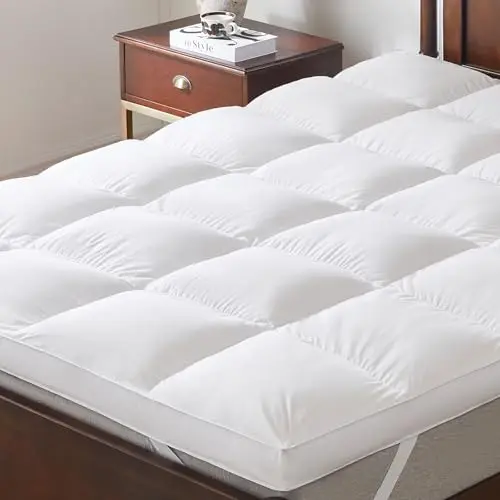
3 Inch Goose Feather Topper – Genuine Featherbed Loft
A genuine goose feather topper in a category full of fiber-filled imitations. The three-inch loft sits inside a brushed cotton shell with baffle box chambers, and adjustable anchor bands tension it to the mattress so the fill stays where you put it.
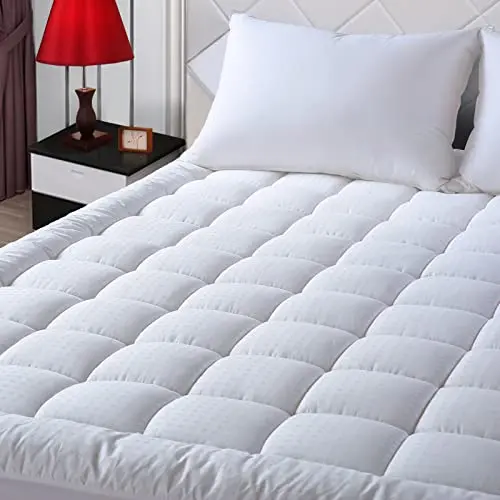
Cotton Pillow Top Mattress Pad – Breathable Everyday Plushness
A fitted-sheet-style pad with a 300 thread count cotton face and down-alternative fill. The elastic skirt stretches to 21 inches, so it grips a thick mattress without bunching, and it goes in the washing machine when it needs a refresh.
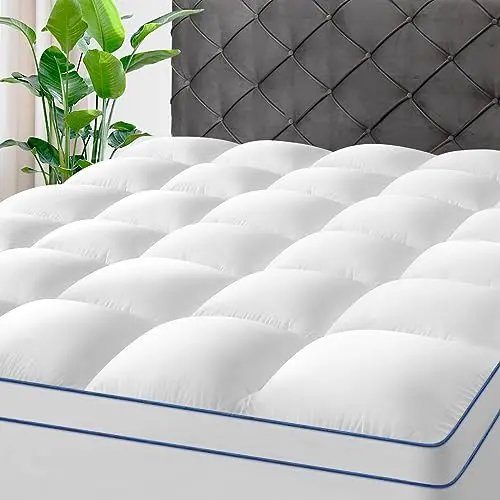
Overfilled Plush Mattress Topper – Deep-Pocket Cloud Comfort
A heavily overfilled pad built on 1000gsm of down-alternative fiber, with cooling microfiber blended through the fill. The pocket stretches from 8 to 23 inches, so it handles tall and pillow-top mattresses that defeat shorter skirts.

Cotton Top Mattress Pad – Cool, Breathable Cloud Comfort
A cotton-topped pad with extra-length stretchy sides for mattresses up to 20 inches deep. No latex, no formaldehyde, and a quiet non-slip construction aimed squarely at sleepers who run hot or have sensitive skin.
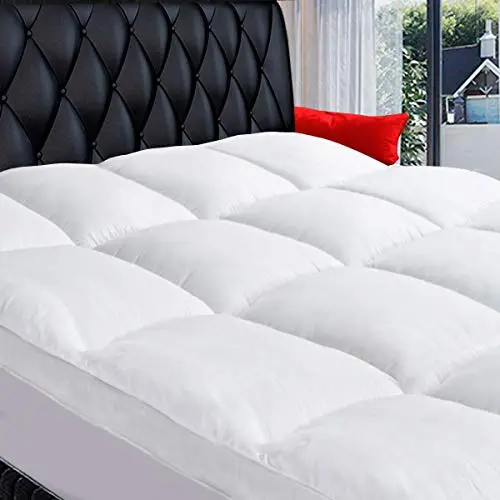
Cotton Extra Thick Pillow Top Topper – Cooling Cotton Surface
An overfilled pillow-top topper with a 400 thread count cotton cover and a ventilated surface aimed at sleepers who overheat on foam. The elastic deep pocket wraps mattresses from 8 to 21 inches, and a commercial washing machine handles cleanup.
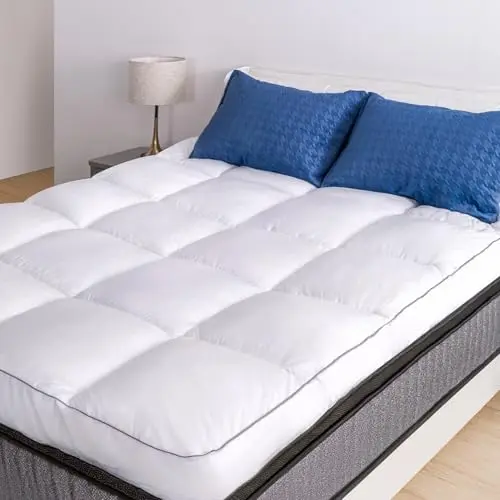
Cooling Plush Pillow Top Topper – Pressure-Relief Down Alternative
A plush down-alternative topper with a 400 thread count face and elastic straps rather than a full skirt. The fill is high-density and aimed at pressure relief at the shoulders, hips, and back.
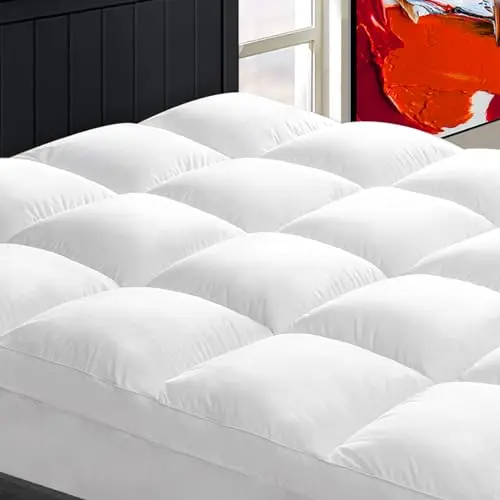
Double Border Pillow Top Topper – Overstuffed Fiber Fill
A heavily overstuffed fiber topper built with a double border wall that holds 60% more fill than a typical pad. The peach-skin finish is soft to the touch, and the deep pocket stretches to 21 inches.
How We Evaluated These Feather Mattress Toppers
We didn’t sleep on each of these toppers for a month straight. What we did: cross-referenced 7 mattress toppers from 7 distinct brands across five decision axes – fill material and loft, surface fabric, pocket depth and stay-put design, care requirements, and comfort feedback from real-world use. We triangulated published specifications, feature lists, and aggregated owner feedback where available, then mapped every option against the buyer profiles that actually shop this category: hot sleepers, pressure-point pain sufferers, and anyone trying to recreate a featherbed without buying one.
The scoring framework weighted real-world fit and performance (70%) – how well a topper delivers comfort, temperature control, and staying in place over a night’s sleep – against feature differentiation (30%), which covers construction choices like baffle box chambers, thread count, pocket range, and fill weight. Fill type got extra scrutiny because it’s the axis that defines this category: a genuine goose feather topper and a polyester down-alternative pad can look identical in a photo and behave nothing alike.
We have no commercial relationship with any of the brands featured here, and recommendations track fit and differentiation rather than brand preference. If you want the real featherbed feel, the LeWinBedding 3 Inch Goose Feather Topper is the match; if machine-wash simplicity matters more, the EASELAND Cotton Pillow Top Mattress Pad is the better call.
How to Choose the Right Feather Mattress Topper
1. Feather vs. Down Alternative: What's Really Inside a Feather Mattress Topper
A true feather mattress topper is filled with goose feather fill, often blended with a small amount of cotton batting to keep the clusters from shifting. It compresses under weight and springs back, which is why featherbeds feel supportive rather than sinking. Look for RDS-certified feather and a stated feather-to-batting ratio. That kind of specificity is usually a sign the fill is what the label claims.
Most listings using the word “feather” are actually down alternative: polyester microfiber clusters engineered to mimic loft. They’re hypoallergenic, cheaper to produce, and often easier to wash, but they tend to flatten faster and hold more warmth than real feather. Neither fill is a scam, they’re just different products with different lifespans. If the featherbed feel is specifically what you’re after, the LeWinBedding topper is the one in this lineup that uses actual goose feather.
2. Loft and Fill Weight: How Thick a Feather Mattress Topper Should Be
Fill weight, often quoted in grams per square meter, predicts plushness far better than the marketing phrase “extra thick.” A 1000gsm fill runs roughly double a standard pad, and it shows up as real loft rather than a suggestion of it. Construction matters just as much: baffle box stitching and double border walls keep fill distributed instead of pooling at the edges.
Thickness also trades off against support. A deep three-inch feather topper cradles pressure points but can feel unstable if you like a firm surface, while a thinner cotton pad adds cushioning without changing the mattress’s character. Match the loft to your problem: pressure-point pain calls for more fill, and a mattress that’s merely a touch too firm needs less.
3. Deep Pockets and Stay-Put Fit: Keeping a Mattress Topper in Place
Check pocket depth against your actual mattress height, including any existing topper. Most options cover eight to 21 inches and a few stretch to 23. A full-perimeter elastic skirt grips better than corner straps alone, and anchor bands do the same job for a heavier feather fill that wants to travel overnight.
If your mattress is a pillow-top or you’re stacking layers, go deeper than you think you need. The Kayfia topper reaches 23 inches, making it the safer bet on a tall or pillow-top mattress, while fitted-sheet-style skirts are the easiest to wrestle on alone.
4. Care Reality: Which Feather Mattress Toppers Survive a Washing Machine
Care instructions are the most underrated spec in this category. A machine washable topper you can refresh quarterly will outlast a fussier one that quietly accumulates dust and sweat. Feather fill almost always lands in spot clean or dry clean only territory because the fill clumps when soaked, while polyester down alternative generally tolerates a gentle cycle and a low-heat tumble to restore loft.
Decide up front whether you’re willing to pay for professional cleaning. If not, the cotton-topped machine-washable pads are the practical choice, and the EASELAND pad is the easiest to live with on that front.
5. Feather Mattress Topper vs. Memory Foam: Heat, Feel, and Longevity
Memory foam toppers contour more aggressively and don’t shift, but they’re also the classic culprit behind night sweats, since foam traps body heat in a way feather and fiber fills don’t. If you wake up hot, a breathable cotton-top or feather topper is usually the better direction to move in.
The tradeoff runs the other way on durability. Foam holds its shape for years, while feather and fiber fills compress over time and need occasional fluffing. Neither wins outright. It depends on whether temperature or longevity is the bigger annoyance in your bed right now.
6. What Feather Mattress Toppers Cost at Each Tier
Entry tier toppers are almost all polyester fill with a simple skirt. They’re the right call if you’re testing whether extra loft helps at all before committing further. Mid-tier money buys cotton tops, higher fill weights, and better pocket engineering, which is usually where the sweet spot sits for most bedrooms.
The premium tier is where genuine feather fill and three-inch lofts live, along with the dry-cleaning bills that come with them. Spending more doesn’t automatically mean sleeping better. The jump that matters most is from a synthetic surface to cotton, because that’s what changes temperature regulation night to night.
Frequently Asked Questions
1. Are feather mattress toppers actually filled with feathers?
Sometimes, but not usually. Genuine feather toppers state the fill plainly, like 95% goose feather blended with a little cotton batting to stop shifting, and they’re the exception rather than the rule. Most listings using the word feather in the title are filled with down alternative, a polyester microfiber that mimics loft.
Neither is dishonest as long as the material line is accurate. But they behave differently. Real feather springs back and sleeps cooler, while fiber fills tend to compress over time and hold more warmth. Read the material spec, not the product name.
2. What's the difference between the LeWinBedding goose feather topper and the EASELAND cotton pillow top?
They solve different problems. The LeWinBedding topper is a true featherbed: three inches of goose feather fill in a baffle box cotton shell, built to cradle pressure points and give a firm mattress a hotel-soft surface. It needs spot cleaning or professional care.
The EASELAND pad is a cotton-topped pad with down-alternative fill and a 21-inch deep pocket, machine washable and much easier to maintain. It adds cushioning without the deep sink of a featherbed. Choose feather for the feel, cotton for the upkeep.
3. Do feather mattress toppers help with back pain?
They can, indirectly. A feather or fiber topper adds a cushioning layer that redistributes pressure at the shoulders, hips, and lower back, which is why so many topper shoppers are really trying to avoid replacing a mattress. What it won’t do is rescue a mattress that’s badly sagging or already too soft.
If your pain is pressure-related, like numb arms or sore hips, a three-inch loft gives the most relief. If your mattress is too soft and the ache sits in your lower back, adding more fill usually makes it worse. You want a thin cotton pad instead, or a firmer mattress.
4. Which is better for hot sleepers, the Niagara Sleep Solution pad or the COONP topper?
Both use cotton tops, which is the important shared trait, since cotton breathes and wicks far better than a polyester face or a foam layer. The Niagara pad uses a 300 thread count cotton surface with a 20-inch pocket and skips latex and formaldehyde, making it a reasonable pick for sensitive skin. The COONP runs a 400 thread count cotton top with more fill, so it feels plusher.
If overheating is your main complaint, pick the thinner of the two, because more fill means more insulation. If you want the plushness and sleep temperature is secondary, the COONP’s extra loft is worth it.
5. Can you wash a feather mattress topper?
Usually not in a home machine. Feather fill clumps when soaked and takes a long time to dry through, so most feather toppers specify spot cleaning or professional dry cleaning. Spot-treat accidents promptly and air the topper outdoors seasonally to keep it fresh.
Down-alternative and cotton-topped pads are the opposite. Most are machine washable on a gentle cycle, and a low-heat tumble brings the loft back. Check the care label before buying, because a topper you can’t clean is a topper with a shelf life.
Final Verdict
For most people shopping a feather mattress topper, the LeWinBedding 3 Inch Goose Feather Topper is the pick. It’s the only option here with real goose feather fill, and the three-inch baffle-box loft delivers the pressure relief and hotel feel that down-alternative pads only approximate. Just know you’re signing up for spot cleaning.
If that upkeep is a dealbreaker, the EASELAND Cotton Pillow Top Mattress Pad gets you a breathable cotton top, a deep pocket that genuinely stays put, and machine-wash simplicity for far less commitment. Sleepers who overheat should look at the Niagara Sleep Solution pad for its cotton surface, and anyone working to a tight budget can go straight to the Kayfia topper, which carries the heaviest fill in the entry tier.
