
Best Flat Burr Coffee Grinders – 2026 Reviews

The first sign that a flat burr coffee grinder is doing its job is almost boring: the grounds look even, the bed settles predictably, and the cup tastes like the bean rather than the grinder. The second sign is that you stop fiddling with the dose every morning because the grinder is not throwing boulders and dust into the same basket.
Flat burr geometry is the organizing idea here. Two flat discs crush beans between them, and the quality of that cut shapes particle spread, heat buildup, and how cleanly the grinder doses. But geometry alone is not a purchase decision. You also need to look at burr size, adjustment range, static control, hopper design, and whether the workflow fits espresso, drip, or French press.
This guide surveys the flat burr coffee grinder market across brands and price tiers, from compact entry models to 64mm single-dose machines. It is written for the reader who wants the right grinder for a real counter and a real brewing routine, not the one with the longest spec sheet.
Best Flat Burr Coffee Grinders – 2026 Reviews
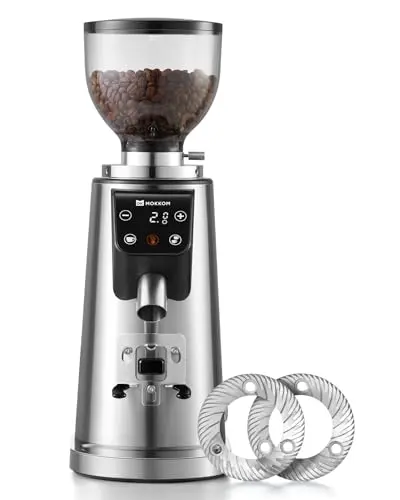
BD-CG308 – 64mm Flat Burr All-Rounder
A 64mm flat burr grinder with a 100-step adjustment ring, dual hoppers, and a 0.1-second timer. It is aimed at home brewers who want a wide grind range and low-static dosing without commercial pricing.
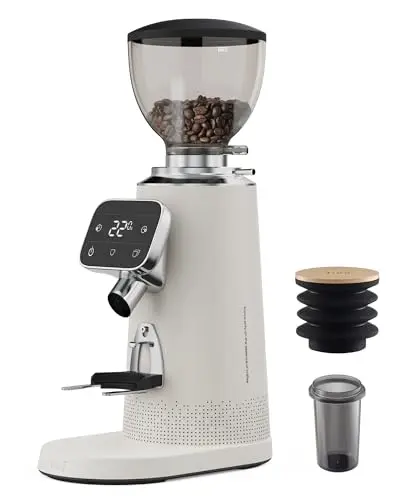
G3 – Espresso-Focused Flat Burr
A 64mm flat burr espresso-focused grinder with stepless adjustment, dual hoppers, and a portafilter holder. It suits dialing in single and double shots with anti-static dosing.
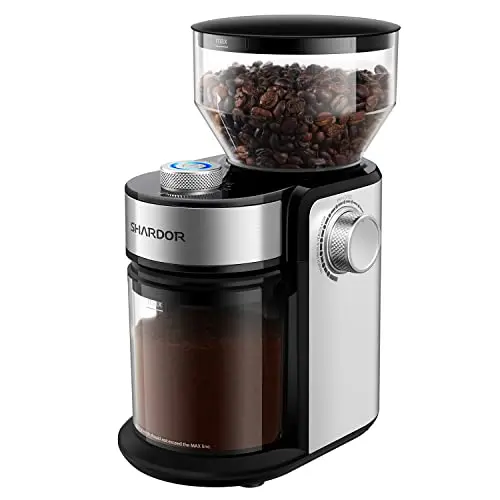
CG835S – Compact Flat Burr Value
A compact flat burr grinder with 16 settings, a 2-to-14-cup timer, and a dual safety interlock. It is a budget-friendly entry point for drip, pour-over, and French press.
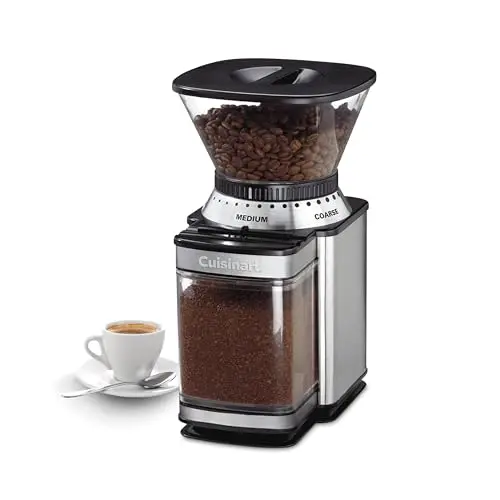
DBM-8P1 – Entry-Level Flat Burr Workhorse
An entry-level flat burr grinder with 18 settings, an 8-ounce hopper, and a cup selector. It is built for simple daily drip, espresso, and French press grinding.
How We Evaluated These Flat Burr Coffee Grinders
We didn’t run lab-grade particle-distribution tests or pull dozens of espresso shots on a bench. What we did: cross-referenced four flat burr coffee grinders from four brands across five decision axes – burr geometry and size, grind-range control, dosing workflow, static and retention behavior, and build/service support. We audited published specifications, mapped feature sets to real brewing routines, and triangulated owner feedback where available against use-case fit for espresso, drip, pour-over, and French press.
Each grinder was judged first on how well it serves the brewer it targets, then on what it adds beyond the basics. We weighed real-world fit and performance (70%) against feature differentiation (30%). That means a model earned credit for repeatable grind quality, sensible adjustment, and clean dosing, not for a long spec sheet. We have no commercial relationship with the brands featured; recommendations track fit and differentiation, not brand preference. If you want the most complete flat burr package for mixed brewing, the MOKKOM BD-CG308 is the pick; if espresso dialing is the priority, the Tuni G3 is the stronger match.
We also did not measure burr wear over months or verify long-term reliability under daily commercial volume. Instead, we focused on the information a home buyer can act on: grind range, adjustment precision, hopper design, timer accuracy, anti-static hardware, warranty terms, and available service support.
How to Choose the Right Flat Burr Coffee Grinder
1. Flat Burr Coffee Grinders: What the Burr Geometry Actually Changes
A flat burr coffee grinder uses two flat discs to crush beans between their edges. That design tends to produce a narrower spread of particles than a blade grinder, which is the practical reason flat burr models are associated with balanced extraction and clearer flavor separation. You are not chasing laboratory-grade uniformity at home; you are trying to avoid a basket full of dust and boulders.
The useful question is not whether flat burrs are inherently better than every other design. It is whether the grinder gives you enough adjustment, enough consistency, and a clean enough workflow for the way you brew. A well-aligned burr set matters more than the marketing label alone.
2. Burr Size and Motor Power in Flat Burr Coffee Grinders
Burr size affects speed and heat. The 64mm flat burrs in this group cut faster and generally recover from back-to-back doses better than smaller burrs, but alignment and build quality still decide the result. A bigger burr with a weak mount is not an automatic win.
Motor stability matters just as much. A grinder that slows down through a dark roast can shift the grind setting mid-dose, and that shows up in the cup. Look for a confident adjustment mechanism and a motor that does not sound like it is straining. Heat buildup is less of a concern for a single morning dose than for repeated grinding, but it is still a reason to avoid stalling the motor.
3. Static, Retention, and Workflow for Flat Burr Coffee Grinders
Anti-static design is one of the most practical features in this category. Coffee grounds that cling to the chute or fly onto the counter make a mess and throw off your dose. A sealed catch cup, a grounded chute, or a plasma generator can all help; the point is to keep the grounds in the cup, not on the counter.
Retention is the coffee left inside the grinder after you finish. A little is normal. A lot means yesterday’s dark roast is seasoning today’s light roast. A dosing timer, a removable upper burr, and a single-dose hopper all make retention easier to manage. If you switch beans often or weigh every dose, prioritize clean access over a large hopper.
If low-static single dosing is your priority, the MOKKOM BD-CG308 is the pick.
4. Espresso vs Filter: Dialing In a Flat Burr Coffee Grinder
Espresso needs a narrow adjustment window and repeatable micro-steps. Filter brewing needs range more than surgical precision, especially at the coarse end. That is why stepped vs stepless adjustment is worth understanding before you buy: stepless rings let you nudge a shot, while stepped collars are easier to return to a known setting.
For espresso, also check the espresso range and whether the grinder includes a portafilter holder or dosing cup. For drip and pour-over, look at coarse settings and whether the grinder can deliver a consistent bed without a lot of fines. A grinder that is excellent at one end may be merely adequate at the other.
If you pull espresso daily and want a portafilter holder in the box, the Tuni G3 is the pick.
5. Budget vs Premium Flat Burr Coffee Grinders
Budget-friendly flat burr grinders usually use smaller burrs, fewer settings, and more plastic, but they can still be a clear upgrade over a blade grinder for drip and French press. The tradeoffs show up in static, noise, and fine-espresso control.
Premium flat burr grinders add bigger burrs, metal bodies, better timers, anti-static hardware, and more thoughtful dosing. Those features improve build quality, but they only matter if they match your routine. Spend for the grind range and workflow you will actually use, not for a spec sheet you admire once.
Frequently Asked Questions
1. What makes a flat burr coffee grinder different from a conical burr grinder?
Flat burr coffee grinders crush beans between two flat discs, while conical burrs use a cone inside a ring. The practical difference is particle distribution: flat burrs often produce a more uniform grind with a narrower spread, which can make flavor clarity easier to taste in filter coffee and can simplify espresso dialing. Conical burrs are not inferior; they have a different profile and are often easier to turn at low RPM.
The bigger variable is burr quality, alignment, and the grinder’s adjustment system. A well-built flat burr grinder with a sensible range will beat a poorly aligned one with a fancy label.
2. MOKKOM BD-CG308 vs Tuni G3: which flat burr coffee grinder should you choose?
The MOKKOM BD-CG308 and Tuni G3 are close on paper: both use 64mm flat burrs, both offer 100 settings, and both include dual hoppers. The MOKKOM leans on a 0.1-second timer, a plasma anti-static system, and a broad mixed-brewing workflow. The Tuni counters with a stepless ring, a portafilter holder, and single/double shot modes that suit espresso-first routines.
Choose the MOKKOM if you move between espresso, drip, and French press and want the more precise timer. Choose the Tuni if you want the adjustment ring and accessories to feel purpose-built for an espresso station.
3. Cuisinart DBM-8P1 vs SHARDOR CG835S: which budget flat burr coffee grinder is the better entry point?
The Cuisinart DBM-8P1 and SHARDOR CG835S are both entry-level flat burr grinders, but they solve different problems. The Cuisinart gives you 18 settings, a larger hopper, and a simple cup selector for batch drip. The SHARDOR is more compact, uses 16 settings, and backs the package with a two-year warranty.
If counter space and a longer warranty matter more than hopper capacity, the SHARDOR is the better fit. If you grind larger batches and want a familiar automatic workflow, the Cuisinart makes more sense.
4. Are flat burr coffee grinders worth it for drip coffee and French press?
Yes, if you want more grind consistency than a blade grinder provides. A flat burr grinder can improve drip coffee and French press by reducing the mix of dust and chunks that makes extraction uneven. You do not need a 64mm commercial-style grinder for either method; a compact budget flat burr model with a clean catch cup can be enough.
Spend more only if you also brew espresso, switch beans often, or want lower static and better dosing control. For filter-only brewing, grind range and mess control matter more than raw burr size.
5. How do you keep a flat burr coffee grinder clean and consistent?
Brush the grind chamber after every few uses and use a cleaning brush to clear the chute. If the grinder has a removable upper burr, take it out periodically and brush the burr teeth; never wash burrs with water. A regular purge of a few beans clears stale grounds before you brew a delicate light roast.
Consistency also depends on using the same dose and not overfilling the hopper. Store beans away from heat and light, and clean more often if you grind dark, oily beans.
Final Verdict
For most shoppers, the MOKKOM BD-CG308 is the flat burr coffee grinder to beat: 64mm burrs, a 100-step range, dual hoppers, and a precise timer make it easy to move between espresso and filter without buying two machines. If your routine is espresso-first, the Tuni G3 adds a stepless adjustment ring and a portafilter holder that make shot dialing more natural. On a tighter budget, the SHARDOR CG835S is the compact flat burr pick for drip and French press, while the Cuisinart DBM-8P1 is the familiar entry point if you want a larger hopper and simple cup selector. Start with the grinder that matches your daily brewer, not the one with the longest feature list.
