
Best Fluffy Comforters For Hot Sleepers – 2026 Reviews

Hot sleepers get told to choose between a fluffy comforter and a cool night. That’s a false choice. The right comforter can have visible loft and still move heat away, as long as the shell, fill, and construction are working together instead of trapping warmth.
Two things separate a good fluffy comforter for hot sleepers from a mediocre one: the cooling surface and the breathability of the fill. A cool-to-touch fabric or Q-Max-style shell helps at contact points, while a lightweight down alternative or breathable cotton shell keeps the comforter from turning into a heat trap.
The picks below span active-cooling fabrics, natural fills, budget-friendly inserts, and extra-fluffy options. We compared them by how well they balance loft with airflow, so you can choose the one that fits your sleep temperature instead of just your bed’s look.
Best Fluffy Comforters for Hot Sleepers – 2026 Reviews
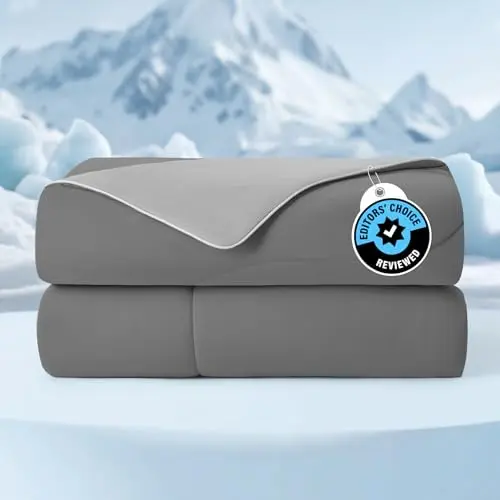
Cooling Comforter – Q-Max Cooling for Hot Sleepers
A cooling-first comforter for hot sleepers, built with Q-Max >0.45 fabric and a fluffy down-alternative fill. The Queen size gives generous coverage while keeping the overall feel light and breathable.
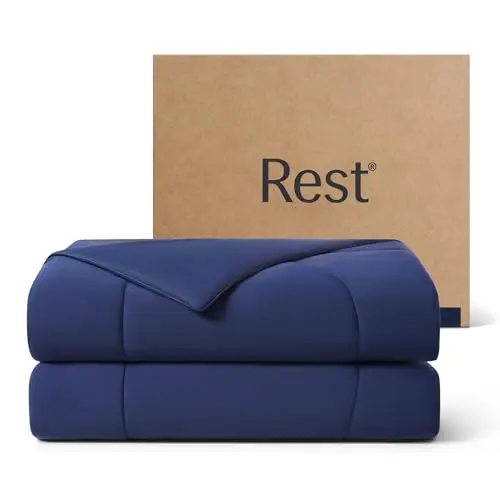
Evercool – Premium Cooling for Night Sweats
A premium cooling comforter with proprietary Evercool fabric and a breathable Sorona and Tencel fill. It is designed for hot sleepers who want a silkier drape and a more luxurious bed feel.

Seersucker Plaid – Cooling With a Textured Look
A Q-Max cooling comforter with a two-sided design: one smooth cooling face and one breathable seersucker plaid face. It brings active cooling and a more casual textured look to hot-sleeper bedding.
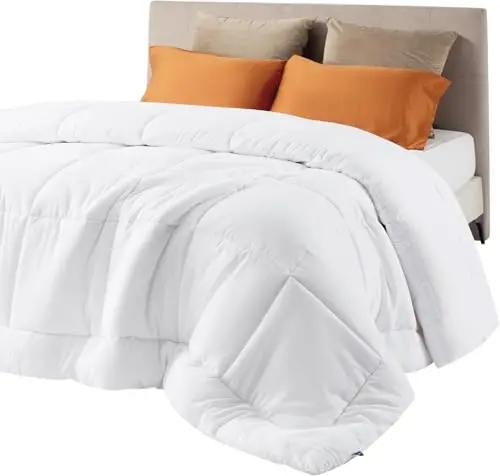
Comforter Duvet Insert – Soft All-Season Budget Pick
A soft down-alternative duvet insert with box stitching and eight tabs, made for all-season use. It is a strong budget-friendly starting point for hot sleepers who want a fluffy, hotel-like bed without a dedicated cooling fabric.

Marshmellow – Extra-Fluffy Temperature-Balancing
An extra-fluffy double-stuffed comforter with heat-adaptive fibers and a baby-grade OEKO-TEX Class I shell. It is built for sleepers who want maximum cloud-like loft with some temperature-balancing support.
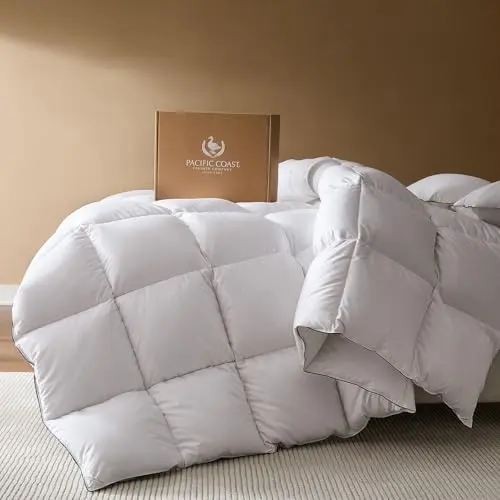
Goose Feather Down Fiber – Breathable Natural Fill
A natural goose down fiber comforter with a 3D baffle-box build and a breathable cotton-poly shell. It is a medium-weight, hotel-luxury option for sleepers who want fluffy natural fill rather than synthetic cooling fabric.

Reversible Comforter – Two-Tone Softness
A reversible down-alternative comforter with a brushed microfiber shell and two complementary colors. It is a soft, all-season option for hot sleepers who want fluffy comfort without a dedicated cooling fabric.
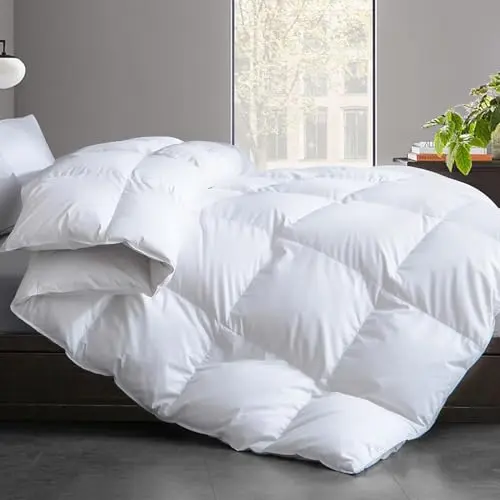
Feather and Down Fiber – Cotton-Shell Breathability
A feather-and-down-fiber comforter with a 100% cotton shell and medium warmth. It is a breathable natural-fill option for hot sleepers who prefer cotton over synthetic cooling fabrics.
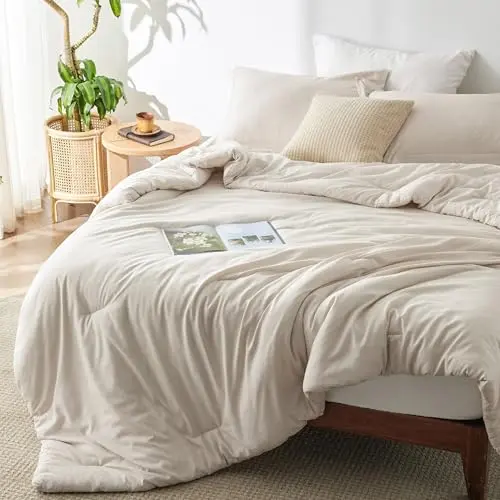
Cationic Dyed Comforter Set – Complete Bedding Refresh
A three-piece comforter set with a heather cationic-dyed finish, matching shams, and a lightweight all-season feel. It is a complete bedding refresh for hot sleepers who want a cozy but not heavy look.

All-Season Cooling Comforter – Lightweight Duvet Insert
A lightweight all-season comforter with a soft polyester shell, whole-piece fill, and box stitching. It is a budget-friendly duvet insert for hot sleepers who want a simple, breathable layer rather than active cooling tech.
How We Evaluated These Fluffy Comforters for Hot Sleepers
We didn’t run a sleep lab or measure surface temperatures over a full night. What we did: cross-referenced 10 comforter models from 8 distinct brands across six decision axes – cooling fabric or Q-Max rating, fill type and loft, breathability and warmth balance, construction and duvet tabs, care and durability, and size fit for hot sleepers. We triangulated published specifications, feature sets, and owner feedback where available, then mapped each option against representative hot-sleeper profiles: people who overheat under traditional down alternatives, couples with different temperature needs, and shoppers who still want a fluffy-looking bed. We also weighed care requirements, because a cooling comforter only works if it stays clean without fuss. We audited care labels, tab counts, and fill descriptions rather than relying on photos alone, and benchmarked cooling claims against the materials listed rather than marketing language.
The scoring framework weighted real-world hot-sleeper fit (70%) – how well each comforter balances cooling, airflow, and comfortable loft – against feature differentiation (30%) – unique cooling technology, fill construction, and care advantages. We have no commercial relationship with any of the brands featured; recommendations track fit and differentiation, not brand preference. If you want the most complete cooling-first package, the Cozy Bliss Cooling Comforter is the one we’d start with; if you want the premium cooling build with a silkier drape, the REST Evercool is the stronger match.
How to Choose the Right Fluffy Comforter for Hot Sleepers
1. What Makes a Comforter Fluffy Without Overheating
A genuinely loft-y comforter uses fill that springs back rather than packing down into a thin layer. For hot sleepers, the trick is pairing that loft with breathability: air needs to move through the shell and fill instead of getting trapped against your skin. Airflow matters more than raw thickness, which is why a lightweight down-alternative comforter can feel fluffier and cooler than a dense, heavy insert.
Look for box-stitch construction or a baffle box if you want the fill to stay evenly distributed. Those chambers keep the comforter from developing flat spots, so the fluffy look lasts beyond the first week.
2. Cooling Tech and Breathability for Hot Sleepers
Active-cooling comforters usually advertise a Q-Max rating, which measures how cool the fabric feels to the touch. A higher Q-Max value generally means a stronger cool-to-touch sensation, but it isn’t the whole story. Moisture wicking and cool-to-touch fabric help at the surface, while the fill still needs to avoid becoming a sauna. If night sweats are your main issue, start with a purpose-built cooling shell rather than a standard all-season insert.
If you want the most direct hot-sleeper cooling, the Cozy Bliss Cooling Comforter is the one to shortlist because it pairs a Q-Max shell with a lightweight down-alternative fill. Just don’t expect a cooling comforter to replace a bedroom fan in extreme heat; it manages comfort, not room temperature.
3. Fill Types: Down Alternative, Feather-Down, and Cotton Shells
Down alternative is the most common fill in this category because it can deliver cloud-like loft without the cost or care quirks of natural down. Feather-down blends add a more traditional hotel feel and often drape better, but they can be warmer and may need a duvet cover to contain stray feathers. A cotton shell is worth considering if you want breathability and a more natural hand feel, especially in a medium-warmth comforter.
If natural fill is a priority, the Pacific Coast Goose Feather Down Fiber is the premium-leaning option to consider, while budget shoppers can start with the Bedsure Comforter Duvet Insert for a soft down-alternative feel. Neither is a dedicated cooling fabric, so match them to how hot you sleep.
4. Construction Details That Keep Fluffy Comforters Balanced
Duvet tabs are easy to overlook, but they decide whether your comforter stays centered inside a cover or bunches into a lump. Eight tabs or loops are better than four if you use a duvet cover regularly. Box-stitch construction keeps the fill from sliding, while a true baffle box gives the fill more room to expand for maximum loft. For hot sleepers, balanced construction matters because uneven fill creates hot spots and cold spots across the bed.
5. Size, Drape, and Bed Fit for Hot Sleepers
Size and drape change how a comforter feels overnight. A comforter that’s too small leaves you tugging it back into place, while an oversized one can trap more heat around your body. Queen is the most common starting point, but hot sleepers in larger beds may prefer a King/Cal King or oversized Queen for generous coverage without a heavy coverlet on top.
If you have a King/Cal King and want the puffiest option, the Mellow Marshmellow is the extra-fluffy choice, but it’s not offered in Queen. For most Queen beds, the Bedsure Comforter Duvet Insert is the simpler fit.
6. Care and Durability: Keeping a Cooling Comforter Fresh
Most comforters in this group are machine washable, but the details matter. Use a gentle cycle, cold or cool water, and a low-heat tumble dry to protect cooling fabric and keep the fill from clumping. Avoid fabric softener on cooling fabrics because it can coat the fibers and reduce the cool-to-touch effect. A duvet cover is optional, but it can cut down on how often you need to wash the comforter itself.
Check the care label before you buy. Natural down and feather fills may call for dry cleaning or spot cleaning, while polyester and down-alternative comforters are usually easier to maintain. If you wash often, prioritize secure stitching and reinforced seams.
Frequently Asked Questions
1. Are fluffy comforters a bad choice for hot sleepers?
Not necessarily. The problem is usually a heavy fill or a shell that traps heat, not the fluffy comforters themselves. Look for cooling fabric, breathable construction, and a fill that doesn’t pack down into a dense slab. A high-loft comforter with active cooling can feel airy and cloud-like without the heat retention of a traditional winter insert. The Cozy Bliss Cooling Comforter is the clearest example in this lineup because its Q-Max shell is built around hot sleepers rather than added as an afterthought.
2. What's the difference between the Cozy Bliss Cooling Comforter and the REST Evercool Comforter?
Both are cooling-first comforters, but they take different routes. The Cozy Bliss uses a Q-Max cooling shell with a down-alternative fill and a straightforward all-season build. The REST Evercool leans on its proprietary Evercool fabric and a fill blend of Sorona and Tencel for a silkier drape and a more premium feel. The REST sits in a higher price tier, so it makes the most sense if you want the plusher hand feel and don’t mind paying for it; otherwise the Cozy Bliss is the more accessible cooling pick. If you want the premium version, the REST Evercool is the one to choose.
3. How does the Bedsure Comforter Duvet Insert compare with the COHOME All-Season Comforter?
The Bedsure is the softer, more hotel-like down-alternative insert, with down-alternative fill, box stitching, and duvet tabs that make it easy to secure inside a cover. The COHOME is lighter and more budget-oriented, with a whole-piece polyfill and a simpler all-season build. Neither is a dedicated cooling fabric, so they’re better for hot sleepers who mainly want a breathable, lightweight comforter rather than active Q-Max cooling. Choose Bedsure for a plusher feel; choose COHOME if you want a lower-cost all-season weight.
4. Do cooling comforters actually help with night sweats?
They can help, but think of them as comfort tools rather than medical fixes. Cooling fabrics can improve night sweats by pulling heat away from the skin, and moisture evaporation helps you feel drier. Airflow in the fill and shell matters just as much as the cool-to-touch surface, because trapped heat cancels out the benefit. A cooling comforter is most useful when paired with a breathable sheet and a cooler bedroom; it supports temperature regulation, but it can’t make a hot room cold.
5. What size fluffy comforter should hot sleepers choose?
Start with your mattress size, then decide how much drape you want. Size and drape affect both coverage and heat: an oversized comforter gives more coverage but can add warmth if it wraps around you, while a too-small comforter leads to cold spots and tugging. Most Queen sleepers are fine with a standard Queen, but if you have a deep mattress or share the bed, an oversized Queen may be worth it. King and Cal King sleepers should check the specific King/Cal King sizing, since not every fluffy comforter comes in every size.
Final Verdict
For most hot sleepers who still want a fluffy bed, the Cozy Bliss Cooling Comforter is the pick. It pairs Q-Max >0.45 fabric with a down-alternative fill that feels airy rather than heavy, and the Queen size gives solid coverage without extra bulk. If you want the most premium cooling build and a silkier drape, the REST Evercool is worth the step up. Budget-minded shoppers can start with the Bedsure Comforter Duvet Insert, which delivers a soft, hotel-like feel for far less. And if loft is the priority and you have a larger bed, the Mellow Marshmellow brings the most cloud-like puffiness in this group. The smart move is to match the comforter to how you sleep: cooling fabric first for night sweats, then loft and size.
