
Best Fluffy Cooling Comforters – 2026 Reviews

A comforter can feel like a cloud at bedtime and still turn into a heat trap by 2 a.m. That is the tension at the heart of the fluffy cooling comforter search: you want loft you can see and sink into, but you don’t want a layer that traps every degree of body heat.
The good options separate themselves on two axes. First, fill and shell breathability – how much air moves through the comforter and how quickly moisture escapes. Second, loft that stays put – whether the fill is box-stitched, whole-piece, or double-stuffed, and whether the comforter keeps its shape after washing. Tabs, sizing, and cover compatibility matter too, especially if you plan to use a duvet cover.
We cross-shopped the category across major brands to find comforters that balance fluffiness with a cooler sleep surface. Some lean into cooling fibers, others into airy fills or lightweight construction. The guide below maps those tradeoffs so you can pick for your bedroom, your sleep temperature, and how much upkeep you want.
Best Fluffy Cooling Comforters – 2026 Reviews

Comforter Duvet Insert – All-Season Hotel Softness
A white down-alternative duvet insert with a soft shell, even box-stitched loft, and eight tabs for cover security. It is built for year-round use and comes in a wide size range.

All-Season Cooling Comforter – Breathable Year-Round Insert
A cooling-focused duvet insert with a soft polyester shell, whole-piece fill, and box stitching to limit clumping. It works as a standalone comforter or inside a duvet cover.

Marshmallow Comforter – Double-Stuffed Cloud Fluff
A double-stuffed down-alternative comforter designed for visible loft and cloud-like softness. Temperature-balancing fibers and an OEKO-TEX Class I shell make it a fit for sensitive sleepers.

Lightweight Duvet Insert – All-Season Comfort
A lightweight microfiber duvet insert with 3D/7D down-alternative fill and box stitching. Four corner loops keep it anchored inside a cover.
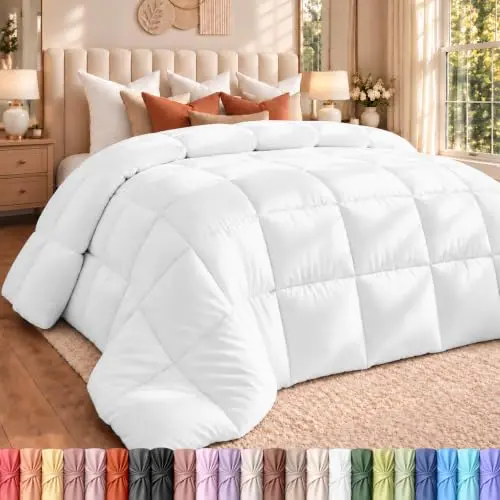
Comforter King Duvet Insert – Soft Down Alternative
A straightforward white duvet insert with siliconized fiberfill, piped edges, and corner tabs. It is machine washable and sized for King beds.
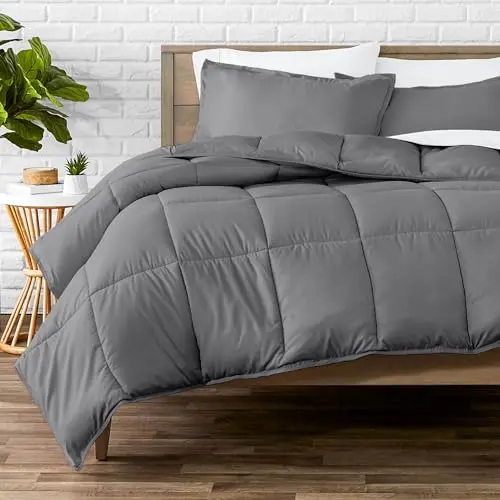
Queen Comforter Set – Ultra-Soft All-Season Set
A coordinated queen comforter set with a brushed microfiber shell, 300 GSM down-alternative fill, and two matching shams. It is built for all-season use.
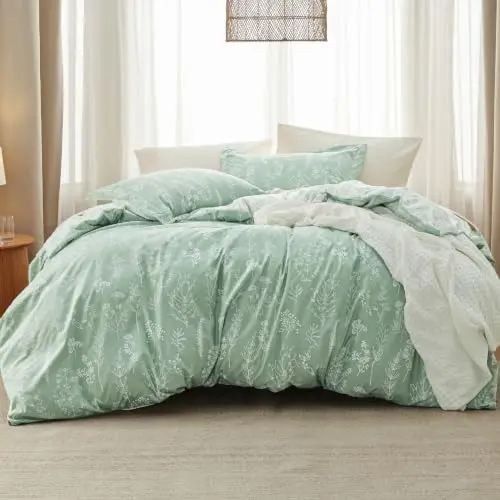
Reversible Floral Comforter Set – Cottagecore Cloud Comfort
A reversible floral comforter set with a down-alternative blend and two matching shams. The sage green side flips to a contrasting finish for an easy decor change.

7-Piece Bed in a Bag – Complete All-Season Set
A seven-piece bed-in-a-bag set with a comforter, sheets, pillowcases, and shams. The 240 GSM fill is designed for year-round warmth.
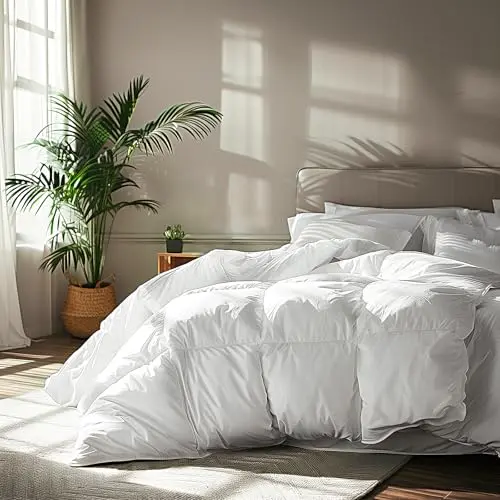
Goose Feather Down Fiber Comforter – Hotel-Style Natural Fill
A natural-fill comforter with a cotton cover and a blend of goose feather fiber and down fiber. Sewn-through boxes keep the fill evenly placed.
How We Evaluated These Fluffy Cooling Comforters
We didn’t sleep under each comforter for a full season or run lab temperature tests. What we did: cross-referenced nine comforters from eight brands across six decision axes – loft and fill distribution, cooling and breathability, shell feel, size and cover compatibility, attachment tabs, and care requirements. We mapped published specifications, triangulated owner feedback where available, and weighed each option against realistic sleep scenarios: hot sleepers, cold rooms, duvet-cover users, and shoppers who want a standalone bed topper. We also audited how each comforter is likely to behave after vacuum compression, whether the loft is described as whole-piece or double-stuffed, and how easy the care instructions are to live with. Owner-feedback signal was strongest where listings included detailed comments about warmth, size, and fill movement; where that signal was thin, we leaned more heavily on published construction and dimensions.
The scoring framework weighted real-world fit and performance (70%) – how well each comforter delivers on fluffy loft without overheating – against feature differentiation (30%) – construction details, tab systems, fill technology, and care practicality. We have no commercial relationship with the brands featured; recommendations track fit and differentiation, not brand preference. If you want the most balanced all-season pick, the Bedsure Comforter Duvet Insert is the one we’d route most shoppers to; if you overheat easily, the COHOME All-Season Cooling Comforter makes a stronger case.
How to Choose the Right Fluffy Cooling Comforters
1. What Makes a Fluffy Cooling Comforter Feel Airy, Not Heavy?
A fluffy comforter gets its cloud-like feel from loft – the amount of air trapped in the fill – and from a shell that doesn’t crush that loft. Cooling comes from the other direction: breathability, moisture movement, and how much heat the fill traps. The best fluffy cooling comforters balance those goals rather than maxing out one. A double-stuffed comforter can look spectacular but sleep warm; a very thin comforter can feel airy but lose the fluffy brief.
Look at the fill type and shell fabric together. Down-alternative polyester is common because it holds loft and washes easily, but the shell and fill density determine whether it sleeps cool. Whole-piece fill and box stitching help prevent clumping, which keeps the surface even instead of creating hot and flat spots. If a listing mentions temperature-balancing fibers or a cooling-focused shell, treat that as a directional signal, not a guarantee – construction and room temperature still matter.
2. Loft, Fill Weight, and Breathability: The Cooling Balance
Fill weight is the clearest shorthand for warmth. Lighter fills tend to suit hot sleepers and warmer rooms; heavier fills feel plusher but can trap more heat. For a fluffy cooling comforter, the sweet spot is usually a mid-weight down alternative with visible loft and a shell that feels smooth rather than rubbery. A comforter that is too dense can feel heavy even if the fabric is breathable.
Don’t confuse thickness with quality. Some comforters look puffy in photos because of double-stuffed construction or a high-loft fill, yet they may sleep warmer than a simpler box-stitched insert. If you run hot, prioritize lightweight fill, breathable shell fabric, and a duvet-cover-friendly design so you can adjust the outer layer. If you sleep cold, a slightly denser comforter with good loft is the better trade.
3. Size, Tabs, and Duvet Cover Compatibility for Cooling Comforters
Size gaps show up fast with comforters. A King insert that measures closer to a Queen can leave cold spots and exposed sheets, especially if two people share the bed. Check the listed dimensions against your mattress and duvet cover, not just the size label. Corner tabs or duvet loops are worth having; they keep the insert from bunching inside the cover, which can create uneven warmth and flat spots.
If you plan to use the comforter standalone, tab count matters less than surface feel and washability. If you use a cover, look for eight tabs or at least secure corner loops. The Bedsure Comforter Duvet Insert is a strong example of a cover-ready design; the COHOME All-Season Cooling Comforter takes a simpler tab approach but keeps the focus on breathability.
4. Care and Maintenance for Fluffy Cooling Comforters
Most down-alternative comforters are machine washable, but the drying step is where loft is won or lost. Use a gentle cycle with cold water, then tumble dry low or no heat with a couple of dryer balls to break up clumps. High heat can damage synthetic fill and reduce the airy feel you bought the comforter for. Always check the care tag before washing a set with shams or sheets.
Feather and down-fiber comforters often require dry cleaning, which changes the ownership calculus. If easy care is a priority, a polyester down alternative is the simpler route. For any fluffy comforter, air it out after washing and give it time to regain loft before judging the thickness.
5. Budget, Mid-Range, and Premium Cooling Comforters
Entry-level comforters usually use simpler polyester shells and standard box stitching. They can be perfectly comfortable, but loft and durability may vary more from unit to unit. Mid-range options tend to add better shell softness, more tabs, and more consistent fill distribution. Premium comforters often push loft, temperature-balancing fibers, or certified materials – features that can matter if you sleep hot or have sensitive skin.
Spend where the tradeoff affects you. If you use a duvet cover, put budget toward fill distribution and tabs; if you sleep hot, prioritize breathability and lightweight fill; if you want maximum cloud feel, look at double-stuffed designs like the Mellow Marshmallow Comforter. The right tier is the one that solves your sleep problem without adding upkeep you won’t keep up with.
Frequently Asked Questions
1. What makes a comforter feel fluffy without sleeping hot?
Fluffiness comes from loft, which is the air trapped in the fill, while cooling comes from breathability and moisture movement. A comforter can have both if the fill is airy rather than dense and the shell doesn’t seal in heat. Look for box stitching, a lightweight or mid-weight fill, and a smooth shell that feels cool to the touch. Double-stuffed comforters can still work for some hot sleepers, but they are usually the warmer end of the fluffy spectrum.
2. Bedsure Comforter Duvet Insert vs. COHOME Cooling Comforter: Which is better for hot sleepers?
The Bedsure Comforter Duvet Insert is the more balanced all-season choice, with eight corner tabs, 300 GSM fill, and a soft hotel-style feel. The COHOME All-Season Cooling Comforter leans harder into breathability and a cooling-focused shell, which makes it the better route if overheating is your main problem. Choose Bedsure for a plusher, cover-ready insert; choose COHOME if you want a lighter, airier feel and don’t need maximum loft.
3. Mellow Marshmallow vs. Bedsure Comforter Duvet Insert: Which is fluffier?
The Mellow Marshmallow Comforter is the fluffier pick on paper because of its double-stuffed construction and temperature-balancing fibers. The Bedsure insert is more of a balanced all-season comforter with even box-stitched loft and a cover-ready tab system. If you want visible cloud-like loft, Mellow is the stronger match; if you want a versatile insert that won’t dominate the bed, Bedsure is the easier fit.
4. Do cooling comforters work in winter?
Yes, if you treat cooling as breathability rather than refrigeration. A breathable all-season comforter can work year-round because it moves moisture and doesn’t trap as much heat, but it won’t replace a heavier blanket in a cold room. Add a duvet cover or an extra blanket in winter, and switch to just the comforter in warmer months. The key is layering, not expecting one comforter to be ideal in every temperature.
5. How do I keep a fluffy comforter from going flat after washing?
Wash on a gentle cycle with cold water, then dry on low or no heat with dryer balls to separate the fill. High heat can damage synthetic fibers and make the comforter feel limp. After drying, air it out and shake it vigorously; most down alternatives need a few hours to regain loft. If the comforter arrived vacuum-packed, give it the same recovery time before judging the thickness.
Final Verdict
For most shoppers, the Bedsure Comforter Duvet Insert is the best overall fluffy cooling comforter because it balances visible loft, breathable all-season fill, and a cover-ready design without asking you to baby it. If you overheat easily, the COHOME All-Season Cooling Comforter is the more targeted pick, with a lighter feel and a cooling-focused shell. Want maximum cloud-like loft? The Mellow Marshmallow Comforter is the premium route, though it runs warmer and costs more. And if you want the lowest-cost way into the category, the DOWNCOOL Lightweight Duvet Insert delivers a simple, airy insert for a modest outlay. Start with your sleep temperature, then choose the loft level you actually want.
