
Best Fluffy Duvet Inserts For Hot Sleepers – 2026 Reviews

A duvet insert can feel perfect when you climb in and then turn into a heat trap by 3 a.m. That is the tricky part of shopping for a fluffy insert as a hot sleeper: the same loft that looks inviting can work against you if the fill is dense and the shell does not breathe.
The better approach is to treat fluffiness as a texture goal and breathability as a temperature goal. Look for a breathable shell, a moderate fill weight, and a construction that keeps the fill evenly distributed without packing it into a heavy slab. A box-stitched or baffle-box insert can hold its loft while still letting heat move.
We compared cross-brand options across the market to find inserts that balance cloud-like loft with hot-sleeper practicality. The picks below range from budget-friendly synthetics to premium down-fiber builds, with notes on who each one suits.
Best Fluffy Duvet Inserts for Hot Sleepers – 2026 Reviews

All-Season Cooling Comforter – Breathable Loft for Hot Sleepers
A queen-size duvet insert built around hot-sleeper comfort: a soft polyester cover, whole-piece polyfill, and a box-stitched layout that keeps the loft even. It works alone or inside a cover, with tabs to hold it in place.

Marshmellow Comforter – Double-Stuffed Cloud Loft
A king/Cal king down-alternative insert with a visibly puffy, double-stuffed build. The heat-adaptive fibers and OEKO-TEX Class I shell target sleepers who want cloud-like loft without a sauna effect, though the overall weight is substantial.
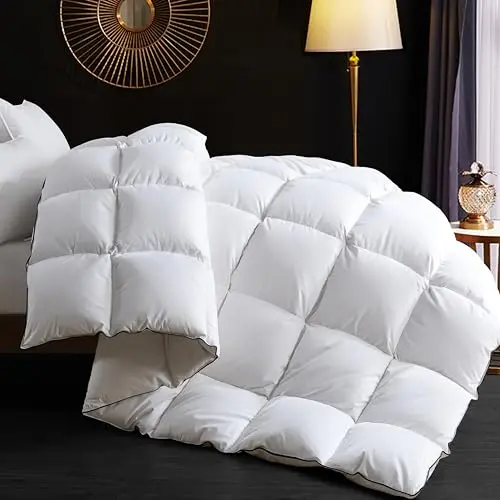
Cool Touch Down Duvet Insert – Cotton Shell for Hot Sleepers
A king-size feather and down-fiber insert with a Cool Touch cotton shell and a medium-warmth fill. It is designed for year-round temperature regulation, with eight attachment points to keep it from shifting inside a cover.

Lightweight Down Alternative Comforter – Airy All-Season Fill
A queen-size down-alternative insert that keeps weight low with a 2.8-pound build and a breathable microfiber shell. Box stitching and four corner loops help it stay put, and the fill is designed for all-season use rather than deep winter warmth.
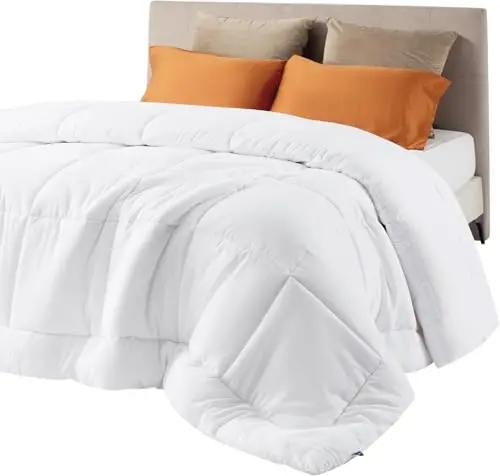
Quilted Comforter Duvet Insert – Soft All-Season Coverage
A queen-size down-alternative insert with a soft polyester shell, box stitching, and eight tabs for duvet-cover security. It is designed for all-season use and has a reputation for a plush hotel-style feel, though the published warmth description leans heavier than some hot-sleeper picks.
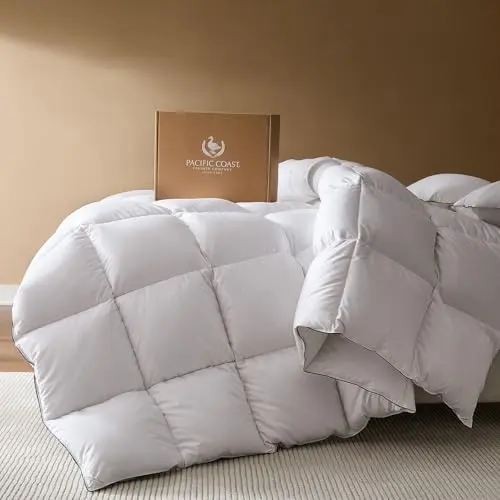
Goose Feather Down Fiber Comforter – Premium Baffle-Box Loft
A premium queen-size down-fiber insert with a 3D baffle-box construction, eight loops, and an all-season medium-weight fill. The shell is a cotton-poly blend, and the care routine leans toward dry cleaning or spot cleaning rather than frequent machine washing.

Down Alternative Comforter – Budget-Friendly Box-Stitched Loft
A queen-size down-alternative insert with a box-stitched microfiber shell, piped edges, and corner tabs. It is a budget-friendly option with a lightweight fill and straightforward machine-wash care, though feedback suggests the loft is more moderate than cloud-like.
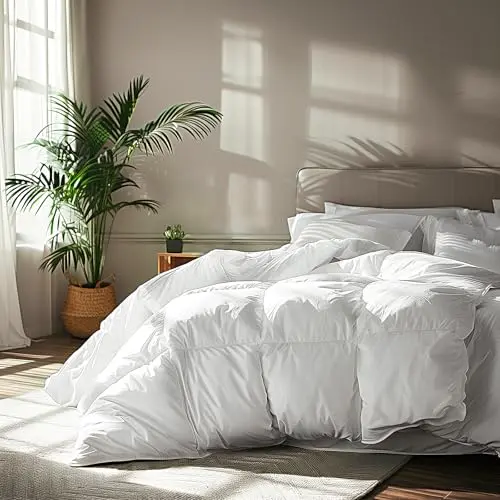
Goose Feather Down Fiber Comforter – Cotton Medium-Warmth Bedding
A queen-size feather and down-fiber insert with a 100% cotton cover and a sewn-through box construction. It is positioned as an all-season medium-warmth option for hot sleepers transitioning into warmer months, but it requires dry cleaning.
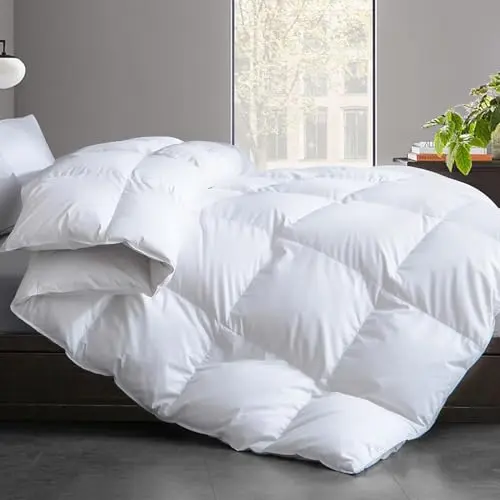
Feather and Down Fiber Comforter – Cotton Hotel-Style Insert
A queen-size feather and down-fiber insert with a 100% cotton shell and a medium-warmth fill. It is designed for year-round use, with box stitching and corner tabs, though feather leakage is a reported tradeoff.
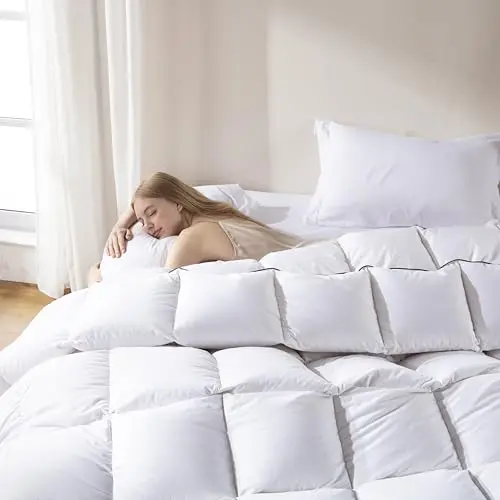
Feather Comforter – Cotton Medium-Warmth King Insert
A king-size feather and feather-fiber insert with a 100% cotton downproof shell, medium-warmth fill, and eight attachment points. It is designed for year-round use and can be machine washed, though feedback suggests the loft is moderate rather than deeply puffy.
How We Evaluated These Fluffy Duvet Inserts for Hot Sleepers
We didn’t run a sleep-lab heat-mapping study or measure overnight skin temperature. What we did: cross-referenced 10 duvet insert models from 9 distinct brands across six decision axes – shell breathability, fill loft and distribution, temperature-balancing design, hot-sleeper suitability, care requirements, and duvet-cover compatibility. We audited care instructions and attachment systems because a fluffy insert only works if it stays put and can be cleaned without losing its shape. We weighed how each insert is likely to perform in a warm bedroom, not just how it looks in a product photo, and we considered how easily each one recovers loft after vacuum packing. We triangulated published specifications, feature sets, and feedback where available, then mapped each option against the needs of sleepers who run warm but still want a fluffy bed. We also factored in whether the care routine is realistic for bedding that may need more frequent washing.
The scoring framework weighted real-world fit for hot sleepers (70%) – breathability, fill weight, loft behavior, and how well each insert avoids trapped heat – against feature differentiation (30%) – unique shell materials, baffle or box construction, attachment points, and care flexibility. We have no commercial relationship with any of the brands featured; recommendations track fit and differentiation, not brand preference. If you want the most balanced hot-sleeper pick, the COHOME All-Season Cooling Comforter is your match; if maximum cloud-like loft matters more, the Mellow Marshmellow Comforter serves you better.
How to Choose the Right Fluffy Duvet Inserts for Hot Sleepers
1. What Makes a Fluffy Duvet Insert Work for Hot Sleepers?
Fluffy is not the same as heavy. For a hot sleeper, the best duvet insert balances loft with breathability, so the bed looks cloud-like without trapping body heat. Look for a breathable shell – cotton, microfiber, or a performance cool-touch fabric – and a fill that is distributed evenly rather than packed into dense pockets. A box-stitched or baffle-box build helps the fill stay in place, which keeps the loft consistent across the bed. The goal is a moderate fill weight that feels airy, not a winter comforter disguised as an all-season insert.
2. Hot-Sleeper Fit: Breathability, Fill Weight, and Shell Fabric
The biggest mistake hot sleepers make is buying the puffiest insert they can find. A very high-loft insert can still sleep warm if the shell doesn’t breathe or the fill is dense. Prioritize a breathable shell fabric, a light to medium fill weight, and construction that prevents cold or hot spots. Cotton shells tend to feel more natural and breathable, while microfiber can be soft and quiet but varies in airflow. If you sleep in a warm room, a cooling-focused insert is a better starting point than a heavyweight comforter. If you want the most balanced hot-sleeper pick, the COHOME All-Season Cooling Comforter is the one we’d route you toward.
3. Down vs. Down Alternative for Hot Sleepers
Down and feather-fiber inserts can feel airy for their loft, but they are not automatically cooler. The fill blend, shell tightness, and baffle construction matter just as much as the material name. Down alternative inserts are usually easier to machine wash and more budget-friendly, while feather and down-fiber inserts can deliver a more traditional hotel feel. For hot sleepers, a medium-warmth down-fiber insert with a breathable cotton shell can work well, provided you don’t mind gentler care. If you want a lightweight synthetic option instead, the DOWNCOOL Lightweight Down Alternative Comforter is the budget-friendly route.
4. Duvet Insert Size, Tabs, and Cover Compatibility
A fluffy insert can look flat if it is too small for the cover, and it can bunch if there are too few attachment points. Check the insert dimensions against your duvet cover rather than relying on the bed size alone. Corner tabs are the minimum; eight attachment points or middle loops are better for keeping a lofty insert from shifting. Box stitching also helps the fill stay evenly distributed. If you have a queen cover that runs generous, a true 88-by-88 or 90-by-90 insert is usually the safer fit than an oversized insert that crowds the cover.
5. Care and Loft Recovery for Fluffy Duvet Inserts
Most inserts arrive vacuum-packed, so the first 24 to 48 hours matter. Fluff the insert, shake it out, and let it rest before judging the loft. Machine-washable inserts are more practical for hot sleepers who may launder bedding more often, but always follow the care label. Dry-clean-only feather inserts can last well but require more planning. A low-heat tumble dry with dryer balls can help restore loft, but high heat can damage synthetic fill and shrink shells. If you want a premium baffle-box insert and can handle gentler care, the Pacific Coast Goose Feather Down Fiber Comforter is the premium route.
6. Budget, Mid-Range, and Premium Duvet Inserts
Price tiers mostly buy you fill quality, shell refinement, and construction detail. Budget-friendly inserts can be perfectly comfortable for a warm room, especially if you prioritize breathability over maximum loft. Mid-range options often add better tabs, cotton shells, or more consistent box stitching. Premium inserts may use baffle boxes, certified down fiber, or more detailed finishing. None of that guarantees a cooler night unless the fill weight and shell suit your sleep temperature. Spend up only when the construction or fill type solves a problem you actually have.
Frequently Asked Questions
1. Are fluffy duvet inserts actually a good choice for hot sleepers?
Yes, if you separate fluffiness from fill weight. A fluffy insert can still sleep warm if the shell is breathable and the fill is not packed too densely. Look for moderate loft, a breathable shell, and construction that keeps the fill even. The best choice is usually a medium-warmth all-season insert rather than a winter-weight comforter.
2. What's the difference between the COHOME All-Season Cooling Comforter and the Mellow Marshmellow Comforter?
COHOME leans toward breathable all-season balance, with a lighter polyester build and a cooling-focused design. Mellow leans toward maximum cloud-like loft, with a double-stuffed fill and temperature-balancing fibers, but it is a heavier insert and comes in king/Cal king sizing. For a hot sleeper who wants a moderate, cover-friendly insert, COHOME is the more straightforward fit. For a cooler-room sleeper who wants the puffiest look, Mellow makes more sense.
3. How do the DOWNCOOL Lightweight Comforter and Bedsure Quilted Comforter compare for warm rooms?
DOWNCOOL is the lighter, more explicitly warm-room-friendly option, with a 2.8-pound build and a breathable microfiber shell. Bedsure is softer and more hotel-like, but its published warmth description leans heavyweight, so it is a better match for sleepers who only occasionally overheat. If you run hot most nights, DOWNCOOL’s airy fill is the safer route; if you want a plush feel and sleep temperature is secondary, Bedsure is the more familiar choice.
4. Do feather and down fiber inserts sleep cooler than down alternative?
Not automatically. Feather and down-fiber fills can feel airy for their loft, but the shell and construction decide whether heat escapes. A tightly woven shell or dense fill can sleep just as warm as a synthetic insert. Down alternative has the advantage of being easier to machine wash and often more budget-friendly. For hot sleepers, focus on breathable fabric, medium warmth, and even fill distribution rather than the fill label alone.
5. Which fluffy duvet insert should I choose for a queen bed in a warm apartment?
Start with a queen-size insert that matches your cover dimensions and prioritizes breathability over maximum loft. The COHOME All-Season Cooling Comforter is the most balanced route for a warm apartment because it keeps a soft, fluffy profile without a heavy fill. If budget is the priority, the DOWNCOOL Lightweight Down Alternative Comforter is the lighter, more affordable alternative. Avoid oversized inserts that crowd the cover, and check for corner tabs or middle loops so the insert stays put.
Final Verdict
For most hot sleepers, the COHOME All-Season Cooling Comforter is the answer. It keeps a soft, fluffy profile without the heavy, trapped-heat feel that makes some inserts a bad match for warm sleepers, and its cover-friendly tabs make it easy to live with. If you want the puffiest cloud look and sleep in a cooler room, the Mellow Marshmellow Comforter is the loft-first pick. Budget-conscious shoppers should look at the DOWNCOOL Lightweight Down Alternative Comforter, which trades some loft for a lighter, airier build. And if you want a premium down-fiber insert with a baffle-box design, the Pacific Coast Goose Feather Down Fiber Comforter is purpose-built for that upgrade. Choose the insert that matches your sleep temperature first, then your preferred level of puff.
