
Best Fluoride Water Filter Pitchers – 2026 Reviews

You fill a glass from the tap, run it through a pitcher, and assume the job is done. For chlorine and taste, that’s often true. Fluoride is a different story. Plenty of popular pitchers are built around carbon and a pleasant pour, not a fluoride-specific filter stage, and the label doesn’t always make that distinction obvious.
That’s the first fork in this category: a pitcher can be certified for fluoride or it can be a broad dissolved-solids tool. Both can be useful, but they are not the same purchase. The second fork is daily livability – filter life, capacity, and how long you stand there waiting for the reservoir to drain.
We compared the fluoride water filter pitchers that actually make a relevant claim, then looked at what each one removes, how often you’ll replace the filter, and who it suits. The goal is a short list you can shop across brands, not a brand loyalty test.
Best Fluoride Water Filter Pitchers – 2026 Reviews
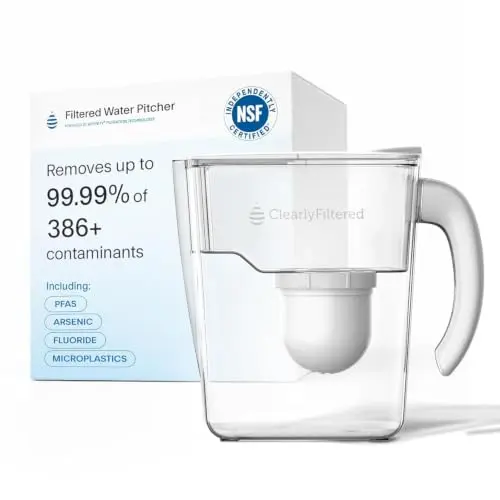
P-V3 – Broad Fluoride and PFAS Coverage
The Clearly Filtered P-V3 is the fluoride-first pick in this lineup, with an explicit claim to reduce fluoride along with lead, PFAS, arsenic, microplastics, and chlorine. The 80-ounce reservoir is family-sized, and the medical-grade Tritan body is built for daily fridge or countertop use.
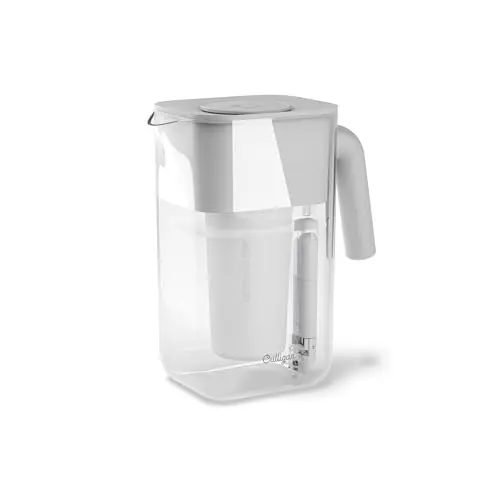
ZEROP10 – Certified Fluoride Removal with TDS Meter
The Culligan ZeroWater ZEROP10 is a 10-cup pitcher built around 5-stage filtration and certified to reduce fluoride, total PFAS, lead, mercury, and chlorine. A built-in TDS meter gives you a quick filter-change cue, and the BPA-free body is sized for smaller fridges and countertops.
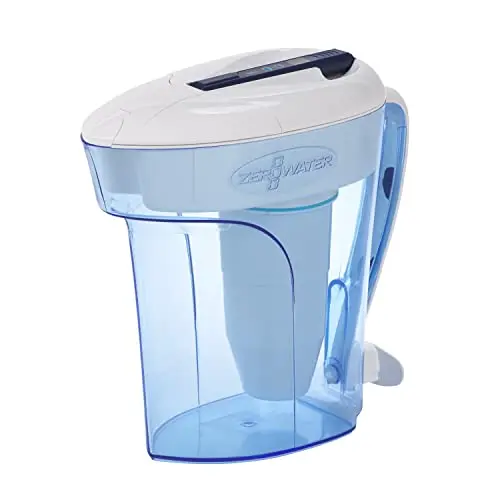
ZD-012RP – 12-Cup TDS Stripping Pitcher
The ZeroWater ZD-012RP is a 12-cup pitcher that uses 5-stage ion exchange to strip virtually all dissolved solids from tap water. It includes a TDS meter, fits standard fridge shelves, and is the larger-capacity option in this fluoride-focused lineup.
How We Evaluated These Fluoride Water Filter Pitchers
We didn’t run controlled lab tests for fluoride reduction or long-term reliability trials. What we did: cross-referenced 3 fluoride water filter pitcher models from 3 distinct brands across 7 decision axes – fluoride-specific certification, contaminant coverage, filter life, capacity, filtration speed, materials and build, and maintenance. We triangulated published specifications, certification claims, and owner feedback where available, then mapped each pitcher to representative buyer routines: family fridge refills, small-kitchen countertop use, and fluoride-first filtration. We also weighed how clearly each brand states what its filter does and does not remove. A broad dissolved-solids claim is not the same as a fluoride-specific certification, so we treated those signals differently.
The scoring framework weighted real-world fit (70%) – how well each pitcher delivers on fluoride reduction and daily usability – against feature differentiation (30%) – certification depth, filter life, capacity, and design choices that separate one model from another. We have no commercial relationship with any of the brands featured; recommendations track fit and differentiation, not brand preference. If fluoride is your non-negotiable, the Clearly Filtered P-V3 is the strongest match; if you want certified fluoride removal in a more affordable package, the Culligan ZeroWater ZEROP10 is the better fit. That gap matters most for shoppers replacing a standard pitcher that never addressed fluoride in the first place. We kept the lineup tight rather than padding it with pitchers that do not make a fluoride claim.
How to Choose the Right Fluoride Water Filter Pitcher
1. Why Fluoride Removal Is a Different Filtering Job
Most pitchers are built around chlorine taste and odor, not fluoride. Carbon handles chlorine well; fluoride reduction typically needs an ion exchange stage or a filter explicitly certified for it. That’s why a pitcher that makes tap water taste cleaner can still leave fluoride untouched. If fluoride is your reason for shopping, start with the certification list, not the taste claim.
2. Certification and Contaminant Coverage: Read the Fine Print
Look for third-party certification that names fluoride, not just a broad removes-contaminants badge. IAPMO and NSF/ANSI listings are the useful signals here. A filter can be certified for lead, PFAS, and chlorine while saying nothing about fluoride, so match the claim to your concern. TDS reduction is a broader measure; it can pull dissolved ions, but it is not a fluoride-specific certification.
3. Filter Life, Capacity, and Real-World Speed
Filter life changes the ownership math. A 100-gallon filter and a 12-cup reservoir reduce how often you refill, while a smaller 10-cup pitcher may fit tighter fridge shelves. Filtration speed matters too: slower media can be thorough but frustrating when the reservoir empties. Match capacity to your household and accept that fluoride-focused filters often trade speed for contaminant coverage.
4. Clearly Filtered vs Culligan ZeroWater: Which Fluoride Pitcher Fits Your Routine?
The Clearly Filtered P-V3 is the broad-coverage route, with an explicit fluoride claim and a long filter life. The Culligan ZeroWater ZEROP10 is the more budget-friendly certified fluoride option, and its TDS meter gives you a filter-change cue. If you want the widest contaminant list and don’t mind a slower pour, go with the Clearly Filtered P-V3. If certified fluoride removal and a lower entry point matter more, the Culligan ZeroWater ZEROP10 is the pick.
5. Materials, Maintenance, and Total Ownership
Medical-grade Tritan and BPA-free plastic are the main body materials here; neither should be treated as a filtration spec. Plan for filter replacement based on gallons used, not calendar months alone. Priming a new filter and cleaning the reservoir are part of the routine. If a pitcher fits your fridge and your refill habit, you’ll actually use it; that matters more than a long feature list.
Frequently Asked Questions
1. Do all water filter pitchers remove fluoride?
No. Many pitchers are designed around chlorine taste and odor, and some add lead or PFAS reduction without making a fluoride claim. For fluoride, look for a model with third-party certification or a filter stage explicitly listed for it. A broad TDS reduction claim is a different signal.
2. What's the difference between the Clearly Filtered P-V3 and Culligan ZeroWater ZEROP10?
The Clearly Filtered P-V3 casts a wider net, with an explicit fluoride claim, a long filter life, and a premium body. The Culligan ZeroWater ZEROP10 is the more affordable certified fluoride option, and it includes a TDS meter for filter tracking. Choose the Clearly Filtered P-V3 if you want the broadest coverage; choose the Culligan if budget and a compact footprint matter more.
3. Culligan ZeroWater ZEROP10 vs ZeroWater ZD-012RP: Which is the better fluoride pick?
The Culligan ZeroWater ZEROP10 is the clearer fluoride choice because its certification explicitly names fluoride alongside total PFAS, lead, and mercury. The ZeroWater ZD-012RP is a TDS-first pitcher with a larger 12-cup reservoir, but its headline claims center on dissolved solids rather than a fluoride-specific certification. If fluoride is the priority, choose the Culligan; if you want more capacity and a broader dissolved-solids approach, the ZeroWater is the alternative.
4. How often should I change a fluoride water filter?
Follow the gallon rating first, then adjust for your water. A 100-gallon filter and a smaller-capacity pitcher will hit replacement sooner in a busy household. Use the filter indicator or TDS meter as a backup, not the only cue. If flow slows noticeably, that’s another sign the filter media is spent.
5. Will a fluoride filter pitcher make water taste flat?
It can. Filters that remove a broad range of dissolved solids may strip some minerals along with contaminants, and some people notice a softer or flatter taste. A pitcher with mineral-preserving language aims to avoid that, but taste is personal. If you’re sensitive to texture and flavor, start with a model that states it keeps calcium and magnesium.
Final Verdict
For most fluoride-focused shoppers, the Clearly Filtered P-V3 is the answer. It pairs an explicit fluoride claim with the broadest contaminant coverage in this lineup, and it backs that up with a long filter life and a premium body. The tradeoff is speed and cost, so it rewards patient refillers rather than someone who wants a pitcher to fill in seconds.
If you want certified fluoride removal at a more affordable entry point, the Culligan ZeroWater ZEROP10 is the value pick. It adds a TDS meter and a compact footprint, though filter life and durability are the things to watch. And if your goal is broad dissolved-solids reduction rather than a fluoride-specific certification, the ZeroWater ZD-012RP is the larger-capacity alternative. Start with the P-V3 if fluoride is non-negotiable; move to the Culligan if budget leads.
