
Best Foam Pillows For Side Sleepers – 2026 Reviews

Side sleepers tend to notice a bad pillow before they notice a bad mattress. The wrong foam pillow leaves a gap under the neck, pushes the head too high, or goes flat right where the shoulder needs support. The right one disappears into the background and keeps your spine in a neutral line.
Foam pillows for side sleepers split into two broad families: fixed contour pillows with a shaped neck cradle, and adjustable shredded-foam pillows that let you add or remove fill. Contour models can be excellent when the height matches your shoulder width, but they are less forgiving if you are between sizes. Adjustable models are more tunable, though they can take a few nights to settle.
The useful shopping question is not which brand has the most features. It is which pillow can hold the right loft for your body while staying breathable and easy to live with. We looked across the category with that side-sleeper fit in mind, from budget-friendly fixed shapes to premium adjustable designs.
Best Foam Pillows for Side Sleepers – 2026 Reviews

Signature Adjustable Shredded Memory Foam Pillow – Tailorable Loft for Side Sleepers
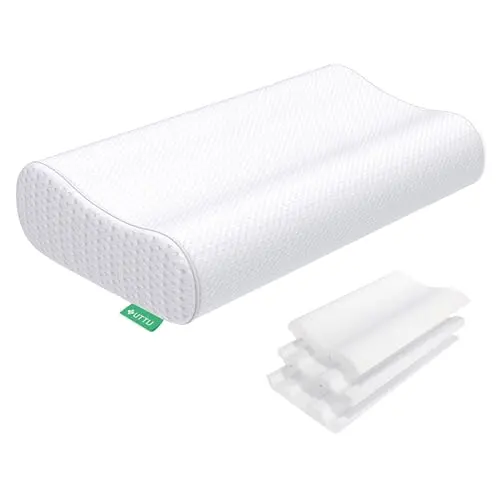
Sandwich Cervical Pillow – Adjustable Loft for Side Sleepers
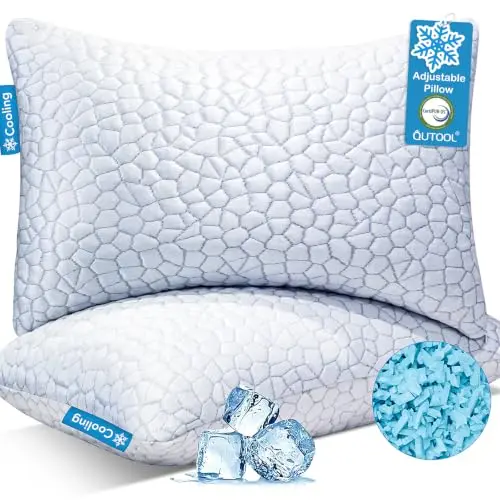
Cooling Pillow Set of 2 – Adjustable Shredded Foam Value

Cooling Pillow Set of 2 – Adjustable Loft and Cool-Touch Cover
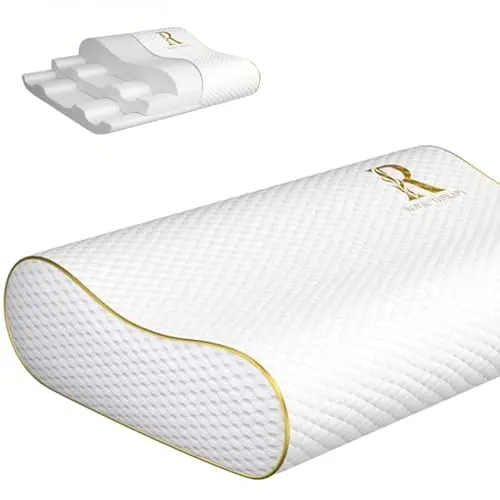
Memory Foam Cervical Pillow – Three-Layer Adjustable Contour

Ultra Pain Relief Cooling Pillow – Hollow Contour for Side Sleepers

Cooling Gel Memory Foam Pillow – Medium-Firm Support
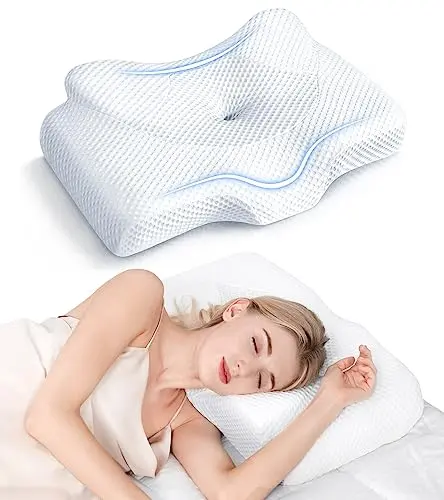
Cervical Pillow – Hollow-Center Neck Support
How We Evaluated These Foam Pillows for Side Sleepers
We didn’t put these pillows through long-term compression testing or sleep-lab measurements. What we did: cross-referenced 8 foam pillow models from 8 distinct brands across six decision axes – loft and height, firmness and adjustability, contour and neck support, cooling and breathability, cover care, and durability cues such as warranty and foam certification. We triangulated published specifications, mapped feature sets, weighed owner feedback where available, and pressure-tested each design against side-sleeper use-case fit, especially the shoulder-gap fill that keeps the spine neutral.
We also separated fixed-shape contour pillows from adjustable shredded-foam designs, because side sleepers interact with those two formats differently. A contour pillow has to match your shoulder width and preferred sleeping height out of the box; an adjustable pillow can be tuned, but it also requires some trial and error. We treated washable covers, cooling fabrics, and CertiPUR-US foam claims as practical ownership details, not headline features.
The scoring framework weighted real-world side-sleeper fit (70%) – how well each pillow supports the head and neck in a side position – against feature differentiation (30%) – adjustable fill, cooling covers, contour shaping, and washable components. We have no commercial relationship with the brands featured; recommendations track fit and differentiation, not brand preference. If you want the most tunable all-rounder, the DreamyBlue Signature is the strongest match; if neck pain is the main driver, the UTTU Cervical Pillow is the more targeted pick.
How to Choose the Right Foam Pillows for Side Sleepers
1. What Side Sleepers Should Look for in a Foam Pillow
Side sleepers need a foam pillow to do one job well: fill the gap between the neck and the mattress while keeping the head, neck, and spine in a neutral line. That makes loft the first spec to check. A pillow that is too low lets the head drop; one that is too high pushes the chin toward the chest. The sweet spot depends on shoulder width, mattress firmness, and how much you sink into the foam.
After loft, look at firmness and adjustability. A medium-firm foam pillow usually gives side sleepers enough support without feeling like a brick, but fixed-shape pillows are a gamble if you are between sizes. Adjustable shredded-foam designs let you add or remove fill, which is why the DreamyBlue Signature is a strong starting point for most side sleepers. A removable, washable cover is also worth prioritizing for everyday freshness.
2. Contour Foam vs. Shredded Foam: Which Fits Side Sleeping?
Contour foam pillows use a shaped surface – often with a higher and lower side – to cradle the neck. They can be excellent for neck support, but the shape has to match your body. If the high side is too tall, you will feel pushed forward; if it is too low, the shoulder gap stays open. The UTTU Cervical Pillow is a good example of a contour design with a removable middle layer for height tuning.
Shredded foam pillows behave more like a traditional bed pillow with a moldable fill. They are easier to fine-tune for side-sleeper loft, and many come with extra fill. The tradeoff is that shredded foam can feel lumpy until you settle it, and it may need occasional fluffing. Neither format is universally better; the right choice depends on whether you want a guided contour or a customizable fill.
3. Cooling, Breathability, and Cover Care
Cooling claims are common in foam pillows, but the fabric matters as much as the foam. Gel-infused foam, ventilation holes, 3D mesh covers, and cool-touch fabrics can all help a pillow feel less heat-trapping, yet none of them replaces a cool bedroom. If you sleep hot, prioritize a breathable cover and a pillow that does not feel dense against your face.
Care is the quieter differentiator. Look for a zippered removable cover that is machine washable, and keep the foam core dry. A CertiPUR-US foam claim is a useful baseline for material safety, while a warranty gives you a sense of how long the maker expects the pillow to hold up. Allow any compressed pillow time to fully expand before judging its loft.
4. Firmness, Loft, and Adjustment: The Side-Sleeper Fit Check
The fastest fit check is simple: lie on your side and look at whether your head, neck, and spine form a straight line. If your head tilts down, add loft; if your chin lifts, remove some. Side sleepers often need a higher pillow than back sleepers, especially on a softer mattress where the shoulder sinks in. A medium-firm feel is a sensible baseline, but the surface should still have some give.
Adjustable pillows are not set-and-forget. Plan on a short break-in period, and keep the extra fill if the pillow includes it. A two-pillow set can be useful for couples or guest beds, but it also means committing to the same loft and firmness across both pillows. If you share a bed with a back sleeper, choose a design that can be tuned rather than a fixed contour.
5. Budget, Mid-Range, and Premium Foam Pillows
Budget-friendly foam pillows usually give you a fixed shape, a simple cover, and fewer tuning options. They can work well if you already know your preferred loft. Mid-range pillows often add cooling covers, adjustable fill, or a two-pack value. Premium foam pillows tend to focus on material quality, cover comfort, and more generous adjustment – not always dramatically better sleep.
Spend up only when the extra feature solves a real problem for you: hot sleeping, neck pain, or a hard-to-fit side position. A basic foam pillow that matches your loft is often more useful than a premium pillow that is the wrong height.
6. Common Foam Pillow Pitfalls for Side Sleepers
One common mistake is judging a compressed pillow immediately. Most foam needs time to expand, and some designs need a few nights of adjustment before they settle. Another is chasing a very soft pillow: side sleepers usually need support under the neck, not just cushion under the head. Odor is also worth planning for; many foam pillows ask for an airing-out period before first use.
Finally, do not ignore the cover. A pillow can have excellent foam and still feel warm or scratchy if the cover is not breathable. Check whether the cover is removable, how it washes, and whether the foam core should stay dry. Small ownership details like these often matter more than a long feature list.
Frequently Asked Questions
1. How thick should a foam pillow be for side sleepers?
There is no universal number, because shoulder width, mattress softness, and head size all change the right height. As a starting point, side sleepers often do better with a pillow that fills the gap between the neck and the mattress without lifting the chin. A medium-firm pillow with some adjustability is easier to dial in than a fixed shape. If your head drops below your shoulders, add loft; if your chin tilts up, remove some.
2. What's the difference between the DreamyBlue Signature and the UTTU Cervical Pillow?
The DreamyBlue Signature is a shredded-foam adjustable pillow with a bamboo-rayon cover and extra fill, so it is easier to tune for a wide range of side-sleeping heights. The UTTU Cervical Pillow is a contour cervical design with a removable middle layer, which gives you a more guided neck position but less free-form fill adjustment. Choose the DreamyBlue if you want to customize loft; choose the UTTU Cervical Pillow if you want a shaped neck support and a more structured feel.
3. How does the QUTOOL Cooling Pillow compare with the SUPA MODERN Cooling Pillow?
Both are two-pillow sets built on adjustable shredded foam with a cool-touch side. The QUTOOL set uses a dual-sided cover with an ice-silky side and a bamboo-rayon side, and it is the more affordable value play. The SUPA MODERN set is a little more plush and bulky, with a similar adjustable-fill approach and a cool-touch cover. If you want a straightforward two-pillow value, QUTOOL is the easier pick; if you prefer a fuller, more cushioned feel, SUPA MODERN is worth a look.
4. Do side sleepers need a cervical contour pillow or an adjustable shredded foam pillow?
It depends on whether you want a guided shape or a custom fill. A cervical contour pillow can be excellent if its fixed height matches your shoulder width, and many side sleepers like the structured neck support. An adjustable shredded foam pillow is more forgiving when you are between sizes or share a bed with someone who needs a different loft. For most side sleepers, the safer first buy is an adjustable pillow like the DreamyBlue Signature; if you already know you like contour support, a cervical pillow can be the more targeted choice.
Final Verdict
For most side sleepers, the DreamyBlue Signature is the pick that gets out of the way. Its adjustable shredded fill, extra bag of stuffing, and bamboo-rayon cover make it easier to hit the right loft than a fixed-shape pillow, and it has the most forgiving fit across different shoulder widths.
If you want a two-pillow value with a cooling cover, the QUTOOL Cooling Pillow Set is the practical buy. If neck pain is the main reason you are shopping, the UTTU Cervical Pillow offers more structured support. And if you sleep hot but still want a contour shape, the Cozyplayer Ultra Pain Relief Cooling Pillow is the niche pick. Start with your loft need, then choose the feature that solves your biggest sleep problem.
