
Best Foaming Hand Soap Dispensers – 2026 Reviews

Foaming hand soap dispensers look like a small upgrade until you’ve used one that spits out watery foam or a pump that quits after a few weeks. The difference usually comes down to the foam pump, the soap-to-water ratio, and how much control you have over the amount dispensed. A good foamer turns a small amount of soap into a satisfying lather; a bad one makes you pump twice as often and clean up drips.
This category splits into manual pump bottles and automatic touchless models. Manual foamers are simpler and often more decor-friendly, but pump durability and seal quality matter. Automatic models add sensors, rechargeable batteries, and adjustable output, which is great for busy sinks and shared bathrooms, though they bring charging and dilution routines. We looked across the market at glass, ceramic, plastic, and touchless designs to find the ones that make daily handwashing easier rather than more fiddly.
Best Foaming Hand Soap Dispensers – 2026 Reviews
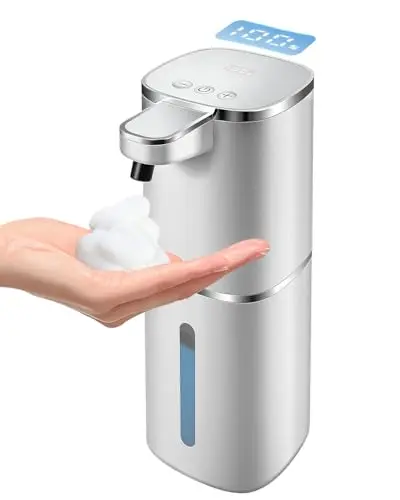
P20 – 9-Level Touchless Foaming
The Cheftick P20 is a touchless foaming dispenser with a high-precision infrared sensor, nine adjustable foam levels, and a digital display for output and battery status. It holds 400 ml, recharges by USB, carries IPX5 splash resistance, and can sit on a countertop or mount to the wall with the included stickers.
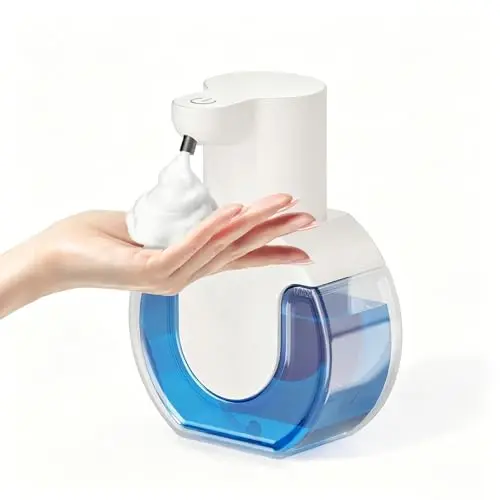
P10 – Rechargeable Touchless Foamer
The Ipefan P10 is a rechargeable touchless foamer with a 420 ml reservoir and four foam-output levels. It supports countertop or wall-mount use, charges by USB, and is designed for hand soap, dish soap, and similar liquids when mixed to the recommended dilution.
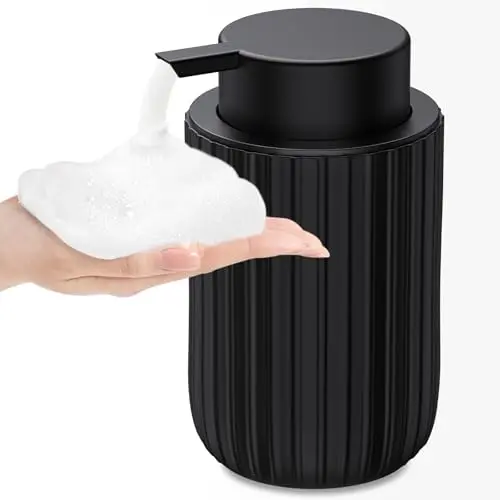
Ceramic Foaming Dispenser – Rust-Free Countertop Style
The Dlirho is a 12 oz ceramic foaming dispenser with a rust-free body, a wide-mouth refill opening, and a pump head fitted with a silicone sealing ring. The striped black finish suits a bathroom counter, kitchen sink, or guest room, and the pump is designed for foam soap or diluted liquid soap.
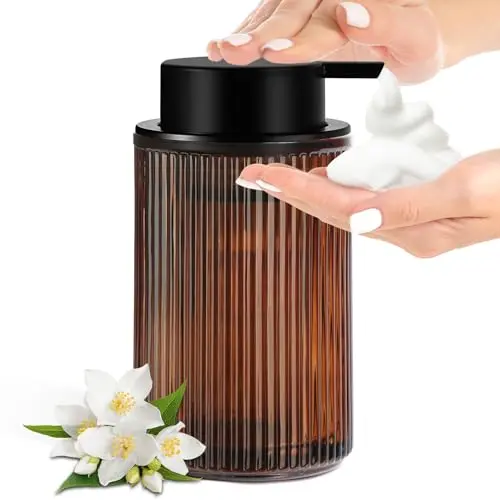
Ribbed Amber Glass – Decor-Friendly Foaming Pump
The Kasunting dispenser pairs an 11 oz ribbed amber glass bottle with a matte black plastic foam pump. The oversized pump button can be pressed with a finger or elbow, the wide mouth makes refills easier, and a rubber sealing ring helps keep the pump seated.
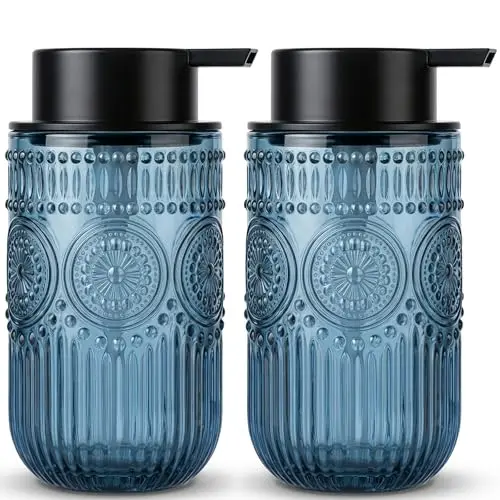
Blue Embossed Glass – Vintage Countertop Foamer
The Wikapy dispenser uses a 14 oz lead-free blue glass bottle with a vintage embossed sunflower and hobnail pattern, topped with a matte black plastic foam pump. The wide mouth simplifies refills, and the pump includes a sealed ring to help prevent leaks.
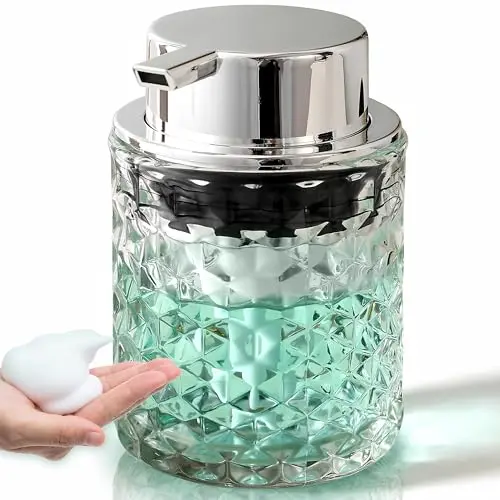
Diamond Glass – Clear Foaming Pump Bottle
The Malachi dispenser is a clear glass foam pump bottle with a diamond-etched texture and a silver ABS pump. The cylindrical body shows the soap level at a glance, and the pump is designed for a 1:3 soap-to-water mix for everyday hand soap.
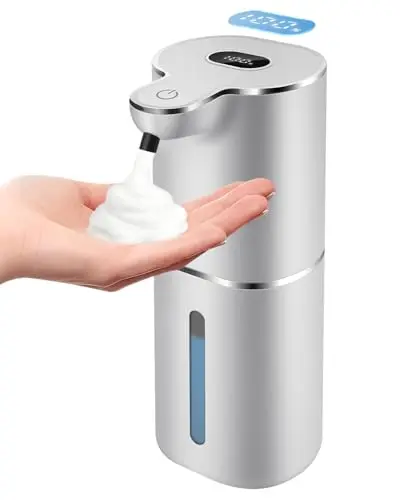
P15 – Digital Six-Level Touchless
The Cheftick P15 is an automatic touchless foamer with six foam-output levels, an HD digital display, and a built-in 1200 mAh rechargeable battery. It holds 380 ml, carries IPX5 splash resistance, and can be used on a countertop or mounted to the wall without punching holes.
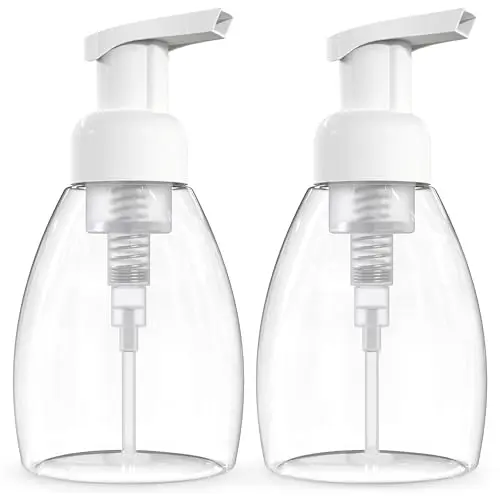
2720 – Clear Two-Pack Foamers
The BRIGHTFROM 2720 set includes two clear 8 oz BPA-free plastic foam pump bottles. They’re designed for DIY soap blends and bulk refills, with a compact body that fits kitchen or bathroom counters and a clear wall that shows how much liquid remains.
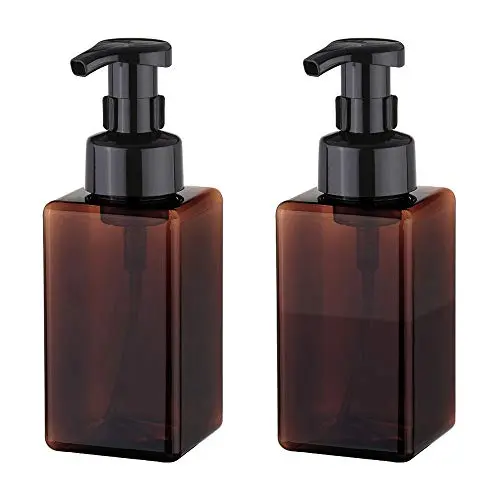
450ml Amber – Two-Pack Foam Bottles
The UUJOLY set includes two 450 ml amber PETG plastic foam pump bottles with a safety buckle between the pump and collar. They’re designed for a 1:3 to 1:5 soap-to-water mix and can handle hand soap, shampoo, or body wash in a bathroom, kitchen, or laundry room.
How We Evaluated These Foaming Hand Soap Dispensers
We didn’t spend weeks living with every pump and sensor in this category. What we did: cross-referenced 9 foaming hand soap dispenser models from 8 distinct brands across six decision axes – foam-pump type, output control, capacity and refill ratio, body material, mounting or placement, and maintenance needs. We triangulated published specifications, feature sets, and owner feedback where available, then mapped each option against representative buyer profiles for bathrooms, kitchens, and shared sinks. We also audited the foam mechanism details, because a dispenser can look great and still be a chore to live with if the pump clogs or the soap ratio is fussy.
The scoring framework weighted real-world fit (70%) – how well each dispenser handles daily handwashing, refilling, and placement – against feature differentiation (30%) – unique controls, touchless operation, and material advantages. We have no commercial relationship with any of the brands featured; recommendations track fit and differentiation, not brand preference. If you want the most control, the Cheftick P20 is the automatic pick to start with; if you want a simpler four-level touchless model, the Ipefan P10 is the easiergoing alternative.
A few things we can’t tell you: how a pump feels after six months of daily use or how a specific soap blend behaves in every home. What we can tell you is which designs solve the practical problems – easy refills, controlled foam, stable placement, and materials that suit the room. That’s the difference between a dispenser that earns its counter space and one that gets swapped out.
How to Choose the Right Foaming Hand Soap Dispensers
1. What Makes a Foaming Hand Soap Dispenser Work Well
A foaming dispenser doesn’t just hold soap; it aerates the liquid as it leaves the pump. The best foam pump produces dense, even lather without sputtering, and it does that only when the soap-to-water ratio matches the pump’s design. Most manual foamers expect roughly one part soap to three or four parts water, while some automatic models want a thinner mix. If the ratio is off, you get runny foam or a clogged mechanism. Look for a pump that feels smooth in the product description and a bottle that makes refilling uncomplicated. Consistent lather matters more than a fancy body.
2. Manual Foam Pumps vs. Automatic Touchless Dispensers
Manual pump bottles are the simplest route: no charging, no sensor, no electronics to fail. They’re also the easiest to match to decor, and replacement pumps are often the only wear part. Automatic touchless models trade that simplicity for convenience, especially at a shared bathroom or kitchen sink where messy hands are the norm. The tradeoffs are charging routines, sensor behavior, and a higher feature ceiling. If you want touchless without a steep learning curve, the Ipefan P10 is a straightforward four-level option. Check whether regular liquid soap needs dilution before you commit, because that’s the routine you’ll repeat every refill.
3. Capacity, Refill Ratios, and Daily Foaming Hand Soap Maintenance
Capacity affects how often you refill, but bigger isn’t automatically better. A 12 to 15 ounce foaming hand soap dispenser is a sensible middle ground for a bathroom, while a smaller 8 ounce bottle can be easier to tuck beside a kitchen sink. Look for a wide-mouth opening so you can pour without a funnel, and respect the fill line; overfilling can push liquid into the pump and cause sputtering or leaks. Clean the bottle between refills, especially when switching soap types, and rinse the pump head if the foam starts to feel thin.
4. Glass, Ceramic, or Plastic: Materials for Foaming Hand Soap Dispensers
Material is where looks and daily durability meet. Glass gives you the clearest view of soap levels and the most decor flexibility, but it’s heavier and can chip if it topples. Ceramic feels substantial and hides soap residue well, making it a natural fit for a guest bath or powder room; the Dlirho Ceramic is the pick here if that’s the look you want. Plastic is the lightest and most budget-friendly route, and it’s the practical choice for rentals, utility sinks, or anywhere a bottle might get knocked around. Check the countertop footprint either way, because a tall pump can crowd a shallow sink ledge.
5. How Much Should You Spend on a Foaming Hand Soap Dispenser?
Entry-level foamers are usually plastic or simple glass bottles with basic pumps; they can work well, but pump durability is the variable to watch. Mid-range options add better glass, ceramic bodies, or more controlled foam. Premium touchless models bring rechargeable batteries, digital displays, adjustable output, and wall-mount flexibility. You don’t need the most feature-heavy model for a guest bath, but a busy family kitchen can justify the extra control. If you want the most adjustable automatic, the Cheftick P20 is the premium-feature pick.
6. Common Pitfalls When Buying Foaming Hand Soap Dispensers
The two most common letdowns are pump durability and soap compatibility. A pump that feels stiff or starts sticking is a sign the mechanism isn’t suited to your soap mix. Thick lotion-style soaps can clog foam pumps unless diluted properly, and some automatic sensors struggle with very thick liquids. Also check the seal and lid fit if the dispenser will sit near a shower or a splashy kitchen sink. A good return policy matters here, because pump failures tend to show up after the honeymoon period.
Frequently Asked Questions
1. What's the difference between the Cheftick P20 and the Ipefan P10?
The P20 is the more adjustable automatic: it has nine output levels, a digital display, physical buttons, and a 400 ml reservoir. The Ipefan P10 keeps things simpler with four output levels and a slightly larger 420 ml bottle, and its simpler touchless routine suits anyone who doesn’t want to cycle through menus. Both can sit on a counter or mount to a wall. If you want granular control, the Cheftick P20 is the obvious pick; if you want fewer settings, the Ipefan P10 is the easier daily option.
2. Do foaming hand soap dispensers need special soap?
Most manual foamers are designed for diluted regular liquid soap, commonly around a 1:3 to 1:5 ratio of soap to water. Some automatic models specify a thinner mix, so check the instructions before filling. Foaming soap refills can often be used directly, while thick soap may clog the pump or produce weak foam. When in doubt, start thinner and adjust.
3. How does the Dlirho ceramic dispenser compare with the Malachi glass dispenser?
The Dlirho is a ceramic body with a 12 oz capacity, wide mouth, and silicone-sealed pump; it’s the warmer, more opaque option for a guest bath. The Malachi uses clear diamond-etched glass, which gives you better soap visibility and a brighter look. Choose the Dlirho for a warmer countertop look and the Malachi if you want to see the soap level at a glance. If ceramic is your priority, the Dlirho Ceramic is the pick here.
4. Are automatic foaming soap dispensers worth it for a family bathroom?
For a family bathroom, automatic foamers earn their keep through touchless convenience and adjustable output; kids and guests don’t have to handle a shared pump. The tradeoffs are a charging routine and the need to get the soap mix right. At a busy shared sink, the convenience usually wins, but a simple manual foamer is easier to live with if you don’t want another device to charge.
5. What should I check before buying a foaming hand soap dispenser for a kitchen sink?
Start with capacity: a 12 to 15 ounce bottle is a good kitchen-sink middle ground if you don’t want frequent refills. Check pump durability and soap compatibility, especially if you use thick dish soap, and measure the countertop footprint so the pump doesn’t crowd the faucet. A wide mouth and a stable base matter more than decorative details in a working kitchen.
Final Verdict
For most bathrooms and kitchens, the Cheftick P20 is the foaming hand soap dispenser I’d start with. It gives you the most control over foam output, a readable digital display, physical buttons that make sense with wet hands, and the flexibility to sit on a counter or mount to a wall. If you want touchless convenience with fewer settings, the Ipefan P10 is the easiergoing automatic pick, and its 420 ml reservoir keeps refills reasonable. For a manual setup with a warmer look, the Dlirho Ceramic is the one I’d choose for a guest bath or powder room, while the Kasunting Ribbed Amber Glass is the decor-forward option for a main bathroom. Match the pump style and soap routine to the sink, and you’ll get better foam with less fuss.
