
Best Foaming Soap Dispensers – 2026 Reviews

A foaming soap dispenser should make hand washing feel easier, not like a small plumbing problem. The bad ones spit watery foam, need four pumps to get enough soap, or leak down the bottle after a refill. The good ones turn a small amount of soap into a satisfying lather and keep the pump moving smoothly.
Foaming models are a distinct subcategory. They rely on an aerating pump and a soap-to-water ratio, so the bottle matters less than the pump assembly and the seal around it. Manual glass and ceramic dispensers win on bathroom looks; automatic rechargeable models are better for busy kitchen sinks and kids who never touch the pump cleanly.
We looked across brands for dispensers that get the basics right: consistent foam, easy refills, and a body that suits the sink it sits on. The picks below span budget refill bottles, decor-led glass, and touchless models with adjustable output.
Best Foaming Soap Dispensers – 2026 Reviews
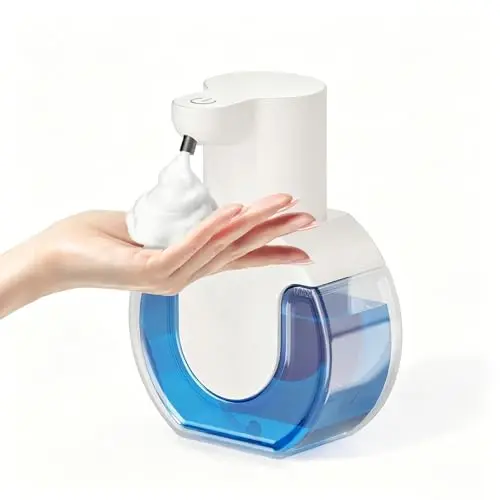
P10 – Touchless Rechargeable Foaming Dispenser
A rechargeable touchless foaming dispenser designed for bathroom and kitchen sinks. It can sit on the counter or mount to the wall, and the translucent reservoir makes refills less of a surprise.
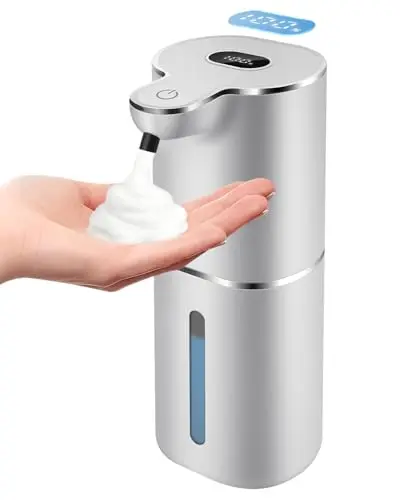
P15 – Digital Display Touchless Foaming
A feature-rich touchless foaming dispenser with a digital readout, six output levels, and rechargeable power. It works on the counter or wall and is built for kitchens, bathrooms, and light commercial sinks.
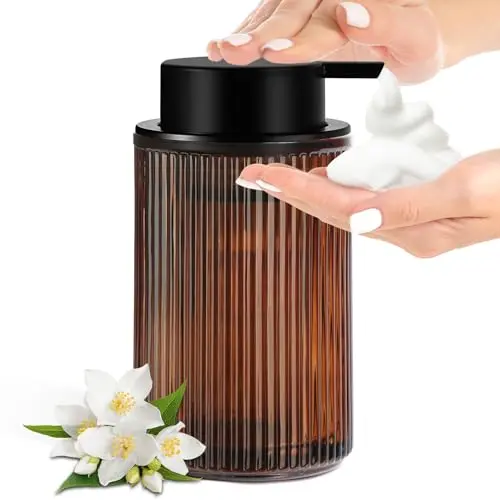
Amber Ribbed Glass – Bathroom Foaming Pump
A ribbed amber glass foaming dispenser with a matte black pump and a wide mouth for easy refills. It is designed to look at home on a bathroom vanity or kitchen counter.
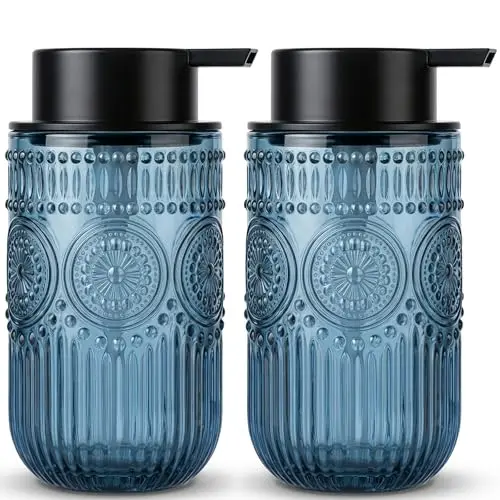
Vintage Blue Glass – Embossed Foaming Decor
A vintage-inspired blue glass foaming dispenser with an embossed sunflower and hobnail pattern. The wide mouth and sealed pump make it a practical decorative piece for bathrooms and kitchens.
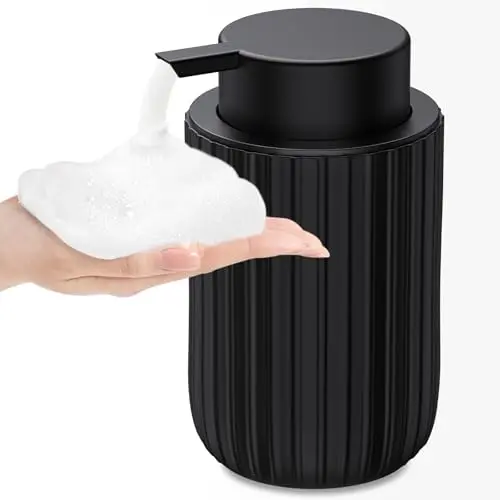
Ceramic Foam Dispenser – Modern Countertop Hand Wash
A ceramic foaming soap dispenser with a striped grip, wide mouth, and removable pump. It is built for bathroom and kitchen counters where plastic looks out of place.

P11W 2-Pack – Touchless Foaming for High-Traffic Sinks
A two-pack of touchless foaming dispensers with rechargeable power, four output levels, and IPX5 water resistance. Each unit can sit on the counter or mount to the wall with adhesive.
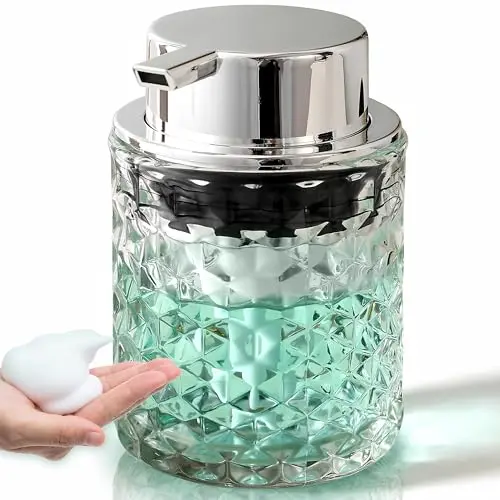
BPF Diamond Glass – Clear Foaming Pump
A clear glass foaming dispenser with a diamond-etched texture and a silver pump. It is a simple refillable option for bathroom hand soap or kitchen dish soap.

802741 2-Pack – Clear Refillable Foaming Bottles
A two-pack of clear plastic foaming pump bottles with 15 oz capacity each. They are designed for refilling with foaming hand soap and keeping multiple sinks stocked.
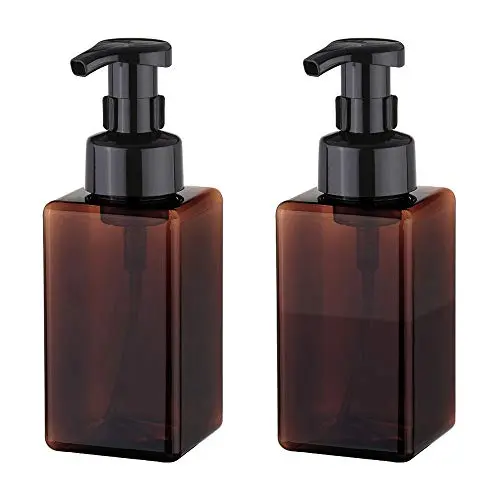
Amber 2-Pack – Large-Capacity Foaming Bottles
A two-pack of amber plastic foaming dispensers with a 15 oz capacity and a safety buckle on the pump. They are designed for hand soap, shampoo, or body wash.
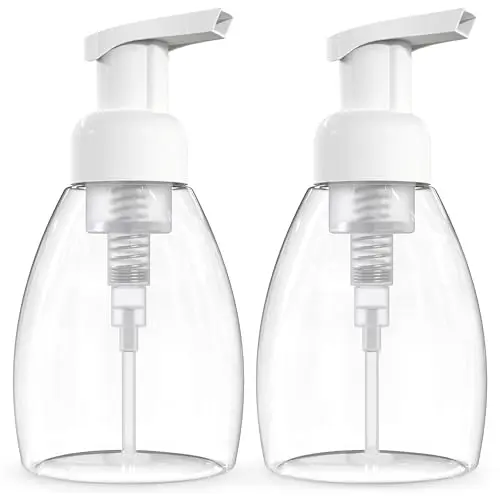
2720 2-Pack – Compact Clear Foaming Bottles
A two-pack of compact clear plastic foaming pump bottles with 8 oz capacity each. They are designed for DIY soap blends, bathroom sinks, and light commercial use.
How We Evaluated These Foaming Soap Dispensers
We didn’t run long-term pump-cycle testing or measure foam density in a lab. What we did: cross-referenced 10 foaming soap dispenser models from 10 distinct brands across six decision axes – pump and foam output, material and build, capacity and footprint, refill and cleaning, installation or power, and owner feedback where available. We triangulated published specifications, feature sets, and use-case fit against everyday bathroom and kitchen routines. We also audited refill ratios, pump construction, and mounting hardware, because a foaming dispenser lives or dies on whether it produces consistent foam without leaking, clogging, or sliding around a wet counter. Where the input signal was thinner, we kept the recommendation narrower instead of inventing claims.
The scoring framework weighted real-world fit (70%) – foam quality, refill practicality, and daily usability – against feature differentiation (30%) – unique controls, materials, mounting options, and capacity advantages. We treated glass, ceramic, and plastic as different ownership experiences, not just different finishes, and we favored picks whose pumps matched their bodies. We have no commercial relationship with any brand here; recommendations track fit and differentiation, not brand preference. If you want a touchless sink that stays put and adjusts easily, the Ipefan P10 is the strongest all-around match. If you want more control and a battery readout, the Cheftick P15 is the feature-led alternative.
How to Choose the Right Foaming Soap Dispensers
1. What Makes a Foaming Soap Dispenser Actually Foam?
The foaming part happens in the pump, not the bottle. A foam pump mixes air with liquid soap as you press, which is why a regular lotion pump won’t produce the same lather. The bottle shape is mostly about capacity and looks; the aerating mechanism and seal around the collar decide whether you get rich foam or a dribble. Most manual models ask you to dilute liquid soap with water, usually around 1:3 to 1:5 soap to water, while automatic models often specify their own ratio. If the mix is too thick, the pump strains; if it’s too thin, the foam collapses quickly.
2. Manual Foaming Soap Dispensers vs Automatic Models
Manual foaming dispensers are quiet, cheap to maintain, and easy to live with on a bathroom vanity. Glass and ceramic models add visual weight, but plastic two-packs are better for utility sinks and rentals. Automatic models trade simplicity for touchless operation, rechargeable batteries, and adjustable foam levels. They are the better fit for a kitchen sink where your hands are greasy or for a bathroom shared by kids. If you want touchless control at a busy kitchen sink, the Ipefan P10 is the pick; it keeps the setup compact and the output easy to adjust.
3. Match Foaming Soap Dispenser Capacity and Footprint to Your Sink
Capacity is a Goldilocks problem. An 8 oz foaming soap dispenser fits tight bathroom sinks but needs refilling more often; 11 to 15 oz manual models are better for family bathrooms, while 380 to 420 ml automatic dispensers reduce refill runs in kitchens. Check the height under the faucet and the counter space before buying, especially with tall glass bottles. A wide-mouth opening matters more than capacity once you’re actually refilling the thing, because narrow necks turn a simple top-off into a funnel job.
4. Glass, Ceramic, and Plastic Foaming Soap Dispensers: Which Material Fits?
Material changes the ownership experience. Glass foaming soap dispensers look best on open vanities and come in amber, clear, or blue finishes; they can chip if knocked over. Ceramic models feel heavier and hide water spots well, but they can crack. Plastic dispensers are the practical choice for kids, rentals, and high-traffic sinks, and they’re the lightest option for wall mounting. If bathroom decor is the priority, the Kasunting amber glass dispenser is the pick; it has the ribbed texture and matte pump that make a manual bottle feel intentional.
5. Refill Ratios, Cleaning, and Pump Care
Refill ratios are the most common source of disappointment. Start with the manufacturer’s dilution guidance, then adjust in small steps; a 1:3 soap-to-water ratio is a common starting point, but some pumps prefer 1:4 or 1:5. Don’t overfill the bottle, especially with automatic models, because the pump needs air space to work. Clean the pump by running warm – not hot – water through it, and avoid abrasive cleaners on glass or ceramic. A spare pump is cheap insurance if you rely on one dispenser every day.
6. Budget, Mid-Range, and Premium Foaming Soap Dispensers
Budget foaming soap dispensers are usually plastic two-packs. They won’t win design awards, but they’re the lowest-risk way to set up multiple sinks and test refill ratios. Mid-range models move into glass and ceramic bodies with nicer pumps and better counter presence. Premium foaming soap dispensers are mostly automatic, rechargeable models with touchless sensors, adjustable output, and wall-mount hardware. If you want the premium feature set, the Cheftick P15 is the pick; the digital display and six output levels are the clearest step up. Just go in knowing that more electronics means more to maintain.
Frequently Asked Questions
1. What makes a soap dispenser a foaming dispenser?
It comes down to the pump. A foaming soap dispenser uses an aerating pump to mix air into liquid soap as you press, creating foam instead of a gel ribbon. That’s why standard lotion pumps and foaming pumps aren’t interchangeable. The soap also has to be thin enough to move through the pump, which is why most manuals ask for a soap-to-water dilution. If the mix is too thick, you’ll get a weak squirt or a clogged pump rather than rich lather.
2. Ipefan P10 vs Cheftick P15: Which automatic foaming soap dispenser should you choose?
The Ipefan P10 is the simpler automatic pick: it has a touchless sensor, four foam levels, and a compact body that works on a counter or wall. The Cheftick P15 adds an HD digital display, six output levels, and a 10-second continuous mode, so it gives you more visible control. Choose the Ipefan P10 if you want a straightforward touchless sink; choose the Cheftick P15 if you like seeing battery status and fine-tuning output. Both need diluted liquid soap, and neither is a good match for thick gel soap straight from the bottle.
3. Kasunting amber glass vs Wikapy blue glass: Which decorative foaming soap dispenser fits a bathroom?
Both are manual glass foaming dispensers, so the choice is mostly about look and capacity. The Kasunting has a ribbed amber body, matte black pump, and 11 fl oz capacity; it reads warm and spa-like. The Wikapy has a blue vintage embossed pattern and a larger 14 oz capacity, so it suits a sink where you refill less often. Pick the Kasunting for a warm bathroom palette or the Wikapy for a farmhouse or vintage look. Neither is the right call for a rough utility sink where plastic makes more sense.
4. Do foaming soap dispensers really save soap?
They can, mainly because you’re using diluted liquid soap and a pump that turns it into a full dose of foam. A little soap goes a long way when it’s aerated, so you may use less per hand wash than with a standard pump. The catch is that savings depend on the dilution ratio and the pump quality. A weak foaming pump can make you press twice, which cancels the advantage. Automatic models also add rechargeable battery maintenance, so the savings are real but not effortless.
5. Can I use regular liquid soap in a foaming soap dispenser?
Usually yes, but you need to dilute it. Thick hand soap or dish soap straight from the bottle can clog a foam pump or produce sluggish foam. Start with a 1:3 soap-to-water ratio, then move toward 1:4 or 1:5 if the foam is too dense or the pump strains. Use room-temperature water and avoid hot water, which can damage some pumps. If you’re using a dedicated foaming soap refill, follow the label instead of adding extra water.
Final Verdict
For most sinks, the Ipefan P10 is the easy answer. It delivers touchless foam, a rechargeable battery, and enough capacity to feel practical rather than precious, and it works on a counter or a wall. If you want a more feature-led automatic dispenser, the Cheftick P15 adds a digital display and six foam levels, which is genuinely useful if you like visible control. If the goal is simple budget coverage for two sinks, the Ginger Lily Farms two-pack gets you there with minimal fuss. And if bathroom decor is the priority, the Kasunting amber glass dispenser is the one that looks the part while still producing rich foam. Start with the sink that annoys you most, then match the pump to your habits: touchless for busy hands, manual for calm counters.
