
Best Freestanding Ice Makers For Home – 2026 Reviews

A bag of ice from the corner store works until it doesn’t. The punch bowl runs low, the cooler gets sloshy, and someone volunteers to make another run. A freestanding ice maker for home use solves that problem more cleanly, but only if you pick one that fits your counter, your drain setup, and the way you actually entertain.
The first split is output versus storage. A machine that cranks out a lot of ice per day can still feel annoying if its bin is small, and a big bin can’t help if the compressor is slow. The second is installation reality: most of these units need a water line and gravity drain, so the best home pick is often the one that slots into your space without a plumbing project.
We looked across brands to find the freestanding ice makers that make sense for home kitchens, wet bars, and garages. Some are compact under-counter units, some are high-volume workhorses, and one is a better fit for a built-in cabinet run. The goal is simple: match the machine to your ice habit, not to a spec sheet bragging contest.
Best Freestanding Ice Makers for Home – 2026 Reviews
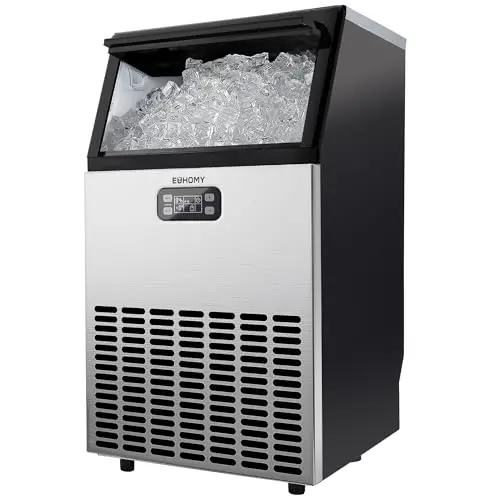
IM-02 – 100-lb Freestanding Ice Workhorse
The EUHOMY IM-02 is a stainless-steel freestanding ice maker built for steady home and light commercial use. It produces up to 100 pounds of ice daily, holds 33 pounds in the bin, and offers adjustable cube thickness plus one-touch cleaning from the LCD panel.

SSX100 – 150-lb High-Volume Ice Maker
The VEVOR SSX100 is a high-output stainless-steel ice maker with a 150-pound daily capacity and a 30-pound storage bin. It supports faucet or bottled-water inlet, includes a self-cleaning mode, and is designed for freestanding or under-counter placement.
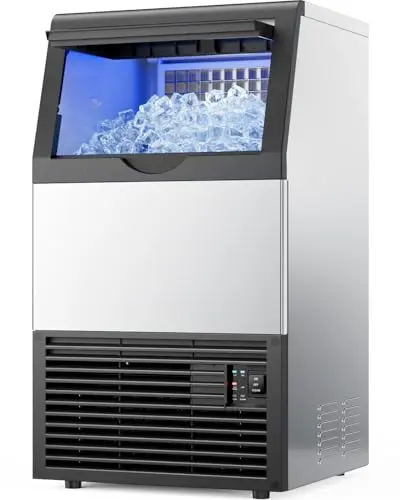
CIM-360F – High-Capacity Value Pick
The Mojgar CIM-360F is a 100-pound-per-day freestanding ice maker with a 33-pound storage bin and a 24-month warranty. It uses simple mechanical controls, offers one-touch self-cleaning, and fits under standard counters with front venting.

CIM-500T-3 – 170-lb Large-Bin Ice Maker
The Uthfy CIM-500T-3 is a large-bin freestanding ice maker rated for up to 170 pounds of ice per day, with a 55-pound storage capacity. It includes automatic water filtration, one-touch self-cleaning, an LCD panel, and a 24-hour timer.
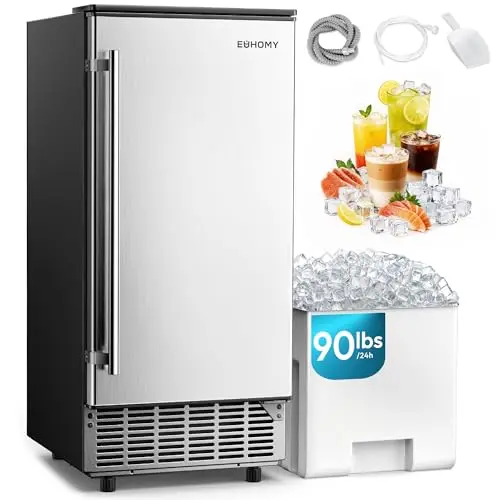
CIM002-0618 – Built-In 90-lb Ice Maker
The EUHOMY CIM002-0618 is a 90-pound-per-day under-counter ice maker with a 24-pound bin, built for freestanding or built-in installation. It adds a reversible door, a 24-hour timer, and one-touch self-cleaning in a slimmer cabinet-friendly body.
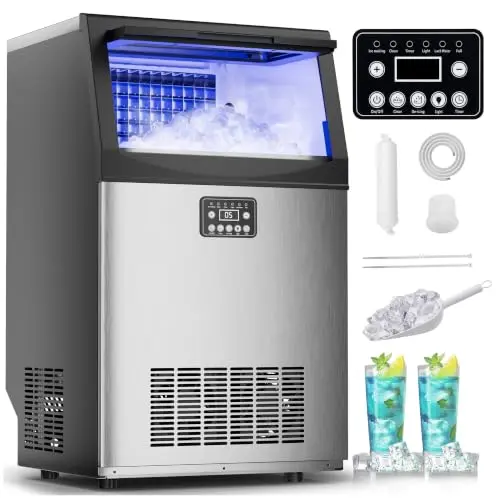
MM-ZB360 – Quiet 110-lb Under-Counter Pick
The Mountman MM-ZB360 is a 110-pound-per-day freestanding or under-counter ice maker with a 33-pound bin. It includes a water filter, one-touch self-cleaning, adjustable cube thickness, and an LCD control panel.

CIIM360 – 110-lb Stainless Freestanding Ice Maker
The SUNGDOGIN CIIM360 is a stainless-steel 110-pound-per-day ice maker with a 33-pound storage bin and a 7-to-14-minute batch cycle. It works freestanding or under a counter and includes one-touch self-cleaning.

0987-001-C1 – Filtered 110-lb Ice Maker
The Nanori 0987-001-C1 is a 110-pound-per-day freestanding or under-counter ice maker with a 33-pound bin. It includes a built-in water filter, 10 ice-thickness levels, a 24-hour timer, and one-touch self-cleaning.

CIM-320F – Compact Under-Counter Ice Maker
The Amzgachfktch CIM-320F is a compact 100-pound-per-day ice maker with a 25-pound bin, a removable water filter, and a blue interior light. It works under a counter or freestanding and includes a 24-hour timer and self-cleaning mode.
How We Evaluated These Freestanding Ice Makers for Home
We didn’t run these freestanding ice makers through a controlled kitchen lab or a multi-month reliability trial. What we did: cross-referenced 9 ice maker models from 8 distinct brands across six decision axes – daily ice output, storage-bin capacity, drainage and water-supply setup, footprint and placement, controls and self-cleaning, and insulation or ice-retention design. We triangulated published specifications, feature sets, owner feedback where available, and use-case fit for home kitchens, wet bars, and garages.
We mapped each model against the typical home setup: a standard cabinet opening, a nearby water line, and gravity drainage to a floor drain or low outlet. Capacity claims got extra scrutiny because daily output and bin size rarely matter in equal measure; a big compressor with a small bin can still leave you scooping slush. We also weighed how clearly each brand documents installation requirements and maintenance, since vague drain instructions are a common source of frustration.
The scoring framework weighted real-world performance (70%) – how well each machine handles a home’s actual ice demand and installation reality – against feature differentiation (30%) – meaningful extras like water filtration, reversible doors, timers, and warranty coverage. We have no commercial relationship with any brand here; recommendations track fit and differentiation, not brand preference. If you want the most balanced home pick, the EUHOMY IM-02 is the easy starting point. If output is the priority, the VEVOR SSX100 is the better match.
How to Choose the Right Freestanding Ice Makers for Home
1. Why Freestanding Ice Makers Fit Home Kitchens and Wet Bars
A freestanding ice maker is the simplest way to add a dedicated ice supply at home. It does not need a custom cabinet panel, and many models can still slide under a counter if the vents and door swing have clearance. For a home kitchen, wet bar, or garage, the main appeal is capacity: these machines make and store ice continuously instead of relying on trays or bags.
The tradeoff is that freestanding placement still needs planning. Most units here require a water line and a gravity drain, and some need a floor drain or a low wall outlet. Measure the opening, check the door swing, and confirm the drain slope before you buy.
2. Daily Ice Output and Storage Capacity for a Home Ice Maker
Daily ice output and bin capacity are not the same thing. A machine rated for a high daily total may still have a modest storage bin, which means you can outrun it during a party even if the compressor is strong. For home use, match the bin to your peak entertaining window, not just the daily number.
The bin is also not a freezer. Ice will melt over time, especially in a warm room, so a well-insulated body and a lid that seals properly matter. If you want a big bin without jumping into the highest-output tier, the Mojgar CIM-360F is the value-focused route.
3. Drainage and Water Supply for a Freestanding Home Ice Maker
Gravity drainage is the installation detail that trips up the most home buyers. These machines do not include a drain pump, so wastewater has to flow downhill to a floor drain, sink, or low outlet. If the hose runs uphill or sits level, the machine can stop working or leak.
You also need a cold-water supply and a little patience: keep the unit upright for at least a day before first use so the refrigerant settles. Front-venting models are easier to tuck under a counter, but they still need clearance for airflow and access for cleaning.
4. Ice Quality, Self-Cleaning, and Maintenance
Adjustable ice thickness is more than a gimmick. Thin cubes work well in smoothies and seafood displays, while thicker cubes last longer in cocktails and iced coffee. A water filter can improve taste and reduce scale, but it does not replace regular cleaning.
Use the one-touch self-cleaning cycle on the schedule the manufacturer recommends, and remember that the storage bin needs attention too. If filtered ice is a priority for your home setup, the Nanori 0987-001-C1 is the filtered-water pick in this lineup.
5. Freestanding vs Built-In Ice Makers: Which Fits Your Home?
A true built-in ice maker is designed to sit flush in a cabinet run, while a freestanding model is meant to stand on its own. Many of the machines here can do both, but only if the vents are not blocked and the door has room to open. A reversible door is a small feature that makes a big difference in a tight home bar.
If the clean integrated look matters most, the EUHOMY CIM002-0618 is the built-in-friendly pick, with a slimmer body and a door that can hinge on either side.
6. Budget, Mid-Range, and Premium Ice Makers: What Changes
Entry-level ice makers usually make a similar daily output but cut corners on bin insulation, warranty length, or water filtration. Mid-range models tend to add better controls, a filter, or a larger storage bin. Premium picks often justify the jump with quieter compressors, reversible doors, longer warranties, or a more refined built-in fit.
Spend for the feature you will actually use. A home bar that runs a few nights a week may not need the highest output, while a garage setup that supports parties will feel the difference in bin size and recovery time.
Frequently Asked Questions
1. What's the difference between the EUHOMY IM-02 and Mojgar CIM-360F?
Both are 100-pound-per-day freestanding ice makers with 33-pound bins, but they aim at slightly different buyers. The EUHOMY IM-02 has the more established control layout and a broader commercial-and-home certification story. The Mojgar CIM-360F counters with a 24-month warranty and a simpler value-focused setup. If you want the most balanced all-rounder, go EUHOMY. If warranty coverage and bin size are your priorities, the Mojgar is the better fit.
2. How much ice does a home really need from a freestanding ice maker?
For most households, a 90- to 110-pound daily rating with a 24- to 33-pound bin is plenty. That range covers everyday drinks plus a party or two without making the machine feel oversized. If you routinely fill coolers or host large gatherings, step up to a 150- to 170-pound output and a larger storage bin. Just remember that the bin is not a freezer, so ice will melt if it sits too long.
3. Are freestanding ice makers hard to install at home?
They are not hard, but they are not plug-and-play either. Most need a cold-water line, a gravity drain, and a level surface. You also need to keep the unit upright for a day before first use and allow airflow clearance around the vents. The install is closest to a dishwasher or filtered-water tap: simple if the plumbing is already close, annoying if you have to add a drain.
4. VEVOR SSX100 vs Uthfy CIM-500T-3: which is better for a busy household?
The VEVOR SSX100 is the better pick if you want fast output with flexible water options; its dual inlet and 150-pound daily rating suit a home that fills coolers and entertains often. The Uthfy CIM-500T-3 wins on storage capacity with a much larger bin, plus automatic water filtration. If your priority is never running out during a long party, choose Uthfy. If you want strong output and more installation flexibility, choose VEVOR.
5. Can a freestanding ice maker work without a floor drain?
Usually no, unless you can route the drain hose to a sink, standpipe, or another low outlet. These machines rely on gravity drainage, and a drain pump is not included. The hose must slope downward continuously; a level or uphill run can cause water backup and shutdowns. Check your drain location before buying, especially for a built-in placement.
Final Verdict
For most home buyers, the EUHOMY IM-02 is the answer. It pairs a 100-pound daily output with a 33-pound bin, and it has the controls, cleaning cycle, and certification story to handle both everyday drinks and party overflow. If you regularly fill coolers or host a crowd, the VEVOR SSX100 is the high-volume alternative, with dual water inlet options and a bigger daily rating. The Mojgar CIM-360F is the value-focused pick when a long warranty and a large bin matter more than maximum output. And if a clean built-in look is the priority, the EUHOMY CIM002-0618 is the cabinet-friendly choice. Pick the one that matches your ice habit and your drain setup, and you will spend less time running out for bags.
