
Best Fully Automatic Espresso Machines With Grinder – 2026 Reviews

The honeymoon phase with a bean-to-cup machine lasts about three weeks. Then you notice the thing that actually decides whether you keep using it: how long the milk cleanup takes, and whether the machine asks you to think before it pours. Everything else – the preset count, the display, the brushed finish – fades into the background fast.
That’s the lens we used for this category. A fully automatic espresso machine with a grinder should handle the whole chain – grind, dose, tamp, brew, and usually the milk too – without turning your morning into a barista shift. Two axes separate the ones people love from the ones that end up on a resale listing: milk system design and grinder-plus-brew-path flexibility. A machine with a three-part milk carafe and a real burr grinder beats one with twice the presets and a tube you can’t rinse.
The picks below span the market, from a budget bean-to-cup that covers the essentials to a premium machine with a dedicated cold-brew path. Here’s how they actually compare, and who each one suits.
Best Fully Automatic Espresso Machines With Grinder – 2026 Reviews
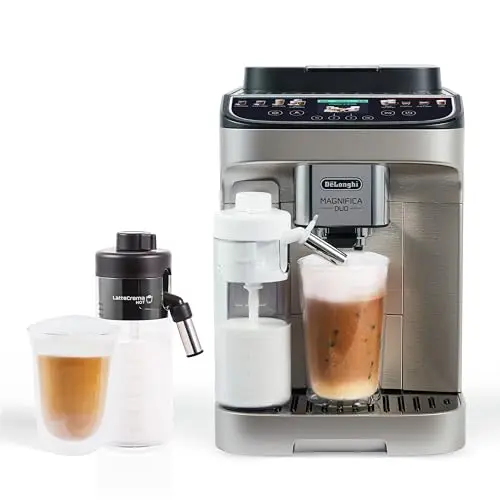
Magnifica Duo ECAM33080SXB – Hot and Cold Coffee in One Touch
A true bean-to-cup machine that covers hot and iced drinks from one touchscreen. Three brewing paths – espresso, drip, and cold extraction – feed 20 preset recipes, and the integrated conical burr grinder doses fresh for each one. The removable LatteCrema carafe handles hot foam and cold foam, so iced lattes get real texture instead of cold milk stirred into espresso.
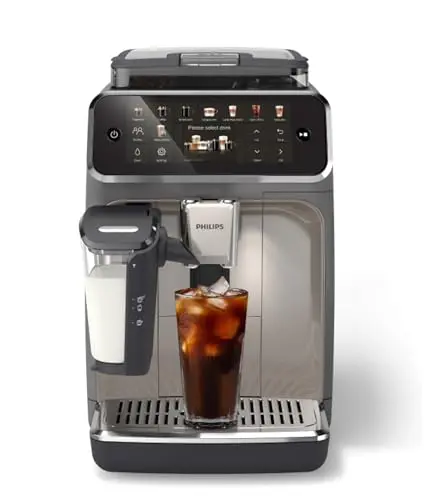
5500 Series EP5544/94 – Twenty Presets, Four Drink Profiles
Philips’ mid-tier bean-to-cup with the widest personalization in the LatteGo family. Twenty presets span hot and iced drinks, four saved profiles let each household keep its own settings, and the ceramic grinder feeds a 15-bar brew group in a 1.8-liter chassis. LatteGo’s three-part milk system has no internal tubes, so cleanup is a rinse or a dishwasher cycle.
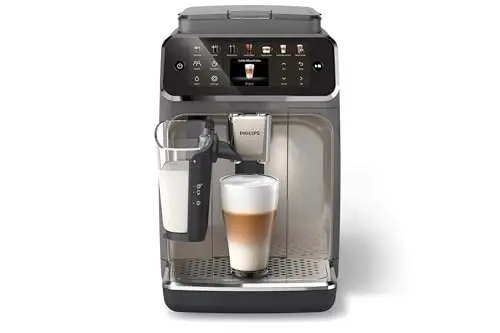
4400 Series EP4444/90 – Fast, Quiet Mid-Range Brewing
The middle step in Philips’ LatteGo range: 12 presets, two saved profiles, and the same three-part milk system as the rest of the family. QuickStart claims a three-second warm-up and SilentBrew shields the grinder, so it’s the quick, quiet option if you brew in a shared or early-morning kitchen.
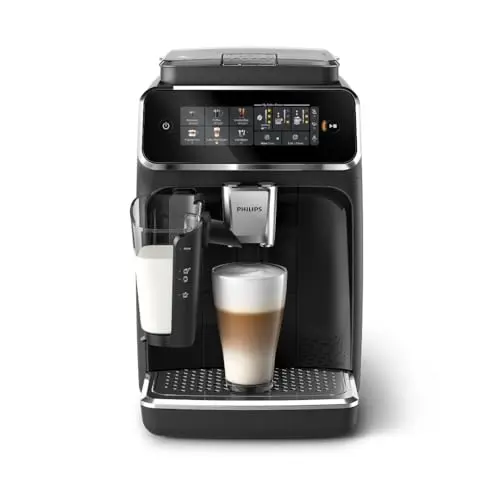
3300 Series EP3341/50 – Simple One-Touch LatteGo Starter
Philips’ entry point into LatteGo bean-to-cup brewing. Six presets cover espresso, coffee, iced coffee, cappuccino, latte macchiato, and hot water, with a full-color display and one-touch milk frothing. The ceramic grinder, 15-bar brew group, and removable brew group are shared with the rest of the family.
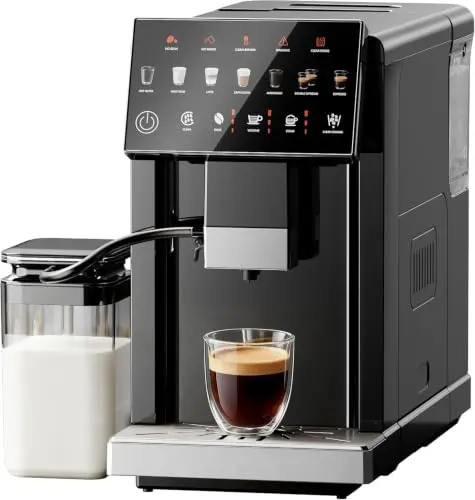
CM004-02 – Budget Bean-to-Cup With Real Burrs
A budget bean-to-cup machine that still covers the essentials: a 20-bar pump, an integrated burr grinder with 15 grind levels, automatic milk frothing, and a touchscreen for volume and strength. A 1.5-liter tank and 200-gram hopper keep refills infrequent, and the adjustable spout height handles tall iced glasses.
How We Evaluated These Fully Automatic Espresso Machines With Grinders
We didn’t run controlled extraction tests or measure brew temperature with a thermocouple. What we did: cross-referenced five fully automatic espresso machines from three brands across six decision axes – grinder type and adjustment range, milk system design and cleanup, preset menu breadth, saved-profile customization, footprint and water capacity, and weekly maintenance routine. We triangulated published specifications, feature sets, and owner feedback where available, then mapped each machine against the buyer profiles that actually matter here: the two-latte-a-day household, the iced-coffee drinker, the small-counter kitchen, and the buyer who wants cafe drinks without learning to tamp.
Every machine here is a bean-to-cup design, so the comparison is never about whether it grinds. It’s about how well it grinds, brews, and cleans up. The scoring framework weighted real-world fit (70%) – how well a machine delivers one-touch drinks that hold up on a Tuesday morning – against feature differentiation (30%), meaning the technical choices that separate one machine from the next. We have no commercial relationship with any brand here; recommendations track fit and differentiation, not brand preference. If you want the widest drink menu and a genuine cold-brew path, the De’Longhi Magnifica Duo is the machine to beat; if milk cleanup is your daily pain point, the Philips 5500 Series is the better fit.
How to Choose the Right Fully Automatic Espresso Machine With a Grinder
1. What Fully Automatic Espresso Machines With a Grinder Actually Do for You
Fully automatic means the machine handles the whole chain: it grinds, doses, tamps, brews, and in most cases froths the milk. You press one button and walk away. A semi-automatic machine with a grinder still asks you to dose into a portafilter, tamp, and lock it in – more control, more ritual, and more room for a bad shot on a rushed morning.
The grinder is the part worth scrutinizing. A ceramic burr grinder resists heat and wear, while a conical burr grinder delivers a consistent dose across its setting range. Grind adjustment range is a better spec to check than pump pressure, because it’s what lets you move between a dark espresso roast and a lighter bean without the shot running away from you.
2. Grind Settings, Burr Type, and Why 15 Bars Isn't the Whole Story
Nearly every machine in this category advertises 15 or 20 bars, and that number tells you less than you’d expect. Grind consistency and dose control shape flavor far more than peak pressure. Look for adjustable grind settings – a modest range is easy to dial in and leave alone, while a wide range rewards anyone who switches beans often.
A removable brew group matters too, because that’s where spent grounds and oils collect. Machines that let you rinse the group yourself are easier to keep clean between deeper maintenance cycles, and easier to inspect when something tastes off.
3. Milk Systems Compared: LatteGo, LatteCrema, and Steam Wands
Milk is where most people abandon a machine, and it’s almost always a cleaning problem. Philips’ LatteGo uses three parts with no internal tubes – it rinses in seconds and goes in the dishwasher. De’Longhi’s LatteCrema carafe is also removable and dishwasher-safe, and it adds cold foam, which is the only way to get proper texture in an iced latte at home.
A manual steam wand gives you more control over microfoam but adds a wipe-down and a purge after every single use. If you drink milk drinks most mornings, the automatic systems are the entire reason to buy in this category.
4. Presets and Saved Profiles: How Much Customization Do You Need
Preset counts range from six to twenty, and more isn’t automatically better. Six presets usually cover espresso, coffee, iced coffee, cappuccino, latte macchiato, and hot water – which is what most households drink. Twenty adds flat whites, cold brew, drip coffee, and drink-specific milk settings.
Saved profiles are the underrated feature. Two profiles cover a couple; four cover a full household. Without them, someone re-adjusts strength and milk level every single time they brew, which gets old by week three.
5. De'Longhi Magnifica Duo vs Philips 5500 Series: Two Ways to Go Fully Automatic
These two split the category cleanly. The De’Longhi Magnifica Duo brews espresso, drip, and cold brew through separate paths, which is why its iced drinks and cold-brew cups taste distinct rather than just chilled. The Philips 5500 Series goes the other direction: one brew path, twenty presets, four saved profiles, and the simplest milk cleanup you can buy.
Choose the De’Longhi if iced and cold-brew drinks are a real part of your routine. Choose the Philips if milk drinks and per-person settings matter more than brewing variety.
6. Counter Space, Water Capacity, and Weekly Maintenance
Bean-to-cup machines are deeper than they look. Most run between 9 and 20 inches front to back, and the Magnifica Duo is the deepest here at roughly 19.7 inches – measure before you commit. 1.8-liter water tanks are standard across the Philips lineup; the EUHOMY runs 1.5 liters.
Water filtration is the quiet quality-of-life feature. An AquaClean-style filter pushes descaling intervals out considerably, and descaling is the chore that makes people resent a machine. Without filtration, expect regular descale cycles plus the rinse and cleaning-tablet routine every bean-to-cup owner knows.
7. How Much Should You Spend on a Fully Automatic Espresso Machine
There are three rough tiers. Entry-level machines get you a real grinder, one-touch brewing, and automatic milk for about what a mid-range semi-automatic costs. The mid-range jump adds saved profiles, quieter grinding, faster warm-up, and better filtration. Premium buys brewing variety – dedicated cold extraction paths, drip coffee, and cold foam.
If you drink two milk drinks a day, the mid-range step is worth it, because the convenience features are the ones you touch every morning. If you mostly drink straight espresso and iced coffee in summer, an entry-level or mid-range machine covers it without the premium markup.
Frequently Asked Questions
1. Do fully automatic espresso machines with a grinder really grind fresh for every cup?
Yes – on a true bean-to-cup machine the grinder runs per drink. You fill the hopper with whole beans, and the machine grinds a dose, tamps it, and brews. That’s the real difference between these and a machine that takes pre-ground coffee into a pressurized basket.
What varies is grind adjustment range. The EUHOMY lists 15 grind levels; the Philips and De’Longhi machines let you adjust grind without leaning on a big number. More settings help when you switch beans often – fewer are easier to dial in once and forget. Ceramic burrs resist heat and wear, which is why they show up across most of this lineup.
2. What's the difference between the De'Longhi Magnifica Duo and the Philips 4400 Series?
The Magnifica Duo is the broader brewer: three brewing technologies covering espresso, drip, and cold extraction, 20 one-touch recipes, and a hot-and-cold milk carafe for iced drinks. The Philips 4400 is the faster, quieter daily driver: 12 presets, a three-second QuickStart, SilentBrew shielding, and LatteGo’s three-part milk system.
Pick the De’Longhi if cold brew and iced coffee are routine and you want the widest menu. Pick the Philips 4400 if you brew milk drinks in a hurry and want the easiest cleanup in the category.
3. How does the EUHOMY CM004-02 compare to the Philips 3300 Series?
Both are entry points, but they’re built for different buyers. The EUHOMY CM004-02 spends its budget on hardware: a 20-bar pump, an integrated burr grinder, 15 grind levels, automatic milk frothing, and a self-cleaning program. The Philips 3300 spends it on polish: a full-color display, the LatteGo milk system, AquaClean filtration, and a removable brew group.
If the goal is spending as little as possible on a real bean-to-cup workflow, the EUHOMY does that. If you want the machine you’ll actually enjoy using every morning and cleaning less often, the Philips 3300 is the upgrade.
4. How much maintenance does a fully automatic espresso machine need?
Daily: empty the puck bin, refill the tank, and rinse the milk parts. Weekly: a deeper rinse of the brew group and drip tray. Periodically: a cleaning cycle with tablets. Descaling depends almost entirely on water filtration – a machine with an AquaClean-style filter stretches that interval out considerably.
The milk system is the deciding factor. Three-part systems with no internal tubes rinse in seconds and can go in the dishwasher, which is why they’re worth paying for. A steam wand needs a wipe and a purge after every use, or the milk bakes on and the whole routine gets abandoned.
5. Can a fully automatic machine make good iced coffee?
Yes, and there are two distinct approaches in this lineup. Some, like the De’Longhi Magnifica Duo, use a dedicated cold extraction path and brew cold brew in minutes, then add cold foam from a removable carafe. Others, like the Philips models, build iced coffee into their preset menus without a separate cold brewing path.
The difference is real. A dedicated cold path is designed to keep the cup smoother and less acidic, while an iced preset on a standard brew path is quicker and brighter. If iced coffee is a daily habit rather than an occasional one, it’s worth choosing a machine with a genuine cold path.
Final Verdict
For most buyers, the De’Longhi Magnifica Duo is the answer. It brews espresso, drip, and cold brew through separate paths, so hot and iced drinks both land where they should, and the conical burr grinder plus 20 one-touch recipes mean you never touch a portafilter. If your priority is a milk system you can rinse in seconds and settings each person can save, the Philips 5500 Series is the machine to pick instead – just confirm the voltage on the listing first. And if you want the bean-to-cup workflow without the premium spend, the EUHOMY CM004-02 covers grind, brew, and froth at the entry tier. Whichever you choose, the deciding question isn’t how many presets it has – it’s whether you’ll actually clean the milk parts every morning.
