
Best Gentle Alarm Clocks – 2026 Reviews

The worst alarm clock is the one that makes your heart race before your feet touch the floor. A harsh buzzer can jolt you out of deep sleep, but so can a display that lights up the whole room at 3 a.m. Gentle wake-up is really a design problem: how do you ease someone from sleep without making them dread the morning?
The market splits into two broad approaches. Sunrise alarm clocks use light as the first cue, brightening gradually before any sound begins. Sound-machine alarms lean on soft birdsong, waves, or white noise that rises slowly in volume. The best models also get the sleep-side details right: a display that can go dark, a night light that stays subtle, and controls you can operate half-awake.
We looked across major brands for clocks that treat the wake-up as a transition rather than an event. The picks below cover different priorities – a full sunrise panel, granular volume control, a compact sound machine, or a simple wooden bedside clock – so you can choose the kind of gentle that fits your bedroom.
Best Gentle Alarm Clocks – 2026 Reviews
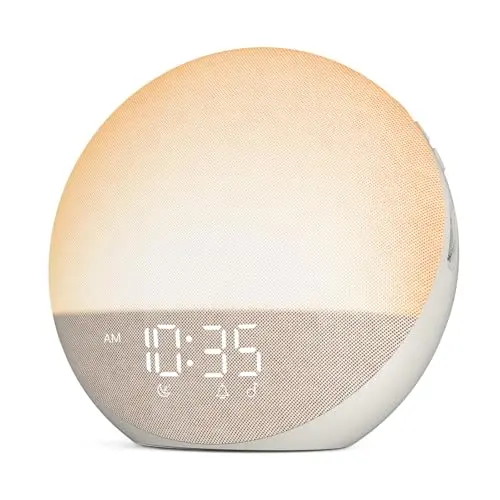
H03 – Sunrise Light and Sound Machine
The H03 is a sunrise alarm clock and sound machine in one compact bedside unit. Its light ramps up over a customizable window, and you can choose light-and-sound, sound-only, or light-only wake modes. A 5W Bluetooth speaker and 25 sleep sounds round out the nightstand.
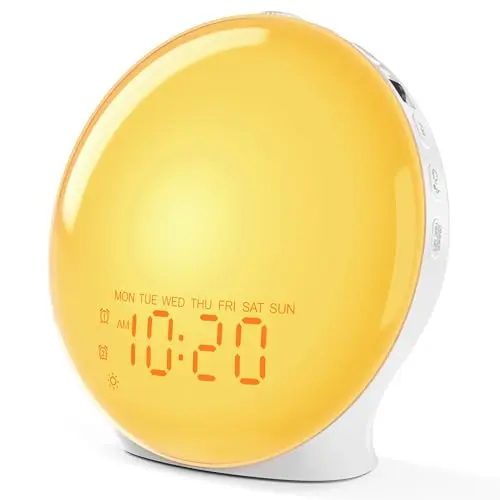
K8 – Full-Screen Sunrise Wake-Up Light
The K8 uses a full-screen front panel to simulate dawn over 10 to 60 minutes, then follows with your choice of 25 sounds or FM radio. Dual alarms, a 5W Bluetooth speaker, and 17 lighting effects make it a feature-rich bedside hub.
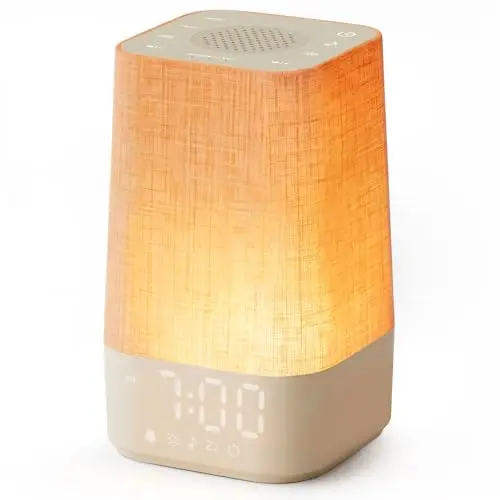
SM-07 – Customizable Sunrise and Sound Wake-Up
The SM-07 pairs a 10-60 minute sunrise simulation with 30 soothing sounds and unusually granular controls: 13 brightness levels and 32 volume steps. It’s built for people who want a wake-up that starts almost imperceptibly soft.
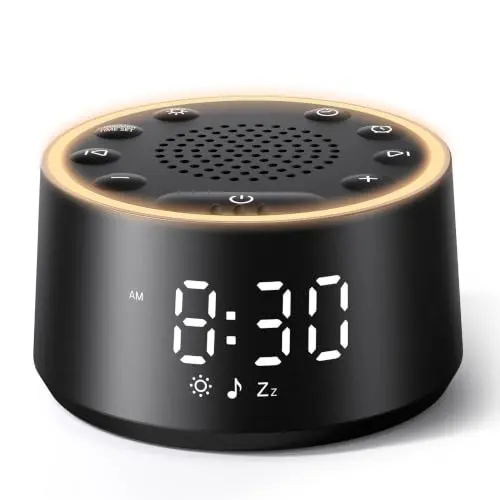
D1 Nova – Compact Sound Machine and Gentle Alarm
The D1 Nova condenses 25 sleep sounds, seven gentle alarms, a dimmable clock, and a 10-color night light into a small USB-C plug-in footprint. It’s a nightstand space-saver that handles both sleep and wake routines.
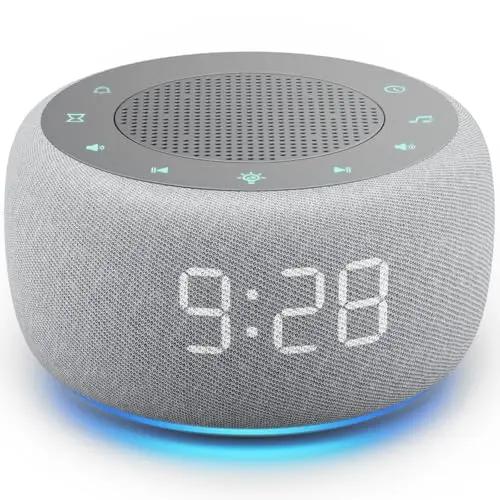
BK11 – 2-in-1 White Noise and Gentle Alarm
The BK11 combines a 24-sound white noise machine with soft alarm tones and a seven-color ambient night light. Its display dims from full brightness to nearly black, making it a good fit for shared bedrooms.
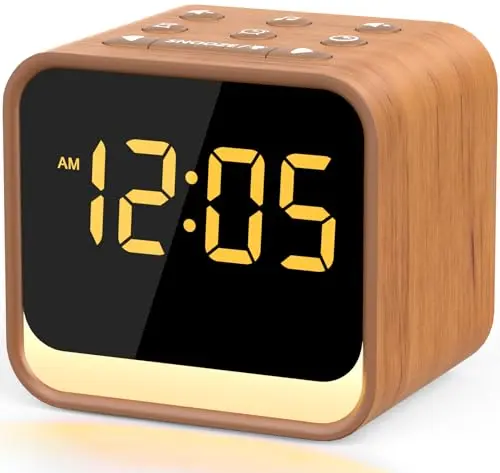
Wooden Sound Machine Alarm Clock – Birdsong Wake-Up
This Housbay clock hides a 24-sound sleep machine inside a compact wood-grain cabinet. It wakes you with nature sounds that rise gently in volume, and the display and night light can both be dimmed or turned off.
How We Evaluated These Gentle Alarm Clocks
We didn’t sleep through a full week with each clock or measure decibel output in a lab. What we did: cross-referenced 6 gentle alarm clock models from 6 distinct brands across 5 decision axes – wake-up gentleness, sound variety, display dimming, ease of setup, and nightstand footprint. We triangulated published specifications, feature lists, owner feedback where available, and use-case fit for light sleepers, heavy sleepers, and shared bedrooms.
The scoring framework weighted real-world fit (70%) – how well each clock actually delivers a calmer morning – against feature differentiation (30%) – unique sound libraries, sunrise controls, dimming range, and footprint advantages. We weighed softness of the alarm ramp, readability at night, and how quickly a half-awake person can operate each model. Our recommendations track fit and differentiation, not brand preference.
Where owner feedback was available, we used it to flag reliability patterns and setup friction rather than treating it as a scorecard. We also mapped each pick to a realistic buyer: light sleepers who need granular volume, heavy sleepers who still want a softer start, and small-nightstand setups. We did not treat ‘gentle’ as a synonym for quiet. A clock can be gentle because its light wakes you first, because its alarm volume starts low, or because its display stays dark enough to protect sleep. Those are different design choices, and we scored them separately. If you want the most complete sunrise-and-sound package, the Odokee H03 is the clear starting point; if a wide light panel matters more, the JALL K8 is the better match.
How to Choose the Right Gentle Alarm Clocks
1. What Makes an Alarm Clock Actually Gentle
A gentle alarm clock changes how you wake, not just how loud the alarm gets. The best ones use one or more of three levers: gradual light, rising alarm volume, and a display that can go dark. A clock with a big sunrise panel but a harsh beep isn’t truly gentle; neither is a soft-sounding alarm attached to a display that lights up the whole room.
Look for adjustable ramp times rather than fixed presets. A 10-60 minute sunrise window gives light sleepers a slow build and heavy sleepers a shorter path to full brightness. For sound, low starting volume and fine volume steps matter more than a long list of tones. The goal is a wake-up that coaxes you out of sleep instead of ambushing you.
2. Sunrise Light vs. Gentle Sound: Which Wake-Up Fits You
Sunrise clocks wake you with light first, which can feel natural in a dark bedroom. Sound-machine alarms wake you with birdsong, waves, or white noise that rises gradually. Some people need the visual cue of a brightening room; others sleep through light but respond to sound. Neither approach is universally better.
If you want both in one unit, the Odokee H03 is the most complete blend of sunrise light, soft sounds, and dimming. If you mostly want a wide, room-filling light panel and don’t mind a more involved setup, a full-screen sunrise model may suit you better.
3. Sound Libraries and Alarm Tones That Won't Jar You Awake
Sound libraries vary widely. Nature sounds like birdsong and rain feel gentler to many people, while white noise, pink noise, and brown noise are better at masking traffic or a snoring partner. Check whether the alarm tone is separate from the sleep sounds; you don’t want to wake to a looping waterfall at full volume.
Volume granularity is the unsung hero. A clock with 32 volume steps can start below your partner’s hearing threshold and climb slowly. A clock with three volume levels may jump from whisper to alarm. If you’re especially sound-sensitive, the Wkzay SM-07 offers the finest adjustment in this lineup.
4. Display Dimming, Night Lights, and Bedroom Darkness
Bedroom darkness matters as much as alarm softness. A display that blasts blue light at 3 a.m. can undermine the calm you’re trying to create. Look for multiple dimming levels or a full-off setting, and check whether the night light is independent of the clock display.
A soft amber or warm night light is easier on the eyes than a bright white panel. Some clocks also let you turn off the display entirely while keeping the alarm active, which is ideal for people who need total darkness.
5. Ease of Setup and Daily Operation
A gentle alarm clock should be easy to set when you’re tired. Physical buttons with clear labels beat hidden menus, especially if you change alarms for weekdays and weekends. Check whether the clock has dual alarms, a dedicated snooze button, and a DST shortcut if you hate resetting twice a year.
If you want a wide sunrise panel and can tolerate a short learning curve, the JALL K8 is a strong choice. If you want the simplest possible setup, prioritize a model with labeled buttons and a visible alarm icon.
6. Power, Footprint, and Nightstand Fit
Most gentle alarm clocks are plug-in devices, and some rely on batteries only for alarm backup. That’s fine for a nightstand, but it means you need an outlet within reach. Check the adapter type and whether a USB port is included for charging your phone.
Footprint matters in small rooms. A full-screen sunrise clock takes up more space than a compact sound-machine alarm. Measure your nightstand before committing to a wide panel. If you travel, a USB-C plug-in model is easier to pack than a clock with a bulky proprietary adapter.
7. Budget, Mid-Range, and Premium Gentle Alarm Clocks
Gentle alarm clocks span budget-friendly, mid-range, and premium tiers. Budget models usually focus on a soft alarm and a dimmable display, while mid-range options add white noise, sunrise lighting, or dual alarms. Premium models bundle the widest sunrise panels, the deepest sound libraries, and the finest brightness control.
Spend based on which gentle feature you’ll actually use. If you only need a softer beep and a dark display, a basic model is enough. If you want a full sunrise simulation, a broader sound library, and app-free controls, the premium tier is worth considering. The Dreamegg D1 Nova is a strong value if you want sound-machine features without a sunrise panel; the Odokee H03 is the fuller package.
Frequently Asked Questions
1. Are gentle alarm clocks loud enough for heavy sleepers?
Yes, if you choose a model with adjustable volume and a rising alarm ramp. Gentle doesn’t mean quiet; it means the alarm starts softly and climbs. A clock with many volume steps or a light-first wake mode can reach a firm volume while avoiding a cold-start jolt. Heavy sleepers should check the maximum volume and whether the sunrise light is bright enough to help.
2. What's the difference between the Odokee H03 and JALL K8?
The Odokee H03 leans toward simplicity and a polished all-in-one experience: labeled physical buttons, a 0-100% display dimmer, and a 5W Bluetooth speaker. It also offers three wake modes, including light-only. The JALL K8 counters with a full-screen light panel, dual alarms with weekday/weekend settings, and FM radio. The JALL is more feature-dense, but its menus are harder to program. Choose the Odokee for easier daily operation; choose the JALL for the wider sunrise glow and radio.
3. What's the difference between the Buffbee BK11 and Dreamegg D1 Nova?
Both are compact sound-machine alarms, but they optimize different things. The Buffbee BK11 has 24 calming sounds, a seven-color night light, and a very simple two-in-one focus; it’s a good fit if you mainly want white noise and a softer alarm. The Dreamegg D1 Nova adds seven gentle alarms, 32-step volume control, and a separate 10-color night light in a smaller USB-C plug-in body. The Dreamegg feels more adjustable; the Buffbee is more straightforward. Both have some reported reliability concerns over time.
4. Do gentle alarm clocks help light sleepers wake up without stress?
They can, especially when the clock gives you fine volume control and a display that can go fully dark. Light sleepers often benefit from a light-first wake mode, which lets the sunrise do the work before sound begins. A gradual ramp is more important than a long list of sounds. If you share a bed, look for a separate night light and a silent snooze button.
5. Can a gentle alarm clock replace a white noise machine?
Many can, but check the sound library and timer. A good two-in-one offers continuous playback, a 10-480 minute sleep timer, and enough white noise, pink noise, or brown noise options to mask your bedroom’s specific disruptions. If you need a dedicated high-fidelity sound machine, a clock’s smaller speaker may disappoint. For most bedrooms, a combined sound machine and alarm clock saves space and simplifies the nightstand.
Final Verdict
For most buyers, the Odokee H03 is the gentle alarm clock to get. It pairs a customizable sunrise, soft sound options, and a genuinely dimmable display with straightforward physical controls. If you want a wider, room-filling light panel and don’t mind a more involved setup, the JALL K8 is the better sunrise-first pick. For sound-sensitive sleepers who want granular control, the Wkzay SM-07 offers the finest volume and brightness steps in this lineup. And if you want a compact sound machine with gentle alarms without paying for a full sunrise panel, the Dreamegg D1 Nova is the value choice. Start with the Odokee unless one of those specific needs pulls you toward another model.
