
Best Goose Down Comforters – 2026 Reviews

A comforter that looks lofty in the package can sleep flat by February. That is the quiet trap in this category: the label says goose down, the price tier feels reassuring, and the first week feels great. Then the fill shifts, the shell rustles, or the warmth turns out to be wrong for your bedroom.
The first split is the fill itself. Goose down clusters, down fiber, and feather fiber are related but not interchangeable, and the ratio changes loft, warmth, and how the comforter holds up over time. The second split is construction. A true baffle box behaves differently from sewn-through channels, especially when you use a duvet cover and want the fill to stay where it started.
This guide surveys the market across brands and focuses on the details that actually change how a goose down comforter sleeps: fill composition, shell fabric, warmth level, care requirements, and the little hardware that keeps a duvet cover in place. The goal is to help you pick the right fit, not to crown one label as universally best.
Best Goose Down Comforters – 2026 Reviews
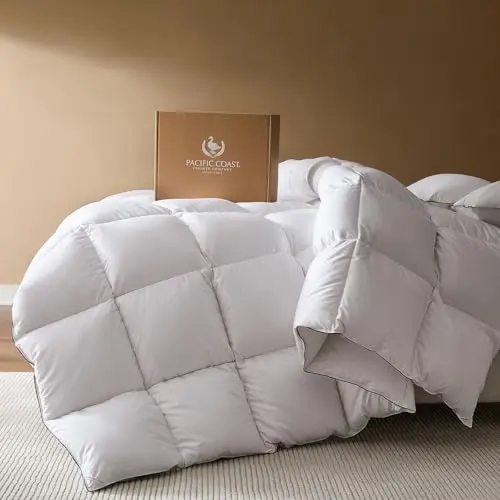
3D Baffle Box All-Season – Hotel-Grade Loft
A king-size all-season comforter built around a 3D hidden baffle-box shell, with eight corner and center loops and a medium-weight fill. The cover is a cotton-poly blend, the fill is RDS and OEKO-TEX certified, and Pacific Coast backs the build with a 3-year warranty.

Winter Goose Down – Cold-Night Loft
A winter-weight king comforter filled with 800 fill power goose down and treated with Texcote-Nano for moisture resistance. The 450 thread count shell has a 3D box design, corner loops, and a machine-washable care label, with RDS and OEKO-TEX certifications.

Goose Feather Down Fiber – Noiseless All-Season Value
A full/queen all-season comforter with a 90/10 goose feather fiber and down fiber fill, wrapped in a 233 thread count cotton cover. It uses sewn-through box construction, four corner loops plus four side tabs, and carries ADFC and OEKO-TEX certifications.
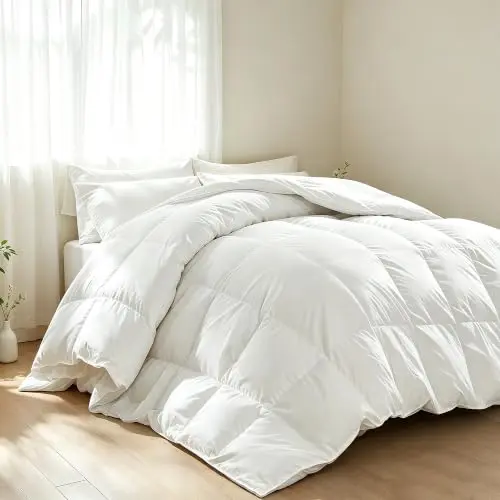
Hotel Luxury All-Season – Breathable Cotton Comfort
A king-size all-season comforter with a 100% cotton cover, sewn-through box construction, and eight corner loops. The hypoallergenic fill is OEKO-TEX certified, and the medium warmth is designed for year-round use.
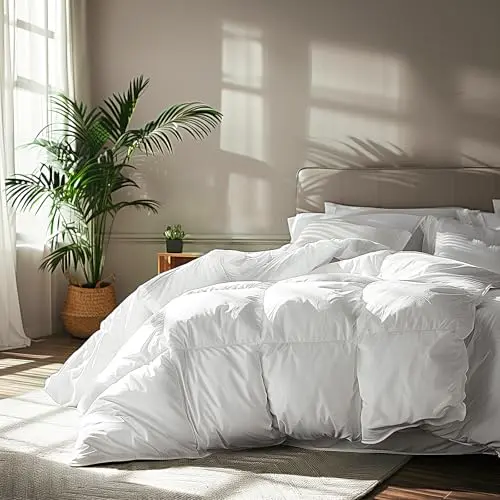
Goose Feather Down Fiber Extra Warmth – Budget Winter Warmth
A queen-size extra-warmth comforter with a 90/10 goose feather fiber and down fiber fill, processed with FreshLoft for hypoallergenic performance. It has a 100% cotton cover, sewn-through box construction, four corner loops, and OEKO-TEX certification.

Luxury Goose Feather Down Fiber – Soft Hotel-Style Comfort
A queen-size all-season comforter with a 3D hidden baffle-box shell, eight corner tabs, and a navy piped edge. The fill is RDS and OEKO-TEX certified, and the medium warmth is designed for year-round use.

Pinch Pleat All-Season – Elegant Baffle-Box Warmth
A king-size 106 by 90 inch comforter with a 65 oz fill weight, an 80/20 goose down fiber and waterfowl feather fiber blend, and a 1200 thread count cotton cover. It uses pinch-pleat baffle-box construction, corner loops and tabs, and carries RDS, Downpass, and OEKO-TEX certifications.
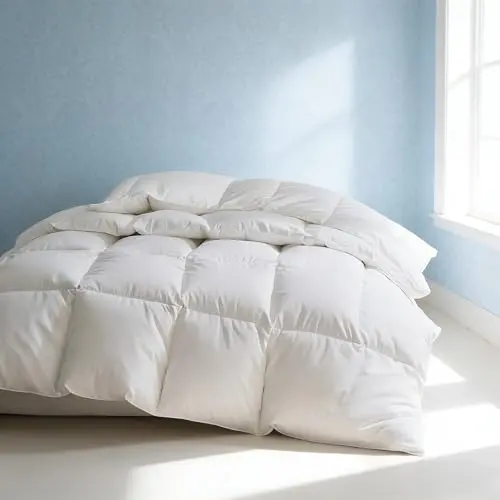
Hotel Collection Extra Warmth – Winter-Ready Cotton
A queen-size extra-warmth comforter with a 100% cotton cover, sewn-through box construction, and eight corner tabs. The hypoallergenic fill is OEKO-TEX certified, and the design is aimed at cold sleepers who still want a breathable cotton surface.

King/California King Goose Down Fiber – Year-Round Baffle Box
A king and California king comforter measuring 106 by 90 inches, with a 58 oz fill weight and an 80/20 goose down fiber and waterfowl feather fiber blend. The 1200 thread count cotton cover uses baffle-box construction, eight corner loops, rope piping, and RDS, Downpass, and OEKO-TEX certifications.
How We Evaluated These Goose Down Comforters
We didn’t run long-term wash trials or sleep-test every comforter through a full winter. What we did: cross-referenced 9 goose down comforters from 6 distinct brands across six decision axes – fill composition, fill weight and loft, shell fabric, construction, warmth rating, and care requirements. We triangulated published specifications, certification details, feature sets, and owner feedback where available against representative buyer profiles for this category. We also mapped each comforter to the sleepers it actually suits: hot sleepers, cold sleepers, duvet-cover users, and shoppers who want a finished look without a cover. Where the product details were thin, we kept the assessment shorter rather than filling gaps with guesswork.
The scoring framework weighted real-world fit and performance (70%) – how well each comforter delivers on warmth, loft, and construction for its stated use – against feature differentiation (30%) – unique shell materials, certification depth, care practicality, and size options. We audited the certification claims and weighed care labels heavily because dry-clean-only and hand-wash-only comforters demand more from owners. We have no commercial relationship with any of the brands featured; recommendations track fit and differentiation, not brand preference. If you want the most balanced year-round starting point, the Pacific Coast 3D Baffle Box All-Season is the top pick; if you sleep cold, the Globon Winter Goose Down is the stronger match.
How to Choose the Right Goose Down Comforter
1. Start With Fill: Goose Down, Down Fiber, and Feather Fiber
The label is the first thing to decode. Goose down clusters are the lofty, insulating part of the plumage, and they deliver the most warmth for the least weight. Down fiber is a processed material made from down and feather byproducts; it can feel soft and fluffy, but it usually has less loft per ounce than high-quality clusters. Feather fiber adds bulk and durability, though it feels less cloud-like. A true goose down comforter usually sits in a higher price tier, while blends can be warm and comfortable but behave differently over time. If maximum loft is the goal, prioritize a high down content; if you want structure and value, a blend can work.
2. Fill Power, Fill Weight, and Warmth Ratings
Fill power measures how much space a given amount of down occupies, so higher numbers generally mean more loft for the weight. Fill weight is the actual amount of fill inside the comforter, and it has a big say in warmth. A high fill power with a low fill weight can feel airy; a higher fill weight adds warmth and heft. Match the number to your sleep temperature rather than chasing the biggest spec. If you sleep cold and want a dedicated winter comforter, the Globon Winter Goose Down is the pick.
3. Construction Matters: Baffle Box vs Sewn-Through
Baffle-box construction gives the fill room to expand, which helps a comforter stay lofty and resist cold spots. Sewn-through box construction is simpler and common in budget and medium-warmth comforters; it keeps fill from shifting but can compress along the seams. Check the hardware, too. Corner loops and tabs matter if you use a duvet cover, and extra center loops help on larger king-size comforters. A well-built shell should also have a tight weave to reduce leakage.
4. Shell Fabric, Cooling, and Noise
100% cotton shells breathe well and feel natural against the skin, which matters if you sleep warm or dislike synthetic textures. Cotton-poly blends can add durability and lower the cost, but they may feel less breathable. Noise is another practical split: some shells rustle when you move, while tighter or softer fabrics stay quiet. If you want an all-cotton shell for year-round use, the Martha Stewart Hotel Luxury All-Season is the pick.
5. Care, Sizing, and Duvet Compatibility
Care instructions should be part of the decision, not an afterthought. Dry clean only comforters are lower-maintenance day to day but costly over time, while hand wash only models demand real effort. A machine washable comforter is the easiest to live with, provided the shell and fill can handle it. Measure your bed and check the finished dimensions, especially for king and California king beds. Corner loops and tabs keep a duvet cover from twisting, and a duvet cover itself adds a washable barrier that can extend the life of the comforter.
6. How Much Should You Spend on a Goose Down Comforter?
Entry-level comforters usually rely on feather-heavy blends, simpler sewn-through construction, and fewer attachment points. Mid-range options tend to add better cotton covers, certified fill, more loops, and more consistent loft. Premium comforters step up to higher fill power, true baffle-box construction, stronger warranties, and more detailed finishing. Do not pay for thread count alone; shell quality, fill composition, and construction matter more. A well-chosen mid-range comforter often delivers most of the sleep experience of a premium model without the top-tier price.
Frequently Asked Questions
1. Is goose down fiber the same as goose down?
Not exactly. Goose down clusters are the loose, three-dimensional puffballs that trap air and create loft. Down fiber is a processed material made from feather and down byproducts; it can be soft and warm, but it usually has less loft per ounce than high-quality clusters. A comforter labeled goose down fiber may also include feather fiber for bulk, so read the fill ratio before assuming you are getting cluster down.
2. What's the difference between the Pacific Coast 3D Baffle Box All-Season and the Globon Winter Goose Down?
The Pacific Coast is the more versatile year-round choice: medium warmth, a 3D baffle-box build, eight corner and center loops, and a 3-year warranty. The Globon is a dedicated winter comforter with 800 fill power and a machine-washable shell, so it delivers more loft and warmth but less flexibility in warm bedrooms. For most buyers, the Pacific Coast 3D Baffle Box All-Season is the easier starting point; choose the Globon if cold sleeping is your main problem.
3. How does the Hotel Grand Goose Feather Down Fiber compare with the Martha Stewart Hotel Luxury All-Season?
Both are all-season comforters with 100% cotton covers, but they differ in construction and size. The Hotel Grand uses ADFC and OEKO-TEX certified fill, a sewn-through box, and corner loops plus side tabs in a full/queen size. The Martha Stewart model uses eight corner loops, OEKO-TEX certified fill, and a king-size option. If budget is the priority, the Hotel Grand Goose Feather Down Fiber is the value pick; if you need a king and want a cotton shell, the Martha Stewart is the better fit.
4. Do I need a duvet cover with a goose down comforter?
Not always. A comforter with a finished cotton shell and decorative detailing can work on its own, while a plain white insert is usually designed to live under a cover. A cover adds a washable barrier, changes the look, and can extend the life of a dry-clean-only comforter. If you use one, look for corner loops and tabs to keep it from shifting.
5. Are these goose down comforters machine washable?
Most are not. Many models here are dry clean only, and at least one is hand wash only. The clear exception is the Globon Winter Goose Down, which lists machine washable care. Always follow the care label; if convenience matters, compare care requirements before you buy.
Final Verdict
For most shoppers, the Pacific Coast 3D Baffle Box All-Season is the right first stop. It balances medium warmth, a true baffle-box build, and useful corner tabs without pushing into the top price tier. If you sleep cold and want a dedicated winter comforter, the Globon Winter Goose Down is the premium route, with 800 fill power and a machine-washable shell. Budget-minded buyers should look at the Hotel Grand Goose Feather Down Fiber; it covers the all-season basics with certified fill and a quiet cotton cover. And if you want an all-cotton shell for year-round use, the Martha Stewart Hotel Luxury All-Season is the pick. Start with the Pacific Coast, then branch out only if your sleep temperature or care preferences clearly point elsewhere.
