
Best Goose Down Mattress Toppers – 2026 Reviews

A mattress that has lost its cushioning is a slow, quiet problem. You notice it in your shoulder at three in the morning long before you admit the bed itself needs help. A topper is the practical fix – and the goose down versions are a completely different animal from the poly-fill pads most people picture when they hear the word.
The phrase “goose down” does a lot of heavy lifting on product listings that the actual fill often doesn’t support. Some toppers are overwhelmingly feather with a token amount of down blended in; others are all cluster and no core, which feels like heaven on night one and then collapses into a divot under your hips by week three. The feather-to-down ratio is what decides whether you sink pleasantly or wake up stiff.
We looked across the market at fill composition, shell fabric, construction method, and care requirements – the four things that separate a topper worth keeping from one that flattens before spring. Below you’ll find the builds that hold their shape, plus an honest note on where a down-alternative fill still makes more sense than the real thing.
Best Goose Down Mattress Toppers – 2026 Reviews
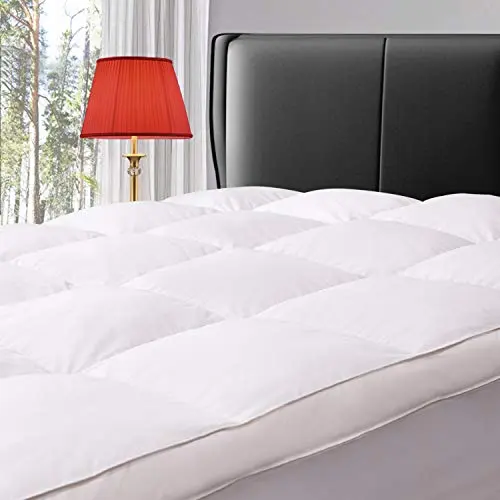
Goose Down & Feather Topper – Baffle-Box Loft with Deep Pockets
A two-layer topper that pairs a fusion down top layer with a dense feather core, wrapped in 400-thread-count Egyptian cotton. Baffle-box pockets keep the fill exactly where it’s sewn, and a deep pocket stretches over thick mattresses without popping loose.
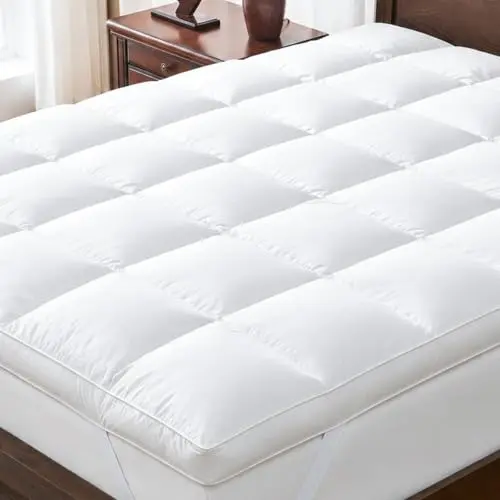
Dual Layer Goose Feather Down Topper – Washable Organic Cotton Cover
A three-inch dual-layer topper with a soft top layer over an 80/20 goose feather-and-down core, wrapped in 100% organic cotton with adjustable corner straps. One of very few genuine down builds the maker says you can machine wash.

1400 GSM Pillow Top Topper – Plush Down-Alternative Comfort
A quilted, box-stitched pillow top with gel-fiber down-alternative fill and a brushed microfiber shell. Machine washable end to end, with elastic corner straps that hold it flat on mattresses from 6 to 22 inches deep.
How We Evaluated These Goose Down Mattress Toppers
We didn’t run loft-recovery or fill-migration tests in a lab, and we didn’t sleep on each of these toppers for months on end. What we did: cross-referenced 3 topper models from 3 distinct brands across six decision axes – fill composition and feather-to-down ratio, shell fabric and thread count, baffle or quilting construction, loft and fill weight, care requirements, and mattress-depth compatibility. We triangulated published specifications, certification claims, and owner feedback where available, then mapped each model against the sleepers it actually suits. A topper can look generously lofted in a product photo and still flatten to a half-inch under a sleeper’s hips; construction is what separates the two.
The scoring framework weighted real-world fit (70%) – how well a topper delivers loft that survives a full night of movement – against feature differentiation (30%) – the specifics that make one option meaningfully different from the next, whether that’s washability or an auditable down supply chain. We have no commercial relationship with any brand featured here; recommendations track fit and differentiation, not brand preference. If you want the closest thing to a hotel feather bed, the ELEMUSE goose down topper is your match. If washability matters more to you than pedigree, the ROSE FEATHER dual-layer topper is the better call.
One honest limit: fill quality varies batch to batch in this category, and a claimed ratio is self-reported by the brand. We treated published third-party certifications as the strongest available signal on that front, and we say so rather than pretending otherwise.
How to Choose the Right Goose Down Mattress Toppers
1. What Actually Makes a Mattress Topper Goose Down
The label gets used loosely. True down is the loose cluster that sits under a goose’s feathers – light, compressible, and very good at trapping warmth without weight. Feathers are the stiffer quills, and they’re what gives a topper its structure. Almost no topper is pure down, because all-down compresses into a pancake under a sleeper’s hips within weeks.
So check the fill composition and the certifications behind it. A listing that says goose down but never states a ratio is usually feather-heavy with a marketing gloss. Look for Responsible Down Standard (RDS), DOWNPASS, or Oeko-Tex claims – those are auditable, unlike a product photo of a fluffy cloud. And if the fill is polyester clusters, it’s down alternative, not down, no matter what the brand name reads.
2. Feather-to-Down Ratio: Why a Goose Down Mattress Topper Can Still Feel Firm
The ratio drives almost everything about how a topper feels. A 70/30 feather-to-down build lands on the supportive end – good for back and stomach sleepers who don’t want to sink. Push toward 80/20 and you get more resilience and less compression over time, which is what most feather beds actually sell. A high-down build feels plusher on night one but develops body impressions faster.
Fill weight matters alongside the ratio. A heavier fill in a baffled shell reads firmer underhand than a lighter fill at the same loft. Neither is better – it’s a match question. If you want the topper to soften a firm mattress without swallowing you, lean feather-forward. If you want to sink, lean down-forward and accept more maintenance.
3. Baffle Box vs Quilted Construction in Goose Down Toppers
Construction decides whether the fill stays where it started. Baffle box construction sews fabric walls between chambers so the fill has room to loft to full height – that’s what you see in a proper feather bed, and it’s why those toppers keep their shape. Box quilting stitches the top and bottom layers together at intervals; it’s common on synthetic toppers because it prevents clumping, but it also caps how much loft the fill can reach.
Either way, look for equal-volume filling per chamber and double-needle stitching at the seams. Those two details are the difference between a topper that lasts several seasons and one that develops a bald patch under your shoulders. If fill migration is your worry, the ELEMUSE goose down topper uses a sewn-shut baffle-box core built for exactly that problem.
4. How Thick Should a Mattress Topper Be?
Two to three inches is the useful range. Under two inches and you’re mostly buying a padded sheet – it takes the edge off a hard surface but won’t change how your hips and shoulders load. Over three inches and you start to lose the support of the mattress underneath, which is how people end up with a topper that feels wonderful for a week and then aches.
Think about what you’re trying to fix. A two-inch pad works well on guest beds and firm mattresses. A three-inch feather bed genuinely changes the feel of the sleep surface, which is what side sleepers with shoulder pressure need. Then check the pocket depth: most decent toppers stretch to 18-22 inches, which covers pillow-top mattresses where a shallow topper would pop off nightly.
5. Care Realities: Washable vs Spot-Clean Mattress Toppers
This is where most buyers get surprised. Genuine down and feather toppers usually specify spot clean only or professional cleaning, because a natural cotton shell and natural fill don’t take kindly to a home washer. Synthetic builds and a few dual-layer designs are machine washable in cold water, which is a much easier life if you have pets, kids, or allergies.
Be honest about your household before you buy. If you’re already laundering bedding weekly, a spot-clean topper will irritate you. If you want the down feel and can live with a protective cover plus the occasional spot treatment, you get better loft and temperature behavior in return. The ROSE FEATHER dual-layer topper is one of the few feather-and-down builds the maker says you can actually wash, which is worth flagging.
6. What Goose Down Mattress Toppers Cost, Tier by Tier
Entry-level toppers are almost entirely synthetic. Gel-fiber and microfiber builds sit in the budget tier and give you softness, washability, and allergy friendliness – but not the resilience of natural fill. That’s the honest trade at the low end, and for a guest room it’s usually the right one.
Move into genuine feather-and-down and you’re in mid-range to premium territory. The jump buys a cotton shell, a stated fill ratio, auditable certifications, and baffle construction that survives years rather than months. Within that band, shell quality and care requirements differentiate far more than fill volume does. If value is the priority and you don’t need down, the D & G pillow top topper delivers the plushness at the entry tier.
7. Matching a Mattress Topper to Sleep Position and Mattress Depth
Side sleepers need cushioning at the shoulder and hip, so a loftier down-forward build earns its keep. Back and stomach sleepers usually do better with feather-forward fill that resists bottoming out, or a thinner pad that lets the mattress keep doing the support work. Hot sleepers should favor cotton shells and breathable fills over foam and dense quilting.
Then check the boring stuff: mattress depth, strap or pocket fit, and whether your fitted sheets still go on. A topper that slides or bunches will cancel out any fill advantage. Deep pockets rated to 21 or 22 inches cover most modern mattresses, and adjustable straps beat fixed elastic if your mattress runs thick.
Frequently Asked Questions
1. Are all goose down mattress toppers actually goose down?
No, and it’s the most common source of confusion in this category. Plenty of listings that read as down are filled with gel fiber or polyester clusters marketed as down alternative. That isn’t a scam – down alternative is genuinely better for allergy households and it’s machine washable – but it behaves differently. It won’t develop the same loft over the years, and it compresses differently under weight.
Even real down toppers are rarely all down. Most pair down with feather for structure. Read the fill ratio, not the product title, and look for a certification like RDS or DOWNPASS before you assume you’re getting the real thing.
2. What's the difference between the ELEMUSE goose down topper and the ROSE FEATHER dual-layer topper?
Both are genuine feather-and-down builds with dual-layer construction, so the split comes down to shell and care. The ELEMUSE goose down topper uses a 400-thread-count Egyptian cotton shell and publishes DOWNPASS, RDS, and Oeko-Tex certifications, with a baffle-box core sewn shut chamber by chamber. It is spot clean only.
The ROSE FEATHER dual-layer topper runs a 100% organic cotton shell over an 80/20 goose feather and down core with a stated fill weight, and it’s machine washable. If shell quality and documented sourcing matter most, ELEMUSE. If you need to launder it, ROSE FEATHER.
3. Is the D & G pillow top topper a real down topper?
No. Despite the brand name, the D & G pillow top topper is filled with gel-fiber down alternative and wrapped in brushed microfiber – there’s no goose down in it anywhere. That’s worth knowing before you weigh it against a feather bed.
What it does offer is full machine washability, no feather quills, and a box-quilted build that holds its shape. For allergy households, guest rooms, or anyone who wants a softer mattress without natural fill, that’s a legitimate set of tradeoffs rather than a downgrade.
4. Do goose down mattress toppers sleep hot?
They can sleep cooler than foam, yes. Down is breathable and moves moisture, and a cotton shell helps considerably. But warmth is a function of the whole build – a high-down topper with dense quilting traps more heat than a feather-forward one in a breathable cover.
If you run warm, prioritize cotton over microfiber, favor feather-forward ratios, and skip anything described as heat-retaining. If you overheat easily but still want the plush surface, a well-ventilated gel-fiber alternative is a reasonable compromise.
5. How long does a goose down mattress topper take to fully expand?
Plan on 24 to 48 hours. These ship vacuum-compressed, and the fill needs time to decompress and redistribute inside its chambers. Take it out of the packaging, spread it flat on the bed or a clean floor, and give it a good shake to break up clumping.
Don’t judge the loft on day one. A topper that looks flat out of the bag often reaches full height by the second day, and patting or shaking the chambers speeds that along. If it’s still flat after three days, that’s a return-worthy problem, not a patience problem.
Final Verdict
For most people, the ELEMUSE goose down topper is the answer. It’s the one build here that pairs a real down layer with a feather core that won’t collapse, and the baffle-box construction is what keeps it sleeping the same in month six as in week one. If you need to wash your bedding, go with the ROSE FEATHER dual-layer topper; it gives up a little shell refinement but gains machine washability, which is genuinely rare in this category. And if you’re working with a tighter budget or want a feather-free bed for allergy reasons, the D & G pillow top topper softens a hard mattress without a speck of down. Match the fill to your sleep position and the care routine to your household, and you’ll land on the right one.
