
Best Guitar Case Humidifiers – 2026 Reviews

The first cold snap is usually when acoustic players notice the fret ends feeling sharp and the top looking a little too flat. Central heat pulls moisture out of the air, and a guitar case is only as protective as the humidity you put inside it. A guitar case humidifier is a small, cheap safeguard against cracks, warping, and seasonal setup drift – but the options work in very different ways.
The biggest split is between two-way packs that hold a target range automatically and refillable sponges or clay units that you wet on a schedule. Placement matters too: some humidifiers hang in the soundhole, while others mount inside the case. And if you like seeing numbers, a built-in hygrometer changes the experience. We sorted through the market to help you match those tradeoffs to your routine, not to a single brand.
Best Guitar Case Humidifiers – 2026 Reviews
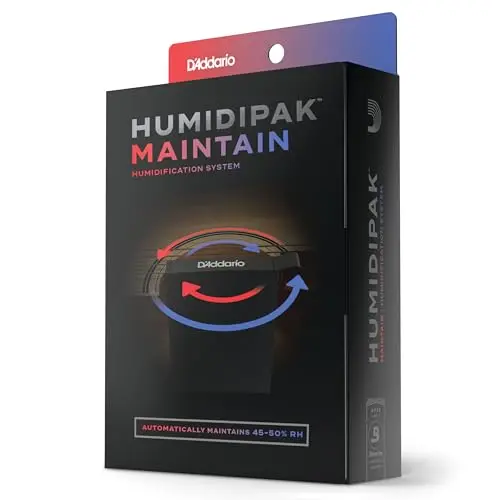
Humidipak Maintain – Two-Way Humidity Control Kit
A maintenance-free, two-way humidity control kit that keeps an acoustic guitar case in the 45%-50% relative humidity range. The pouches and packs do the regulating automatically, so you aren’t wetting sponges or guessing at refill timing.
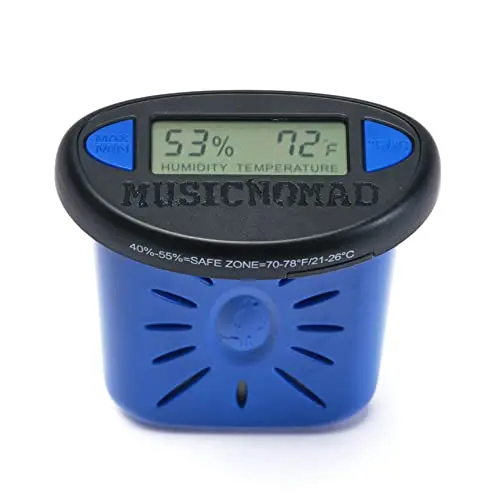
The Humitar ONE – Humidifier and Hygrometer in One
An all-in-one soundhole humidifier and hygrometer that monitors case conditions every 20 seconds and displays humidity and temperature. The reusable Humid-i-Bar sponge holds water for longer stretches, and the LCD tracks highs and lows.
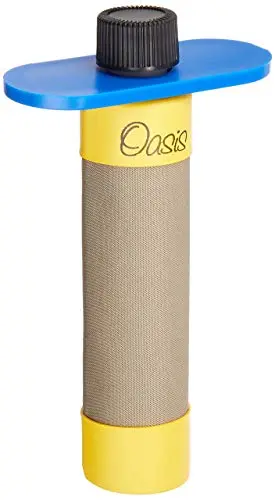
OH-5 Plus+ – High-Output Soundhole Humidifier
A soundhole humidifier built for drier climates, with a stabilizer bar and syringe for controlled distilled-water filling. The Plus+ material is designed to release more moisture than the original blue Oasis.
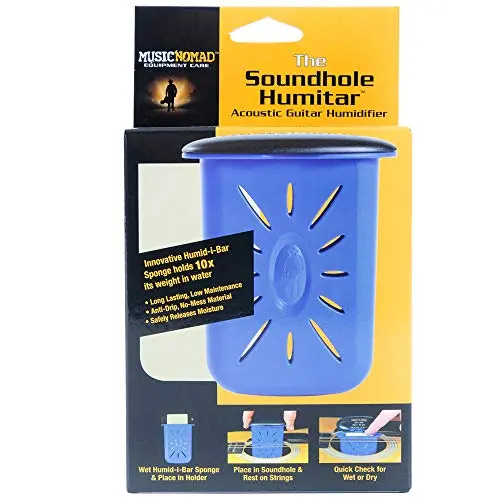
Humitar – Anti-Drip Soundhole Humidifier
A low-maintenance soundhole humidifier with an anti-drip Humid-i-Bar sponge and a quick-flip top for checking water level. It hangs safely from the strings and releases moisture evenly into the guitar body.
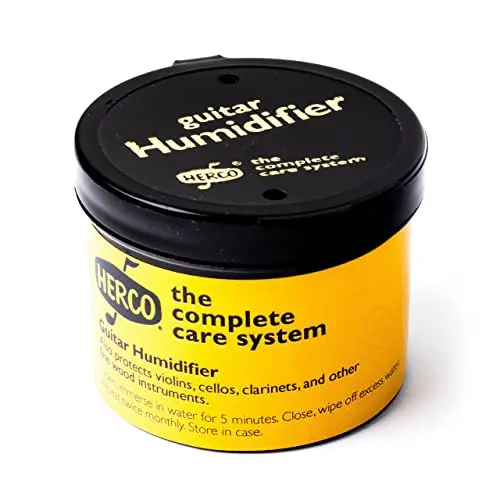
HE360 – Classic Clay In-Case Humidifier
A classic clay-filled plastic humidifier that lives in the case and releases moisture gradually. It’s a straightforward, budget-friendly option for acoustic guitars and other wooden instruments.
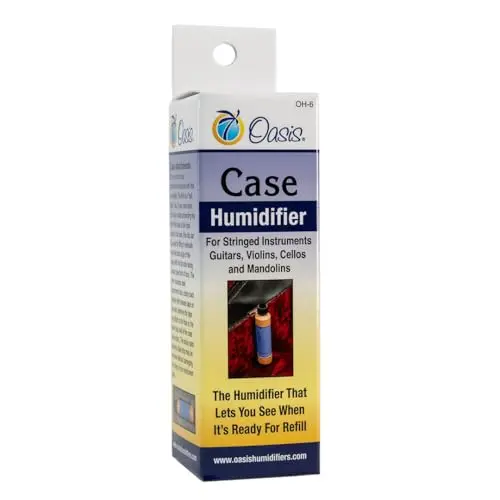
OH-6 – Magnetic Case Humidifier
A case-mounted humidifier with neodymium magnets that attach to a steel clip or adhesive strip. It includes a syringe for controlled filling and is designed to humidify the instrument’s case environment.
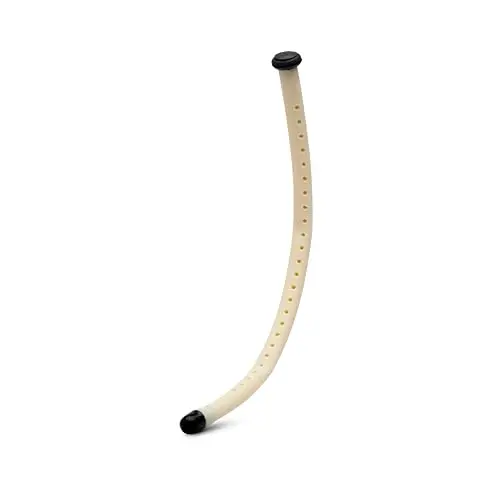
Guitar Humidifier – Clay-Style In-Case Moisture
A clay-style in-case humidifier with a water-absorbing stem and vent holes that release moisture slowly. It’s a traditional low-cost option for keeping acoustic instruments from drying out.
How We Evaluated These Guitar Case Humidifiers
We didn’t run instrument-grade humidity-chamber tests across a full heating season. What we did: cross-referenced 7 guitar case humidifier models from 5 distinct brands across six decision axes – humidity-control method, moisture output and refill interval, attachment and case fit, leak resistance, monitoring features, and long-term replacement needs. We triangulated published specifications, feature sets, aggregated owner feedback where available, and use-case fit for players in dry homes, travel situations, and varied instrument sizes. A humidifier that works in a tight gig bag may behave differently in a large dreadnought case, so we treated case fit as a first-order filter rather than a footnote.
Our scoring framework weighted real-world performance (70%) – how reliably each humidifier holds a stable range without creating mess – against feature differentiation (30%) – unique advantages like two-way packs, built-in hygrometers, or high-output sponges. We weighed refill cadence, capacity in real cases, attachment security, and the likelihood of dripping onto finish or labels. We also mapped each option to a buyer profile: the player who wants zero maintenance, the player in a very dry climate, and the player who prefers a traditional clay humidifier.
We have no commercial relationship with any brand here; recommendations track fit and differentiation, not brand preference. If you want set-and-forget humidity control, the D’Addario Humidipak Maintain is the strongest match; if you want to see the number inside the case, the MusicNomad Humitar ONE is the more informative pick.
How to Choose the Right Guitar Case Humidifier
1. Two-Way vs. Refillable Humidifiers: Which Control Style Fits Your Routine?
Two-way control is the set-and-forget approach: packs add or absorb moisture to hold a target range, usually around 45%-50% relative humidity. You replace the packs when they expire, but you don’t wet sponges or measure water. Refillable humidifiers use clay, sponge, or wick material that you soak or fill on a schedule. They cost less upfront and are easy to top off, but they depend on you remembering. If you travel or own several acoustics, the lower-maintenance style is usually worth the replacement packs. If you like a simple routine and want to spend less, a refillable unit is fine. If you’d rather not think about refills, the D’Addario Humidipak Maintain is the obvious pick.
2. What Makes a Guitar Case Humidifier Different From a Soundhole Humidifier?
A true case-side humidifier mounts inside the case or sits in a compartment and humidifies the whole enclosure. A soundhole humidifier hangs from the strings or sits in the body, targeting the guitar’s interior directly. Both can work well in a case, but they solve slightly different problems. Case-side units are handy when the instrument has a tight soundhole or when you want moisture spread across the case. Soundhole units put moisture closer to the wood that is most prone to cracking. Some players use one or the other; some use both in dry seasons.
3. Capacity, Refill Interval, and Dry-Climate Performance
Moisture output matters more than physical size. A small unit that releases water steadily can outperform a larger reservoir that dries out between checks. In very dry homes, look for a high-output design rather than a standard sponge. The Oasis Plus+ material, for example, is specifically built to release more moisture than the original blue version. Dry-climate performance also depends on case seal, room temperature, and how often you open the case. Check the refill interval against your routine; a unit that needs attention every few days is a poor match for a player who travels. If your home runs dry all winter, the Oasis OH-5 Plus+ is the stronger match.
4. Attachment, Fit, and Leak Risk Inside the Case
Attachment security is where cheap humidifiers often stumble. Magnets, clips, adhesive strips, and string hangs all work, but each has a failure mode. Magnets can slide if the case lining is thick; clips can mark trim; hanging units can swing into the finish. Leak risk is the other big one. A humidifier that drips can do more damage than dry air. Look for anti-drip materials, controlled fill ports, and a shape that stays upright. Also check case fit: a unit that is too large for a mandolin or travel case may not sit securely. Measure the space before you buy, especially with shallow cases.
5. Monitoring Humidity Without Guesswork
A built-in hygrometer turns humidification from a guess into a feedback loop. You can see whether the case is actually holding a safe range instead of assuming a wet sponge is doing the job. Some units also track humidity readings over time, including highs and lows, which helps you spot overnight swings. That data is useful in winter when indoor humidity can drop fast. It isn’t mandatory; plenty of players do fine with a simple refill schedule. But if you want confidence, a monitor is a practical upgrade. The MusicNomad Humitar ONE combines the humidifier and hygrometer in one unit.
6. Budget, Mid-Range, and Premium Humidifier Tiers
Budget-friendly clay options get the job done with minimal fuss, though they need regular soaking and offer no monitoring. Mid-range sponges add anti-drip materials, better attachment, and longer refill intervals. Premium two-way kits and hygrometer-equipped units cost more upfront or over time, but they reduce maintenance and guesswork. The right tier depends on how many instruments you own, how dry your home is, and whether you want to check a number or just trust the setup. For a spare guitar or a tight budget, the Herco HE360 is a sensible starting point.
Frequently Asked Questions
1. What's the difference between the D'Addario Humidipak Maintain and the MusicNomad Humitar ONE?
The D’Addario Humidipak Maintain is a two-way humidity control system: the packs add or absorb moisture to hold a target range, and you replace them when they expire. The MusicNomad Humitar ONE is a sponge humidifier with a built-in hygrometer, so you can watch humidity and temperature in the case. Choose the Humidipak if you want set-and-forget control and don’t mind replacement packs. Choose the Humitar ONE if you want to see the number and don’t mind re-wetting a sponge. For pure convenience, the D’Addario Humidipak Maintain is the easier pick.
2. Oasis OH-5 Plus+ vs. MusicNomad Humitar: which is better for a dry climate?
The Oasis OH-5 Plus+ is built for dry climates, with a high-output design that releases more moisture than the standard blue Oasis. The MusicNomad Humitar uses an anti-drip sponge and hangs from the strings, which is simpler and less messy for moderate conditions. If your indoor humidity routinely drops into the low 30s or below, the soundhole placement and extra output of the Oasis make it the better fit. In a milder room, the Humitar is easier to live with. For very dry winters, the Oasis OH-5 Plus+ is the one to beat.
3. Do guitar case humidifiers work in both hard cases and gig bags?
Yes, but fit changes the answer. In hard cases, clip-on and magnetic humidifiers have a stable surface to attach to, and the case seal helps hold moisture. In gig bags, you need a secure pouch or a hanger that won’t slide into the finish, and you should watch for condensation in tight spaces. Attachment security matters more than capacity in a soft bag. Also leave a little airflow so moisture can spread instead of pooling against the guitar.
4. How often should you refill a refillable guitar humidifier?
Refill timing depends on the unit, the season, and your indoor humidity. A clay or sponge humidifier may need attention every few days in a heated home, while a milder room can stretch to weekly. Check the refill cadence by touching the material; if it’s dry, it’s not doing much. Use distilled water to avoid mineral buildup, and make weekly checks part of your routine. Two-way packs are different: you replace them when they stiffen or expire, not when you feel like topping them off.
Final Verdict
For most players, the D’Addario Humidipak Maintain is the easiest recommendation: it takes the refill guesswork out of guitar case humidification and holds a steady range without dripping. If you want to watch the number instead of trusting a pack, the MusicNomad Humitar ONE adds a built-in hygrometer and a reusable sponge in one unit. Players in very dry climates should look at the Oasis OH-5 Plus+, which is built for higher moisture output. And if you want the simplest budget-friendly traditional option, the Herco HE360 gets the job done with clay-and-case basics. Match the control style to your routine, check case fit, and you’ll keep your guitar stable through heating season.
