
Best Guitar Humidifiers – 2026 Reviews

The first cold snap is when acoustic owners start paying attention. The heat kicks on, indoor humidity slides into the teens and twenties, and suddenly the action feels off, fret ends poke out, and a seam that was invisible all summer looks like a warning. Wood does that – it swells with moisture and shrinks without it.
A guitar humidifier is about the cheapest insurance you’ll ever buy for an instrument. The tricky part is that two very different approaches dominate the market. There are two-way pack systems that hold a case at a target range and largely run themselves, and there are soundhole humidifiers you fill and keep an eye on. Neither is universally better – it comes down to your climate, whether your guitar lives in its case, and how much tending you actually want to do.
This guide surveys the field across brands so you can match the tool to your routine rather than to a logo. We’ll walk through which approach fits your situation, the fit quirks that trip people up, and the ongoing upkeep each design demands.
Best Guitar Humidifiers – 2026 Reviews
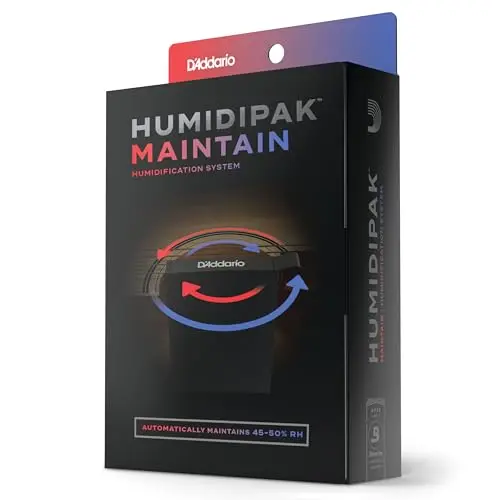
Humidipak Maintain Kit – Maintenance-Free Two-Way Control
A maintenance-free, two-way humidity control system that holds your instrument case in the ideal 45-50% relative humidity range. It releases moisture when the air is dry and absorbs it when it’s damp, so there’s no water to spill and no guesswork to manage.

49% RH Large Instrument Kit – Complete Two-Way Setup
A complete two-way humidity kit for large wooden instruments. It pairs 49% RH saltwater packs with fabric holders, so you can set up a case in minutes and let the packs absorb or release moisture to hold a steady target.
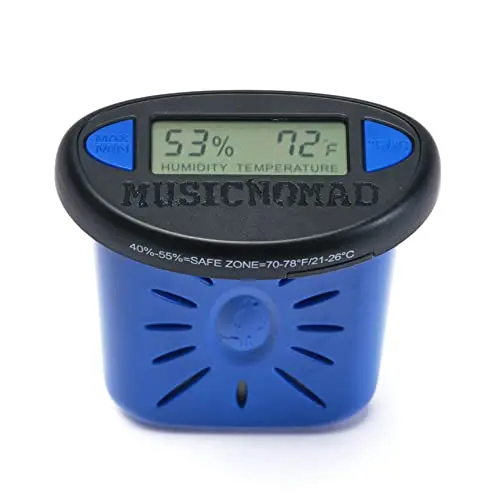
Humitar ONE MN311 – Humidifier and Hygrometer in One
A soundhole humidifier and hygrometer in one. It releases moisture from a reusable sponge while an onboard sensor reads temperature and humidity every 20 seconds, so you can see exactly what your instrument’s environment is doing.

OH-1 Soundhole Humidifier – The Classic Blue Standard
The classic blue soundhole humidifier. Its fabric body releases water vapor into the guitar body and visibly shrinks as it dries, so you always know when a refill is due. A syringe makes topping off precise.
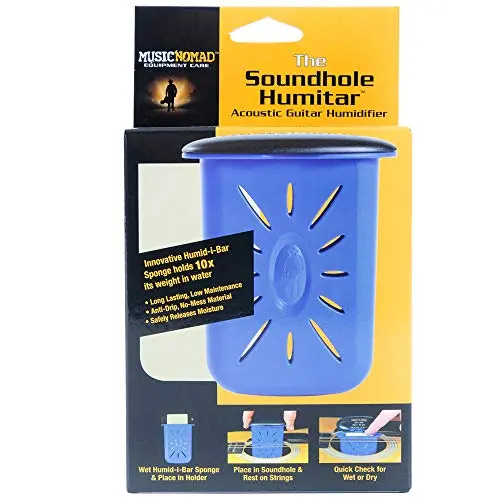
Humitar MN300 – Anti-Drip Soundhole Humidifier
A soundhole humidifier built around an anti-drip sponge bar that holds water without leaking. It hangs from your strings and releases moisture evenly into the body, with a quick-flip top so you can check if it’s wet or dry.
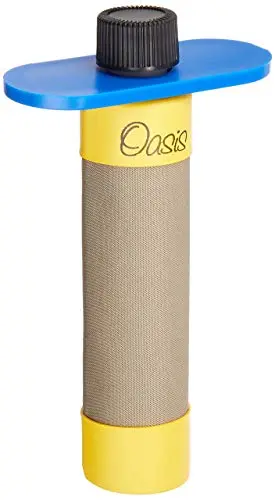
OH-5 Plus+ Humidifier – High-Output for Dry Climates
A higher-output version of the classic soundhole humidifier, meant for dry climates where a standard unit can’t keep up. It uses the same shrink-to-refill indicator but releases more moisture.

Humidifier Pro – Budget Soundhole Sponge
An affordable soundhole humidifier built around a hydrophilic sponge that holds a lot of water. It releases moisture slowly to protect against cracks and warping, with fewer refills than a basic sponge.

GHD-04 Humidifier – 2-in-1 Soundhole Cover and Gauge
A 2-in-1 soundhole cover and humidifier that fits most standard holes. It pairs an adjustable humidifier with an on-board humidity meter and cuts feedback and whistling at the same time.

49% RH Refill 4-Pack – Replacement Packs for Holders
A four-pack of replacement 49% RH two-way packs for Boveda fabric holders. They keep large wooden instruments in a stable humidity range and slot into existing holders so you can refresh your setup fast.
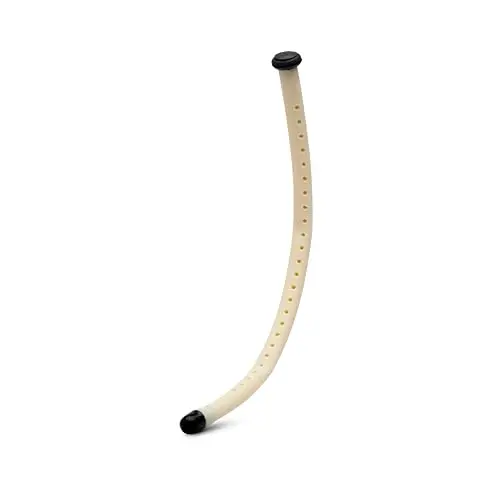
Guitar Humidifier – Resin Case Humidifier
A resin case humidifier that absorbs water and slowly releases it to keep a guitar’s case environment from drying out. It’s a simple, compact option for players who want basic protection.
How We Evaluated These Guitar Humidifiers
We didn’t run these humidifiers through a climate-controlled chamber or measure moisture loss across a full winter. What we did: cross-referenced 10 guitar humidifier models from 6 distinct brands across 5 decision axes – humidification approach, capacity and refill interval, monitoring and readout features, case or soundhole fit, and ongoing upkeep cost. We triangulated published specifications, mapped each unit against common storage and playing scenarios, and audited owner feedback where available to separate designs that hold up from ones that create mess or hassle. Because wood instruments respond to local conditions, we weighed how each design performs in a closed case versus an open room, since that gap explains most real-world differences.
The scoring framework weighted real-world performance (70%) – how reliably a unit protects an instrument through dry-season swings – against feature differentiation (30%) – the design choices that actually set one option apart from the next. We have no commercial relationship with any of the brands featured here; recommendations track fit and differentiation, not brand preference. If you’d rather set it and forget it, the D’Addario Humidipak is your match; if you want to watch the numbers, the MusicNomad Humitar ONE hands you a gauge.
How to Choose the Right Guitar Humidifier
1. Two-Way Packs vs. Soundhole Humidifiers
There are two real approaches, and picking one is the first decision. Two-way systems like the D’Addario Humidipak use packs that both absorb and release moisture to hold a case at a target range – no water, no monitoring, but you replace the packs periodically. Soundhole humidifiers sit in the guitar’s body and release moisture from a sponge or fabric body, and you refill them with water. They’re cheaper to run but demand more attention.
If you want to set it and forget it, go two-way. If you like to see and control the process, soundhole units give you more hands-on feedback.
2. How Much Humidity Does an Acoustic Guitar Actually Need?
Most luthiers and humidifier makers aim for roughly 45-55% relative humidity. Below that, wood shrinks, seams open, fret ends sprout, and action drifts. Above it, the top can swell and your action climbs. Two-way systems are built to lock onto a band in that range – often 49% or 45-50% – while sponge humidifiers release moisture when the case is dry and leave it to you to monitor.
The practical takeaway: a consistent target beats a big moisture dump. Steady is what protects the instrument.
3. Guitar Humidifier Fit: Case, Soundhole, and Instrument Size
Fit is where people get burned. Soundhole humidifiers only work if they seat in your hole size – some units target 4 to 4.3 inch openings, and a few run small for larger dreadnought or Taylor bodies. If fit is a concern, a proven classic like the Oasis OH-1 seats in most standard holes. Case humidifiers like the Martin unit are size-sensitive too and may need more than one for a big body.
Two-way packs sidestep fit entirely – they live loose in the case – which is one reason they’re so forgiving.
4. D'Addario Humidipak vs. Boveda Kits: Which Two-Way System?
Both are two-way, and both take water out of the equation. The D’Addario Humidipak targets 45-50% and comes as pouches plus packs, ready to drop in. The Boveda 49% kit adds fabric holders and locks onto 49%, with packs you swap roughly every three months. Choose D’Addario for the widely understood target range and simple pouch setup; choose Boveda if you want holders included and a clean, modular system.
Either way, the replacement cycle is the recurring cost to plan for.
5. Reading the Signs: When Your Guitar Humidifier Needs a Refill
Each design tells you something different. The Oasis units shrink as they dry, so the shape is your gauge. The MusicNomad Humitar has a quick-flip top for a fast wet-or-dry check. Step up to a unit with a built-in hygrometer, and you get actual numbers instead of inference. In dry winters, plan to check more often – refill intervals can shrink from a week to a few days.
6. Ongoing Cost and Upkeep of a Guitar Humidifier
Sponge and fabric humidifiers are cheap to run – you’re mostly spending distilled water and a little time. Two-way packs carry a recurring replacement cost every couple of months, which you trade for convenience. Neither is wrong; just budget for the model that fits your habits. Keep packs sealed until use so they last, and use distilled water in refillable units to avoid mineral buildup.
Frequently Asked Questions
1. What's the difference between the D'Addario Humidipak and the Boveda 49% kit?
Both are two-way humidity systems, so they add or remove moisture to hold a target. The D’Addario Humidipak aims for 45-50% and arrives as pouches with packs, ready to drop into a case. The Boveda 49% kit includes fabric holders and holds 49%, with packs you replace roughly every three months. Pick D’Addario for the familiar target range and no-holder setup; pick Boveda if you want the holders bundled and a modular refresh.
2. Oasis OH-1 vs. MusicNomad Humitar: which soundhole humidifier is right for you?
The Oasis OH-1 uses a fabric body that shrinks as it dries, so the unit itself tells you when to refill, and it ships with a syringe. The MusicNomad Humitar leans on an anti-drip sponge bar that holds a lot of water and a quick-flip top for fast checks. If you like a visible, tactile refill signal, go Oasis; if leak prevention is your priority, the Humitar wins.
3. Do you need a guitar humidifier if your guitar stays in its case?
Yes – a case slows humidity swings but doesn’t add moisture on its own. In a heated home, the air inside a case can still get dry enough to stress the wood. That’s exactly the scenario two-way packs are built for, since they work best in a closed environment. A soundhole humidifier also helps, but a sealed case is where the more hands-off systems shine.
4. Can you over-humidify an acoustic guitar?
Yes. Pushing humidity too high can swell the top, raise the action, and cause its own set of problems. Two-way systems self-limit, so they’re hard to overdo. Simple sponge humidifiers can overshoot if you refill constantly without checking, which is why a hygrometer or a built-in gauge is worth having. Aim for the middle of the recommended range, not the top.
5. How often should you refill or replace a guitar humidifier?
It depends on the design and the season. Sponge and fabric units often need a top-off every several days to a week in dry weather, and more often in very dry climates. Two-way packs usually last a few months before replacement. Watch whatever signal your unit gives – a shrinking body, a flip-top, or a digital readout – and act before the case gets dry.
Final Verdict
For most players, the D’Addario Humidipak is the answer – it holds your case in the ideal band without water, sponges, or guesswork. If you want a complete two-way setup with holders in the box, the Boveda 49% kit gets you there with a modular refresh routine. Prefer to read the numbers? The MusicNomad Humitar ONE pairs a sponge humidifier with a gauge so you always know where you stand. And if budget or a second guitar is the driver, the D’Addario Humidifier Pro delivers solid soundhole humidification for very little. Match the approach to your climate and your willingness to fiddle – that’s the real deciding factor.
