
Best Gun Safe Dehumidifiers Without Electricity – 2026 Reviews

A gun safe is supposed to be a dry box, but the inside can turn into a slow-motion corrosion chamber. Warm air leaks in, cools against steel, and leaves moisture sitting on bluing, optics, and ammo cans. If the safe sits in a garage, basement, or closet with no outlet nearby, a plug-in dehumidifier is not an option.
Once you rule out wall power, the category narrows to rechargeable desiccants and passive absorbers. The useful question is not just ‘which one absorbs moisture?” but ‘how much silica mass does your safe actually need, how often will you recharge it, and can you trust the indicator when it says the unit is spent?” Those three variables separate a helpful safe accessory from a shelf decoration.
We compared the no-electricity options across major brands with those practical questions in mind. Some are built for full-size rifle safes, some are better for pistol cases and ammo cans, and some are best treated as multi-pack coverage. The guide below is about matching the unit to your safe, not crowning one brand for everything.
Best Gun Safe Dehumidifiers Without Electricity – 2026 Reviews
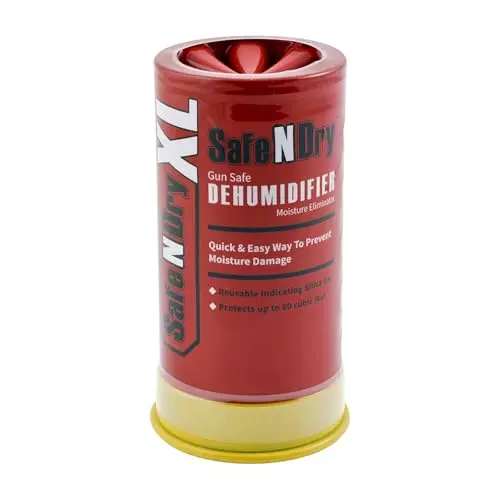
SNDXL – Large-Capacity Reusable Canister
A single 450-gram indicating silica canister built for larger enclosed spaces. The spill-proof plastic housing lets air move while keeping beads contained, and the beads recharge in the oven when they turn pink.
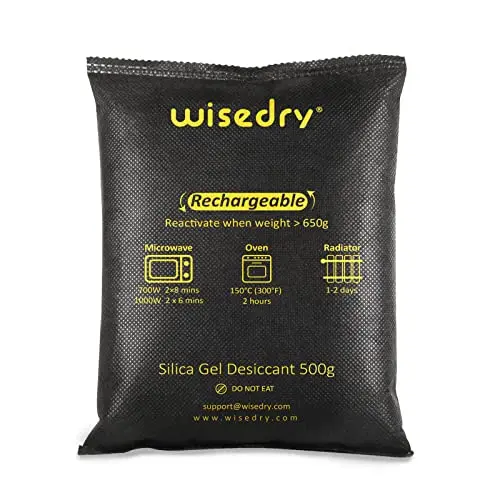
2 x 500g Silica Gel Bags – High-Capacity Rechargeable Pair
Two 500-gram silica gel bags that deliver a combined kilogram of moisture-absorbing capacity. The packets recharge in the microwave, making them a practical choice for a main safe plus a secondary storage box.
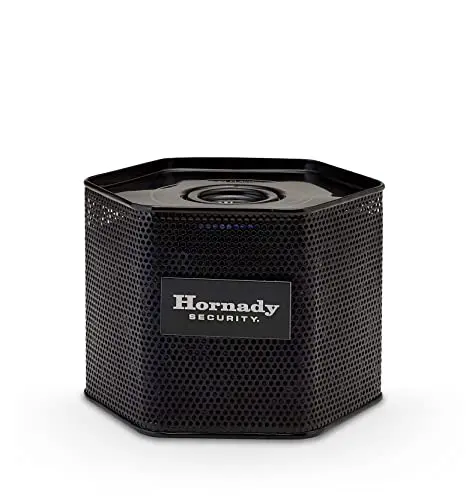
95902 Dehumidifier Canister – Gun-Safe Specific Protection
A gun-safe-specific desiccant canister rated for 50 cubic feet. The crystals change color as they load up, and the unit recharges in a 300°F oven with no batteries or cords.
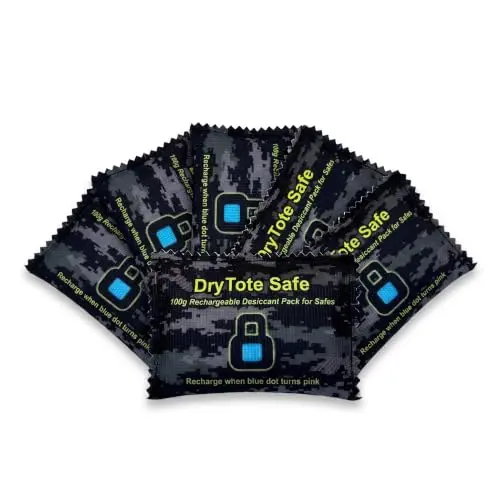
5 x 100g Desiccant Packs – Flexible Multi-Pack Coverage
A five-pack of 100-gram desiccant packets sized for safes, ammo cans, and cabinets. The built-in dot shifts from blue to pink when a pack needs warming, and the flat shape fits around stored firearms.
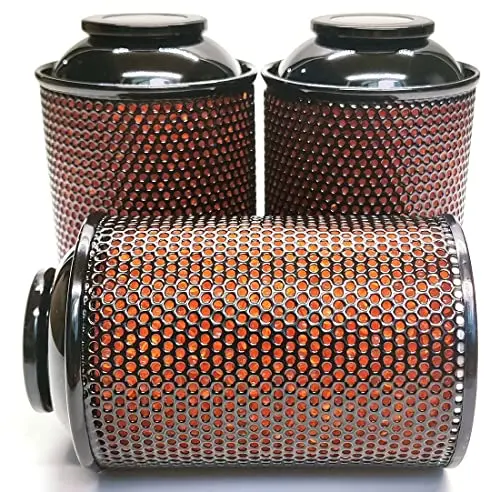
S200 200g Canisters (3-Pack) – Mid-Size Safe Coverage
Three 200-gram silica canisters rated for about 15 cubic feet each. The cobalt-free orange gel indicates moisture load and recharges in a 300°F oven, making the set a good match for a mid-size safe and an ammo box.
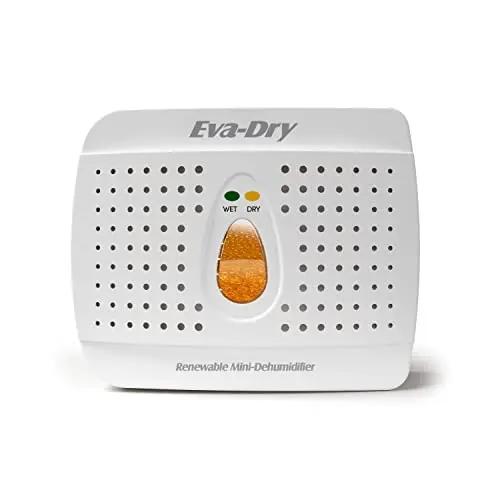
E-333 Wireless Mini – Compact Rechargeable Absorber
A compact cordless dehumidifier that hangs or sits in small enclosed spaces. The rechargeable silica bead core works for roughly 20 to 30 days per cycle, and the unit is designed for spill-free, non-toxic use.
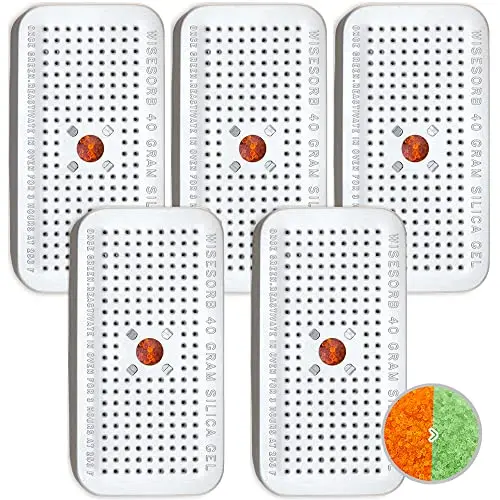
40g Silica Gel Canisters (5-Pack) – Small-Space Coverage
Five 40-gram aluminum canisters with a transparent window and orange-to-green indicating beads. They are sized for tight storage spots like pistol safes, ammo cans, and drawers, and recharge in a low-temperature oven.
How We Evaluated These Gun Safe Dehumidifiers Without Electricity
We didn’t run a humidity-chamber test or monitor safes through a full seasonal cycle. What we did: cross-referenced seven gun-safe dehumidifiers from seven brands across six decision axes – moisture capacity, rated coverage, recharge method and time, indicator clarity, form factor, and reusability. We also separated rigid canisters from flexible packs, since that choice changes where each unit can fit. We triangulated published specifications, feature sets, and owner feedback where available, then mapped each option to common safe sizes and storage habits.
The scoring framework weighted real-world fit for a no-electricity gun safe (70%) against feature differentiation (30%). We have no commercial relationship with the brands featured; recommendations track fit and differentiation, not brand preference. If you have a full-size safe and want one high-capacity canister, the SafeNDry XL is the direct route. If you want to split coverage between a safe and ammo cans, the wisedry 2 x 500g bags make more sense.
We audited the recharge claims and weighed how each shape would sit around rifles, shelves, and door seals. A safe’s door seal, room humidity, and fill level will always swing real-world recharge intervals, so treat coverage ratings as a starting point rather than a promise. We did not physically test these units inside a monitored safe, which is why the picks lean on published capacity, clear recharge routines, and consistent feedback patterns rather than lab-style claims.
How to Choose the Right Gun Safe Dehumidifier Without Electricity
1. What Matters Most in a Gun Safe Dehumidifier Without Electricity
A no-electricity gun safe dehumidifier has one job: pull moisture from a sealed box without adding cords, batteries, or heat. The first spec to check is moisture capacity, because a small bead load in a large rifle safe will saturate quickly and spend more time waiting for a recharge than working. The second is rated coverage, usually expressed in cubic feet. Treat that number as a guide, not a guarantee, especially if the safe lives in a humid garage.
The third is the recharge routine. Oven and microwave methods each have trade-offs, and the best choice is the one you will actually keep up with. For a standard rifle safe, the Hornady 95902 is sized in that middle range and uses a simple oven recharge. Also consider form factor: a rigid canister is tidy, while flexible packs can be split between a safe and an ammo can.
2. Silica Gel vs. Calcium Chloride in a Gun Safe
Silica gel is the safer default for a gun safe. It absorbs moisture and releases it when heated, so the same unit can be reused for years. Calcium chloride products are designed to collect water in a liquid reservoir. That works in a basement or closet, but the spill risk near firearms and optics makes most bucket-style absorbers a poor fit for a tight, sealed safe.
There is also a space issue. A calcium chloride cup needs a stable floor spot and enough clearance to avoid tipping. A silica canister or pack can sit on a shelf, hang near the door, or slide into a gap. For a gun safe, the simpler and drier the unit, the better.
3. How to Match Coverage to Your Safe Size
Coverage ratings are usually given in cubic feet, but safe marketing often lists exterior dimensions. Measure the interior volume instead, then subtract space taken up by rifles, shelves, and storage boxes. A safe that is packed tight has less free air to dry, which can help, but it also blocks airflow around the dehumidifier.
The door seal matters just as much as the rating. A tight seal keeps humid room air out; a worn gasket lets moisture back in faster than any desiccant can remove it. If your safe sits in a damp room, choose more capacity than the label suggests. In a dry, climate-controlled room, a smaller unit can keep up.
4. Recharge Method and Indicator Reliability
Oven recharge is common and predictable, but it takes hours and ties up the oven at low heat. Microwave recharge is faster, though it requires closer attention and a pack that is designed for it. Whichever method you choose, set a reminder on your phone; the best indicator is still a routine check.
Color-change beads are helpful, but they are not a precision gauge. A color-change indicator can shift early or lag behind actual saturation. If the stakes are high, weigh the pack before and after use, or recharge on a conservative schedule. For a hanging small-safe option, the Eva-Dry E-333 uses a compact bead load and a simple hang-and-go format.
5. Placement Tips for No-Power Dehumidifiers
Moisture does not need a straight line to find your guns, but airflow helps the desiccant work. Place the unit where air can move around it, not buried under a case or pinned against a wall. The top of the safe is often a good spot because humid air rises, but avoid blocking the door or the shelf above it.
In a large safe, two smaller units can outperform one large unit because they cover more corners. Keep the dehumidifier away from direct contact with metal surfaces if condensation is a concern, and check the door gasket every few months. A dry safe is mostly a sealed safe.
6. Budget, Mid-Range, and Premium Expectations
Entry-level no-power dehumidifiers usually focus on small spaces: pistol safes, ammo cans, or a single shelf. They can work well, but the bead load is modest and recharge intervals are shorter. Mid-range options add more silica, better housings, and more informative indicators.
Premium picks are not about luxury materials; they are about capacity, coverage, and convenience. A larger canister or multi-pack can cover a full-size safe with fewer recharge cycles. Spend more only if the extra capacity solves a real problem in your safe.
Frequently Asked Questions
1. Are no-electricity gun safe dehumidifiers as effective as plug-in models?
They work differently. A plug-in unit actively cycles air and condenses moisture; a passive desiccant relies on air contact, silica mass, and a tight door seal. In a sealed safe, rechargeable silica can hold humidity down well, but it will not match the continuous removal of an electric unit in a leaky room. The no-power trade-off is periodic recharging, not zero maintenance.
2. How do the SafeNDry XL and wisedry 2 x 500g bags compare?
SafeNDry is a single 450-gram canister rated for 60 cubic feet, with a spill-proof housing and an oven recharge. The SafeNDry XL suits a full-size safe where you want one central unit. Wisedry gives you two 500-gram bags for a combined kilogram of silica, plus a fast microwave recharge. If you want to split coverage between a safe and ammo cans, wisedry is more flexible; if you want one tidy canister, SafeNDry is simpler.
3. What's the difference between the Hornady 95902 canister and the Eva-Dry E-333?
The Hornady 95902 is a gun-safe-specific canister rated for 50 cubic feet and recharged in an oven. It is the more traditional safe accessory. The Eva-Dry E-333 is a small hanging unit with a much smaller bead load; it is better for tight spaces, starter safes, or secondary cabinets. Choose Hornady for centralized coverage in a standard rifle safe, and Eva-Dry for placement flexibility where space is scarce.
4. How often should you recharge a gun safe dehumidifier without electricity?
There is no fixed calendar. Recharge when the indicator changes, when the pack reaches its recharge weight, or when the unit has been working through a humid stretch. A tight safe in a dry room may go weeks; a garage safe in summer may need attention much sooner. Treat the first month as a baseline period and check more often until you learn the pattern. A door seal that leaks will shorten every recharge interval.
5. Do calcium chloride moisture absorbers belong in a gun safe?
Usually not. Calcium chloride buckets are designed to collect water in a liquid reservoir, which introduces spill risk near firearms and optics. They also take up more floor space than a silica canister and can be overkill for a small sealed box. Use them for closets, basements, or laundry rooms; for a gun safe, stick with rechargeable silica and a spill-proof housing.
Final Verdict
For most gun safe owners, the SafeNDry XL is the cleanest answer: a single 450-gram canister with real coverage, a spill-proof body, and a recharge routine that does not depend on wall power. It is the one we would hand to someone with a standard rifle safe and no nearby outlet. If you want more total silica and faster turnarounds, the wisedry 2 x 500g bags are the value play, especially when you want to cover a safe and an ammo can at the same time. And if you prefer a familiar gun-branded canister with straightforward oven recharging, the Hornady 95902 remains a sensible fit for a standard safe. Match the unit to your safe’s volume and your willingness to recharge, and any of these will do the job without a cord.
