
Best Hair Dryers For Wavy Hair – 2026 Reviews

Wavy hair has a reputation problem: it dries into a soft, easy pattern on the days you leave it alone, then turns into a frizzy triangle the moment a dryer gets near it. That’s less a technique failure than an airflow problem. Waves exist because loosely clumped strands dry together, and a blast of hot, fast air scatters those clumps before they’ve had a chance to set.
So the dryers that work best here share a few traits: a diffuser that spreads air out, heat that stays moderate rather than maxed, and enough control to finish a style on cool. The real differences between models show up in bowl design, how low the airflow actually goes, and whether the thing is comfortable to hold over your head for ten minutes – which is roughly how long a proper diffuse takes.
We cross-shopped the category across brands to find options that suit different wavy-hair routines, from full diffusing sessions to fast, smooth blowouts. Below you’ll find what each dryer actually does well, where it falls short, and who it’s genuinely built for.
Best Hair Dryers for Wavy Hair – 2026 Reviews
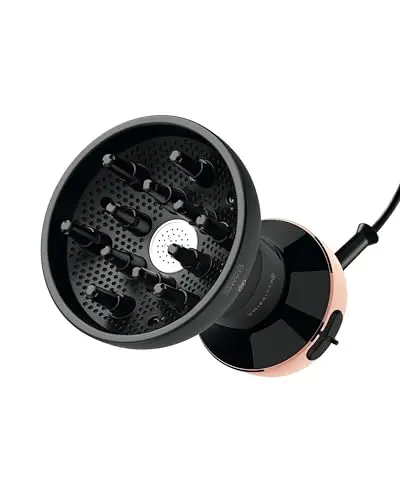
Diffon Ceramic Diffuser – Built-In Bowl for Wave Definition
The Diffon puts the diffuser bowl directly on the dryer, so styling waves doesn’t mean clipping an attachment on and off. Ceramic and argan oil sit in the air path, the body is compact enough to hold bowl-up for a full head, and the handle is shaped for that grip. It’s engineered for Type 2, 3, and 4 hair specifically.
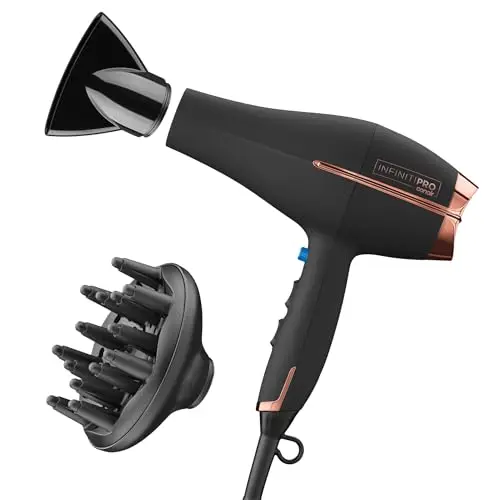
InfinitiPRO 1875W – Diffuser and Concentrator All-Rounder
A 1875-watt AC motor paired with ionic technology and a titanium ceramic coating, plus both a diffuser for waves and a concentrator for smooth, directed airflow. Three heat settings, two speeds, and a true cold shot give you enough control to diffuse low or finish a blowout cool. The lint filter pops out for cleaning, which helps the motor last.
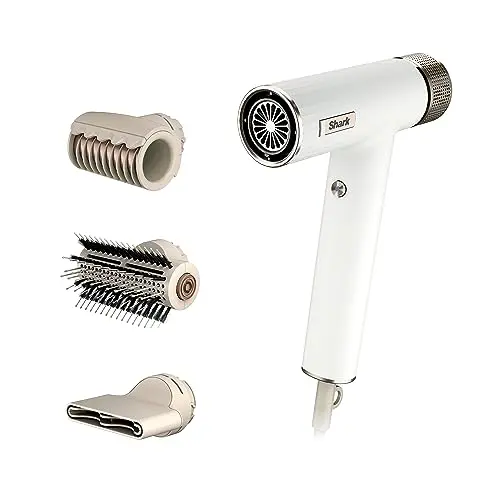
SpeedStyle HD331 – Fast, Glossy Blowouts for Wavy Hair
A high-speed digital dryer that recognizes each attached styler and sets heat and airflow for it. Temperature is regulated constantly to stay below 230F, and the bundle ships with a QuickSmooth brush, a turbo concentrator, and the RapidGloss finisher for flyaway-smoothing shine. At 1.69 pounds it’s light enough for long sessions.
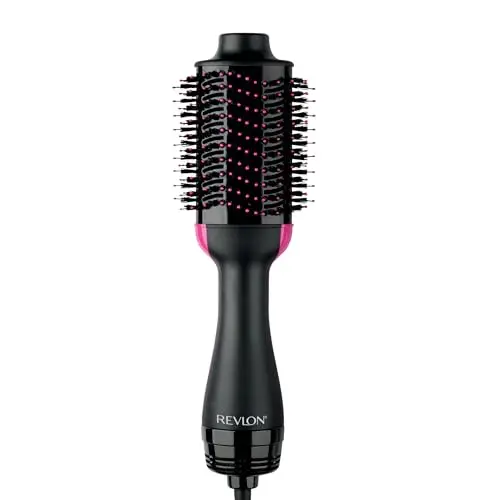
One-Step Volumizer 2.8-Inch – Volume-First Blowout Brush
A dryer and round brush in one, built around a 2.8-inch oval barrel with nylon pins and tufted bristles that grip hair under tension. Three heat settings plus a cool option let you dry damp hair and finish with lift at the roots. The larger barrel is aimed at mid-length to long hair and a classic, high-volume blowout.
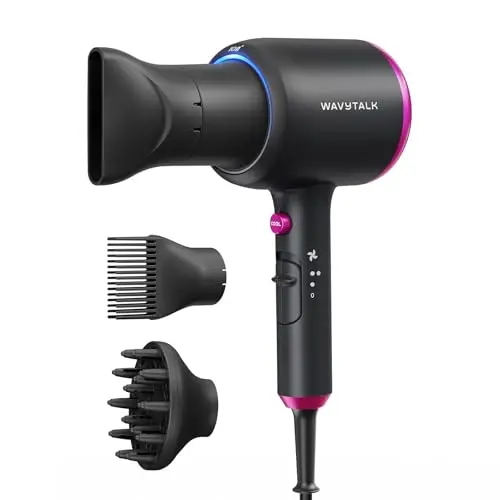
Blown Away Ionic – Three Attachments, Lightweight Build
An 1875-watt dryer with a concentrator, a diffuser, and a comb attachment in the box, so it can define waves, smooth thick hair, or aim airflow precisely. Ionic output targets static and frizz, three temperatures and two speeds cover most routines, and the body is light enough for one-handed diffusing.
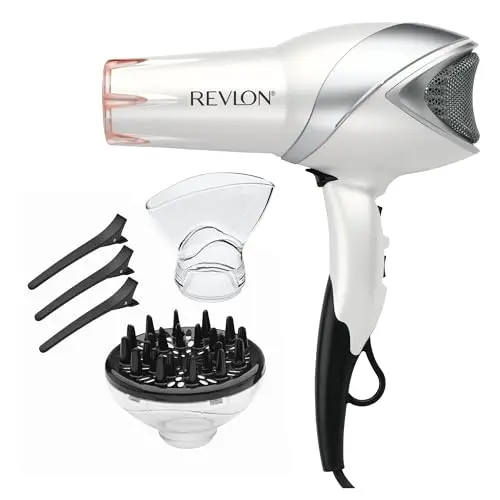
Infrared Ionic 1875W – Diffuser Kit for Frizz-Prone Waves
Infrared heat is the headline, paired with tourmaline ionic and ceramic technology to cut flyaways while drying. The 1875-watt motor moves a decent volume of air, and the kit includes a diffuser, a concentrator, and styling clips. Three heat settings, two speeds, and a cool shot round it out.
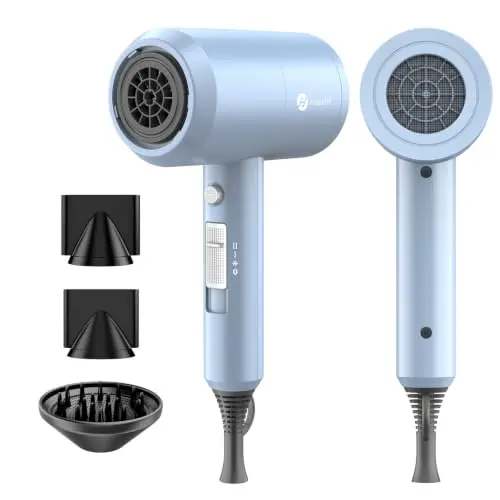
Professional Ionic 1800W – Compact Travel-Friendly Dryer
A compact 1800-watt dryer with a high-rpm motor, a diffuser, and two concentrator nozzles. Constant-temperature drying keeps heat even rather than spiking, and the small body is easy to pack. Three heat settings and a cool shot cover both diffusing and directed styling.
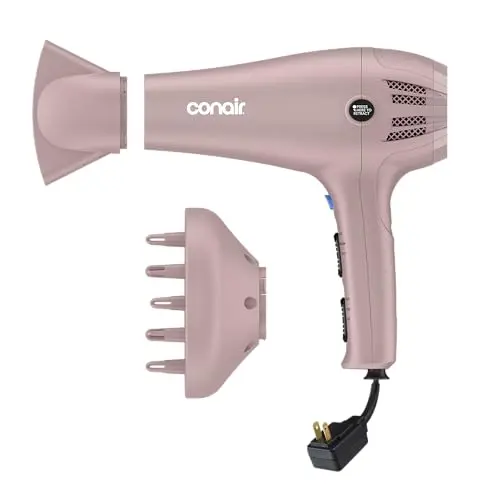
209L Retractable Cord – Compact Diffuser Dryer
A straightforward 1875-watt dryer with ionic and tourmaline ceramic technology, three heat settings, two speeds, and a cool shot. The selling point is the retractable cord, which winds into the handle at the push of a button. A diffuser and concentrator are both included.
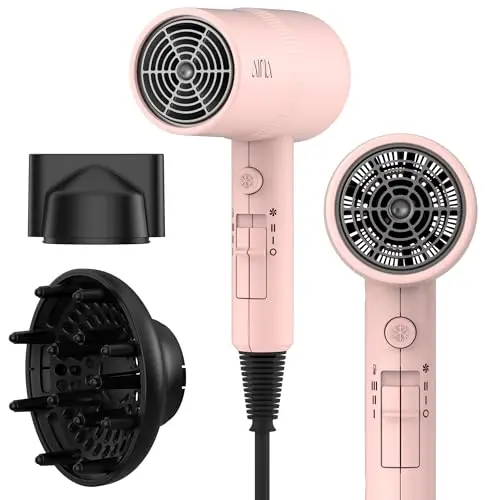
Diffuser Blow Dryer 1600W – Gentle Low-Airflow Option
A small, inexpensive 1600-watt dryer with ceramic coating and tourmaline technology, plus a concentrator and a volumizing finger diffuser. Heat and speed are controlled separately, and a four-layer intake filter keeps hair from being drawn into the body.
How We Evaluated These Hair Dryers for Wavy Hair
We didn’t run controlled airflow-velocity or heat-output measurements, and we didn’t test these dryers on a full head of wavy hair across multiple wash days. What we did: cross-referenced 9 hair dryer models from 7 distinct brands across 6 decision axes – diffuser design and bowl depth, heat and airflow control range, frizz-fighting tech such as ionic and ceramic coatings, weight and handle balance during a long diffusing session, attachment sets and how securely they seat, and how each dryer’s airflow profile treats a wave pattern rather than flattening it. We triangulated published specifications, aggregated owner feedback where available, and mapped stated use cases against how Type 2 wavy hair actually behaves: uneven porosity, frizz at the crown, and a pattern that collapses under high, direct heat. Where the spec sheet and the feedback diverged – heat output especially – we weighted the physical design of the dryer more heavily.
The scoring framework weighted real-world fit (70%) – whether a dryer defines and protects waves in daily use – against feature differentiation (30%) – bowl design, attachment breadth, and control granularity that separate one option from the next. We have no commercial relationship with any of the brands featured; recommendations track fit and differentiation, not brand preference. If you want the tool designed around waves from the ground up, the Diffon is your match; if you need one dryer that handles both diffusing and smooth blowouts, the InfinitiPRO covers both.
How to Choose the Right Hair Dryers for Wavy Hair
1. Why Wavy Hair Needs a Gentler Drying Approach
Wavy hair sits at Type 2 on the curl chart, and its defining trait is fragility of pattern. The waves only exist because strands clump together as they dry; break those clumps apart with fast air or rough handling and you get mechanical frizz instead. This is why a dryer that works beautifully on straight hair can be a disaster on waves.
The practical translation is low airflow and moderate heat. You want to move water off the hair without blasting the clumps apart, and you want it to dry slowly enough that the pattern sets before the surface dries out. Starting with hair that’s damp rather than dripping makes a bigger difference than any single feature on the box.
2. Diffuser vs. Concentrator: What Wavy Hair Actually Needs
A diffuser spreads airflow across a wide bowl with prongs or fingers that hold hair away from the vent. That’s the tool that defines waves: you cup sections, hold, and let the air work through the clump. Bowl depth matters more than most shoppers realize – a shallow bowl gives you less to cup with, and a deeper one handles longer, denser waves.
A concentrator does the opposite, aiming a narrow stream for smooth blowouts with tension. If you want both defined waves and the occasional polished blowout, look for a dryer that ships with both. The Diffon takes the other route entirely, building the bowl into the body so there’s nothing to attach at all.
3. Heat Control, Ionic Tech, and Frizz on Wavy Hair
Ionic technology, tourmaline, and ceramic coatings show up on nearly every spec sheet in this category, and they broadly work the same way: they reduce static so flyaways lie flatter. They’re supporting players, not the main event.
The main event is usable heat control. Three heat settings with a genuinely cool final option gives you room to diffuse, then seal the cuticle. Some dryers go further with continuous temperature regulation, capping how hot the air can get no matter which setting you’re on – the kind of thing that matters if your waves already run dry at the ends.
4. Hair Dryers for Wavy Hair: Weight, Handle Balance, and Attachment Fit
Diffusing isn’t a two-minute job. You’re holding a dryer above and around your head with one hand while the other cups hair, often for a good ten minutes. Weight and balance stop being spec-sheet trivia and become the reason you skip styling altogether.
Look at the handle as well as the number on the box. A lightweight body like the Blown Away Ionic helps, but a handle that’s comfortable in a bowl-up grip matters just as much. Attachment fit is the other quiet failure point: a diffuser that slips loose mid-section is worse than no diffuser at all.
5. How Much to Spend on a Hair Dryer for Wavy Hair
Entry-level dryers now regularly ship with a diffuser and three heat settings, so the floor for a workable wavy-hair dryer is lower than it used to be. The compromise at that end is usually motor longevity and airflow consistency – the Infrared Ionic is a good example of the trade: a full attachment kit and solid frizz control, with build quality as the question mark.
Mid-range money buys a stronger AC motor, better heat stability, and more usable control. Premium money goes toward outright speed, tighter heat regulation, and specialized styling tools. None of it matters if the tool doesn’t suit your routine – a premium dryer built for smooth blowouts won’t define waves no matter what you spend.
6. Reading the Spec Sheet: Wattage, Airflow Settings, and What They Leave Out
Wattage is a rough proxy for power, not a promise of faster drying. A 1875-watt dryer with a well-designed air path can outperform a higher-rated one with a sloppy nozzle, and AC motors generally hold their output better over time than DC motors at the same rating.
What spec sheets rarely tell you: how low the airflow actually goes, how secure the attachments are, and how the dryer feels after five minutes overhead. Those are the details that decide whether a dryer suits wavy hair, and they’re the ones worth digging into in owner feedback before you commit.
Frequently Asked Questions
1. Can I use a regular hair dryer on wavy hair?
Yes, with adjustments. Drop to the lowest heat and lowest airflow setting, keep the nozzle moving rather than parked on one spot, and hold the dryer further from your head than you would on straight hair. If your dryer has a diffuser attachment, use it – even a basic one changes the airflow from a jet into a spread.
Two habits matter more than the tool: don’t brush while drying, since that destroys the clumps that make waves, and finish with a cool shot to set the pattern. Squeeze water out with a towel first so you’re not spending ten minutes drying dripping hair.
2. What's the difference between the Bellissima Diffon and the Conair InfinitiPRO?
They solve the same problem from opposite directions. The Diffon is a dedicated diffusing tool – the bowl is built into the body, there’s no attachment to swap, and the two combined heat and airflow settings are deliberately gentle. It’s for people whose main goal is defined waves.
The InfinitiPRO is a full dryer with swappable attachments: a diffuser for waves, a concentrator for smooth blowouts, more airflow, and a separate cool shot. It suits mixed routines better, but you’re handling an attachment every time you switch. Diffuse daily and the dedicated tool is easier; alternate between waves and straight styles and the Conair does more.
3. Is the Shark SpeedStyle actually better for wavy hair than a budget dryer?
In some ways, clearly yes. Its heat regulation is a real advantage – the air stays below a hard ceiling, the kind of protection wavy hair benefits from over years of drying. It’s also faster and lighter than most budget options.
But better depends on what you’re chasing. The SpeedStyle HD331 is engineered for smooth, glossy blowouts, and its tool set has no diffuser, so it smooths wave pattern rather than defining it. If you want a defined, diffused wave, a mid-range dryer with a proper bowl will serve you better and cost significantly less.
4. How do wavy-hair dryers handle fine waves versus thick waves?
Fine waves need low heat and light airflow and will dry quickly, which is where a dryer with a genuinely low setting earns its keep. Weight matters more here too, since fine hair is easy to over-dry during a long session.
Thick, dense waves need more airflow and a deeper diffuser bowl that can hold a full clump. Expect a longer diffuse regardless, and don’t be surprised if a compact dryer with modest airflow forces you into two sessions.
5. Do I need a cool shot button for wavy hair?
It’s one of the most useful features on the list. A cool shot closes the cuticle after drying, which is what turns a soft, undefined wave into something with actual shape and shine. It also stops the pattern collapsing under residual heat.
Look for a true cold shot rather than a setting that’s merely warm-ish. Diffuse on low heat and finish cool, and you’ll notice the difference in frizz more than you’d expect.
Final Verdict
For most wavy-haired shoppers, the Diffon is the answer – it’s the one dryer here built around wave definition rather than adapted to it, and the built-in bowl removes the whole attachment ritual. If you want a single tool that also handles smooth blowouts, the InfinitiPRO is the more flexible buy, with a diffuser and concentrator in the box and a genuine cold shot. Watching the budget? The Infrared Ionic covers the basics – diffuser, ceramic, three heat settings – for far less. And if speed and shine matter more than wave definition, the SpeedStyle HD331 is the premium route, provided you’re chasing a glossy blowout rather than a diffused wave.
