
Best Hard Side Carry-On Luggage – 2026 Reviews

Watch a baggage claim for ten minutes and you’ll see the same hardside carry-on story play out. The shell held up fine. The wheel didn’t. Or the zipper gave out at the worst possible moment, three days into a trip. Hardside luggage all looks bulletproof in a product photo. The differences show up on the third or fourth flight.
Three things separate a bag that lasts from one that doesn’t. The shell material – polycarbonate flexes and recovers, ABS is stiffer but more brittle, and polypropylene splits the difference. The hardware, meaning the wheels, zippers, and telescoping handle, which fail long before the shell does. And the size math: a case sold as 20 inches can measure 22 or 23 inches overall once wheels and handles are counted, which is how travelers end up gate-checking the bag they bought specifically to avoid checking.
We compared hardside carry-ons across the big legacy brands and the smaller direct-to-consumer labels to see which ones actually solve those three problems and which ones just market around them. What follows is a market survey, not a brand showcase. Every pick earns its place on shell construction, hardware quality, and how well it suits a specific kind of trip.
Best Hard Side Carry-On Luggage – 2026 Reviews

Luminous – Three-Layer Polycarbonate Carry-On
A 40-liter hardside carry-on built around a three-layer polycarbonate shell, a TSA-approved combination lock, and eight rubberized spinner wheels on a four-level aluminum telescoping handle. The split-case interior gives you two fully lined compartments with zippered mesh pockets, and side bumper feet keep the shell off the floor when you set it down.
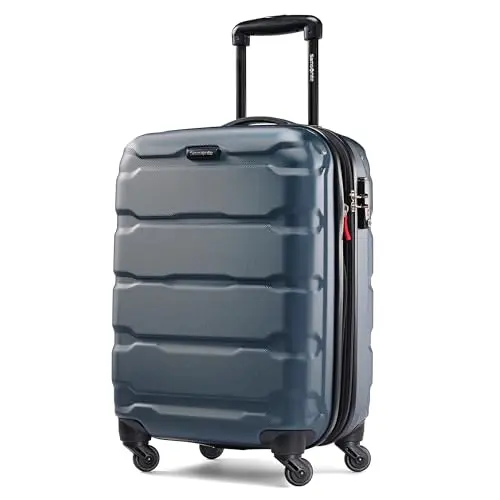
Omni PC – Scratch-Resistant Expandable Carry-On
A 20-inch expandable hardside spinner in micro-diamond polycarbonate, with a side-mounted TSA lock, four oversized multi-directional wheels, and a book-opening main compartment featuring a mesh divider, cross straps, and a zippered modesty pocket. Backed by a 10-year limited warranty and light enough at 6.81 pounds to lift into an overhead bin without a fight.
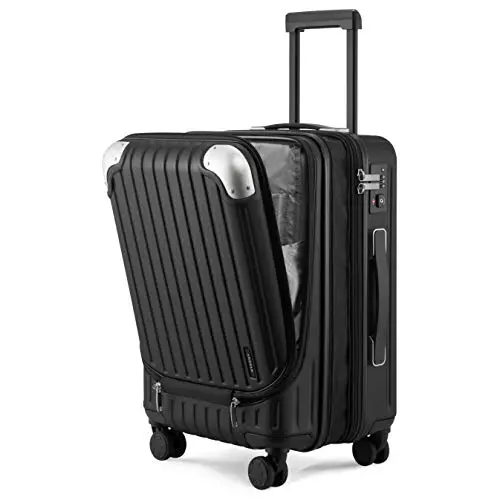
Grace – Front-Pocket Expandable Carry-On
A 20-inch expandable PC+ABS hardside with a dedicated front compartment sized for a laptop up to 15.6 inches, keeping tech separate from clothing and reachable at security. Eight rubber-covered spinner wheels, a four-level aluminum handle, a TSA combination lock, and a 1.57-inch expansion zip that grows packing volume from 36 to 42 liters.
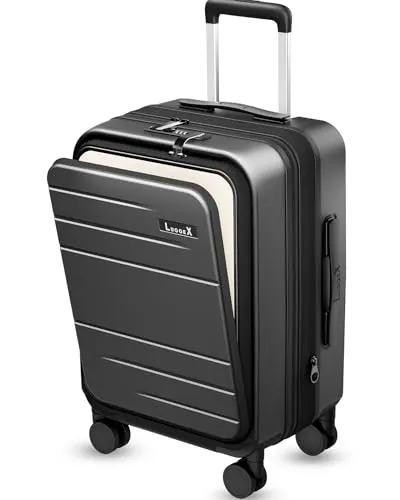
FX-Core – Quick-Access Tech Carry-On
A 20-inch 100% polycarbonate hardside with a front-to-rear separated laptop compartment that fits devices up to roughly 15 by 11 inches, so tech never crowds your clothes. A dual-zone TSA-approved lock secures both the front pocket and the main compartment, and a zipper expansion adds roughly 10% more packing space when you need it.

Freeform – Lightweight Expandable Spinner
A polypropylene hardshell carry-on at 6.5 pounds with four oversized multi-directional double spinner wheels, a built-in TSA-approved combination lock, and an expandable main compartment. The interior uses elastic straps, a divider, and a pouch to keep a short trip organized, and the textured scratch-resistant exterior is sized to meet most airline cabin restrictions.

2304 Travel Set – Carry-On, Backpack, and Toiletry Bag
A three-piece travel set built around a 20-inch polycarbonate hardside carry-on with a TSA combination lock, dual spinner wheels, and a textured scratch-resistant finish. An 18-inch travel backpack with a sleeve that slides over the luggage handle and a separate toiletry bag round out the kit, and the suitcase interior includes a zippered divider, cross straps, and a dry-and-wet separation bag.

Stratum 2.0 – Expandable Barrel Carry-On
A 20-inch expandable hardside spinner with a textured barrel-shaped shell, an ergonomic carbon-fiber texture trolley grip, and wear-tested ball wheels. The interior includes a modesty pocket, mesh door pocket, and elastic tie tapes, and the case expands to add room when a quick getaway turns into a longer one. Backed by a 10-year limited warranty.

21-Inch Hardside – Expandable Everyday Carry-On
A 21-inch expandable hardside carry-on with an extra-thick scratch-resistant shell, four multi-directional spinner wheels, a telescoping handle, and a short lift handle. The interior uses a divider and three zippered pockets to keep a short trip organized, and the case expands by up to 25% when you need the extra room.
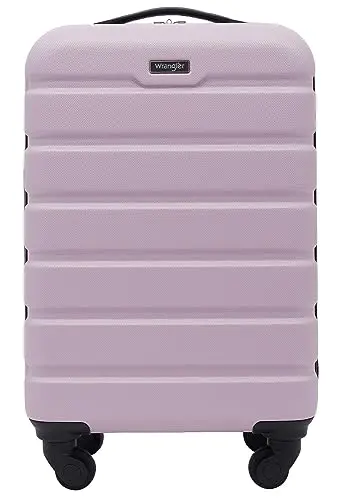
22-Inch Hardside Spinner – Casual Weekender
An ABS hardshell spinner measuring 22 by 14 by 9.5 inches overall and weighing 6.4 pounds empty, with four EZ-glide blade spinner wheels, a push-button recessed telescoping handle, and padded top and side carry handles. Inside, adjustable compression straps hold clothing flat and a fully lined interior keeps everything in place.
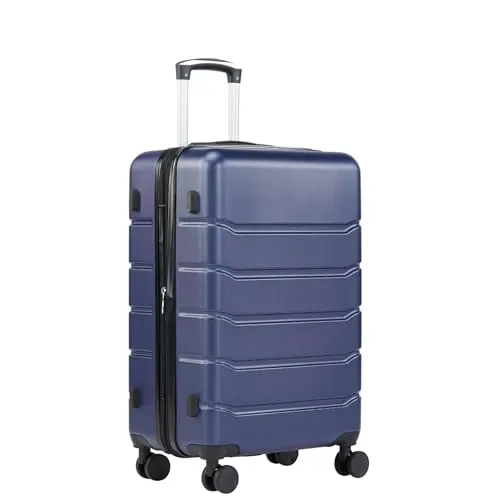
20-Inch Carry-On – Lightweight Dual-Wheel Spinner
A 20-inch expandable ABS hardside at 6 pounds with a dual-wheel spinner system, a built-in TSA-approved lock, and an adjustable telescopic handle. The interior splits into wet and dry mesh compartments with X-shaped securing straps, and the case expands when a weekend trip needs a little more room.
How We Evaluated These Hard Side Carry-On Luggage
We didn’t check these bags at an airport gate or watch them ride a luggage carousel through a full travel season. What we did: cross-referenced 10 hardside carry-on models from 8 distinct brands across six decision axes – shell material and construction, wheel and handle hardware, lock and security design, interior organization and packing volume, size compliance, and warranty support. We triangulated published specifications, feature sets, and owner feedback where available, then mapped each bag against the buyer profiles that actually shop this category: the weekly business flyer, the strict-budget traveler, and the carry-on-only packer.
The scoring framework weighted real-world fit at 70% – how well a bag’s shell, wheels, packing layout, and dimensions serve the way people actually travel – against feature differentiation at 30%, which captures details like front laptop access, dual-zone locks, and expansion that change how a bag gets used. Recommendations track that balance rather than brand preference, and we have no commercial relationship with any brand in this roundup. If you want the most complete hardside carry-on here, the LEVEL8 Luminous is the one we’d hand you; if you need a laptop compartment you can reach at security, the LEVEL8 Grace solves that.
A few things we can’t tell you: how these shells hold up after a hundred gate-checks, and whether a specific airline will wave your bag through. What we can tell you is how each model is built, what hardware it uses, how its published dimensions compare, and what patterns show up consistently in owner feedback across brands.
How to Choose the Right Hard Side Carry-On Luggage
1. Polycarbonate, ABS, and Polypropylene: What Hardside Shell Material Really Means
Shell material is the biggest single determinant of how a hardside carry-on ages. Polycarbonate flexes on impact and springs back, which is why most premium carry-ons use it – sometimes in multiple bonded layers. ABS is stiffer and cheaper; it resists everyday knocks but is more likely to crack in deep cold or under a heavy drop. Polypropylene sits between the two with a good stiffness-to-weight ratio, which is why lighter cases often use it.
Texture matters as much as chemistry. Micro-diamond and matte finishes hide the scratches that glossy shells advertise. If you plan to check the bag occasionally, prioritize a textured polycarbonate shell over a smooth ABS one.
2. Why Wheels, Zippers, and Handles Decide How Long Carry-On Luggage Lasts
Wheels and zippers fail long before shells do. Four-wheel spinners are the standard now, but the count matters less than the hardware. Rubberized casters roll quieter and absorb vibration better than hard plastic ones, and eight-wheel setups spread the load and track straighter. Double spinner wheels add stability at speed but add a little weight.
Zippers deserve equal scrutiny. Coil zippers on a fully packed case take real stress at the corners, so look for a robust expansion gusset rather than a thin one. Handles are the third failure point – look for a multi-level telescoping handle with minimal play when extended, and grab handles that are padded rather than sewn flat.
3. Carry-On Luggage Sizing: When a 22-Inch Bag Stops Being Airline-Approved
Published dimensions split into packing dimensions and overall dimensions, and airlines care about the second one. A case sold as 20 inches often measures closer to 22 once wheels and handles are included. Compare the overall figure against your airline’s sizer, not the packing number.
If you fly carriers with strict sizers, prioritize a bag that stays under the limit with margin. The LEVEL8 Luminous lists an overall 21.5 by 14.5 by 9.2 inches, which keeps it inside most domestic cabin limits without expanding. Bags that grow with a zipper expansion are useful, but once expanded they may no longer qualify as carry-on at all.
4. Locks, Front Pockets, and Expansion: Which Carry-On Features Earn Their Weight
A TSA-approved lock lets security open your bag without cutting it, and side-mounted or dual-zone placement is usually easier to use than a top lock buried under zipper pulls. Some hardsides ship with no lock at all, so budget for a padlock if that matters to you.
Front laptop compartments are the most useful recent addition: they separate tech from clothing and speed up security. The LUGGEX FX-Core goes further with a dual-zone lock that secures the laptop pocket and main body separately. Expansion is worth having for the return leg, but treat it as a checked-bag feature rather than a carry-on one.
5. How Much Do You Need to Spend on Hard Side Carry-On Luggage?
The market splits into three rough tiers. Entry-level ABS cases cover the basics – a hard shell, four spinner wheels, sometimes a lock – and are the right call if you fly a few times a year. Mid-range polycarbonate buys better shells, smoother wheels, and longer warranties; the Samsonite Omni PC sits here with a decade of coverage. Premium models add front laptop access, dual-zone locks, and multi-level handles, and often cost about twice as much as entry-level bags.
Spending more doesn’t automatically buy durability. What it buys reliably is better hardware, longer warranty terms, and more thoughtful interior layouts. Travel monthly and it’s worth it. Fly a few times a year and a mid-range bag with a strong warranty is the smarter spend.
6. Hard Side vs. Soft Side Carry-On Luggage: Which Fits Your Trip?
Hard side wins on protection, weather resistance, and structural integrity – nothing shifts inside, and a shell won’t let a spilled drink seep into your clothes. It also survives being gate-checked better than fabric. Soft side wins on give: it squeezes into a full overhead bin and into underseat space on regional jets, and exterior pockets keep a laptop reachable without opening the main body.
The deciding question is how often you’re on a full flight. A hardside is the better long-term investment for most travelers; a soft side is more forgiving when space is tight. A hardside with a front-access pocket splits the difference.
Frequently Asked Questions
1. LEVEL8 Luminous vs. Samsonite Omni PC: which hardside carry-on is the better buy?
They solve slightly different problems. The LEVEL8 Luminous is built around a three-layer polycarbonate shell, eight spinner wheels, and a four-level handle, and it packs a week of clothes in a split-case interior at 7.7 pounds. The Samsonite Omni PC counters with a side-mounted TSA lock, a 10-year limited warranty, and a scratch-resistant micro-diamond finish at a friendlier price tier.
Choose the Luminous if you want the most polished all-rounder. Choose the Omni PC if warranty coverage and a lower entry price matter more than hardware refinement.
2. What's the difference between the LEVEL8 Grace and the LUGGEX FX-Core?
Both put a front laptop compartment on a hardside carry-on, but the details differ. The LEVEL8 Grace uses a PC+ABS shell, expands by 1.57 inches, and carries a TSA combination lock on the main body only. The LUGGEX FX-Core is 100% polycarbonate, and its dual-zone TSA lock secures the laptop pocket and main compartment separately.
Go with the Grace if front-pocket access plus real expansion is the priority. Go with the FX-Core if separately locking your laptop matters more than either. Both are carry-on sized when unexpanded.
3. Are 22-inch hardside carry-ons actually airline-approved?
Usually not on the strictest carriers. A bag listed as 22 inches is often measuring total height including wheels and handles, and several major airlines cap cabin height closer to 21 inches. The Wrangler 22-inch sits right at that line, and the Samsonite Freeform’s published 23-inch overall height is the kind of figure worth verifying against your specific carrier.
If you fly budget airlines or international routes with tight sizers, buy a bag whose overall dimensions leave margin, and skip the expansion on the outbound leg.
4. Do polycarbonate hardside suitcases really resist cracking?
Polycarbonate is more impact-flexible than ABS – it deforms and springs back rather than fracturing, which is why premium shells use it, often in multiple layers. That doesn’t make it indestructible. Deep cold, repeated drops on hard corners, and overpacking a zipper-closed shell all stress the material. ABS cases are more likely to crack in cold weather, which matters if you travel in winter.
The practical takeaway: a textured polycarbonate shell will generally outlast a smooth ABS one, but no hardside carry-on survives regular checking without wear.
5. Is an expandable hardside carry-on worth it?
Yes, with a caveat. Expansion is genuinely useful for souvenirs, winter layers, or a longer return leg, and most models here add somewhere between 10% and 25% more space. The catch is that expanded bags often exceed carry-on size limits, so you may end up gate-checking the bag you bought to avoid checking.
Treat it as a one-way feature: pack compressed on the outbound flight, expand on the way home, and accept that it may become a checked bag.
Final Verdict
For most travelers, the LEVEL8 Luminous is the answer – a three-layer polycarbonate shell, eight quiet spinner wheels, and a split-case interior that handles a week away without forcing a checked bag. It’s the most complete hardside carry-on here, and the one we’d recommend to a friend without caveats.
If warranty coverage and a lower entry price matter more, the Samsonite Omni PC pairs a proven shell with a decade of protection for noticeably less. Flying with a laptop every week? The LEVEL8 Grace puts your machine in a reachable front pocket and skips the security scramble. And if you want a suitcase plus a backpack in one order, the UKEIN 2304 set covers a short trip end to end.
Pick the shell material you’ll actually maintain, check the overall dimensions against your airline, and buy once.
