
Best Hepa Air Purifiers For Asbestos – 2026 Reviews

Old floor tiles, pipe insulation, and textured ceilings have a way of turning a routine renovation into a research project. Once asbestos enters the conversation, the stakes change: you’re not just shopping for cleaner air, you’re thinking about filtration grade, containment, and whether a machine might stir up fibers that should stay put.
True HEPA filtration is the baseline, not a magic wand. A HEPA air purifier can capture a meaningful share of airborne particles when it’s sized correctly and run continuously, but it is supplemental filtration. It does not replace licensed abatement, negative pressure containment, wet methods, or proper PPE. If asbestos is known or suspected, stop work and get professional guidance before you rely on any plug-in unit.
We compared HEPA air purifiers across major brands with an eye on the things that matter in asbestos-adjacent rooms: sealed filtration, credible clean-air delivery, low-speed operation, filter access, and sensors that don’t force you to run max fan. The picks below are not an endorsement of DIY asbestos handling. They’re a practical shortlist for supplemental filtration once the safety plan is already in place.
Best HEPA Air Purifiers for Asbestos – 2026 Reviews
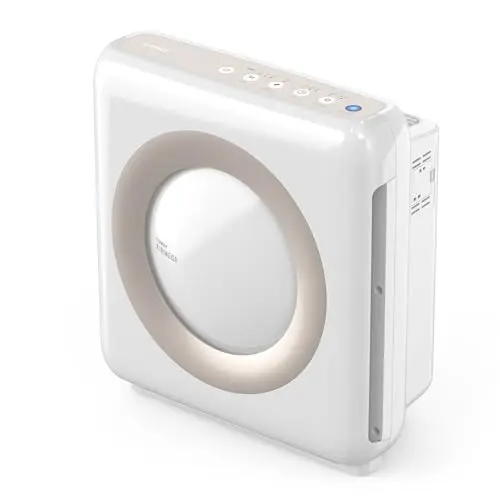
Mighty AP-1512HH – Whole-Room HEPA With Auto Sensing
A four-stage HEPA purifier with a washable pre-filter, real-time air-quality indicator, and auto mode that adjusts fan speed as conditions change. It’s rated for large-room coverage and includes filter alerts and a three-year warranty.
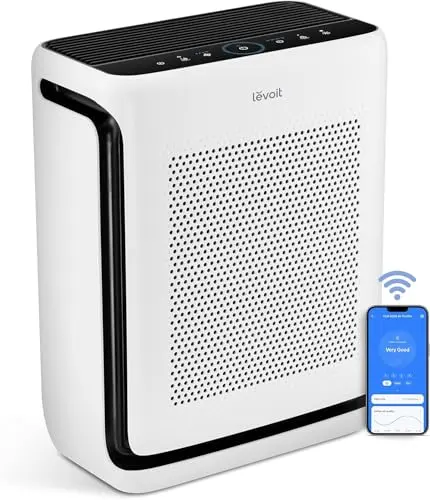
Vital 200S-P – Large-Room HEPA for Allergy Households
A large-room HEPA purifier with AHAM-verified CADR ratings, a U-shaped dual intake for pet hair and dust, app control, and a quiet sleep mode. It’s built for allergy-focused households that want more clean-air delivery without a huge footprint.
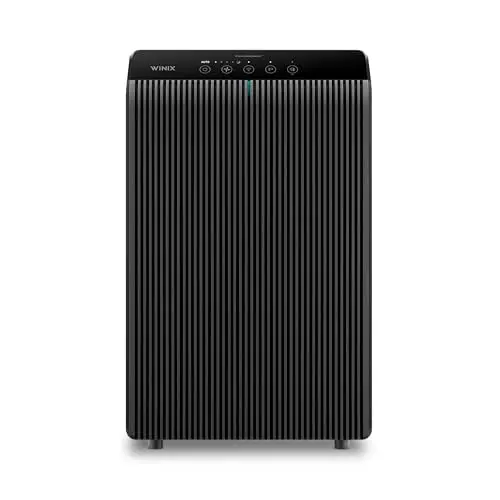
5510 – Smart HEPA With Advanced Odor Control
A true HEPA purifier with a heavy-duty carbon filter, auto mode, air-quality indicator, and Winix app support. It adds light-activated sleep mode and a washable pre-filter for larger rooms.
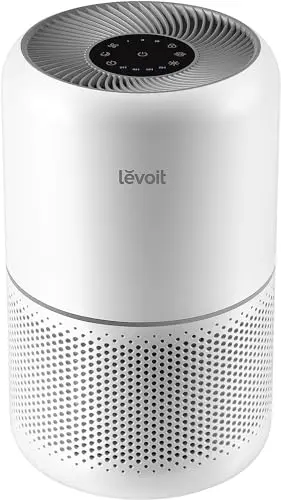
Core 300-P – Compact HEPA for Bedrooms
A compact AHAM-verified HEPA purifier with a 143 CFM smoke CADR, near-silent sleep mode, display-off option, and simple timer. It’s a practical bedroom or office choice when you want true HEPA filtration without a big footprint.
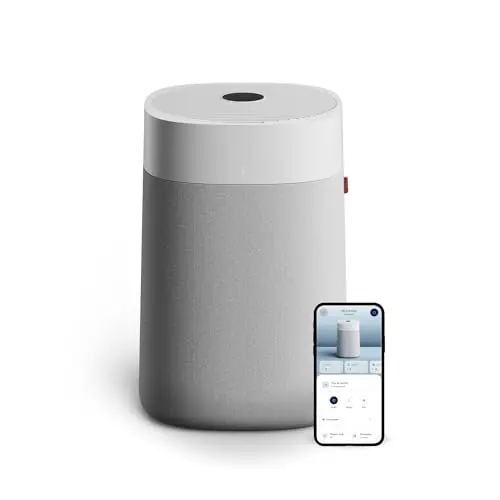
Blue Pure 211i Max – Premium HEPASilent for Open Spaces
A premium large-room purifier with HEPASilent dual filtration, WiFi app control, auto mode, and a washable pre-filter. It’s designed for open living areas and quiet continuous operation.
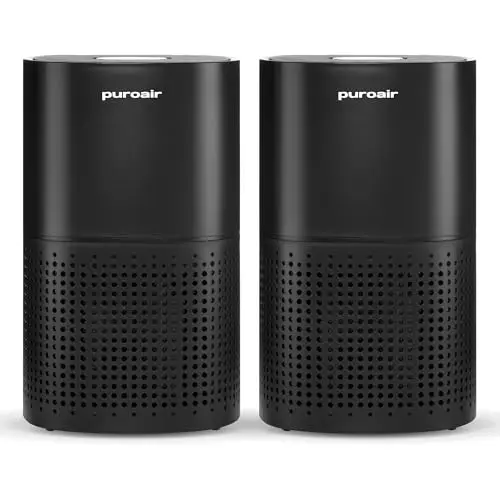
PuroAir 240 – Sensor-Driven HEPA for Busy Rooms
A sensor-driven HEPA purifier with three-layer filtration, PuroIQ auto mode, 360-degree intake, and a quiet sleep mode. The two-pack configuration suits multiple rooms or a main living area plus bedroom.
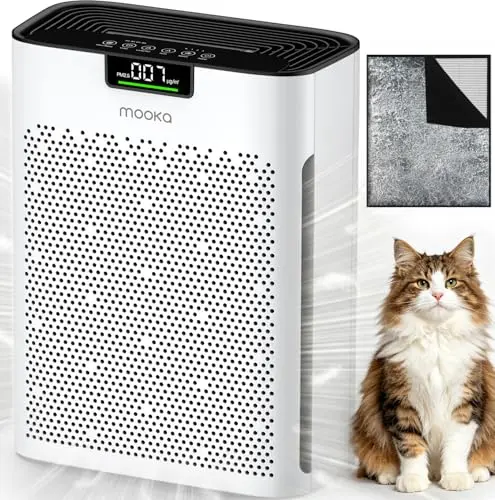
KJ190H – Large-Room HEPA With PM2.5 Display
A large-room HEPA purifier with a PM2.5 air-quality display, auto mode, washable pre-filter, four fan speeds, and a quiet sleep mode. It also includes aromatherapy and a child lock.

B-D02L – Budget HEPA With Aromatherapy
A budget-friendly true HEPA purifier with three-stage filtration, a quiet sleep mode, timer settings, night light, and an aromatherapy pad. It’s a low-cost entry point for a bedroom or small office.

HAP602 – Big-Room HEPA on a Budget
A large-room HEPA purifier with 360-degree airflow, a PM2.5 real-time display, auto mode, child lock, and a quiet sleep mode. It’s a budget-oriented option for big-room coverage claims.
How We Evaluated These HEPA Air Purifiers for Asbestos
We didn’t run lab particle-count tests, asbestos-fiber clearance testing, or controlled room-containment trials. What we did: cross-referenced 9 HEPA air purifier models from 7 distinct brands across six decision axes – true HEPA filtration grade, clean-air delivery and coverage claims, sealed filtration and pre-filter design, auto/sensor behavior, noise and sleep operation, and filter maintenance. We audited each filter path, the stated CADR or air-cleaning claims, and the practicality of running the unit at low speed for long stretches. We triangulated published specifications, feature sets, owner feedback where available, and use-case fit for rooms where asbestos fibers may be present.
The scoring framework weighted real-world fit for asbestos-adjacent air cleaning (70%) – how well each model supports low-disturbance, continuous HEPA filtration without overpromising – against feature differentiation (30%) – sensor quality, filter access, app controls, and warranty support. We mapped each unit against the same buyer profile: someone who needs supplemental filtration near known or suspected asbestos, not a replacement for professional abatement. Where coverage numbers looked outsized for the cabinet size, we treated them as ceiling figures rather than everyday performance. We have no commercial relationship with any brand here; recommendations track fit and differentiation, not brand preference. If you want the most balanced starting point, the Mighty AP-1512HH is our top pick; if you’re sizing a larger open room, the Vital 200S-P is the stronger fit.
How to Choose the Right HEPA Air Purifier for Asbestos
1. What HEPA Filtration Actually Does for Asbestos Fibers
True HEPA filters are rated to capture 99.97% of airborne particles at 0.3 microns. Asbestos fibers can be long, thin, and variable in size, so the practical takeaway is not that every fiber disappears. It’s that a sealed true HEPA system can reduce airborne particulate load when it’s running correctly and the room is already contained.
An air purifier is supplemental filtration, not abatement. If asbestos is known or suspected, stop work and call a licensed professional. No plug-in unit replaces negative pressure containment, wet methods, HEPA vacuuming, or proper PPE.
2. Why HEPA Air Purifiers for Asbestos Need a Sealed Filtration Path
A HEPA filter label alone isn’t enough. Look for true HEPA media, a tight filter fit, and a pre-filter that catches larger debris before it reaches the main filter. Avoid units with obvious bypass gaps or washable HEPA-type media.
The fan matters, too. A powerful unit that only works well on high is a poor fit for a room where you want to avoid stirring up settled dust. Low-speed continuous operation is usually more practical than short bursts on maximum.
3. Sizing a HEPA Air Purifier for Asbestos-Adjacent Rooms
Use CADR and room volume to judge real coverage, not the biggest square-footage claim on the box. A useful target is enough clean-air delivery for several air changes per hour in the room you’re actually treating, not the whole house.
If you’re sizing a bedroom or office, the Core 300-P is the right scale; for open living areas, the Vital 200S-P gives more headroom.
4. Noise, Auto Mode, and Low-Disturbance Operation
For asbestos-adjacent use, low-speed continuous operation often makes more sense than max fan. You want a unit that moves enough air without turning the room into a wind tunnel. Sleep mode and display-off options matter if the purifier is in a bedroom.
Auto mode is helpful only if the sensor is responsive and the lowest speed is genuinely quiet. A sensor that jumps straight to high every time someone walks by is less useful than a steady low setting.
5. Filter Maintenance, Replacement, and Safe Handling
Don’t wash a HEPA filter. Replace it when the unit indicates, and seal the used filter in a bag before disposal according to local rules. Regular pre-filter cleaning protects the main filter and keeps airflow steady.
A filter-change indicator reduces guesswork, but don’t ignore physical signs like reduced airflow or a dusty cabinet. In a dusty renovation space, filters can load faster than the calendar suggests.
6. Levoit Core 300-P vs Winix 5510: Which HEPA Air Purifier for Asbestos-Adjacent Use?
The Core 300-P is the compact, budget-friendly pick for a bedroom or office, with AHAM-verified performance and a near-silent sleep mode. The Winix 5510 has more carbon for odors and smoke, plus app support and a light-activated sleep mode.
If low-disturbance bedroom filtration is the priority, choose the Core 300-P; if you also want heavier carbon for odors in a larger shared space, the Winix 5510 is the better fit.
Frequently Asked Questions
1. Do HEPA air purifiers actually remove asbestos fibers?
They can capture a portion of airborne fibers if the unit uses a true HEPA filter and the air path is sealed. But ‘remove’ is too strong. An air purifier is supplemental filtration; it does not make asbestos-safe, replace containment, or substitute for licensed abatement. If fibers are disturbed, stop and get professional help.
2. What's the difference between the Coway Mighty AP-1512HH and Winix 5510 for asbestos-adjacent rooms?
The Coway is the more balanced all-rounder: four-stage filtration, auto air-quality sensing, and a 3-year warranty make it easy to run continuously. The Winix 5510 leans toward odor and smoke control with a heavier carbon filter, plus app support and a light-activated sleep mode.
For a bedroom or office where low-disturbance HEPA filtration is the priority, the Mighty AP-1512HH is the easier recommendation; for a larger shared space with odors, the Winix has more headroom.
3. Levoit Vital 200S-P vs Blueair 211i Max: which is better for a large room?
The Vital 200S-P is the better value for large-room coverage, with AHAM-verified CADR and a U-shaped dual intake. The Blueair 211i Max is the premium open-floor-plan pick, with HEPASilent dual filtration and a washable pre-filter.
If you want the most filtration per dollar, choose the Vital 200S-P; if you want a quieter premium unit for a big living area, the Blueair fits.
4. Are all HEPA air purifiers suitable for asbestos-adjacent use?
No. The label matters less than the sealed filtration path, true HEPA media, and low-speed operation. ‘HEPA-type’ or washable filters are not the same as true HEPA. You also want a filter-change indicator and a design that doesn’t force you to run max fan to get meaningful filtration.
5. How quiet should a HEPA air purifier be for a bedroom near old insulation?
Quiet enough that you’ll actually leave it running. Look for a sleep mode in the low 20 dB range, a display-off option, and continuous low-speed operation. The Coway and Levoit Core 300-P are both easy to live with overnight; the Winix 5510 is also very quiet but adds more carbon filtration.
Final Verdict
For most people who need a HEPA air purifier in an asbestos-adjacent room, the Mighty AP-1512HH is the pick. It pairs true HEPA filtration with auto sensing, a washable pre-filter, and a 3-year warranty, so it’s easy to run continuously without babysitting it. If you’re treating a bedroom or small office, the Core 300-P gets you AHAM-verified HEPA performance in a smaller, budget-friendly package. For a larger open living area, the Vital 200S-P has more clean-air headroom. And if you want a premium open-floor-plan unit with app control and a washable pre-filter, the Blue Pure 211i Max is the splurge. Whatever you choose, remember: the purifier is supplemental. Suspected asbestos means professional containment first.
