
Best High Pressure 2.5 Gpm Handheld Shower Heads – 2026 Reviews

Nothing kills a morning faster than a shower head that dribbles. You stand there turning the knob further, hoping the water will commit, and it never does. That’s usually not a plumbing problem – it’s a fixture bought on the word “high pressure” and nothing else.
Two things separate a genuinely strong handheld from a disappointing one. The first is flow rate. In the US, 2.5 GPM is the ceiling, so any listing claiming more is either measuring under unusual conditions or stretching the truth. The second is how that water is shaped – nozzle size, spray-face area, and jet count change how forceful the exact same volume feels against your back.
There’s a third factor people learn the hard way: the housing. A shower head lives in a hot, wet, mineral-heavy environment, and cheap plastic near the threads is where most of them give up. So we looked at what the market actually offers – metal-bodied fixtures built for pressure and longevity, mid-range heads with genuinely useful spray options, and budget models that earn their place on reach and convenience rather than build quality. Here’s how they stack up, and which one fits your bathroom.
Best High Pressure 2.5 GPM Handheld Shower Heads – 2026 Reviews
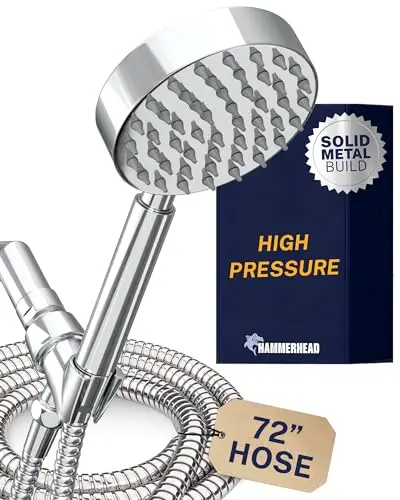
1F-HHS-CH 1-Spray – All-Metal High-Pressure Handheld
A single-setting handheld built from stainless steel and brass, with a 6-foot metal hose and an externally adjustable brass holder. It’s the closest thing in this lineup to a shower wand that behaves like plumbing hardware instead of an accessory.
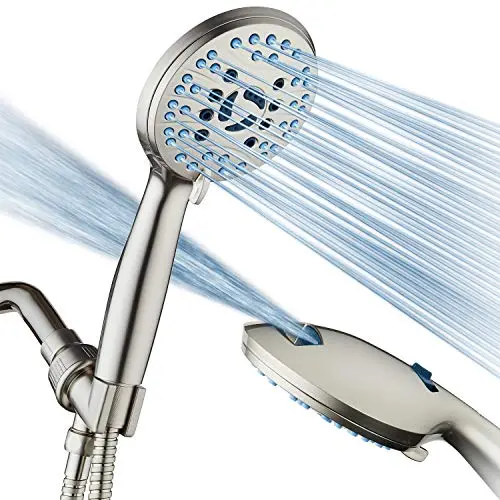
AquaCare 2649M – Eight-Mode Power Wash
An eight-setting handheld with a built-in two-mode power wash for tub, tile, and pets, plus an extra-long stainless hose and two mounting brackets in the box.
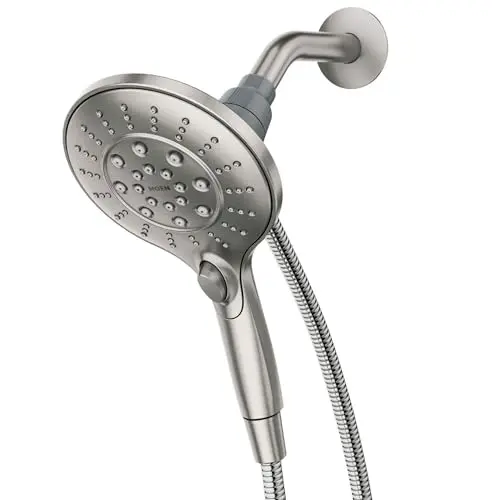
Engage 26112SRN – Six-Spray Magnetic Dock
Moen’s six-function handheld with a Magnetix dock that releases with a pull and snaps back on its own, finished in Spot Resist brushed nickel with a 60-inch metal hose.
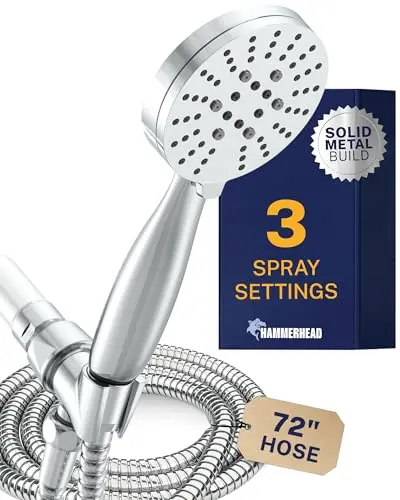
3F-HHS-CH 3-Spray – All-Metal Multi-Spray Handheld
The same all-metal platform as our top pick, but with three spray patterns, a 6-foot metal hose, and a shut-off valve in the box.
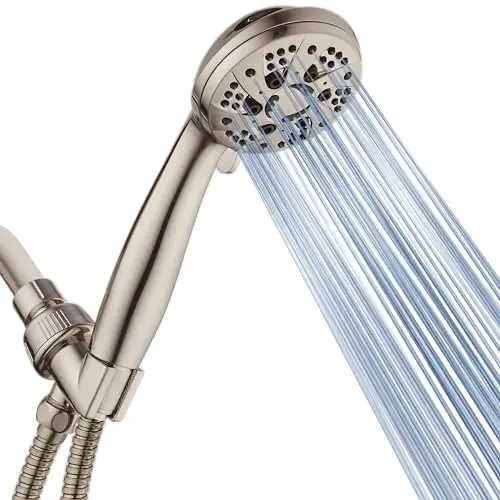
7212 6-Setting – Brushed Nickel High Pressure
A six-setting handheld with a brushed nickel finish, 5-foot stainless hose, and an angle-adjustable overhead bracket – the value-leaning way into the 2.5 GPM category.
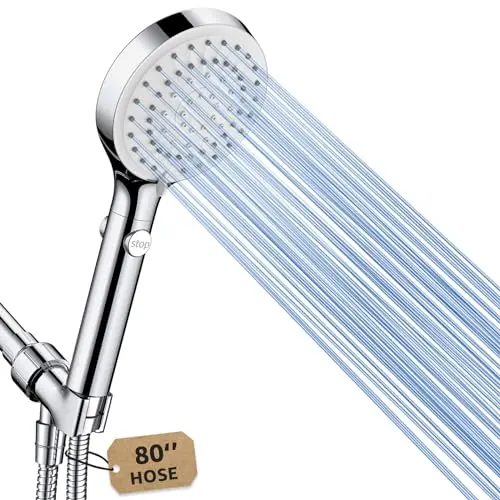
KB7 – 80-Inch Hose with On/Off Pause
A budget handheld with the longest hose in this lineup at 80 inches, plus a thumb pause button that stops the flow right at the wand.
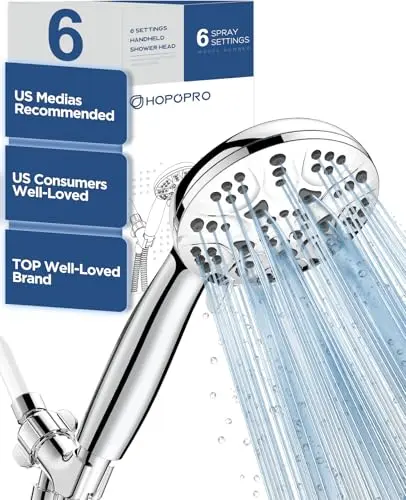
HS6700CP – Six-Mode Pressure Boost
A six-mode handheld built around a pressure-boosting design, bundled with a stainless hose, adjustable bracket, tape, and washers so nothing else is needed.
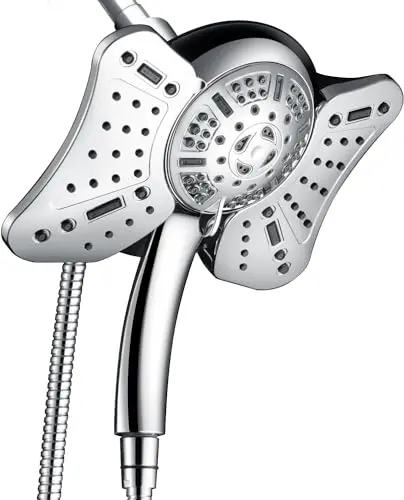
23234 Dual Combo – Rainfall Plus Handheld
A two-in-one fixture: an 8.7-inch rainfall panel with a detachable handheld that slides into the center, giving you 19 combined spray modes at 2.5 GPM.
How We Evaluated These High Pressure Handheld Shower Heads
We didn’t plumb these into a shower arm and time a bucket fill, and we didn’t measure spray force with a gauge. What we did: cross-referenced 8 handheld shower head models from 7 distinct brands across six decision axes – stated flow rate and pressure delivery, spray-setting range and coverage, build material and finish, hose length and reach, installation and connection compatibility, and warranty support.
We triangulated published specifications, mapped feature sets against typical buyer profiles, and weighed owner feedback where available – paying particular attention to the themes that repeat around hose and connection longevity, since that’s where handhelds actually fail. The scoring framework put real-world fit (70%) – how well each head delivers usable pressure at its stated flow rate, for the buyer it’s aimed at – against feature differentiation (30%) – genuinely distinct spray modes, docking systems, and included hardware. We have no commercial relationship with any brand here; the ranking tracks fit and differentiation, not brand preference.
A few things we can’t tell you: how any of these feel after five years of daily use, or how your specific household pressure will pair with a specific nozzle. What we can: tell you which heads are built to hold up, which publish a flow rate that actually matches the topic, and which are leaning on a marketing claim. If you want maximum pressure in a metal body, the 1F-HHS-CH is the pick; if you want the widest feature set, the AquaCare 2649M covers more ground.
How to Choose the Right High Pressure Handheld Shower Head
1. What 2.5 GPM Actually Means for a High-Pressure Handheld Shower Head
Flow rate is the number that determines whether a handheld feels strong, and 2.5 GPM is the federally capped maximum for shower heads sold in the US. Anything marketed as higher is either measured at an unusual pressure or simply not accurate.
That said, a 2.5 GPM rating doesn’t guarantee a forceful spray. Nozzle geometry, spray-face size, and jet count all change how the same volume of water feels against your shoulders. Some heads create a high-pressure feel at lower flow rates by accelerating the stream through smaller silicone nozzles. That’s a legitimate approach, but it’s a different thing from raw volume. If you’re working with genuinely weak household pressure, the HS6700CP is the model in this lineup built around that exact problem.
If pressure is your reason for shopping, look for a stated 2.5 GPM figure and check whether the head ships with a removable flow restrictor. Several here do, which keeps your options open.
2. Metal vs. Plastic: Where High-Pressure Handheld Shower Heads Fail
Scan enough feedback on this category and the failure pattern is consistent – not the spray, but the housing. Cracked plastic bases, stripped threads near the connection, and hoses that split at the crimp are the recurring themes, and they show up across price tiers rather than being a budget-only problem.
A stainless steel and brass body sidesteps most of that. It costs more, weighs more, and generally comes with fewer spray settings. If long-term durability is the priority, the 1F-HHS-CH is the one to buy – one pattern, no plastic in the water path.
The middle path is a brass ball joint and metal hose on an ABS body. That covers the two components most likely to fail while keeping the price down, and it’s the compromise most of this lineup settles on.
3. Spray Settings and Nozzles: Reading Past the Mode Count
Mode counts are marketing-friendly and mostly beside the point. What matters is whether the spray patterns you’ll actually use – a wide drenching spray, a firm massage, a pause – are easy to reach with wet hands, and whether the selector holds its position instead of drifting mid-shower.
Rub-clean silicone nozzles are the spec that earns its keep over time. In hard-water areas, mineral scale closes off jets and pressure quietly drops; silicone lets you pinch the deposits off in seconds. Every head here that publishes the detail uses silicone, but check before you buy anything else.
Two extras are worth paying for if they match how you live: a pause or on/off button at the handle, and a dedicated power-wash spray for tubs and tile.
4. Hose Length and Brackets: Matching Reach to Your Bathroom
Standard hoses run 5 to 6 feet, which is enough for showering and not much else. If you’re rinsing a large dog, bathing a child in a deep tub, or helping a seated family member, hose length is the spec that decides whether the fixture works at all. The KB7 runs to 80 inches, the longest here, and pairs it with a handle-mounted pause button.
Brackets matter almost as much. An angle-adjustable overhead bracket lets the head sit hands-free at the angle you want, and a low-reach adhesive wall bracket – included with some models – puts the wand within arm’s reach of a seat or tub edge without drilling tile.
5. Threads, Tape, and Tool-Free Installation
Nearly every handheld shower head uses a standard 1/2-inch connection – either G1/2 or 1/2-inch IPS – so compatibility is rarely the problem. Leaks usually come from a missing or doubled rubber washer, or from over-tightening, not from mismatched threads.
Look for a kit that includes Teflon tape and spare washers. A five-minute hand-tighten job is realistic; if a listing leans on professional installation, treat that as a warning sign rather than a feature.
6. What Handheld Shower Head Price Tiers Actually Buy You
At the entry tier, you get chrome-plated ABS, a 5-foot hose, and six to nine spray modes. These work, and the better ones hold up for years – the tradeoff is that the body and hose are the components most likely to fail first.
Mid-range adds longer hoses, brackets with brass joints, power-wash modes, and more careful finishing. The premium tier is where you find all-metal construction, brass fittings, and lifetime warranties. Whether that’s worth it depends mostly on how much you dislike replacing a shower head.
Frequently Asked Questions
1. Is 2.5 GPM the strongest a high-pressure handheld shower head can get?
In the US, yes – 2.5 GPM is the maximum flow rate permitted for a shower head, so no fixture is legally going to exceed it. What varies is how forcefully that volume arrives.
A head with a smaller spray face and tighter nozzle geometry will feel sharper than a wide, soft rain panel running at the same rate. That’s why two 2.5 GPM heads can feel completely different in the same shower. It’s also why some manufacturers publish lower flow rates and lean on air-induction or pressure-boosting nozzles to compensate. Neither approach is dishonest – they’re different answers to the same question, and pressure perception is what you’re really shopping for.
2. How do the HammerHead 1F-HHS-CH and the Moen Engage compare?
They’re built around opposite priorities. The 1F-HHS-CH is an all-metal, single-spray fixture with a brass holder and a 6-foot metal hose – maximum pressure, minimum adjustability, and the longer expected service life of the two.
The Moen 26112SRN trades that for daily convenience: six spray settings, a Magnetix magnetic dock that grabs the wand when you let go, and a Spot Resist finish that hides water spots. It’s the better fit for a busy family bathroom and the wrong pick if you want a fixture that feels like plumbing hardware.
3. AquaDance vs. HOPOPRO: which budget handheld is the better buy?
Both sit at the affordable end and both are ABS-bodied, so neither is a lifetime purchase. The HS6700CP leans on nozzle-driven pressure at a lower published flow rate and includes a brass swivel ball joint in the bracket, which is better hardware than most rivals at this price. The AquaDance 7212 publishes a full 2.5 GPM rating and gives you an angle-adjustable overhead bracket for hands-free use.
If your household pressure is genuinely weak, go with the pressure-boosting design. If you want straight volume and a brushed nickel finish that matches existing fixtures, the AquaDance is the simpler answer.
4. Do high-pressure handheld shower heads work in homes with low water pressure?
Some do better than others. Heads designed around air induction or accelerated nozzle jets – the HOPOPRO and the FASDUNT among them – are specifically built to make a modest supply feel stronger. A wide rain-style panel needs volume to work, so it’s the wrong shape for a low-pressure home.
Before buying, check whether the head has a removable flow restrictor. Taking it out is the single biggest change most people can make, and it’s reversible if you decide you’d rather save water.
5. Will a 2.5 GPM handheld shower head use noticeably more water?
Compared with a 1.8 GPM head, yes – roughly a third more per minute of showering. Compared with an older fixed shower head from before flow standards tightened, it may actually use less.
In practice the difference shows up in how long you shower rather than in the fixture itself. If water use matters to you, look for a model with a pause button or a removable restrictor so you can dial the flow back without replacing the head.
Final Verdict
For most people shopping a high-pressure handheld, the 1F-HHS-CH is the answer. It delivers the full 2.5 GPM through a stainless-and-brass body with a hose that won’t kink, and it’s the option least likely to be replaced in two years. Accept the single spray pattern as the price of that build. If you’d rather have a wand that cleans the shower as well as you, the AquaCare 2649M gives you eight settings and a real power wash for meaningfully less. And if you’re bathing pets or kids and need reach more than raw force, the KB7 and its 80-inch hose is the practical choice. Whichever way you go, check the flow rate on the spec sheet first – that’s where high-pressure claims tend to fall apart.
