
Best High Wind Patio Umbrellas – 2026 Reviews

A calm patio morning can turn into a canopy chase in seconds. One gust catches the fabric, the umbrella leans, and suddenly everyone is holding a drink in one hand and a pole in the other. That is the moment when the difference between a high wind patio umbrella and a standard shade canopy stops being theoretical.
The useful distinction is not whether an umbrella can survive a storm. It is how well it manages ordinary breezy afternoons: how the canopy vents air, how the ribs flex or resist, how thick the pole is, and whether the base is stable enough to keep the whole thing planted. Those are the details that separate a frustrating umbrella from one you can leave up through a sunny, gusty afternoon.
We looked across the market at patio umbrellas that take wind behavior seriously, from budget crank-and-tilt models to premium acrylic canopies and lighted options. The goal is simple: help you find the right high wind patio umbrella for your table, your exposure, and your willingness to anchor it properly.
Best High Wind Patio Umbrellas – 2026 Reviews
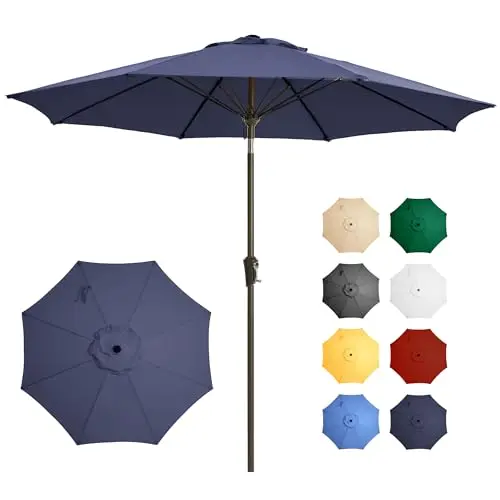
9FT Fiberglass Frame – Wind-Ready Shade for Patio Tables
The Ayge 9FT is a patio table umbrella built around a fiberglass rib frame and a vented, UPF 50+ polyester canopy. It uses a crank lift and push-button tilt for adjustable shade, and the 9ft span suits a four-seat table. The pole is roughly 1.49 inches in diameter, and the base is sold separately.
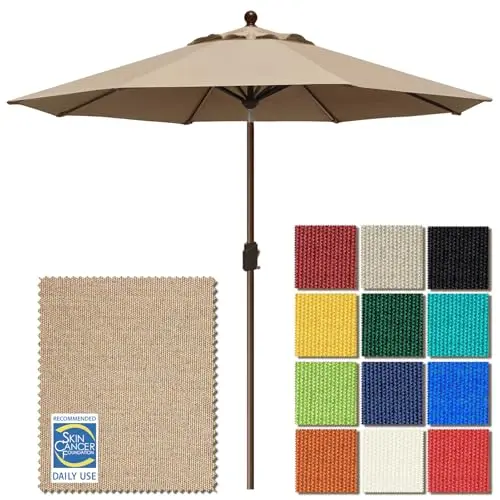
9FT1L – Non-Fading Acrylic Market Umbrella
The EliteShade 9FT1L is a market umbrella aimed at buyers who care about fabric life. It uses solution-dyed acrylic rated for 10-year non-fading performance, a 1.5-inch steel pole, and eight ribs under a vented canopy. The crank lift and push-button tilt cover daily shade adjustments; the base is sold separately.
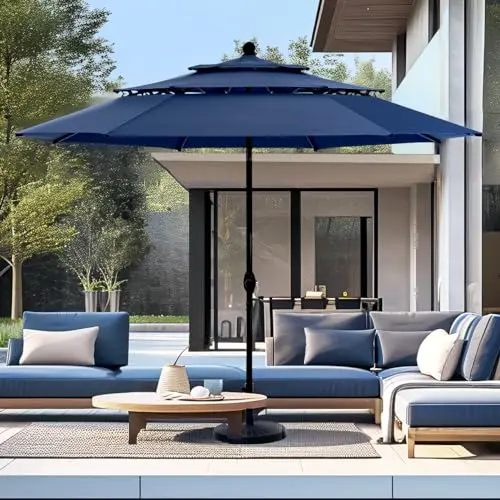
10ft 3-Tier Vented – Large Canopy for Gusty Patios
The PHI VILLA 10ft is a large three-tier vented patio umbrella with a 1.5-inch steel pole, eight ribs, and auto-tilt operation. The triple venting is designed to reduce lift and improve airflow, while the 10ft canopy throws serious shade over a larger table. The base is not included.
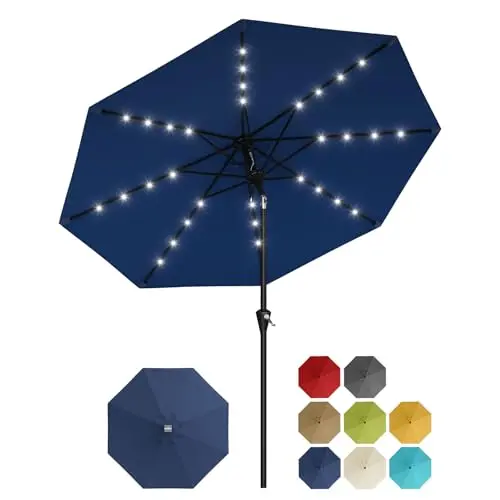
9FT Solar LED – Evening Shade with 32 Lights
The Garvee 9ft solar patio umbrella pairs a reinforced iron frame and eight ribs with 32 solar-powered LED lights. It opens with a crank lift, adjusts with push-button tilt, and uses a UPF 50+ water-resistant canopy. The base is not included.
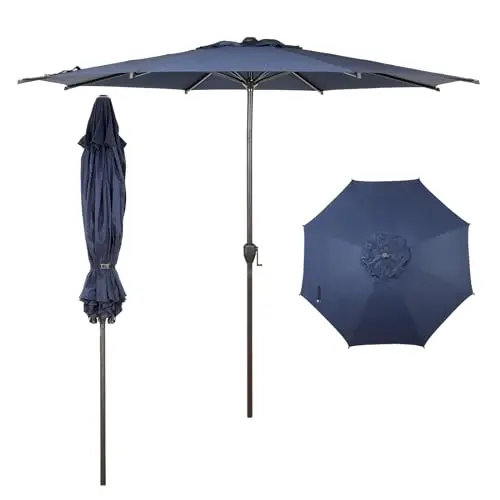
9FT Lyon – Tool-Free Setup with Vented Canopy
The Abba Patio 9FT Lyon is a vented market umbrella with a tool-free threaded pole, eight aluminum ribs reinforced with end screws, and a push-button tilt plus crank lift. It uses UPF 50+ polyester fabric and adds embedded weights in the canopy for counterbalance. The base is sold separately.
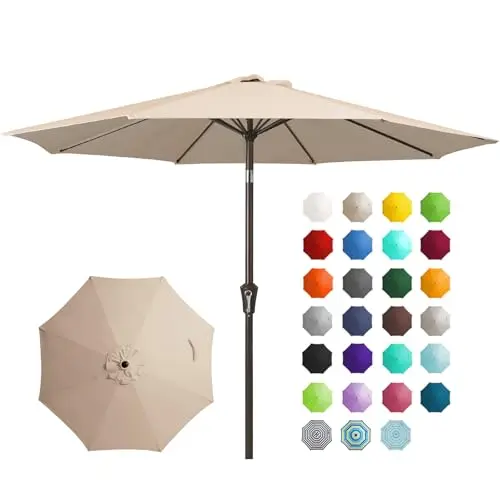
9FT Market Umbrella – Double-Vent Crank & Tilt
The JEAREY 9FT market umbrella uses a powder-coated iron pole and eight ribs under a double-layer vented polyester canopy. It has a crank lift, push-button tilt, and a 9ft span that suits four to six chairs. The base is not included.
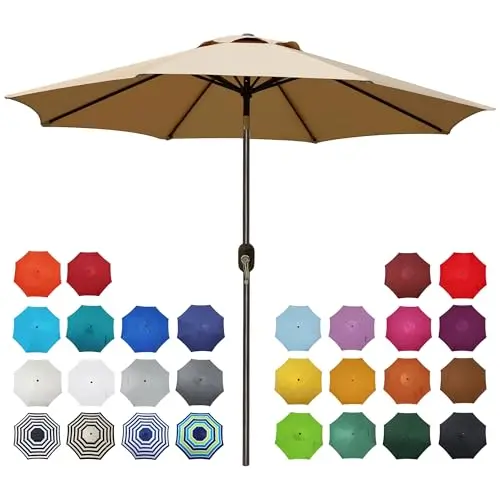
9' Market Umbrella – Budget-Friendly Crank & Tilt
The Blissun 9ft market umbrella uses a powder-coated aluminum and iron pole, eight iron ribs, and a waterproof polyester canopy. It has a crank open system and push-button tilt, with a 9ft span for four to six chairs. The base is not included.
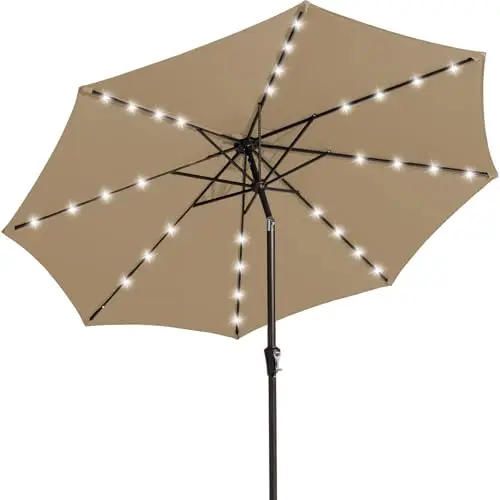
9' Solar LED – Lighted Shade for Evening Use
The JEAREY 9ft solar LED umbrella combines a powder-coated iron frame, eight ribs, and a vented polyester canopy with built-in solar lighting. It has a crank lift and push-button tilt, plus a 9ft span for standard patio tables. The base is not included.
How We Evaluated These High Wind Patio Umbrellas
We didn’t run wind-tunnel tests or leave these umbrellas out through a full storm season. What we did: cross-referenced 8 patio umbrella models from 7 distinct brands across 5 decision axes – canopy venting, rib and pole construction, fabric UV and water resistance, tilt and crank usability, and base compatibility. We kept the comparison to table-style patio umbrellas, since beach umbrellas use a different sand-anchor approach and a different buyer. We triangulated published specifications, mapped each model to typical high wind patio setups, and weighed owner feedback where available for clues about real-world stability, canopy behavior, and long-term wear.
The scoring framework put real-world performance (70%) first – how well each umbrella sheds gusts, shades a table, and stays usable through an afternoon – against feature differentiation (30%) like fiberglass ribs, triple venting, non-fading acrylic, or solar lighting. We also audited how each canopy handles the practical stuff: whether the pole fits common table openings, whether the tilt mechanism feels reachable, and whether the base requirement is clear before purchase. We have no commercial relationship with any brand here; recommendations track fit and differentiation, not brand preference. If you want the most balanced high wind patio umbrella for a four-chair table, the Ayge 9FT Fiberglass Frame is our top pick; if you’d rather invest in fade-resistant acrylic fabric, the EliteShade 9FT1L is the stronger match. The goal is a usable shortlist, not a lab ranking.
How to Choose the Right High Wind Patio Umbrellas
1. What Makes a High Wind Patio Umbrella Different?
A high wind patio umbrella is not a storm shelter. It is a shade umbrella with features that buy time when a gust rolls through. The biggest are canopy venting, fiberglass or reinforced ribs, a thicker pole, and a secure base. Venting gives air a path out from under the canopy instead of letting the fabric balloon. Ribs matter because the canopy is only as stable as the frame beneath it. Pole diameter and table compatibility matter too; a beefy pole is useless if the umbrella wobbles in a loose table opening. If your priority is maximum venting and a larger shade footprint, the PHI VILLA 10ft 3-Tier Vented is the pick to shortlist.
2. How Canopy Venting Helps a Patio Umbrella Shed Gusts
Single vents, double vents, and triple vents all aim to do the same job: reduce lift by improving air circulation through the canopy. A vented patio umbrella is less likely to trap a pocket of air and go sailing, but venting is not a guarantee against canopy inversion in a strong gust. Think of it as wind spill rather than windproofing. The practical takeaway is to close and secure the umbrella when the forecast looks ugly, even if the canopy is well vented.
3. Frame Materials and Rib Strength for Patio Umbrellas
Fiberglass ribs can flex and return to shape, which is why they show up on wind-focused designs. Steel and iron ribs are rigid and supportive, but they can bend or snap if a gust hits hard. A powder-coated finish helps resist rust, especially on iron frames that live outside. Check pole diameter against your table opening, and look at how many ribs support the canopy; eight is common, but the material and joint quality matter more than the count alone. For a balanced frame with fiberglass ribs and a vented canopy, the Ayge 9FT Fiberglass Frame is the pick.
4. Tilt, Crank, and Base Setup for High Wind Days
A crank lift makes opening and closing easier, and a push-button tilt helps you angle the shade without moving the base. Those conveniences are worth having, but the tilt joint is often the first part to wear out on a budget umbrella. The other half of the wind equation is base weight. Many patio umbrellas are sold without a base, so plan for a properly weighted stand or a table that can anchor the pole securely. No canopy feature compensates for a loose base.
5. Sizing a Patio Umbrella for Your Table and Space
A 9ft canopy diameter is the common choice for a 42- to 54-inch table with four to six chairs. A 10ft umbrella adds shade coverage but also adds sail area, which can make it more demanding in wind. Measure your table opening, check the pole diameter, and leave room for the canopy to clear nearby walls or plants. If you need a budget-friendly four-chair setup with tool-free assembly, the Abba Patio 9FT Lyon is the pick.
Frequently Asked Questions
1. Are high wind patio umbrellas safe to leave open in a storm?
No. Even a well-built high wind patio umbrella should be closed and tied before a storm. Vented canopies, fiberglass ribs, and weighted bases help with everyday gusts, but they do not make the umbrella storm-rated. If you expect sustained wind, lower the canopy and secure it rather than testing the frame. A patio umbrella is shade equipment first, and wind resistance is a useful bonus.
2. What's the difference between the Ayge 9FT and the PHI VILLA 10ft 3-Tier Vented?
The Ayge is the more balanced four-chair option. It uses fiberglass ribs, a 1.49-inch steel pole, a vented UPF 50+ canopy, and a familiar crank-and-tilt setup. The PHI VILLA goes bigger with a 10ft canopy, triple venting, a 1.5-inch steel pole, and auto-tilt, which gives it more shade and more wind-spill paths. The tradeoff is that the larger canopy catches more wind, and owner feedback includes some rib durability concerns. For a typical four-chair patio, the Ayge 9FT Fiberglass Frame is the safer all-around pick.
3. How does the EliteShade 9FT1L compare with the Abba Patio 9FT Lyon?
The EliteShade is the fabric upgrade. It uses solution-dyed acrylic rated for 10-year non-fading performance, plus a 1.5-inch steel pole and a vented canopy. The Abba Patio is the budget-friendly alternative, with a tool-free threaded pole, vented canopy, embedded weights, and UPF 50+ polyester. If fade resistance and a more substantial canopy matter most, the EliteShade 9FT1L is the pick. If you want easy setup at a lower upfront tier, the Abba Patio makes more sense.
4. Do fiberglass ribs really handle wind better than steel?
Fiberglass can flex under load and return to shape, which helps in gusty conditions. Steel or iron ribs are stiffer and can bend if the load is too high. That does not mean fiberglass is indestructible; joint quality, rib count, and pole diameter still matter. A vented canopy also reduces the load the ribs have to carry. The best setup combines flexible ribs with a solid pole and a properly weighted base.
5. What size high wind patio umbrella fits a four-chair table?
A 9ft canopy is the usual fit for a 42- to 54-inch table with four to six chairs. A 10ft canopy gives more coverage but catches more wind, so it suits a larger table and a more sheltered patio. Check the table opening and pole diameter before buying, and plan for a weighted base rather than relying on the table alone.
Final Verdict
For most four-chair patios, the Ayge 9FT Fiberglass Frame is the answer – it pairs fiberglass ribs, a vented canopy, and a manageable 9ft footprint without asking you to baby the tilt mechanism. If you want the best fabric and don’t mind a stiffer tilt, the EliteShade 9FT1L is the premium move. For maximum shade and triple venting, go with the PHI VILLA 10ft 3-Tier Vented, but budget for a serious base and close it in gusts. And if the lowest upfront spend matters most, the Abba Patio 9FT Lyon gets you a vented canopy and tool-free setup at a budget-friendly tier.
