
Best Humidifiers For Baby Congestion – 2026 Reviews

It’s 2 a.m., your baby is breathing through a straw, and you’re standing in the kitchen trying to remember whether the humidifier tank takes filtered water. Congestion turns a normal night into a long one, and a humidifier is the least invasive thing you can put in the room to make breathing feel less like work.
The trouble is that this category splits in directions that matter in a nursery. Mist temperature is the first fork – cool mist is the default for parents who don’t want heated water in the room, while warm mist adds a soothing quality and unlocks menthol add-ons. Noise is the second, because a unit that hums at the wrong pitch will wake the baby you just got back down. And humidity control quietly separates the good options from the mediocre ones: a nursery that tips past 60% is an invitation for condensation and mold.
We cross-shopped the current market – the pharmacy-aisle staples, the quiet cool-mist specialists, and the nursery brands that built their units around parent complaints – and sorted them by what actually matters when a baby is stuffed up. Here’s what separates them, and which one fits the kind of nights you’re having.
Best Humidifiers for Baby Congestion – 2026 Reviews
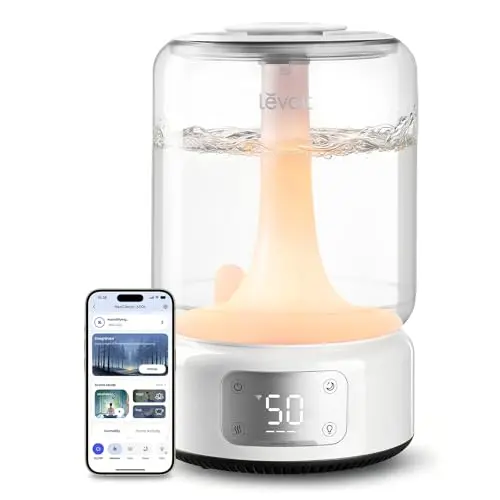
NeoClassic 650S – Nursery Humidity on Autopilot
A 6.2-liter top-fill humidifier for nurseries and larger bedrooms, with a 320 ml/h output and up to 62 hours of runtime. The detachable tray comes fully apart for cleaning, and the water path is treated with silver ions to resist microbial growth between cleanings.
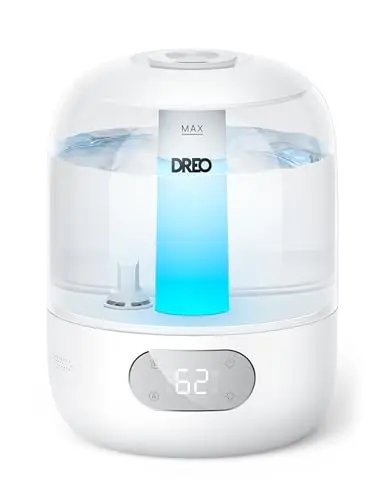
DR-HHM006 – Compact Humidity Control for Small Nurseries
A 3-liter top-fill unit that runs up to 30 hours in sleep mode at a claimed 26 dB. The digital humidistat and timer let you set a target and walk away, and the 360-degree nozzle pushes a fine mist across a room up to 300 square feet.
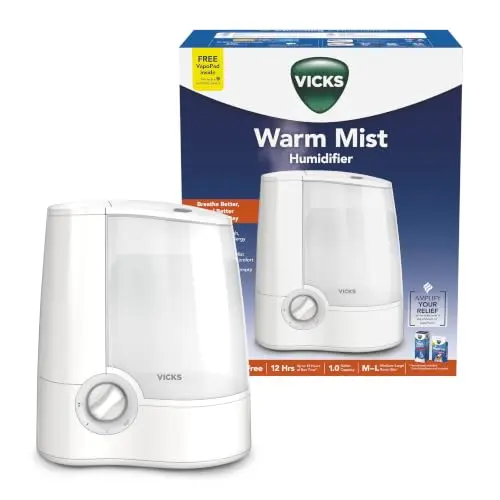
Warm Mist Humidifier V745 – Soothing Warm Mist and Menthol
A one-gallon warm mist humidifier with a filter-free tank and an adjustable humidity dial. It’s built to pair with Vicks VapoSteam or VapoPads for menthol vapor, and it shuts off automatically when the water runs out.
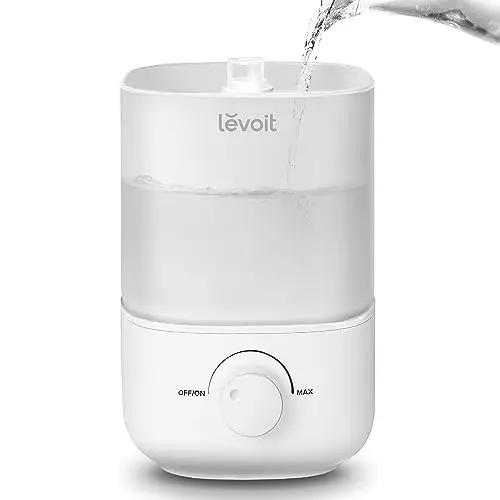
Classic 160 – Quiet, Simple Small-Room Mist
A 2.5-liter top-fill cool mist humidifier sized for bedrooms up to 219 square feet. One knob controls output, the nozzle rotates a full 360 degrees, and the unit runs at a claimed 25 dB with the lights off.
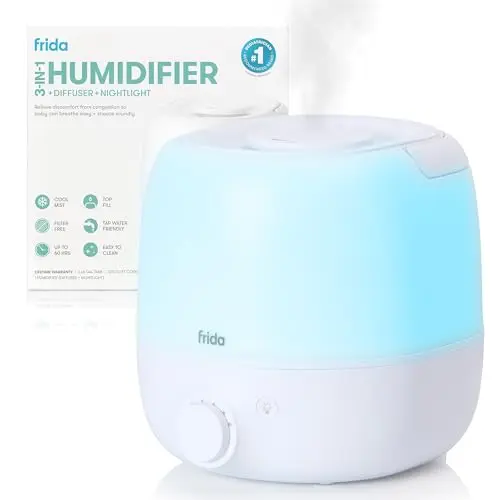
3-in-1 Cool Mist Humidifier – Built for the Nursery
A nursery-focused 0.66-gallon cool mist humidifier that stretches to 60 hours on its lowest setting. It adds a diffuser pad, a nightlight, and a carry handle, and it covers rooms up to 320 square feet.
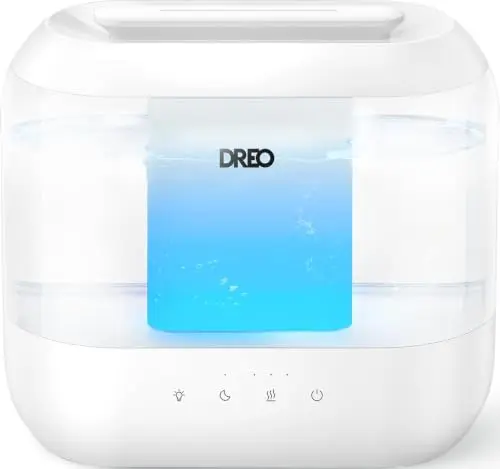
HM311 – Big Tank, Long Runtime
A 4-liter top-fill humidifier rated for rooms up to 300 square feet, with up to 36 hours of runtime. DREO’s dual-intake, four-inch outlet pushes a tall plume of ultrafine mist meant to spread without soaking nearby surfaces.
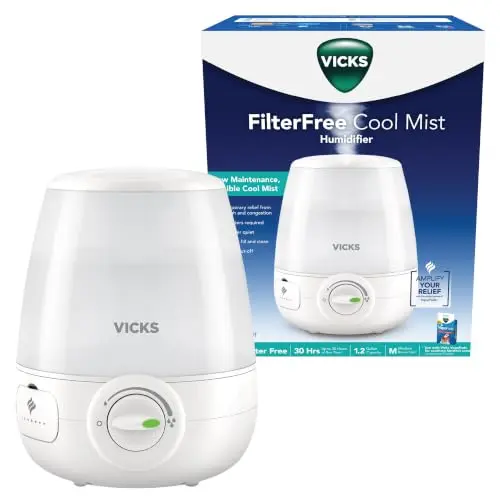
Filter-Free Ultrasonic V4600 – Cool Mist Without Filters
A 1.2-gallon filter-free ultrasonic humidifier that runs up to 30 hours per fill and covers bedrooms and nurseries. Cool mist, no replacement filters, and the same pediatrician-facing positioning Vicks uses across its humidifier line.
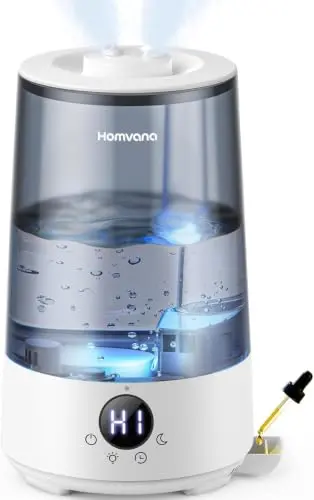
H101 – The 23dB Sleep Companion
A 3.6-liter top-fill humidifier built around a claimed 23 dB output and a display-off sleep mode. It’s BPA-free, adds a seven-color nightlight and an aroma pad, and the 5.3-inch tank opening is wide enough to get a hand and brush inside.
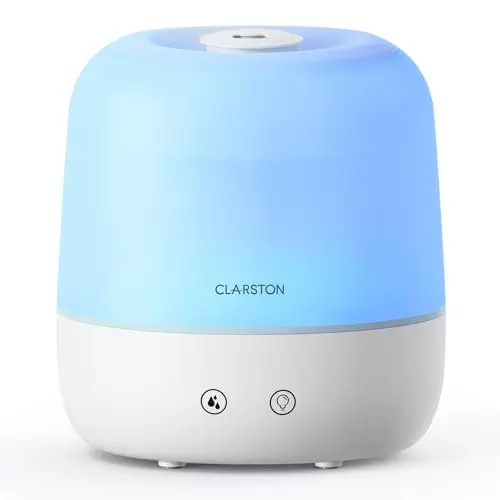
2L Cool Mist Humidifier – Small, Quiet, Affordable
A 2-liter cool mist humidifier with a 24 dB rating and a six-inch tank opening for cleaning. It’s BPA-free, has a water level window and a 360-degree nozzle, and it’s designed to sit on a nightstand rather than the floor.
How We Evaluated These Humidifiers for Baby Congestion
We didn’t run these through a nursery for a full cold season or measure mist output with lab instruments. What we did: cross-referenced nine humidifier models from six brands across six decision axes – mist temperature, noise floor, tank capacity and runtime, humidity control, cleaning access, and safety hardware like auto shut-off and BPA-free materials. We triangulated published specifications, manufacturer feature sets, and aggregated owner feedback where available, then mapped each unit against what a congested baby’s room actually demands: quiet overnight operation, enough runtime to avoid a 3 a.m. refill, and a tank you can get a brush into.
The scoring framework weighted real-world fit for a nursery (70%) – how well a unit performs on the things that drive a bad night – against feature differentiation (30%) – the sensor accuracy, tank treatment, and design details that separate one model from the next. We have no commercial relationship with any brand featured here, and recommendations track fit and differentiation rather than brand preference. Everything was weighed against one question: does this make a sick night easier for the parent who has to get up?
One unit was clearly ahead on humidity control. The Levoit NeoClassic 650S uses sensor-driven Auto Mode to hold a set point, which matters more than tank size once you’re trying to keep a nursery out of the swampy range. If you’d rather skip the app and the premium tier, the DREO DR-HHM006 gives you an on-unit humidistat and timer in a much smaller footprint.
How to Choose the Right Humidifier for Baby Congestion
1. Cool Mist vs Warm Mist: Which Humidifier Helps a Congested Baby?
Cool mist is the nursery default for a reason: no heated water in the room, no warm vapor near a crib, and the same humidifying effect. Warm mist boils the water first and releases a gentle vapor, which many parents find more soothing on a raw nose and which unlocks menthol add-ons like VapoPads and VapoSteam.
Both raise humidity, so treat temperature as a comfort preference rather than a performance spec. The decision usually comes down to whether the menthol ritual is part of your sick-night routine – if it is, the Vicks Warm Mist Humidifier is the only unit here built to support it.
2. Why the Decibel Rating Matters in a Nursery Humidifier
The lineup ranges from a claimed 23 dB to about 28 dB, which sounds like a rounding error on paper and isn’t. A unit in the mid-20s disappears under a white-noise machine; one at the top of that band has an audible hum you’ll notice in a quiet room at 2 a.m. Sleep modes that kill the display lights matter as much as the fan – a glowing panel is its own wake-up risk.
Listen past the fan, too. Tank gurgle can be more disruptive than the motor, and how the reservoir is sealed affects it as much as the fan speed does.
3. Tank Size, Runtime, and the Refill Math That Wakes You Up
Runtime figures are quoted at the lowest output setting, which is not how anyone runs a humidifier during a bad cold. A 2-liter tank is a one-night tank at higher output; a 6-liter tank can stretch across several. Think about which failure mode you’d rather have: bigger and heavier to carry to the sink, or lightweight and needing a refill at 4 a.m.
Top-fill designs beat flip-the-tank designs in practice, because nobody wants to juggle a full reservoir over a crib. If maximum time between refills is the priority, the Frida 3-in-1 Humidifier runs up to 60 hours on its low setting.
4. Humidity Control: How to Keep a Nursery from Going Swampy
The useful range is roughly 40-60% relative humidity. Below that, sinuses stay dry; above it, windows fog and mold finds a foothold. A humidistat or an auto mode with a humidity sensor does the regulating for you, which is the difference between a set-and-forget unit and one you fiddle with by feel.
Knob-only humidifiers aren’t a dealbreaker – they’re often quieter and simpler – but they put the judgment on you. If you’re already up several times a night, automating that decision is worth paying for.
5. Cleaning Access Is the Real Differentiator in Baby Humidifiers
The recurring failure mode in this category isn’t the motor, it’s the tank. Standing water, warm rooms, and narrow necks are a mold recipe. Look for a wide tank opening, a detachable tray, or a base without hard-to-reach corners, and plan on emptying and air-drying daily rather than weekly.
Tank treatments like silver-ion material help between cleanings but don’t replace elbow grease. Any unit that needs a bottle brush and a flashlight will get cleaned less often than one you can wipe down in thirty seconds.
6. What Each Price Tier Actually Buys You
Entry-level units get you a quiet fan, a top-fill tank, and a knob – enough for a small nursery, with fewer parts to break. Mid-range adds a humidistat, a timer, a nightlight, and a wider cleaning opening, which is where most parents should land. Premium buys sensor accuracy, app control, larger tanks, and tank treatments – real conveniences if you’re managing a chronic congestion season, overkill for a two-week cold.
If you’d rather prove that to yourself before spending up, the Levoit Classic 160 shows how little a small room actually needs: quiet operation, top-fill, and one knob.
Frequently Asked Questions
1. Is cool mist or warm mist better for a baby with congestion?
Both raise room humidity, and neither is a treatment – the goal is moist air that makes a stuffy nose feel less raw. Cool mist is the more common nursery default because there’s no heated water in the room. Warm mist adds comfort and supports menthol add-ons. What matters more than temperature is keeping the room in the 40-60% humidity range and cleaning the tank. If you want the warm option, the Vicks Warm Mist Humidifier is the one to look at.
2. What's the difference between the Levoit NeoClassic 650S and the DREO DR-HHM006?
The NeoClassic is the bigger, smarter unit: a 6.2-liter tank, up to 62 hours on low, app and voice control, silver-ion tank treatment, and a dishwasher-safe tray. The DR-HHM006 is the compact alternative – 3 liters, 30 hours in sleep mode, and an on-unit humidistat and timer instead of an app. Both are quiet and both have BPA-free water paths. Go with the DR-HHM006 for a small nursery where you want a set point without reaching for a phone.
3. How does the Frida 3-in-1 compare with the Levoit Classic 160 for nursery use?
The Frida is built for parents: 60 hours on low, a nightlight, a diffuser pad, and a carry handle. The Classic 160 is deliberately plain – 2.5 liters, one knob, a claimed 25 dB – and trades features for simple operation and a lower price tier. The Frida makes more sense if you want the extras and will stay on top of cleaning; the Classic 160 makes sense if you want the least fussy small-room unit on the shelf.
4. How do I keep mold out of a baby humidifier?
Empty the tank every morning, wipe it, and let it air-dry before refilling – standing water is what mold needs. Look for a wide tank opening or a detachable tray so you can actually reach the corners, and follow the manual’s deep-clean schedule. Tank treatments like silver-ion material buy time but don’t replace cleaning. If you see dark specks in the water chamber, stop using the unit until it’s been cleaned.
5. How long should a humidifier run in a baby's room overnight?
Typically the whole night, since congestion tends to be worst when sinuses dry out. The practical limit is the tank: a 2-liter unit may need a refill before morning at high output, while a 6-liter tank can run multiple nights on low. Rely on auto shut-off so a dry tank doesn’t run hot, and keep the room in the 40-60% range rather than chasing maximum mist.
Final Verdict
For most parents, the Levoit NeoClassic 650S is the answer. It holds a humidity set point more precisely than anything else here, has the runtime to get through a bad week without midnight refills, and comes apart for cleaning in a way that actually heads off the mold problem. That combination is what congestion season demands. If you want to spend less and skip the app entirely, the Levoit Classic 160 is the value pick for a small nursery – one knob, quiet, easy to fill. And if warm, menthol-laced mist is part of how your household handles a stuffy baby, the Vicks Warm Mist Humidifier is the only unit here built for it. Whichever you choose, plan on emptying and air-drying the tank every morning – that habit matters more than any spec on this page.
