
Best Humidifiers For Whole House – 2026 Reviews

Dry winter air is easy to ignore until the wood floor gaps open, the piano goes sharp, and everyone wakes up with a scratchy throat. A single bedroom humidifier can take the edge off one room, but whole-house dryness is a different problem: you need moisture distributed across connected spaces, not just a mist plume near the sofa.
The first decision is installation. A furnace-mounted humidifier ties into forced-air ductwork and treats the air as it moves through the house; a floorstanding or portable unit is easier to add but usually serves a zone rather than every room. The second is output and control. Coverage ratings, tank size, humidistat behavior, and evaporative versus ultrasonic operation separate a genuinely useful whole-house humidifier from a large-room appliance with optimistic marketing. We compared the major options across those axes so you can match the unit to your home rather than to a spec sheet.
Best Humidifiers for Whole House – 2026 Reviews
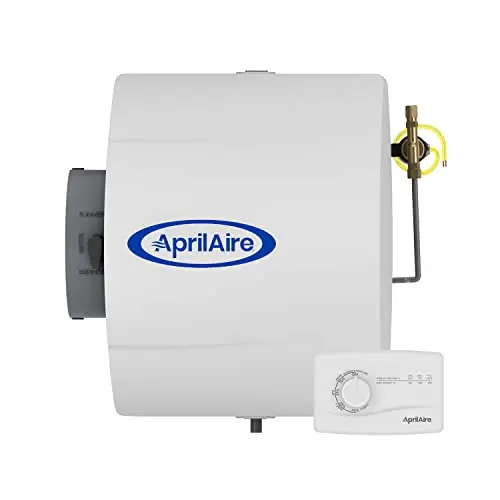
600M Whole-House Humidifier – Furnace-Mounted Coverage for Large Homes
A furnace-mounted evaporative humidifier for forced-air homes, with a 17-gallon daily capacity and coverage up to 5,000 square feet in tightly built spaces. The manual humidistat keeps operation simple.
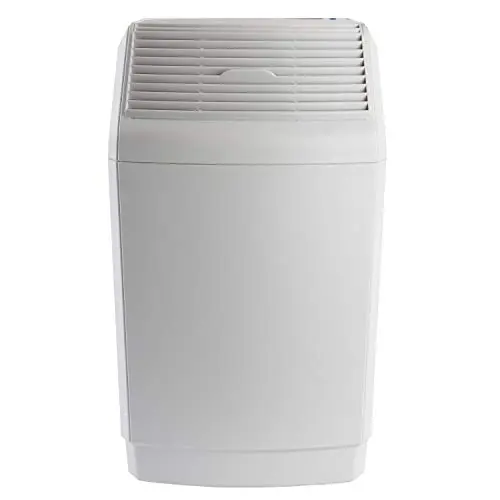
Space Saver 831000 – Digital Evaporative Humidifier for Large Spaces
A standalone evaporative humidifier with a 6-gallon tank, digital auto humidistat, and coverage up to 2,700 square feet. Front filling and casters make it easier to live with in large rooms.

16L Whole-House Humidifier – Long-Run Cool Mist with Remote
A 16-liter ultrasonic floor humidifier with a 4.2-gallon capacity, up to 1,500 square feet of coverage, remote control, extension tube, and aroma box for open living areas.
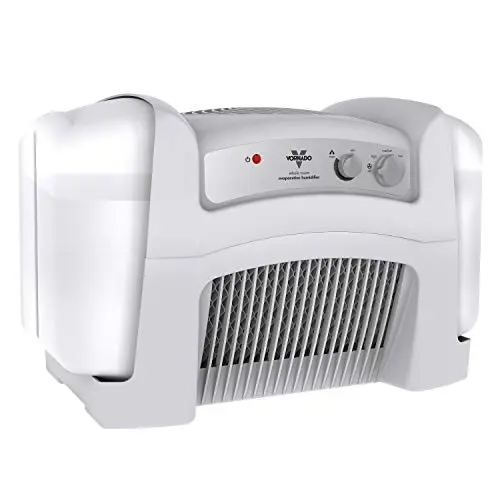
Evap40 – Evaporative Humidifier for Large Rooms
An evaporative large-room humidifier with a 4-gallon dual tank, Vortex air circulation, three speeds, and an adjustable humidistat. It produces no visible mist.
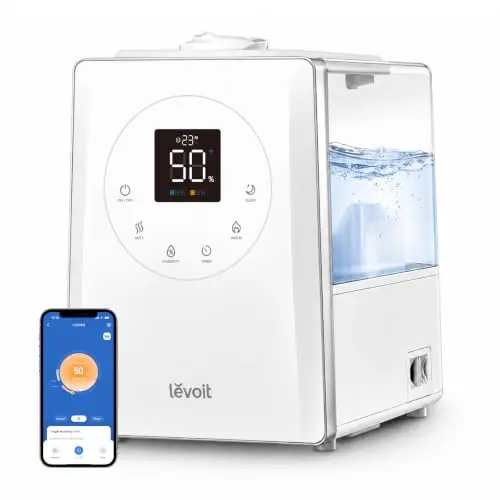
LV600S Smart Hybrid Humidifier – Warm/Cool Mist for Smaller Spaces
A smart warm-and-cool mist humidifier with a 6-liter tank, app and voice control, sleep mode, and coverage up to 753 square feet for bedrooms and smaller homes.
How We Evaluated These Humidifiers for Whole House
We didn’t run controlled whole-home humidity trials or long-term reliability testing. What we did: cross-referenced 5 humidifier models from 5 distinct brands across 5 decision axes – square-footage coverage, moisture output and tank capacity, installation type, control and humidistat features, and maintenance burden. We triangulated published specifications, feature sets, and owner feedback where available, then mapped each option against realistic whole-house buyer profiles.
The scoring framework weighted real-world fit (70%) – how well each humidifier delivers usable humidity for its intended whole-house or large-space role – against feature differentiation (30%) – capacity, control convenience, and maintenance design that separate one model from another. We audited the lineup for coverage claims, water-panel or wick requirements, and installation constraints. We have no commercial relationship with any brand here; recommendations track fit and differentiation, not brand preference. If you have forced-air ductwork and want humidity delivered through the HVAC system, the AprilAire 600M is the natural starting point. If you need a standalone high-capacity unit for a large open area, the AIRCARE Space Saver is the better match.
Where owner feedback was uneven, we treated it as a caution rather than a verdict. Coverage numbers assume closed, reasonably tight homes, so a drafty old house will need more output than the square-footage rating suggests. That gap is worth planning for before you size a unit, especially in older homes with single-pane windows and poor sealing.
How to Choose the Right Humidifier for a Whole House
1. Whole-House Humidifier Coverage: Square Footage, Capacity, and Real Demand
Start with coverage ratings and daily moisture output, but treat both as best-case numbers. A humidifier rated for a certain square footage is usually assuming a reasonably tight, closed home. In an older house with drafty windows, you may need to size up. Capacity matters in two ways: the tank size determines how often you refill, while output per day determines whether the unit can actually keep up. For whole-house use, an evaporative furnace unit with a water line can run far longer between manual refills than a floorstanding tank. If you want ducted coverage and can install a water line, the AprilAire 600M is the direct route.
2. Evaporative vs. Ultrasonic Humidifiers for Whole-House Use
Evaporative humidifiers use a wick or water panel and a fan to add invisible moisture. They are generally self-regulating and less likely to over-humidify, but they need wick or panel replacements and can use more water. Ultrasonic humidifiers create a cool mist and tend to be quieter, but hard water can produce white mineral dust and pump clogs. For whole-house use, evaporative designs are often the more practical match because they work with ductwork or large-room airflow. Ultrasonic floor units make sense where you want targeted mist and can commit to distilled or purified water.
3. Installation Type: Furnace-Mounted, Floorstanding, or Portable Humidifiers
A furnace-mounted humidifier ties into forced-air ductwork and humidifies the whole house as air circulates. It requires a water line, a drain or bypass, and some installation skill. A floorstanding whole-house humidifier is easier to add later and can be moved, but it usually covers a smaller open area and needs regular refills. A portable large-room humidifier is the simplest option, though it is best for a single zone. If you want a standalone unit with high capacity for an open living space, the AIRCARE Space Saver is the more capable floorstanding pick.
4. Controls, Humidistats, and Maintenance for Whole-House Humidity
A humidistat is the control that lets the unit hold a target humidity instead of running nonstop. Auto shut-off protects the unit when the tank empties, and digital controls make setpoints easier to manage. Maintenance is the quiet differentiator: evaporative units need water-panel or wick changes, while ultrasonic units need regular descaling. If you want long runtime and a built-in humidistat without ductwork, the Lacidoll 16L is a strong fit for an open room.
5. How to Match a Humidifier to Your Home Layout and Water Quality
Layout matters as much as square footage. An open-plan living area can often be served by one well-placed floor unit, while a closed-off upstairs bedroom may need its own humidifier. Water quality is the other practical filter: hard water pushes you toward evaporative designs or a commitment to distilled water in ultrasonic units. In the end, the right whole-house humidifier is the one whose installation style, coverage, and maintenance routine match how you actually live.
Frequently Asked Questions
1. How many square feet can a whole-house humidifier realistically cover?
Treat published coverage as a best-case estimate for a closed, reasonably tight home. A ducted model like the AprilAire 600M is rated up to 5,000 square feet in tight construction, while standalone units in this lineup range from about 750 to 2,700 square feet. In an older, drafty house, size up rather than trusting the headline number. Ceiling height, open stairwells, and how many zones you need to humidify all affect the real result.
2. AprilAire 600M vs. AIRCARE Space Saver: which is better for a whole-house setup?
They solve the problem differently. The AprilAire 600M is a furnace-mounted evaporative humidifier that works through your ductwork and is rated for much larger homes. The AIRCARE Space Saver is a standalone floor unit with a digital humidistat, a 6-gallon tank, and casters, so it can serve a large room or open floor plan without HVAC work. Choose AprilAire for ducted whole-house humidity; choose AIRCARE if you want a high-capacity unit you can plug in and move.
3. Vornado Evap40 vs. Levoit LV600S: which should I choose for a large bedroom?
Pick the Vornado Evap40 if you want evaporative mist-free humidity and can tolerate some fan noise for up to 1,000 square feet. Pick the Levoit LV600S if you want app and voice control, warm or cool mist, and a quieter sleep mode for a smaller room. The Levoit is easier to schedule; the Vornado is the more whole-room evaporative design.
4. Do whole-house humidifiers work with any HVAC system?
No. Furnace-mounted humidifiers need forced-air ductwork, a water supply, and a drain or bypass arrangement. Homes with boiler heat, radiators, or mini-splits usually need a standalone floorstanding or portable humidifier instead. Check the installation requirements before buying a ducted unit; the wrong match can turn a simple project into a plumbing and HVAC job.
5. How do I maintain a whole-house humidifier?
Expect consumable parts. Evaporative units need water-panel or wick replacements, and ultrasonic units need regular descaling to prevent mineral buildup. Empty and dry the tank between refills if the unit will sit unused, and follow the manufacturer’s water recommendations. A humidistat helps prevent over-humidification, but it does not eliminate cleaning.
Final Verdict
For most whole-house shoppers, the AprilAire 600M is the pick. It is the only model here built to humidify through forced-air ductwork, and its 17-gallon daily capacity and coverage up to 5,000 square feet make it a true whole-house solution rather than a large-room stopgap. If you don’t have ductwork or want a standalone unit, the AIRCARE Space Saver is the strongest high-capacity floorstanding choice. For a more budget-friendly open-room setup, the Vornado Evap40 is easy to live with. And if you need long runtime with a remote and extension tube, the Lacidoll 16L is the value-oriented match. Match the installation type to your home first; the rest follows.
