
Best Hydrogen Water Pitchers – 2026 Reviews

A hydrogen water pitcher sounds like a simple upgrade to your countertop: fill it, press a button, and drink. In practice, the category is split between two very different products. Some pitchers use electrolysis to dissolve molecular hydrogen into water and quote a concentration in PPB. Others are filtration-first pitchers that remove contaminants, add minerals, and talk about antioxidant potential. Both can be worth owning, but they are not interchangeable.
The first decision is what you actually want the pitcher to do. If you want hydrogenated water as a daily ritual, the quality of the electrolysis cell, cycle length, and retention window matter more than a fancy lid. If your tap water tastes off or carries chlorine, a pitcher with real filtration value may help you more than a higher hydrogen number. Capacity and cleaning routine come next, because a pitcher that is annoying to refill or descale will fall out of use fast.
We looked across brands and product types to separate genuine hydrogen systems from filtration pitchers with hydrogen-adjacent claims. The goal is not to crown the loudest spec sheet, but to help you choose the pitcher that fits your water, your counter, and your actual daily habits.
Best Hydrogen Water Pitchers – 2026 Reviews
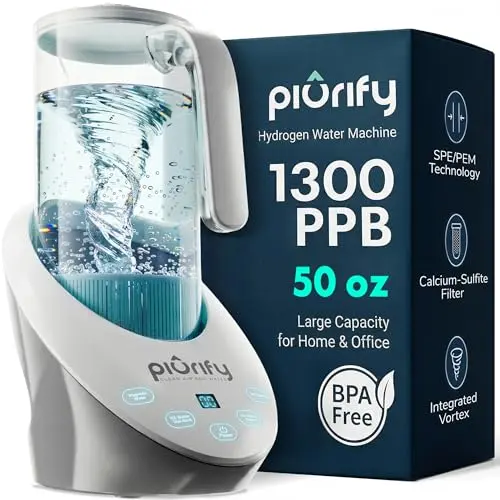
Hydrogenator – 3-in-1 Hydrogen, Vortex, and Filtration Pitcher
A three-in-one countertop pitcher that combines SPE/PEM hydrogen infusion, a magnetic vortex pre-cycle, and a calcium-sulfite chlorine filter. It holds 50 ounces in BPA-free Tritan, offers two hydrogen cycles, and adds self-cleaning touch controls.
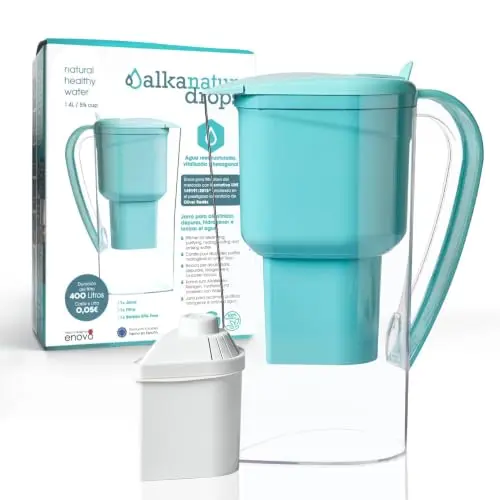
Jarra Filtradora – Filtration-First Alkaline Pitcher
A filtration-first alkaline pitcher that adds magnesium and targets PFAS, fluoride, chlorine, heavy metals, and microplastics. It uses bioceramic filtration rather than electrolysis, with a slim 1.4-liter body and a long-life filter.
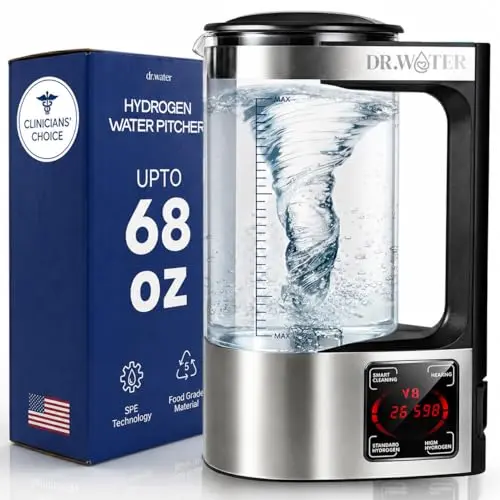
HydroPitcher – Large-Capacity Hydrogen Water Jug
A large-capacity BPA-free pitcher built around simple one- or two-tap hydrogen cycles. It holds 68 ounces, uses calcium-sulfite beads for chlorine reduction, and is aimed at buyers who want more volume with fewer controls.
How We Evaluated These Hydrogen Water Pitchers
We didn’t run controlled electrolysis or dissolved-hydrogen lab measurements over time. What we did: cross-referenced three hydrogen water pitcher models from three distinct brands across five decision axes – hydrogen technology, filtration role, capacity and footprint, cycle controls, and maintenance or warranty coverage. We triangulated published specifications, feature sets, owner feedback where available, and use-case fit for buyers who want either true hydrogen infusion or a filtration-first alternative. That distinction mattered because this category mixes electrolysis pitchers with alkaline pitchers that make antioxidant claims. We also audited whether each model’s filtration language matched its actual role; a chlorine-reduction filter is not the same as a certified contaminant-removal system. We benchmarked each model’s advertised cycle, capacity, and filtration role against its intended daily use.
The scoring framework weighted real-world fit and performance (70%) – how well each pitcher delivers on its stated job, from hydrogen concentration claims to contaminant removal and daily usability – against feature differentiation (30%) – the controls, capacity, warranty, and design choices that separate one model from another. We mapped capacity against typical household routines and weighed warranty coverage as part of long-term ownership, not as a tiebreaker. We have no commercial relationship with the brands; recommendations track fit and differentiation, not brand preference. If you want the most complete hydrogen system, the Piurify Hydrogenator is your match. If you want the strongest filtration-first option, the Alkanatur alkaline pitcher serves you better.
How to Choose the Right Hydrogen Water Pitcher
1. What Makes a Hydrogen Water Pitcher Different From a Filter Pitcher
A hydrogen water pitcher is not one standardized product. Some, like the Piurify Hydrogenator, use SPE/PEM electrolysis to dissolve molecular hydrogen into water and quote a PPB concentration range. Others, like the Alkanatur, are primarily filtration and alkalization pitchers that remove contaminants and produce antioxidant ORP without claiming a measured hydrogen gas output. Both can be useful, but they solve different problems.
If your main goal is hydrogenated water, look for a true electrolysis cell, cycle controls, and a stated retention window. If your main goal is cleaner, better-tasting water with alkaline minerals, a filtration-first pitcher can be the smarter buy. Don’t assume the word hydrogen on the box means the same thing across brands.
2. Hydrogen Concentration, Cycle Time, and Retention Explained
Hydrogen concentration is usually quoted in parts per billion, but the number only tells part of the story. A short cycle might hit a lower PPB, while a longer cycle pushes higher; the Piurify quotes 700-1300 PPB across its two cycles, and the Dr.Water cites roughly 1500 PPB on its longer run. Those figures are brand claims, not lab results you can verify at home without a tester.
Pay equal attention to retention time and cycle length. Hydrogen can dissipate, so a pitcher that holds its concentration for several hours is more useful than one that peaks high and fades fast. Also consider whether you want a 5-minute daily habit or a longer brew that fits your morning routine.
3. Capacity and Countertop Fit for Your Household
Capacity decides how many people a pitcher realistically serves. A 50-ounce model like the Piurify is manageable for one or two people; a 68-ounce jug like the Dr.Water HydroPitcher is better for families or anyone who drinks several glasses before refilling. The Alkanatur’s 1.4-liter body is compact and fridge-friendly, but it will need more frequent refills if you share.
Measure your fridge door and counter space before choosing. A tall pitcher with a stand can be awkward under low cabinets. If volume is your priority, the Dr.Water HydroPitcher is the capacity-first pick here.
4. Filtration, Chlorine Removal, and When You Need More
Most hydrogen pitchers are not full water purifiers. The Piurify includes a calcium-sulfite filter to reduce chlorine, but the brand explicitly says it is not a heavy-duty purifier. The Dr.Water uses calcium-sulfite beads for a similar chlorine-reduction role. If your tap water has serious sediment, lead, PFAS, or fluoride concerns, step up to certified contaminant removal rather than relying on a hydrogen device alone.
The Alkanatur is the filtration specialist in this group, with certifications and a broader removal list. If you need a pitcher to clean up municipal water first, the Alkanatur alkaline pitcher is the safer route. If your water is already safe and pleasant, a hydrogen-focused pitcher can be the add-on.
5. Maintenance, Warranty, and Long-Term Ownership
Daily use brings maintenance into focus. Filters need replacing, pitchers need rinsing, and electrolysis plates benefit from cleaning cycles. The Piurify’s self-cleaning mode and lifetime warranty reduce ownership friction; the Dr.Water has a shorter 12-month warranty; the Alkanatur filter is rated for 105 gallons. Factor in replacement filters and your tolerance for hand-washing before you choose.
If you want the most hands-off routine, the Piurify Hydrogenator is the one to beat. If you prefer a low-maintenance filter pitcher, the Alkanatur is simpler by design.
Frequently Asked Questions
1. What's the difference between the Piurify Hydrogenator and the Dr.Water HydroPitcher?
Both are electrolysis-style hydrogen pitchers, but they aim at different buyers. The Piurify Hydrogenator adds a magnetic vortex pre-cycle, a calcium-sulfite filter, self-cleaning controls, and a lifetime warranty; it is the more complete system. The Dr.Water HydroPitcher is larger at 68 ounces, simpler to operate, and less expensive, but feedback on taste and effectiveness is more mixed.
If you want the fuller feature set and stronger support coverage, go with the Piurify Hydrogenator. If capacity and a lower entry point matter more, the Dr.Water HydroPitcher is the value-volume alternative.
2. How does the Alkanatur pitcher compare with the Piurify Hydrogenator?
The Alkanatur is a filtration-first alkaline pitcher, not an electrolysis generator with a measured hydrogen PPB output. It removes a broad list of contaminants, adds magnesium without sodium, and produces antioxidant ORP. The Piurify is built around hydrogen infusion, with cycle controls and a chlorine filter. That makes the Alkanatur a better fit if your priority is cleaner water rather than hydrogen concentration.
Choose the Alkanatur for certified filtration and alkaline minerals; choose the Piurify Hydrogenator if dissolved H2 is the main goal.
3. Do hydrogen water pitchers replace a normal water filter?
Usually no. A hydrogen pitcher is designed to infuse molecular hydrogen or create antioxidant water, not necessarily to handle heavy sediment, lead, PFAS, or fluoride. Some models include a chlorine-reduction filter, and the Alkanatur is a genuine filtration pitcher, but you should match the device to your water quality report.
If your tap water is already safe and tastes fine, a hydrogen pitcher can be a daily upgrade. If not, fix the filtration problem first.
4. How long does hydrogen stay in pitcher water?
It varies by device and by how you store the water. Piurify quotes retention up to eight hours, while many pitchers do not publish a retention window at all. Higher concentration does not guarantee longer retention, so cycle timing and storage conditions matter.
Drink hydrogenated water sooner rather than later, keep the pitcher covered, and avoid leaving it in a warm spot. If retention is a priority, choose a model with a stated retention claim rather than one that only lists peak PPB.
Final Verdict
For most people shopping this category, the Piurify Hydrogenator is the pick because it treats hydrogen infusion as a full ritual: true electrolysis, a vortex pre-step, a chlorine filter, simple cycles, and a lifetime warranty. It is the most complete countertop system here. If your priority is certified filtration and alkaline, magnesium-rich water rather than measured hydrogen output, the Alkanatur alkaline pitcher is the smarter specialist. And if you want the largest jug with the simplest controls and a more accessible entry point, the Dr.Water HydroPitcher fits that brief. Start with your water quality and your daily volume, then choose the pitcher that solves the bigger problem first. That routing will matter more than any single spec on the box.
