
Best Hypoallergenic Mattress Protectors – 2026 Reviews

You wake up congested, itchy, and sneezing, and the pillowcase takes the blame. The mattress underneath is usually the real offender – it holds dust mite allergen for years and hands it back a little at a time while you sleep. The right protector changes that. The wrong one just has a nicer word printed on the box.
Two things separate the protectors that actually help from the ones that simply say hypoallergenic. The first is barrier design – a full six-sided encasement with a sealed zipper keeps allergen inside the mattress, while a fitted top-only cover doesn’t. The second is what backs the claim: a certification like OEKO-TEX Standard 100 or GREENGUARD Gold, or a build that skips vinyl and PVC, tells you more than an adjective ever will.
We cross-shopped the whole format spectrum – budget zippered encasements, premium cotton-terry covers, and soft fitted protectors in between – and weighed allergen containment, breathability, fit range, and care requirements against each other. What follows is a market survey rather than a pitch for one label. The right pick depends on whether you’re chasing dust mites, spills, or simply a cooler, quieter night’s sleep.
Best Hypoallergenic Mattress Protectors – 2026 Reviews
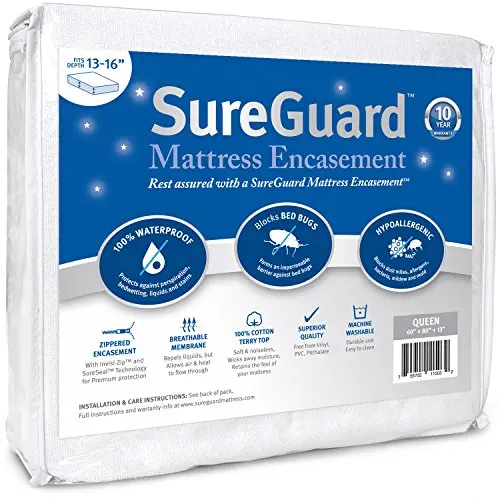
Queen Encasement, 13-16 in. Deep – Certified Allergen Barrier
A six-sided zippered encasement built around a 100% cotton terry top and a polyurethane backing. The zipper pull tucks under a sealed flap so there’s no gap at the end of the track, and the whole build is free of vinyl, PVC, phthalates, and fire retardants.
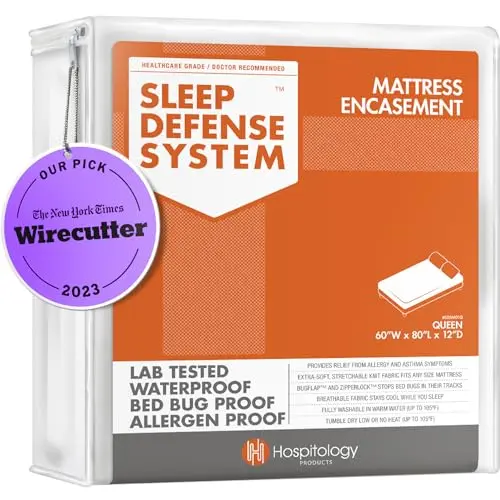
Sleep Defense System Encasement – Stretch Fit for Deep Mattresses
A zippered six-sided encasement with a soft polyester knit face and a breathable polyurethane membrane. The stretch build is designed to pull over deeper mattresses without a fight at the corners.
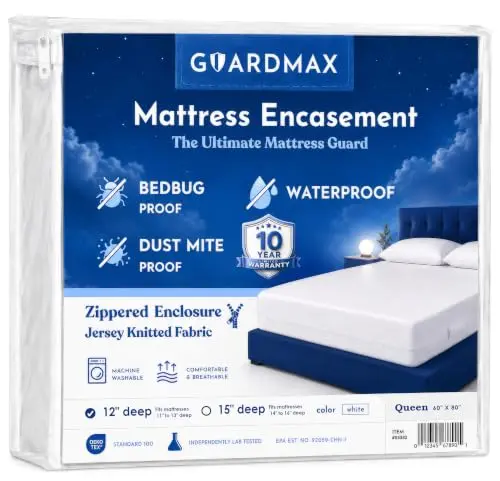
Jersey Knit Encasement – OEKO-TEX Certified Barrier
A six-sided zippered encasement in soft jersey-knit polyester, with the zipper wrapping three sides and tucking under a stitched guard flap. The face fabric carries OEKO-TEX Standard 100 certification.
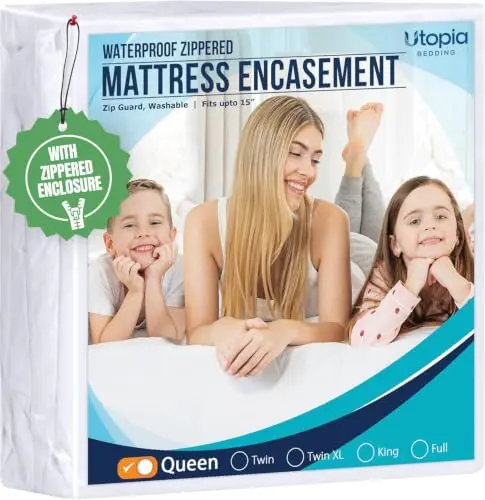
Zippered Mattress Encasement – Six-Sided Value Pick
A full six-sided zippered encasement with a TPU waterproof backing on every face and a smooth knitted polyester surface. It covers the top, bottom, and all four sidewalls – the format that separates a real encasement from a fitted protector.
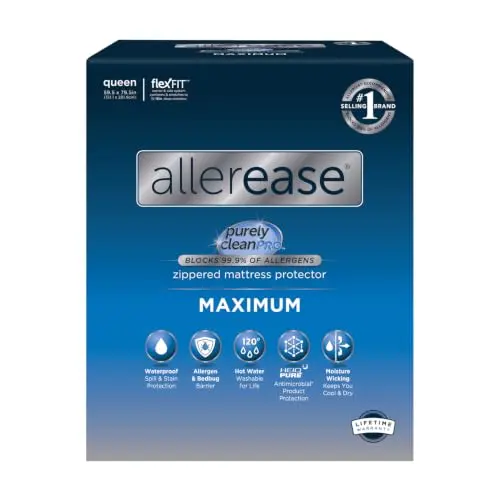
Maximum Allergy Zippered Protector – Hot-Water Washable
An allergy-focused zippered encasement with a soft, quiet top fabric and a waterproof backing. It’s built around frequent high-temperature washing, which is unusual in this category.
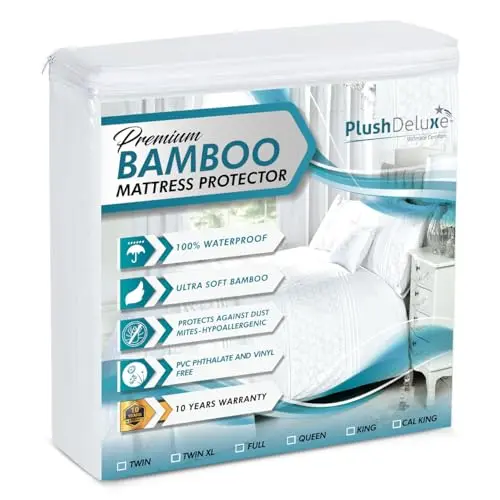
Bamboo Waterproof Protector – Soft, Noiseless Fitted Cover
A fitted-sheet-style protector in viscose derived from bamboo, with a waterproof membrane underneath. It covers the top and the sides it reaches rather than fully encasing the mattress.

Cotton Terry Mattress Protector – Quiet Fitted Coverage
A fitted-sheet-style protector with an 80/20 cotton-poly terry sleep surface and a polyurethane laminate backing. Stretchable pockets pull it over the corners and hold it flat.
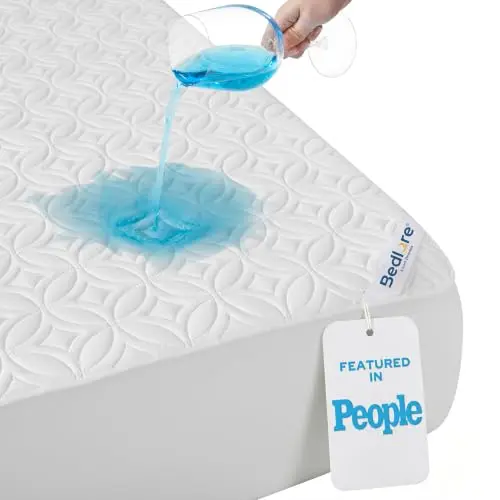
Quilted Waterproof Mattress Pad – Deep-Pocket Fitted Cover
A quilted fitted mattress pad with a brushed microfiber surface, a TPU waterproof layer, and a 360-degree elastic skirt. The quilted build adds a light layer of padding on top of the protection.
How We Evaluated These Hypoallergenic Mattress Protectors
We didn’t run these through months of nightly sleep or send them out for independent allergen lab testing. What we did: cross-referenced 8 hypoallergenic mattress protector models from 8 distinct brands across six decision axes – allergen barrier design, material safety and certification, waterproofing, breathability and noise, fit and depth range, and care requirements. We triangulated published specifications, feature sets, and owner feedback where available against the way people actually buy this category: either chasing dust mite relief, or chasing a spill-proof layer that sleeps comfortably.
The scoring framework weighted real-world fit (70%) – how well each protector delivers on allergen containment or surface protection for its stated job – against feature differentiation (30%) – the certifications, zipper sealing, fabric construction, and depth range that genuinely separate one model from another. We audited the care instructions closely, because a protector that can’t be washed hot has a weaker long-term allergen story than one that can. Recommendations track fit and differentiation, not brand preference; we have no commercial relationship with any brand here.
If dust mite containment is your goal, the SureGuard Mattress Encasement is where to start. If your mattress is thick enough that most covers fight you, the Hospitology Sleep Defense System solves that specific problem.
How to Choose the Right Hypoallergenic Mattress Protector
1. What Actually Makes a Mattress Protector Hypoallergenic
The word hypoallergenic isn’t regulated in bedding, so treat it as a starting point rather than a guarantee. What actually matters is the physical barrier: a fabric tight enough to keep dust mite allergen from migrating out of the mattress, plus a closure that leaves no gap. A cover with a loose weave and an open-ended zipper track doesn’t become hypoallergenic because the box says so.
Second, look at the material. Protectors built around vinyl or PVC tend to bring a plastic smell into a closed bedroom, and some sensitive sleepers react to that before they ever notice an allergen benefit. Polyurethane backings under a cotton terry, jersey knit, or bamboo face are the more common approach among the better picks, and several in this lineup are explicitly free of vinyl, PVC, and phthalates.
2. Encasement or Fitted Protector: Matching the Barrier to the Problem
A six-sided zippered encasement seals the entire mattress – top, bottom, and all four sidewalls. That’s the format that makes sense for dust mite containment, because the allergen lives inside the mattress and the goal is keeping it there. An encasement also blocks bed bug movement in both directions, which is why the format dominates this category.
A fitted protector covers the sleep surface and the sides it reaches. It’s the better choice for spills, night accidents, and general wear, and it’s far easier to strip and wash. What it doesn’t do is seal the mattress, so allergen containment is partial at best.
If dust mite relief is the whole reason you’re shopping, go with an encasement. If you’re protecting against spills and want something you can pull off in a minute, a fitted cover earns its place – the Utopia Bedding encasement is the affordable route to full coverage, while a fitted bamboo or terry cover is the comfort route.
3. Certifications Worth Checking: OEKO-TEX Standard 100 and GREENGUARD Gold
Two certifications come up repeatedly in this category, and they test different things. OEKO-TEX Standard 100 applies to the textile itself and screens for harmful substances at levels considered safe against skin – relevant when the fabric sits against your face for eight hours a night. GREENGUARD Gold is an indoor-air certification covering chemical emissions, which is the more relevant standard if you’re sensitive to how a new product off-gasses in a closed bedroom.
Neither certification proves a protector will reduce your symptoms. What they give you is a verifiable third-party check on fabric safety and emissions instead of relying on the manufacturer’s own wording. Several strong protectors in this lineup carry no certification at all – not automatically disqualifying, but it does mean the allergen claim rests entirely on construction.
4. SureGuard vs. Guardmax: Two Ways to Seal a Mattress
These two sit near the top of the lineup and take opposite approaches to the same problem. The SureGuard encasement uses a cotton terry top over a polyurethane backing, with a zipper pull that tucks under a sealed flap. It carries GREENGUARD Gold and fits mattresses from 13 to 16 inches deep.
The Guardmax encasement uses a jersey-knit polyester face with OEKO-TEX Standard 100 certification, and seals its zipper under a stitched guard flap running around three sides. Its depth ceiling is lower, at roughly 13 inches.
If you want a terry surface and a wider fit range, the SureGuard format suits you better. If you want certified fabric and the softest hand-feel under the sheets, the Guardmax encasement is the one we’d hand to a sensitive sleeper.
5. Breathability, Noise, and Depth: The Fit Details People Skip
The most common reason a protector gets returned isn’t allergen performance – it’s that it crinkles, traps heat, or won’t fit. Noise comes from the waterproof membrane sitting directly under a thin fabric; a terry, knit, or quilted layer above the membrane is what keeps it quiet. Breathability works the same way. A membrane described as breathable with a knit face over it sleeps cooler than a solid vinyl backing.
Depth range is the spec people get wrong most often. Standard mattresses sit around 10 to 12 inches, pillow-tops and hybrids run 13 to 16, and some go deeper still. An encasement rated below your mattress depth will strain at the seams and can pull the zipper open. Measure before you buy – it takes two minutes and saves a return.
6. Washing a Hypoallergenic Mattress Protector Without Breaking the Barrier
Washing is where the allergen story either holds up or falls apart. Hot water is what denatures dust mite allergen, so a protector rated for hot washing with non-chlorine bleach has a genuine advantage over one that only tolerates cold. The Aller-Ease protector is the clearest example in this lineup, and it’s why it earns a spot for allergy-focused households.
The other rule is low-heat drying. High dryer temperatures degrade the waterproof membrane and shorten the life of seams and zippers – several manufacturers here specify the lowest setting and removing the cover as soon as it’s dry. Skip fabric softener and dryer sheets too, since they coat the fabric and reduce both breathability and moisture wicking.
Frequently Asked Questions
1. Are hypoallergenic mattress protectors actually different from regular waterproof ones?
Sometimes, and sometimes it’s just wording. The meaningful differences are barrier construction – a sealed zipper and a tight weave rather than an open-ended track – plus material safety, meaning no vinyl, PVC, or phthalates in the build. A certification like OEKO-TEX Standard 100 or GREENGUARD Gold is the clearest evidence a manufacturer did more than print an adjective on a box.
A standard waterproof protector without those features still stops spills. It just isn’t built around allergen containment.
2. What's the difference between the SureGuard encasement and the Guardmax encasement?
Surface material and depth range, mostly. The SureGuard uses a cotton terry top over a polyurethane backing, carries GREENGUARD Gold certification, and fits mattresses 13 to 16 inches deep. The Guardmax uses a jersey-knit polyester face with OEKO-TEX Standard 100 certification and tops out around 13 inches. Both tuck the zipper pull under a flap.
If your mattress is thick, SureGuard is the safer fit. If you want the softer hand-feel and certified fabric, the Guardmax encasement wins that comparison.
3. How does the Hospitology encasement compare to the Utopia Bedding encasement?
The Hospitology is the stretch option: it pulls over mattresses from 12 to 18 inches deep, uses a breathable polyurethane membrane, and carries an explicit hypoallergenic claim along with a five-year warranty. The Utopia Bedding encasement is the value option – six-sided TPU waterproofing, a smooth knit face, and coverage up to 15 inches, without a certification or an allergen claim.
Choose the Hospitology Sleep Defense System if your mattress is deep or the allergen positioning matters. Choose Utopia if you want full coverage at the entry tier and don’t need the paperwork.
4. Will a hypoallergenic mattress protector make noise or sleep hot?
It depends almost entirely on what sits above the waterproof membrane. A cotton terry, jersey knit, or quilted layer keeps the cover quiet and buffers the membrane from your body. A thin fabric over a vinyl backing is where crinkling and heat build-up come from.
Breathability varies by product too. A membrane described as breathable under a knit face sleeps noticeably cooler than a solid barrier. If you run warm, favor a knitted or bamboo surface over a plastic-feeling one.
5. Can I wash a hypoallergenic mattress protector in hot water?
Only if the care label says so. Hot water is the more effective setting for denaturing dust mite allergen, and a handful of protectors are rated for a hot wash with non-chlorine bleach when needed. Many others specify cold or warm only, and washing those hot can degrade the waterproof membrane or shrink the skirt.
Whatever the label says, dry on the lowest heat setting and pull the cover out as soon as it’s dry. High dryer heat is what shortens the life of seams and zippers.
Final Verdict
For most people shopping this category, the SureGuard Mattress Encasement is the answer – a cotton terry surface, a sealed zipper, and third-party indoor-air certification make it the most defensible hypoallergenic barrier here without giving up waterproofing.
If your mattress is deep enough that most covers fight you, the Hospitology Sleep Defense System stretches over 12 to 18 inches and stays soft doing it. Budget shoppers get genuine six-sided coverage from the Utopia Bedding encasement – you give up certification and the hypoallergenic claim, not the barrier itself. And if you’d rather skip the encasement ritual entirely, the PlushDeluxe bamboo protector is the softest fitted option, with a hypoallergenic surface and an 18-inch fit range.
Match the format to the problem: full encasement for dust mite containment, fitted cover for spills and comfort.
