
Best Hypoallergenic Pillow Covers – 2026 Reviews

You change the pillowcase. You flip the pillow. You still wake up sneezing. Here’s what nobody mentions: the pillowcase is the least protective layer on your bed. It’s decorative, not functional, and it does almost nothing to keep dust mites, dander, and pollen out of the pillow core, which is exactly where they collect.
A hypoallergenic pillow cover is the layer that does real work. But hypoallergenic is one of the loosest words in bedding. On some products it means a lab-tested barrier with a full zipper seal. On others it means a cotton slipcover with a nice label. The gap between those two things is the entire buying decision.
Two things separate the good options from the disappointing ones. First, how completely it seals – a zippered encasement that closes the pillow end to end beats a slip-on protector every time, because allergens come in through the opening. Second, how livable it is. A barrier you stop using after a week protects nothing. We cross-shopped the market rather than one brand’s catalog, and everything below comes down to how those two tradeoffs balance for your bed.
Best Hypoallergenic Pillow Covers – 2026 Reviews
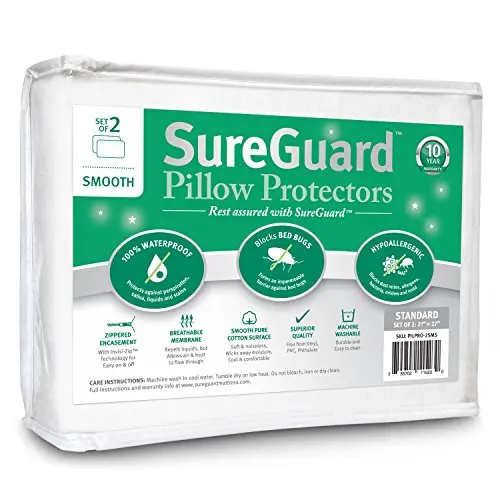
Pillow Protectors – Lab-Certified Allergen Barrier
SureGuard’s standard-size encasement pairs a smooth 100% cotton surface with a waterproof backing and an Invisi-Zip closure that seals the whole pillow. It’s built around blocking dust mites, mold, mildew, pollen, and pet dander rather than just covering the fabric, and it’s independently lab tested and GREENGUARD Gold certified. If feather pillows are the problem, the tight construction also stops quills from poking through.
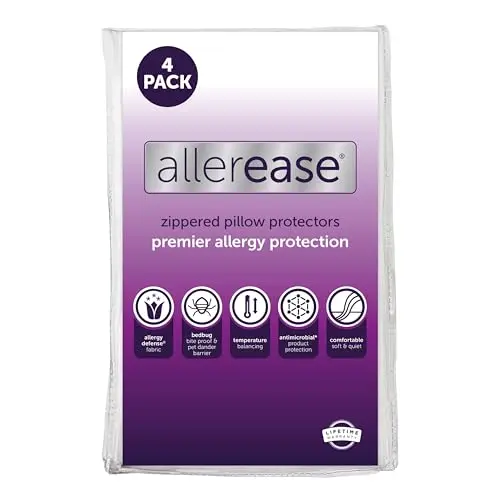
Premier Zipper Pillow Protector – Temperature-Balancing 4-Pack
The Premier version of AllerEase’s pillow protector uses the same tightly woven allergen fabric but adds temperature-balancing fibers – a technology borrowed from performance athletic wear that holds heat when you’re cold and releases it when you’re warm. It comes as a four-pack in a standard/queen cut, fully zippered, machine washable hot, and backed by a lifetime limited warranty.
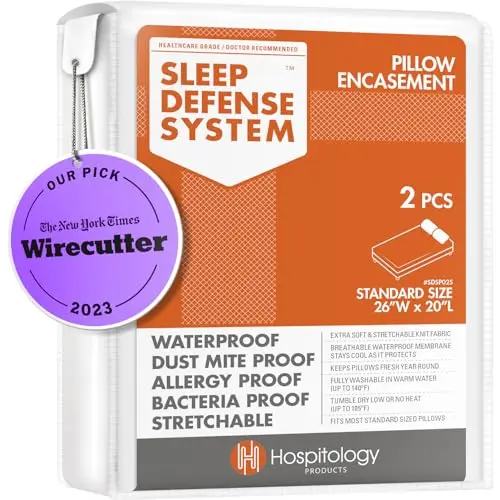
Sleep Defense System Pillow Encasement – Waterproof Zippered 2-Pack
Hospitology builds this as a true encasement rather than a cover: a full zipper, a breathable waterproof membrane, and an extra-soft polyester knit face that stays cool. The membrane blocks saliva, sweat, and other body fluids from reaching the pillow without the heat-retention problem that makes cheap waterproofing miserable.
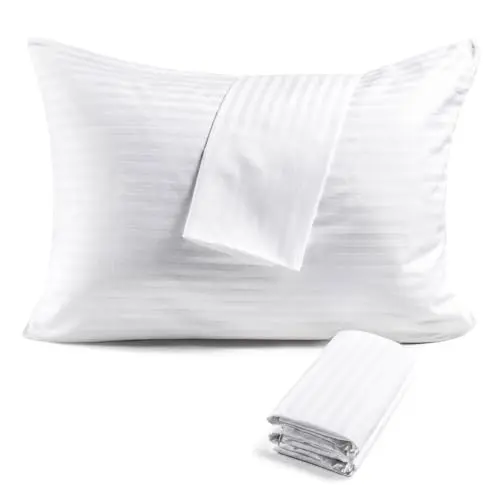
600TC Cotton Pillow Protectors – Hotel-Grade Cotton 4-Pack
Faunna leans hard into fabric quality: a 600-thread-count 100% cotton shell, OEKO-TEX certified for material safety, and a silent rust-proof zipper tucked into a hem pocket. The high-density weave resists pilling and is designed to stay soft and white through repeated washing. Four standard 20 x 26 covers per set.
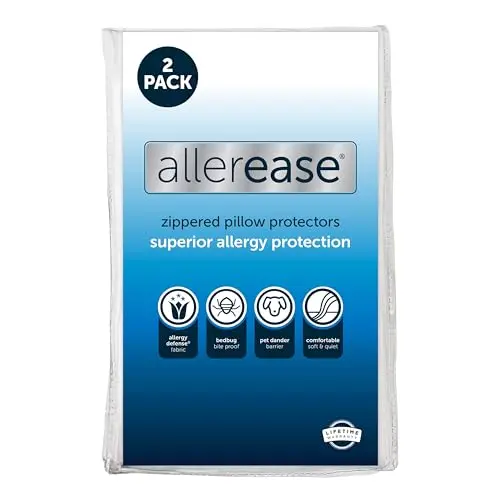
Allergy Pillow Protector – Everyday Allergen Barrier 2-Pack
The entry point to AllerEase’s allergy line: a tightly woven fabric designed to keep household particles out of the pillow, a full zipper, and a breathable build that won’t change how the pillow feels or hold heat. Standard/queen sizing, two per pack, machine washable, and covered by a lifetime limited warranty.
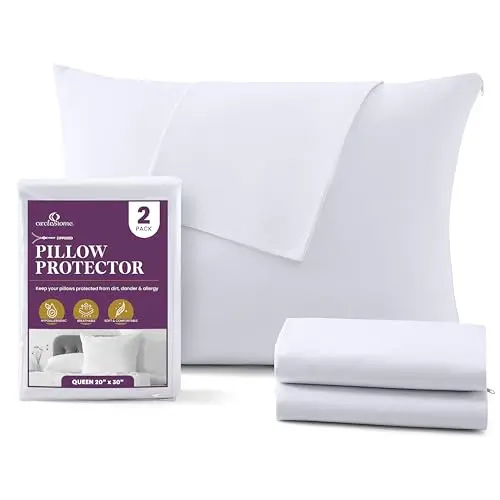
Cotton Pillow Protectors – Silky Cotton with Hidden YKK Zipper
CirclesHome uses natural cotton with a hidden YKK zipper that tucks into the hem so it can’t scratch skin or catch hair. The tight weave is aimed at dust, dander, and everyday allergens, and the cotton is pre-shrunk to hold its shape through laundry. Queen sizing at 20 x 30, two per set.
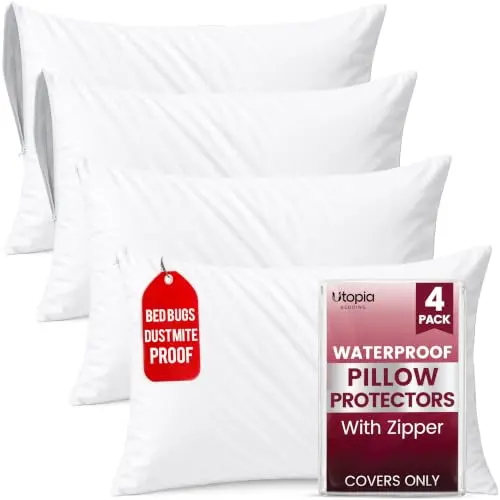
Waterproof Pillow Protectors – Bed Bug and Dust Mite Encasement
Utopia’s four-pack does a lot for a budget cover: a knitted jersey face, a TPU waterproof barrier underneath, and an auto-lock zipper that seals into a full dust mite and bed bug encasement. Queen sizing at 20 x 28 with stretch for a snug fit. Machine washable.
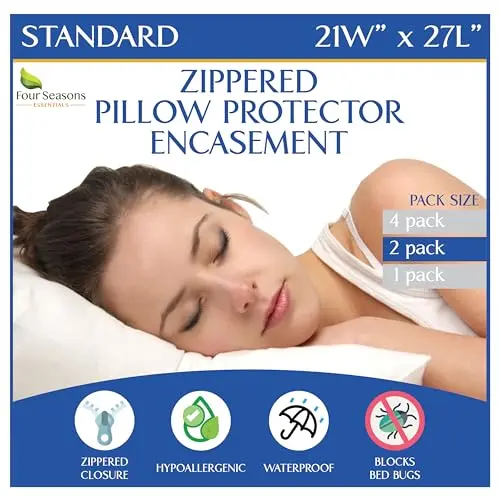
Pillow Protectors – Soft Waterproof Encasement
A polyester knit face over a polyurethane inner lining, fully zippered, and built to stay soft and noiseless rather than crunchy. The impenetrable cover is aimed at sealing out dust and pet hair while blocking liquids and moisture. Standard 21 x 27, two per set, three-year limited warranty.
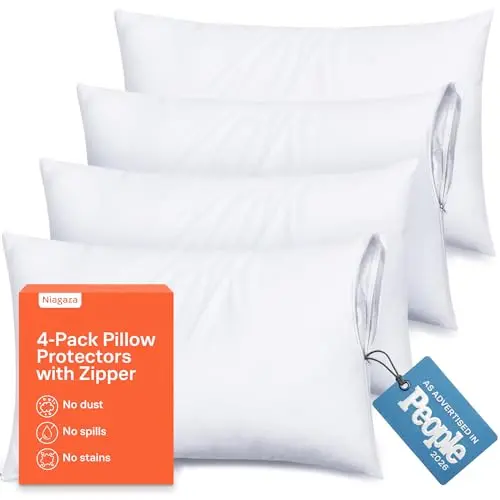
Ultra Soft Pillow Protectors – Breathable Microfiber 4-Pack
A high-thread-count microfiber weave with an auto-lock side zipper and a four-pack at standard 20 x 26. The tight weave is built to keep dirt out and extend pillow life, and the cooling microfiber is aimed at year-round temperature comfort. No waterproof layer.
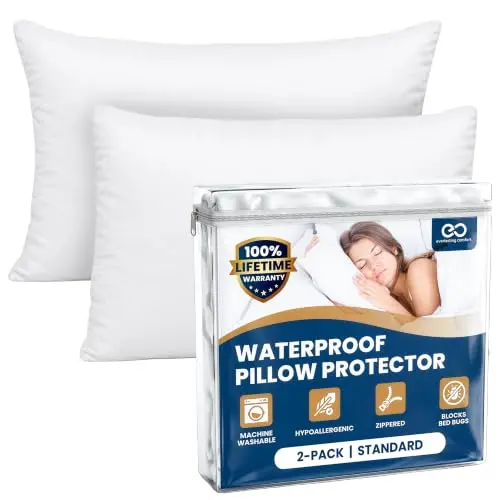
Pillow Protectors – Breathable Waterproof Cover Set
A waterproof, breathable zippered cover in soft polyester with a pure white finish that disappears under any pillowcase. The 360-degree zipper enclosure protects against everyday moisture while the cooling fabric is aimed at hot sleepers. Standard 21 x 27, two per set.
How We Evaluated These Hypoallergenic Pillow Covers
We didn’t put these covers through lab particle-penetration testing or a full season of nightly sleep. What we did: cross-referenced 10 pillow cover models from 9 distinct brands across five decision axes – allergen barrier construction, surface fabric and feel, waterproofing versus breathability, certifications and material safety, and sizing, care, and warranty terms. We triangulated published specifications against feature sets, mapped each cover to realistic allergy-household scenarios, and weighed owner feedback where available to see which claims survived daily use.
That meant weighing weave density, membrane presence, zipper seal quality, and third-party certification against each other rather than treating hypoallergenic as a single yes-or-no. Owner-feedback signal was uneven across the lineup, so we used it as a tiebreaker rather than a foundation.
The scoring framework weighted real-world allergen fit (70%) – how completely a cover seals a pillow, how quietly it sleeps, and how well it keeps that seal after washing – against feature differentiation (30%) – certification, fabric upgrades, zipper engineering, and multi-pack value that separate one option from the next. We have no commercial relationship with any brand featured here; recommendations track fit and differentiation, not brand preference. If you want the most defensible allergen barrier, the SureGuard Pillow Protectors is the pick; if you’re outfitting several beds without spending much, the Utopia Bedding Waterproof Pillow Protectors cover more ground.
How to Choose the Right Hypoallergenic Pillow Covers
1. What Actually Makes a Pillow Cover Hypoallergenic
The word itself has no legal definition in bedding, which is why you see it on everything from lab-tested encasements to plain cotton cases. What actually matters is the barrier. Allergens are physical particles – dust mite waste, pet dander, pollen, mold spores – and they’re measured in microns. A fabric with a tight enough weave or a laminate membrane physically blocks them. A loose decorative weave doesn’t.
That’s why thread count matters here in a way it doesn’t for sheets. A high-density weave is a mechanical filter. So is a polyurethane or TPU membrane. What isn’t a filter: a soft open knit with a hypoallergenic tag and nothing behind it. If a listing can’t tell you how it blocks particles, assume it doesn’t.
2. Zippered Encasement vs. Slip-On Pillow Protectors
A full zipper changes the math entirely. A slip-on protector leaves two open ends, and allergens move freely through them – you’ve protected the fabric, not the pillow. A zippered encasement closes the pillow in on all sides, which is the only way a cover meaningfully reduces what’s in the core.
Zipper quality is the failure point to watch. Cheap zippers split, catch hair, or scratch skin. Auto-lock zippers stay closed on their own; hidden or hem-tucked zippers keep hardware away from your face. If you’re buying for a kid’s bed, put real weight on that detail. For the most complete seal we looked at, the SureGuard Pillow Protectors run an Invisi-Zip closure that sits flush against the pillow.
3. Weave, Fabric, and Breathability: The Comfort Tradeoff
Cotton breathes. Polyester knit stretches. Microfiber feels silky. None of those is inherently more hypoallergenic – what matters is the density of the weave and whether a membrane sits behind it. But the fabric is what determines whether you actually keep the cover on the pillow.
The tradeoff is straightforward: waterproofing adds a barrier layer, which traps some heat and can introduce a crinkle. Good designs fight back with breathable membranes, stretch knits, and moisture-wicking faces. If you sleep hot, paying attention to this section is worth more than any other spec on the page.
4. Waterproofing Without the Crinkle
Decide first whether you need waterproofing at all. An allergen barrier and a spill barrier are different products, and confusing them is the most common buying mistake in this category. If your concern is dust mites and dander, a tight cotton or microfiber weave does the job and sleeps cooler. If you have kids, pets, or a memory foam pillow worth protecting, you want a polyurethane or TPU lining.
The good news is that modern membranes are quieter than the vinyl-and-crinkle versions of a decade ago. Look for language like noiseless, breathable membrane, or won’t retain heat, and treat those claims with mild skepticism – they’re directional, not guarantees. If budget is the constraint and you still want a sealed, waterproof layer, the Utopia Bedding Waterproof Pillow Protectors deliver both across a four-pack.
5. Certifications and Material Safety to Look For
This is where a hypoallergenic claim stops being a marketing word. OEKO-TEX certification means the textile has been tested for harmful substances. GREENGUARD Gold measures chemical emissions. Allergist-recommended designations come from professional bodies rather than the brand’s own copy. Any one of these is a meaningful signal; two is better.
The flip side matters too. Covers advertised as free of vinyl, PVC, phthalates, and fire retardants are telling you something real – those are exactly the materials an allergic or chemically sensitive sleeper should avoid, and older waterproof covers leaned on them heavily.
6. Sizing, Multi-Packs, and Care That Keeps the Barrier Intact
Measure your pillow, not your pillowcase. Standard covers run roughly 20 x 26 to 21 x 27, queen lands around 20 x 28 to 20 x 30, and the difference is enough to make a cover baggy or impossible to zip. A snug fit isn’t cosmetic – a loose cover bunches, and bunched fabric is where seams fail.
Multi-packs are the practical buy. You want at least two covers per pillow so one can be in the wash, and a four-pack is usually the better ratio. Care matters more than most people expect: hot-water washing kills dust mites, but hot drying can shrink cotton and degrade membranes, so follow the label. And remember that waterproofing requires a membrane – cotton alone won’t stop a spill. If you’re setting up a guest room, the AllerEase Premier Zipper Pillow Protector four-pack covers two beds in one purchase.
Frequently Asked Questions
1. Are hypoallergenic pillow covers actually different from regular pillowcases?
Yes, in one specific way: barrier density. A decorative pillowcase is woven loosely enough that dust mite particles and dander pass through it, and it’s open at one end. A hypoallergenic cover is built with a dense weave or a laminate membrane and usually a full zipper. That’s the entire difference – but it’s a real one, because the pillow core is where allergens actually accumulate.
What a hypoallergenic cover won’t do is replace washing. It slows accumulation; it doesn’t eliminate it.
2. What's the difference between SureGuard Pillow Protectors and AllerEase Premier Zipper Pillow Protector?
Both are zippered allergen barriers, but they’re built for different priorities. SureGuard leans on third-party testing – it’s independently lab tested and GREENGUARD Gold certified, with a waterproof laminate under a cotton face and a ten-year warranty. It’s the more defensive pick.
AllerEase Premier is the comfort pick: temperature-balancing fibers, a quiet weave, and a four-pack that covers a whole bed. It’s allergist recommended but not waterproof. Choose the SureGuard Pillow Protectors if certification and liquid protection matter most; choose Premier if you want four covers and a cooler night.
3. How do FAUNNA 600TC Cotton Pillow Protectors compare to CirclesHome Cotton Pillow Protectors?
Both are 100% cotton covers built on tight weaves, and neither is waterproof – that’s the honest tradeoff for sleeping cool. FAUNNA goes further on verification with OEKO-TEX certification and a 600-thread-count shell, and it comes as a four-pack in standard sizing. CirclesHome counters with a hidden YKK zipper and queen 20 x 30 sizing, but that’s the only size offered.
Pick FAUNNA for certification and standard-size coverage; pick CirclesHome if you have queen pillows and care most about zipper quality.
4. Do hypoallergenic pillow covers make noise or feel plasticky?
Some do, and it’s the most common reason people abandon them. Waterproof covers are the usual culprits because the barrier membrane is what crinkles. The fix is breathable membranes paired with a soft face fabric – cotton, jersey knit, or brushed microfiber – rather than a bare polyurethane sheet.
If noise is your main worry, skip waterproofing entirely unless you need it, or look specifically for a noiseless claim or a cotton surface. It’s one of the few places where the marketing language maps to a real difference.
5. How often should you wash hypoallergenic pillow covers?
Weekly is the sensible target, and never less than every two weeks – that’s roughly the interval at which dust mite populations rebound. Hot water does the heavy lifting, so check that the cover tolerates it. Several options here, including the AllerEase models, are rated for hot washing and non-chlorine bleach.
Low-heat drying protects membranes and prevents cotton shrinkage. And buy a set that lets you rotate – a cover that’s off the bed to dry isn’t protecting anything.
Final Verdict
For most people, the SureGuard Pillow Protectors are the answer. It’s the only cover here with a genuine third-party certification stack behind its allergen claim, and a waterproof laminate under a real cotton face means you get protection without a plastic night.
If the goal is outfitting a whole bed without spending much, the Utopia Bedding Waterproof Pillow Protectors give you a sealed zipper and a waterproof barrier across four covers – the best ratio of protection to cost in this lineup. If you sleep hot or want the comfort upgrade, the AllerEase Premier Zipper Pillow Protector adds temperature-balancing fabric and a lifetime warranty.
And if spills aren’t a concern and you just want cotton that feels like bedding, the FAUNNA 600TC Cotton Pillow Protectors are the ones we’d hand a guest.
