
Best Ice Maker Filters – 2026 Reviews

Ice from a fridge dispenser or countertop nugget machine only tastes as good as the water feeding it. A filter that fits but barely reduces chlorine can leave you with clear ice that still smells off.
The tricky part is that ice maker filters are not one product type. Some are refrigerator-specific cartridges, some are inline filters spliced into a quarter-inch line, and a few are built for countertop nugget machines. The useful split is certification coverage and physical fit.
We compared the market with that in mind, sorting for contaminant reduction, installation, lifespan, and owner feedback where available. The goal is to help you match the filter to your appliance, not chase a universal answer.
Best Ice Maker Filters – 2026 Reviews
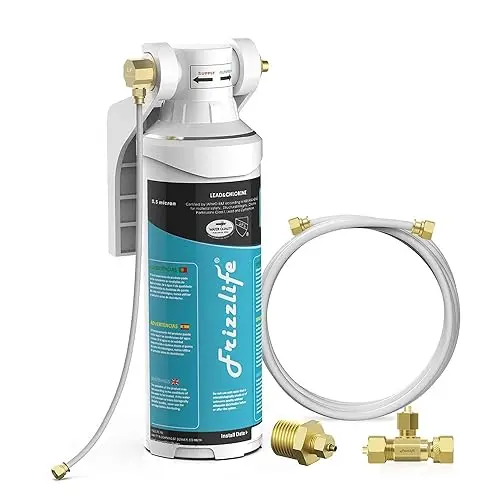
MS99 – Certified Inline Filtration for Fridge and Ice Maker
The MS99 is an inline system rather than a cartridge that drops into a fridge ceiling. It is IAPMO R&T certified to NSF/ANSI 42 and 53, so it targets chlorine, taste, odor, lead, and particulates while leaving minerals in the water. The 1,600-gallon, two-year cartridge and auto shut-off filter head make it a lower-maintenance option for non-filter fridges, ice makers, and under-sink setups. Compression fittings support PEX or copper tubing, and the 1.4 gpm flow rate keeps dispenser fill times reasonable.
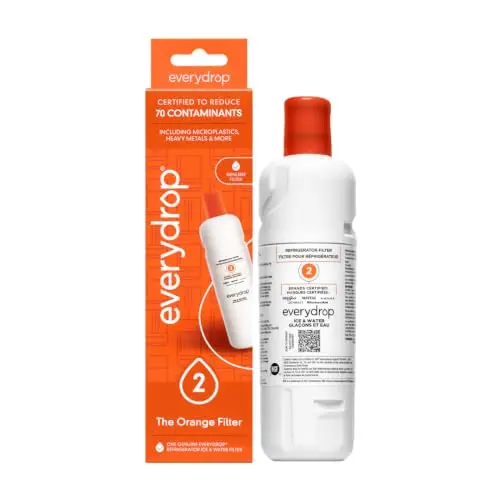
EDR2RXD1 – Triple-Filtration Whirlpool Fit
The EDR2RXD1 is the EveryDrop Filter 2 cartridge for Whirlpool-family refrigerators. It is certified to NSF/ANSI 42, 53, and 401, reduces 70 contaminants including microplastics, heavy metals, and VOCs, and uses a coconut-shell carbon core with triple-stage filtration. Twist-in installation is straightforward, and the rated service interval is six months or 200 gallons. It is designed for Whirlpool, Maytag, KitchenAid, Amana, and JennAir refrigerators; check the filter number and color match before ordering.
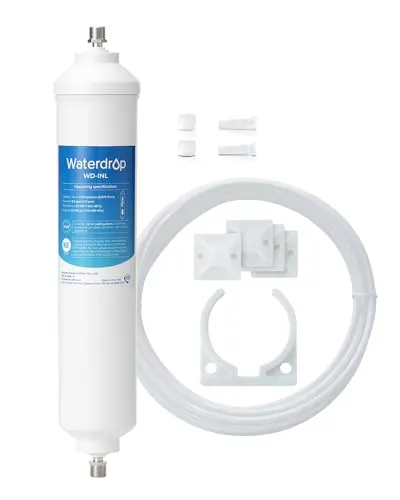
INL – Simple Inline Upgrade for Ice Makers
The Waterdrop INL is a straightforward quarter-inch inline filter for refrigerators, ice makers, coffee makers, water coolers, and RVs. It is NSF 42 certified for chlorine, taste, and odor reduction and NSF 372 certified for lead-free materials, with a 0.5-micron coconut-shell carbon block that also targets sediment, rust, and colloids. The kit includes compression and push-to-connect fittings, and the rated life is one year. It will not reduce TDS.
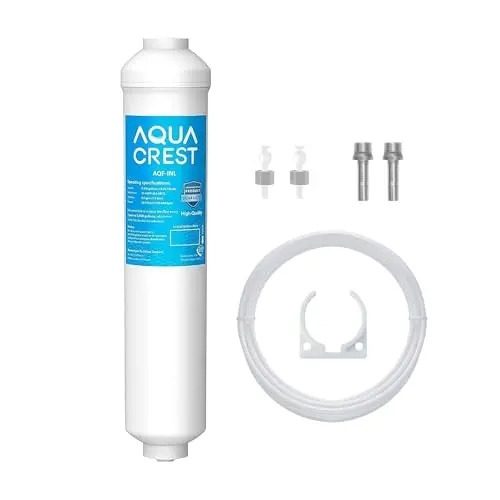
INL – Five-Year Inline Value
The Aqua Crest INL is a five-year, 5,000-gallon inline filter for refrigerators, ice makers, RVs, and other quarter-inch water lines. It uses a polyester membrane plus a 0.5-micron coconut-shell carbon block to reduce chlorine, taste, odor, fluoride, rust, and suspended solids. The kit includes PE tubing, compression and push-to-connect fittings, a hex nut, sleeve, and insert. It is third-party tested against NSF/ANSI standards, and it does not reduce TDS.
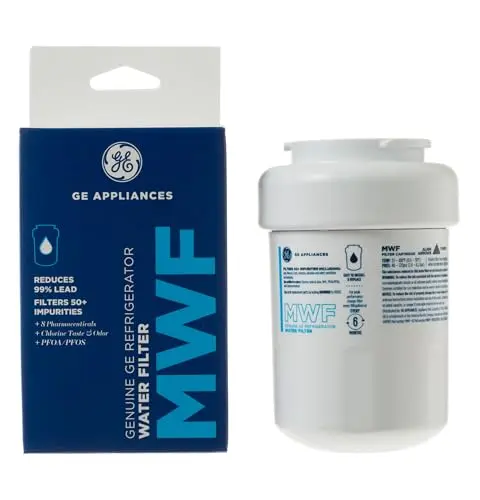
MWF – Genuine GE Refrigerator Fit
The GE MWF is a genuine GE refrigerator water filter for select GE, GE Profile, Cafe, and Monogram French door, side-by-side, and built-in refrigerators. It is certified to NSF/ANSI 42, 53, 372, and 401 and is rated to reduce 70+ impurities, including lead, chlorine, PFOA/PFOS, microplastics, and select pharmaceuticals. Installation needs no tools or water shutoff, and the recommended replacement interval is six months.
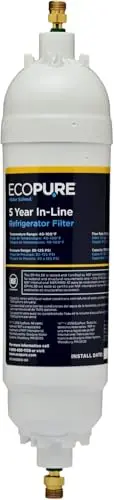
EPINL30 – Universal Long-Life Inline Filter
The EcoPure EPINL30 is a universal inline filter for refrigerators, ice makers, coffee machines, water coolers, RVs, boats, and RO systems. It is NSF/ANSI 42 certified for chlorine taste, odor, and sediment reduction and is rated for up to five years of use. The kit includes quarter-inch compression and push-to-connect fittings for copper or plastic water lines. It is designed and assembled in the USA.
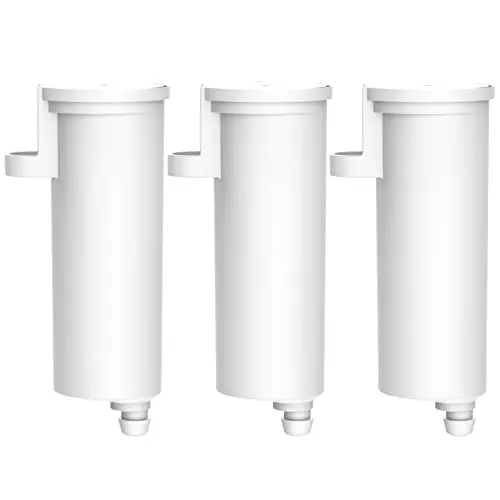
C33 – GE Opal-Compatible Ice Maker Filter
The Waterdrop C33 is a three-pack replacement filter for the GE Profile Opal nugget ice maker and GE Opal-compatible machines that use the P4INKFILTR cartridge. It is NSF 42 certified for chlorine reduction and NSF 372 certified for lead-free materials, with a ring-pull design for easier changes. The rated life is three months or 150 gallons, whichever comes first. Soak or rinse the filter before first use.
How We Evaluated These Ice Maker Filters
We didn’t run lab water-quality assays or plumb these filters into test refrigerators for months. What we did: cross-referenced 7 ice maker filter models from 6 distinct brands across 5 decision axes – certification coverage, appliance fit, filter lifespan, installation complexity, and flow/leak risk. We triangulated published specifications, certification details, and owner feedback where available, then mapped each option against representative buyer profiles: someone replacing a fridge cartridge, someone adding filtration to a non-filter fridge, and someone maintaining a countertop nugget ice maker. We also audited the fine print on compatibility, since a filter that fits one Whirlpool-family model may not fit another brand at all. We weighed certification claims against the actual standards named, because ‘NSF certified’ without a standard number tells you very little. Where owner feedback was thin, we leaned more heavily on published specs and certification scope.
The scoring framework weighted real-world fit and performance (70%) – how well a filter matches its intended appliance and water-quality goal – against feature differentiation (30%), including certification breadth, service life, and installation design. We have no commercial relationship with any brand here; recommendations track fit and differentiation, not brand preference. A dedicated cartridge with genuine-fit assurance can beat a more broadly certified inline filter if your refrigerator rejects aftermarket parts. Conversely, an inline system can be the smarter route for a non-filter fridge or a standalone ice maker. If you want the broadest certified inline coverage, the Frizzlife MS99 is the strongest match. If you want a simple chlorine-focused inline filter, the Waterdrop INL is the value route.
How to Choose the Right Ice Maker Filter
1. Certification and Contaminant Reduction in Ice Maker Filters
Not all ice maker filters are certified to the same standards. The basic mark is NSF/ANSI 42, which covers aesthetic claims like chlorine, taste, odor, and sediment. If you care about lead, volatile organic compounds, pharmaceuticals, or microplastics, look for NSF/ANSI 53 or 401 coverage. NSF/ANSI 372 is separate: it confirms lead-free materials, not lead reduction.
This is where a lot of inline filters separate. The EveryDrop EDR2RXD1 and GE MWF carry broad certifications across 42, 53, and 401, while the Frizzlife MS99 is certified to 42 and 53 with explicit lead reduction. Budget inline models often stop at 42. If lead is a real concern, the Frizzlife MS99 is the inline pick that fits that brief; chlorine-only filters are fine for taste but not for health-related contaminants.
2. Fit and Compatibility for Ice Maker Filters
The most common mistake is buying by category instead of by appliance. Refrigerator-specific cartridges are keyed to a brand family: the GE MWF fits select GE, GE Profile, Cafe, and Monogram fridges, while the EveryDrop EDR2RXD1 is built for Whirlpool, Maytag, KitchenAid, Amana, and JennAir. The Waterdrop C33 is narrower still – it is a replacement for the GE Profile Opal nugget ice maker and similar P4INKFILTR machines.
Inline filters are the flexible alternative. They splice into a 1/4-inch water line and work with many refrigerator brands, standalone ice makers, coffee makers, and RVs, provided you have access to the line and enough clearance. For a Whirlpool-family refrigerator that takes this cartridge, the EveryDrop EDR2RXD1 is the matched route; for anything with a standard line, an inline filter is usually easier to cross-shop.
3. Filter Lifespan and Replacement Rhythm
Replacement intervals range from three months to five years, and the number is a ceiling, not a promise. The Waterdrop C33 is rated for three months or 150 gallons; the GE MWF and EveryDrop EDR2RXD1 are six-month cartridges; the Waterdrop INL is rated for a year; and the Aqua Crest INL and EcoPure EPINL30 claim up to five years. Actual life depends on water quality and how much ice and water your household uses.
Set a calendar reminder rather than trusting a filter until it tastes bad. For a busy kitchen, a six-month cartridge is easy to remember; for a second fridge or a low-use ice maker, a long-life inline filter can make more sense. If you want a low-maintenance inline setup, the Waterdrop INL is the value route, with a one-year rating and a complete fitting kit.
4. Inline vs. Refrigerator-Specific Ice Maker Filters
Dedicated cartridges win on convenience when your refrigerator already has a filter housing. They twist in, need no tubing, and keep the installation stock. The tradeoff is fit lock-in and often a shorter service interval. Inline filters win on flexibility and, sometimes, cost per gallon. They can serve a non-filter fridge, a standalone ice maker, or an under-sink line, and several models include the push-to-connect fittings needed for a quick install.
If you have a newer fridge with a proprietary cartridge, start there and only switch to inline if the cartridge is hard to source or unusually expensive. If you are adding filtration to an ice maker that never had it, an inline system is the practical path. The Frizzlife MS99 and Waterdrop INL are both inline designs; the former adds broader certification and an auto shut-off filter head, while the latter keeps the setup simpler and more affordable.
5. Installation and Leak Checks
Most inline filters install in minutes, but the details matter. Insert the PE tube fully into the fitting – Waterdrop and Aqua Crest both call for about 20mm of insertion to reduce leak risk. Use the included compression or push-to-connect fittings for the line type you have, and support the filter so the tubing is not under strain. If the filter is behind a refrigerator, leave the recommended clearance.
After installation, run water through the dispenser and check every connection with a dry paper towel. A slow leak can show up as cloudy ice or a damp cabinet rather than a dramatic puddle. Also know what the filter does not do: most inline models in this class do not reduce total dissolved solids, and a chlorine-only filter is not a lead-removal device.
Frequently Asked Questions
1. What's the difference between the Frizzlife MS99 and the Waterdrop INL?
They sit at different ends of the inline-filter spectrum. The Frizzlife MS99 is NSF/ANSI 42 and 53 certified, adds lead and particulate reduction, and uses a two-year cartridge with an auto shut-off head. The Waterdrop INL is NSF 42 certified for chlorine, taste, and odor, with a simpler one-year cartridge and a lower upfront cost. If lead is a concern, the Frizzlife MS99 is the better fit; if you just want cleaner-tasting fridge water, the Waterdrop INL is the value choice.
2. What's the difference between the GE MWF and EveryDrop EDR2RXD1?
They are both broad-certification refrigerator cartridges, but they fit different appliance families. The GE MWF is for select GE, GE Profile, Cafe, and Monogram refrigerators and carries NSF/ANSI 42, 53, 372, and 401 certification. The EveryDrop EDR2RXD1 is for Whirlpool, Maytag, KitchenAid, Amana, and JennAir models and carries NSF/ANSI 42, 53, and 401 certification. Neither is a universal fit. Whirlpool-family owners should start with the EveryDrop EDR2RXD1; GE-family owners should start with the MWF.
3. Are all ice maker filters compatible with every refrigerator or ice maker?
No. Dedicated cartridges are appliance-family specific, and even within one brand the wrong number will not seat properly. Inline filters are more universal because they connect to a 1/4-inch water line, but they still need enough clearance and the right fittings. Countertop nugget machines like the GE Profile Opal use their own small cartridge, so a refrigerator filter is not a substitute.
4. How often should you replace an ice maker filter?
Use the manufacturer’s interval as the upper limit. Small Opal-style filters are often rated for three months or 150 gallons; refrigerator cartridges are commonly six months; and inline filters may claim one to five years. Hard water, heavy ice use, and sediment can shorten any of those windows. If ice starts tasting stale or flow slows down, replace sooner rather than waiting for the calendar.
5. Do ice maker filters remove lead, PFAS, or microplastics?
Only if the filter is certified for them. NSF/ANSI 42 is mostly about chlorine, taste, odor, and sediment. NSF/ANSI 53 covers health-related contaminants such as lead, and NSF/ANSI 401 covers emerging contaminants including some pharmaceuticals and microplastics. Many inline filters stop at 42, so check the standard list before assuming a filter handles lead or PFAS.
Final Verdict
For most shoppers, the Frizzlife MS99 is the answer: it pairs NSF/ANSI 42 and 53 certification with lead reduction, a two-year cartridge, and an inline design that works with ice makers and non-filter refrigerators. If your water issue is mainly chlorine and taste, the Waterdrop INL gets you most of the way there for a lot less. Whirlpool-family refrigerator owners should stay with the matched EveryDrop EDR2RXD1, and GE Profile Opal owners should grab the Waterdrop C33 for a proper fit. The common thread is matching certification and physical fit to your appliance – that matters more than any universal filter claim.
