
Best Inexpensive Alarm Clocks – 2026 Reviews

An alarm clock is one of the few bedroom gadgets where spending less can actually get you a cleaner experience-if you know which corners were cut. The best inexpensive models skip the app pairing and voice assistants, then put the savings into the things you use every night: a readable display, a dimmer that goes truly dark, and an alarm you can trust.
The tricky part is that cheap alarm clocks often look identical online. One has a night mode that saves your eyes; another has a display bright enough to light the whole room. Some let you set two alarms; others make you cycle through menus half asleep. We focused on the inexpensive end of the market and compared how each clock handles the basics, plus the extras that matter for different sleepers.
Whether you need a battery-operated clock for a bathroom shelf, a loud alarm for deep sleepers, or a compact backup for a guest room, the right pick depends on how you sleep and where the clock will live. Below are the budget-friendly models that stand out for real bedside use.
Best Inexpensive Alarm Clocks – 2026 Reviews
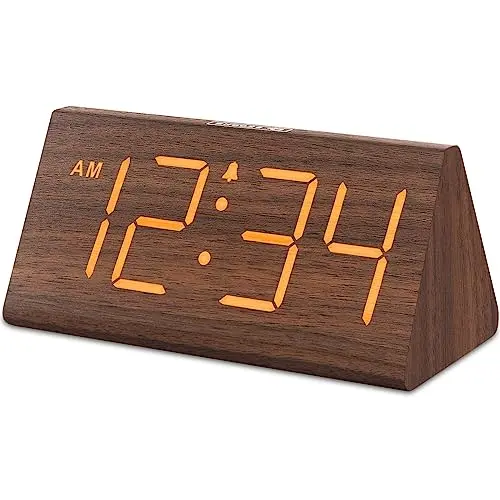
DS2201 – Wood-Grain Bedside Alarm with USB Charging
A wood-grain bedside clock that pairs large, easy-to-read digits with a genuinely useful dimmer and a USB charging port. It runs on AC power, with battery backup reserved for alarm memory during outages.
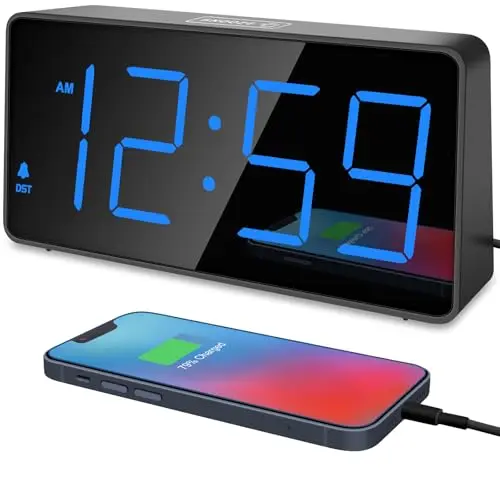
MHP6010 – Large-Display Alarm with USB Charging
A large-display plug-in alarm with five dimmer levels, five alarm volumes, and a front-facing USB charger. Battery backup keeps settings and alarm function during outages.
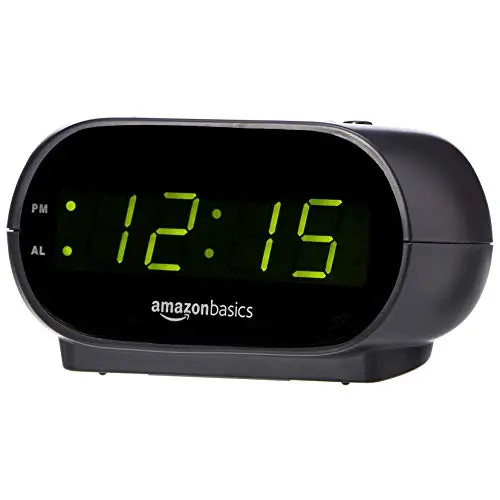
TT1001 – Compact Basic Alarm with Nightlight
A compact, no-frills bedside clock with a green LED display, built-in nightlight, and repeating snooze. It plugs into AC power and accepts a 9V battery for short-term backup.
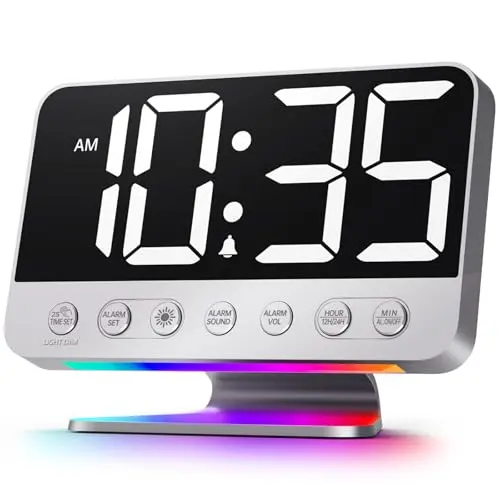
U2 – Loud Alarm with Color Night Light
A feature-packed plug-in alarm clock with large digits, five alarm sounds, adjustable volume, a color night light, and a USB charging port. Battery backup keeps the alarm active during outages.

KW618 – Battery-Operated LED Alarm for Any Room
A battery-operated LED clock with large red digits, three brightness levels, and an automatic night dimmer. It can sit on a table or hang on a wall, and it’s a good fit for spots without an outlet.

Digital Alarm Clock – Simple Keyboard Controls
A compact plug-in alarm clock with simple keyboard controls, a large snooze button, and bright red LED digits. Battery backup keeps the alarm running through short power outages.

6208D – Dual-Alarm Bedside Clock for Deep Sleepers
A compact plug-in alarm with dual alarms, a blue LED display, five brightness levels, four volume settings, and a top snooze button. Battery backup preserves settings and alarm function during outages.

MHP6020 – Ultra-Compact Plug-In Alarm for Small Spaces
An ultra-compact plug-in alarm clock with large digits, six brightness settings, five alarm volumes, and battery backup for outages. The small footprint suits tight nightstands, desks, and travel.
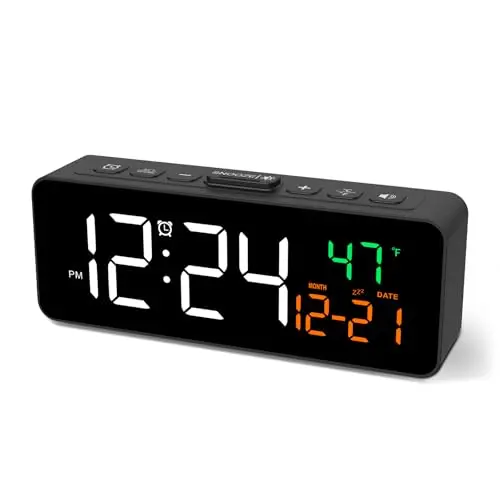
T338B – Compact 3-in-1 Clock with Temperature Display
A slim plug-in clock that shows time, date, and indoor temperature on a compact display. It has four brightness levels, three alarm volumes, and a top button for quick dimming.
How We Evaluated These Inexpensive Alarm Clocks
We didn’t run lab-grade alarm-volume measurements or sleep trials. What we did: cross-referenced 9 alarm clock models from 7 distinct brands across 6 decision axes – display readability, dimming range, alarm flexibility, power backup, footprint, and ease of setup. We triangulated published specifications, feature sets, and aggregated feedback where available, then mapped each clock to common buyer profiles: light sleepers, deep sleepers, small-space dwellers, and anyone who needs a battery-operated clock away from an outlet.
We also can’t measure long-term button wear or tell you how every unit will sound in your bedroom. What we can do is separate designs that make the nightly routine simpler from ones that look good on a spec sheet but frustrate you at 2 a.m. The scoring framework weighted real-world bedtime fit (70%) – how well each clock handles the nightly basics without annoyance – against feature differentiation (30%) – the extras that justify a spot in a small room. We audited the lineup for genuinely useful features rather than clutter. We have no commercial relationship with any of the brands featured; recommendations track fit and differentiation, not brand preference. If you want the most balanced bedside pick, the DreamSky DS2201 is the one we’d start with; if you want a larger display and a USB charger, the Peakeep MHP6010 is the stronger fit.
How to Choose the Right Inexpensive Alarm Clocks
1. What Makes an Alarm Clock Genuinely Inexpensive?
Inexpensive doesn’t have to mean stripped. In this category, the best budget alarm clocks cut cost by skipping voice assistants, Bluetooth, and app pairing, then spend the savings on the parts you actually touch every night: a readable display, a dimmer that goes dark, and an alarm you can set without a manual. A clock that saves a few dollars but blinds you at 3 a.m. isn’t a bargain.
The real value question is whether the core controls feel considered. Look for clearly labeled buttons, a snooze you can find by feel, and a battery backup that at least preserves alarm settings during an outage. If you need the clock to run without an outlet, step up to a battery-operated model rather than assuming standard backup batteries will power the display. The KWANWA KW618 is the clear route if cordless operation is the priority.
2. Display Readability and Dimming Are the Real Daily Wins
You’ll interact with the display more than any other feature. A large digit height helps you read the time without glasses, but brightness control matters just as much. A clock with adjustable dimming can be bright enough for daytime and dim enough to disappear at night. Models with a dedicated night mode or an off setting are especially kind to light sleepers.
Don’t assume every LED display is equally calm. Red and green digits can be easier on night vision for some people, while blue or white digits may feel brighter. The practical test is whether the lowest setting is actually usable in a dark room. If you want a display that can go fully dark while keeping the alarm alive, the DreamSky DS2201 is the easiest recommendation.
3. Alarm Volume, Snooze, and Heavy-Sleeper Needs
Alarm volume is personal. A loud alarm with multiple volume steps is more flexible than a single blaring tone, because you can start gentle and escalate only if needed. If you sleep through phone alarms, look for a model with a high maximum volume, a long alarm duration, and a snooze that’s easy to hit without waking fully. Adjustable alarm duration is a small feature that makes a big difference on tough mornings.
For very deep sleepers, a standard bedside clock may not be enough. Models marketed with heavy-sleeper volume or multiple wake sounds are worth a look, but check whether the loudest setting is adjustable. The Odokee U2 is the strongest inexpensive pick here because it combines a high volume ceiling with several wake sounds and a visible night light.
4. Power Options: Plug-In, Battery Backup, or Battery-Operated
Most inexpensive alarm clocks plug into AC power and use batteries only for memory backup. That’s fine for a bedroom, but it’s a problem if the display goes dark during an outage and you rely on the clock to wake you. A true battery-operated clock runs the display and alarm on AA or AAA batteries, which is better for a bathroom, guest room, or travel bag.
Read the fine print carefully. Some clocks say battery backup but mean the screen stays dark and only the alarm memory survives. Others include an AC adapter and use batteries solely to keep settings alive. Neither is bad, but they solve different problems. If your outlet is crowded, a model with a USB charging port can earn its space by replacing a phone charger.
5. DreamSky DS2201 vs Peakeep MHP6010: Which Inexpensive Alarm Clock Fits Your Nightstand?
These two are the strongest all-around budget picks, but they emphasize different things. The DreamSky DS2201 leans into bedroom decor with a wood-grain face, a five-level dimmer, and a USB port; it’s the one to choose if the clock will sit on a visible nightstand or mantel. The Peakeep MHP6010 is more feature-forward, with a larger display, five alarm volumes, and a front USB charger – a better fit if you want an easier-to-read screen and more granular alarm control. Both are plug-in clocks with battery backup for outages, so neither is the right answer if you need a truly cordless display.
Frequently Asked Questions
1. Are inexpensive alarm clocks worth buying, or should you spend more?
For most bedrooms, yes. An inexpensive alarm clock can cover the essentials – time, alarm, snooze, and dimming – without the extra cost of smart features you may never use. The key is to prioritize display readability, alarm flexibility, and power backup over app connectivity or fancy styling. A simple clock with a good dimmer is often more pleasant to live with than a feature-packed model with a blinding screen.
Spending more makes sense when you need a specialized function: a very loud alarm for deep sleepers, a battery-operated display for a room without outlets, or a dual-alarm setup for two schedules. Otherwise, the budget tier is genuinely capable.
2. What's the difference between the DreamSky DS2201 and the Peakeep MHP6010?
The DreamSky DS2201 is the more furniture-like clock, with a wood-grain finish, a five-level dimmer, and a USB charging port. It’s a good fit for a visible nightstand or mantel where appearance matters. The Peakeep MHP6010 has a larger display, five alarm-volume levels, and a front-facing USB charger; it’s the more feature-forward choice if you want an easier-to-read screen and more control over alarm loudness. Both are plug-in clocks with battery backup for outages.
3. How does the Amazon Basics TT1001 compare with the Sharp digital alarm clock?
The Amazon Basics TT1001 is the more compact, nightlight-friendly option: it has a green LED display, a built-in nightlight, and a simple repeating snooze. The Sharp digital alarm clock is more about straightforward controls, with keyboard-style buttons, a large snooze bar, and bright red digits. Choose the Amazon Basics for a smaller footprint and a softer glow; choose the Sharp if you want the simplest possible button layout and a big snooze target.
4. Which inexpensive alarm clock is best for heavy sleepers?
Start with the Odokee U2. It has a high volume ceiling, five wake-up sounds, and an adjustable volume range that starts gentle and can get genuinely loud. The Netzu 6208D is a good alternative if you also want dual alarms, though its loudest setting is more moderate. For very deep sleepers, prioritize alarm volume flexibility and a long alarm duration over extra display features. The Odokee U2 is the pick here.
5. Do I need a battery-operated alarm clock or is battery backup enough?
Battery backup usually means the clock keeps time and alarm settings during an outage, but the display stays dark. That’s fine for a bedroom where power outages are rare. A true battery-operated alarm clock runs the display and alarm on AA or AAA batteries, which is better for a bathroom, guest room, travel, or any spot without an outlet. If you need cordless operation, the KWANWA KW618 is the model to consider; if you only need outage protection, a plug-in clock with backup is enough.
Final Verdict
For most shoppers, the DreamSky DS2201 is the best inexpensive alarm clock because it gets the nightly basics right: a calm display, flexible dimming, adjustable alarm volume, and a USB port that earns its place. It looks better than most budget clocks, too.
If you want the lowest-cost no-fuss option, the Amazon Basics TT1001 covers the essentials with a nightlight and simple snooze. Deep sleepers should go with the Odokee U2, which adds multiple wake sounds and a much higher volume ceiling. And if you need a clock where there’s no outlet, the KWANWA KW618 is the battery-operated pick that makes the most sense.
